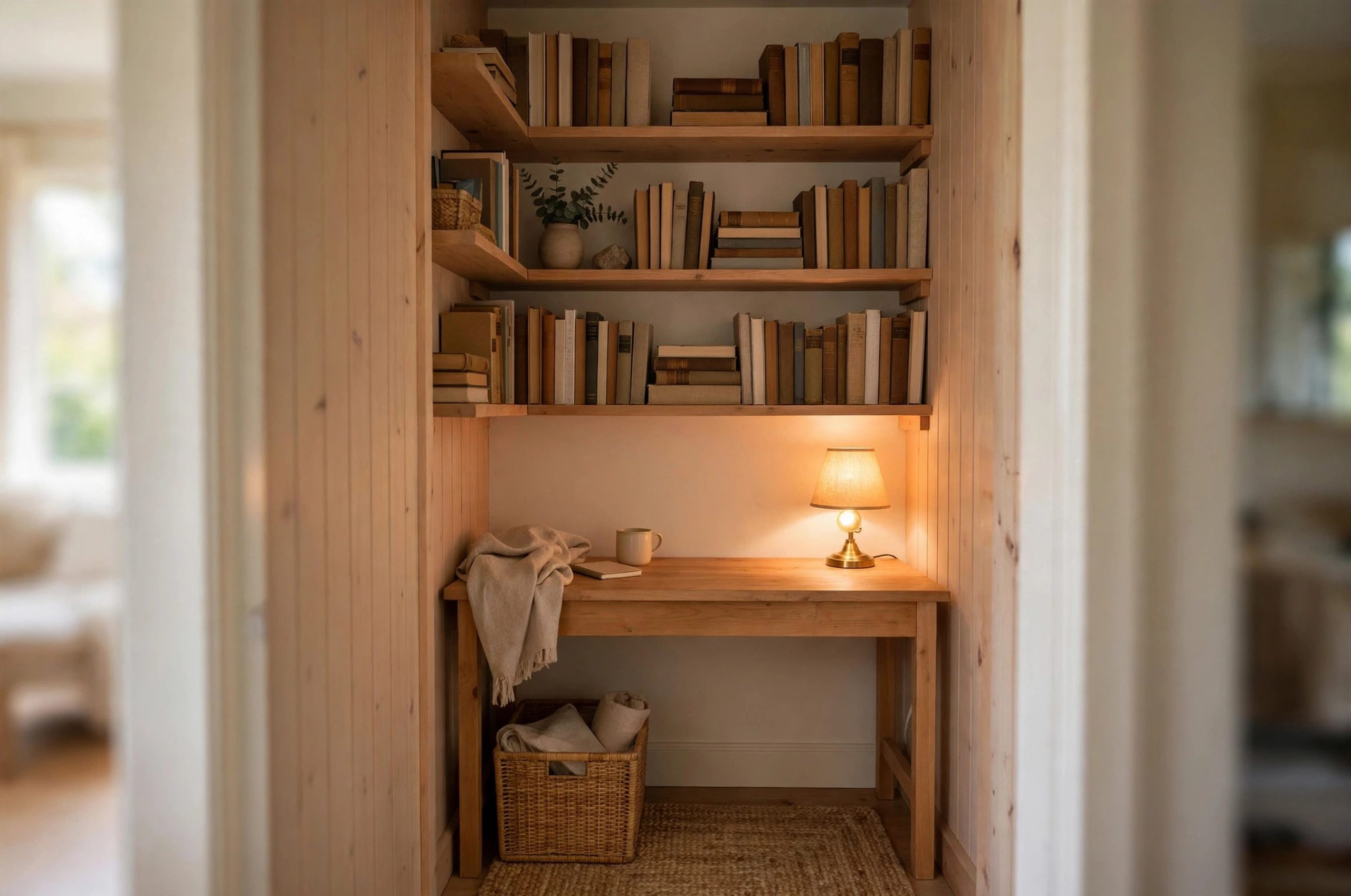
You need a home office. You do not have a spare room. Look around: that closet you barely open might be the answer. Turning a closet into a cozy work nook, sometimes called a "cloffice," is one of the smartest small-space moves in home offices. A standard reach-in closet has the depth of a desk, the height for shelves, and doors that close to hide the workday when it ends. This guide shows you how to plan the desk, the light, the power, and the storage so your closet feels like a real office, not a storage space you squeeze into. The rest of this guide covers closet into a cozy work nook in plain language.
Table of Contents
Table of Contents
- Closet into a Cozy Work Nook: Is Your Closet a Good Candidate?
- The Desk: Your Foundation
- Light It Like an Office, Not a Closet
- Power and Cables in a Tiny Space
- Storage: Go Up, Not Out
- Make It Cozy, Not Cramped
- The Step-by-Step Build Order
- Common Mistakes to Avoid
- Frequently Asked Questions
- How much does a closet office cost?
- Can I work in a closet office full time?
- What if I rent and cannot drill into walls?
- How do I keep it from feeling claustrophobic?
- Conclusion
- References
Closet into a Cozy Work Nook: Is Your Closet a Good Candidate?
When it comes to closet into a cozy work nook, getting the details right makes all the difference.
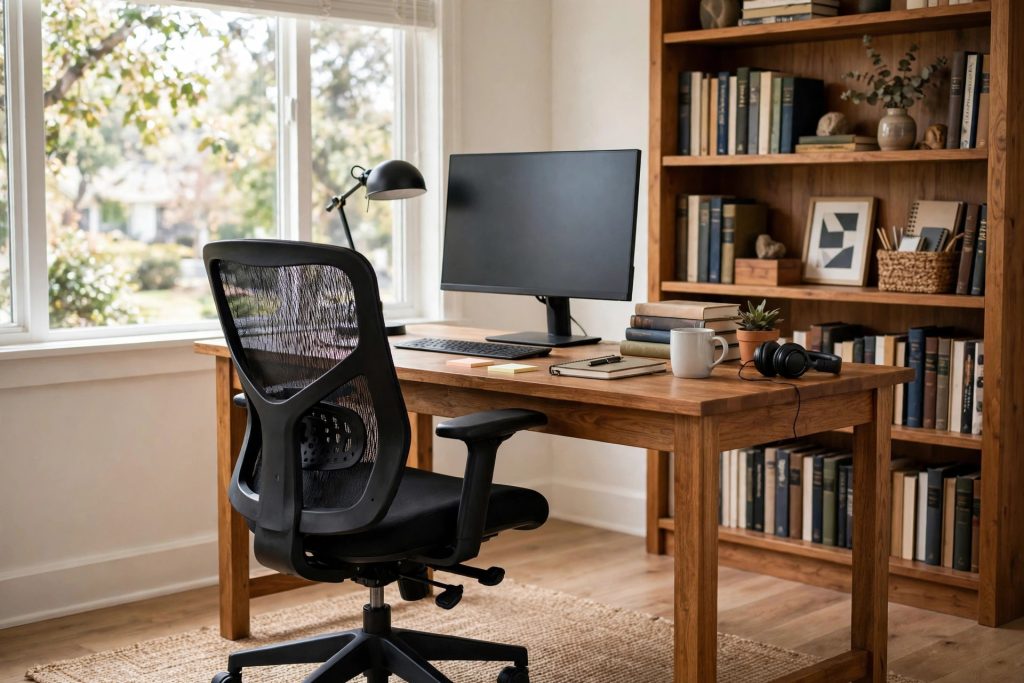
Many homeowners find that closet into a cozy work nook is easier than they expected once they know the basics.
Most reach-in closets work well. A closet about two feet deep and four to six feet wide fits a desktop, a monitor, and a chair that tucks under. Walk-in closets work even better, since you can step inside and close the door behind you for true focus time.
Before you commit, check four things:
1. Depth. Sit at your current desk and measure how far your monitor sits from your chest. Most closet depths of 22 to 24 inches handle a laptop easily. A desktop monitor may need the full depth or a monitor arm to gain space. 2. Power access. Closets rarely have outlets. Plan how a surge protector cord will reach the nearest outlet, routed neatly along the wall. 3. Ventilation. A closed closet gets warm fast, especially with a computer running. Plan to keep the doors open while you work, or add a small fan. 4. Your stuff. Be honest about what lives in the closet now. Move it somewhere real before you build, or the project stalls on day one.
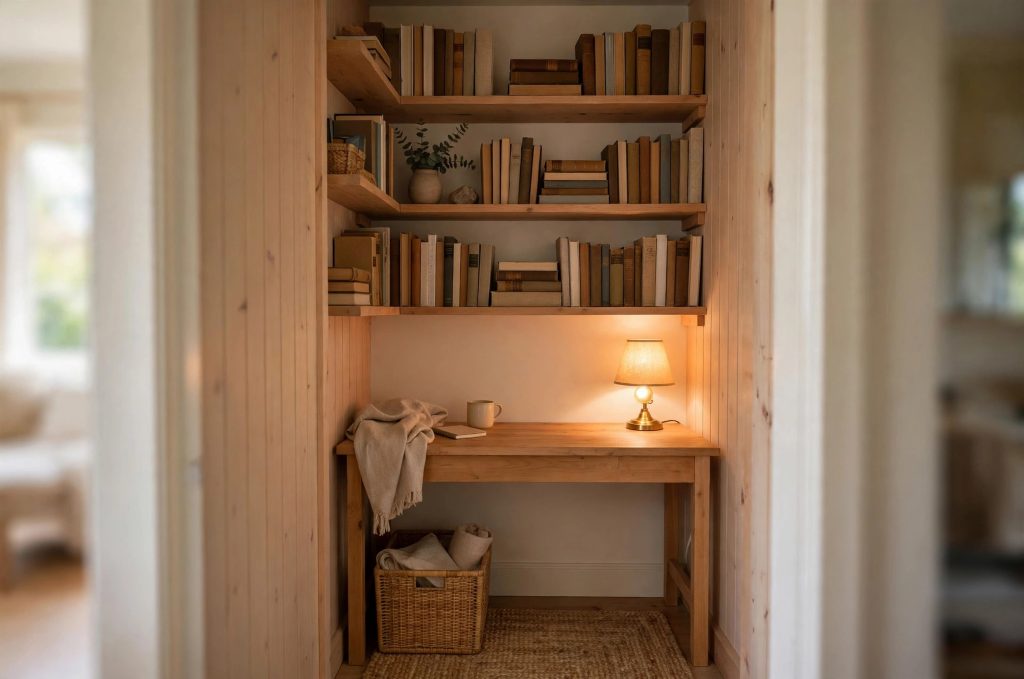
As Apartment Therapy shows in a classic closet-office redo, the anatomy of a good cloffice is clear: a sturdy floating desktop, a comfy chair that tucks under it, shelves or hanging storage overhead, smaller containers, and lighting to make up for the lack of windows.
The Desk: Your Foundation
Many homeowners find that closet into a cozy work nook is easier than they expected once they know the basics.
The key to closet into a cozy work nook is choosing the right approach for your space and budget.
The desk makes or breaks a closet office. You have three good options.
A floating desktop. A board or butcher-block countertop mounted to the walls at desk height uses every inch of width with zero legs in the way. Brackets go into wall studs so the surface holds your monitor and gear. This is the most popular choice for a reason: it is cheap, strong, and fits the space exactly.
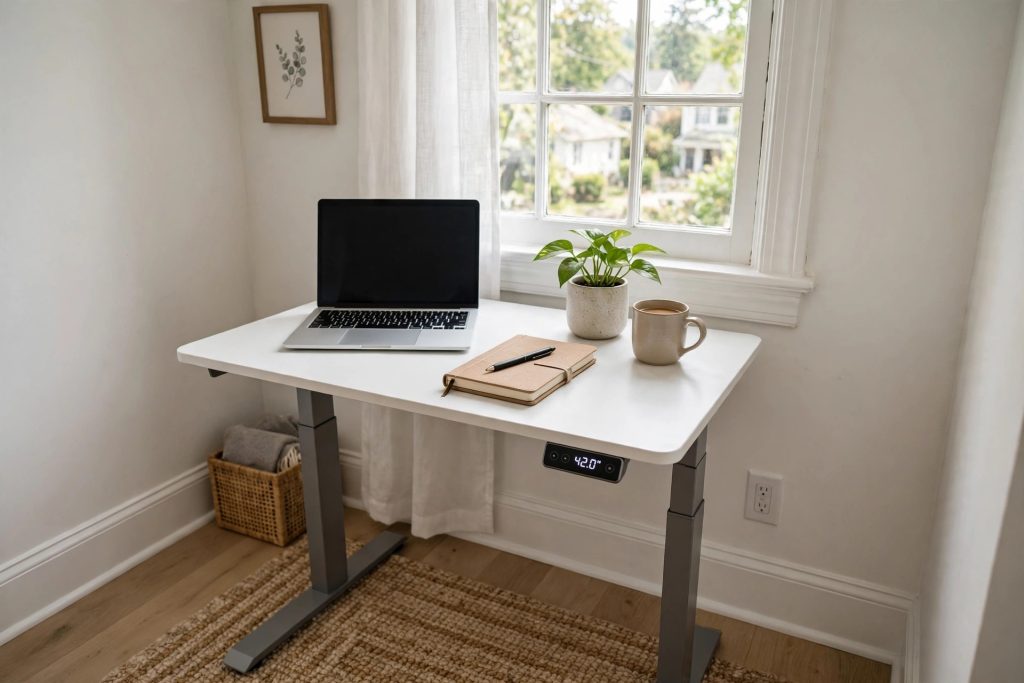
A freestanding small desk. If you rent, or if you want the option to change your mind, a narrow desk that fits the opening works fine. Measure twice. An inch of clearance on each side is enough. Pick a desk with a shallow depth so your knees still fit.
A fold-down desk. Wall-mounted drop-leaf desks fold flat when the workday ends. You close the closet doors and the office vanishes. This is perfect for bedrooms where you want zero visual clutter at night.
Mount your monitor on the wall or on an arm if you can. As Food52 points out, monitors eat desk space fast in a cloffice, and a wall mount frees the surface for notebooks and paperwork. Keep the desktop clear of everything except what you use today.
Light It Like an Office, Not a Closet
The key to closet into a cozy work nook is choosing the right approach for your space and budget.
With a little planning, closet into a cozy work nook can fit even a busy schedule.
Closets have terrible light. That single bare bulb was meant for finding shoes, not for eight-hour workdays. Good lighting turns a closet from a cave into a nook you actually enjoy.
Layer two kinds of light. First, bright general light: replace the old fixture with something brighter, or add LED strip lights under the top shelf. Second, focused task light: a small desk lamp or a wall-mounted sconce aimed at your work surface. An adjustable desk lamp with a dimmer lets you tune brightness through the day and keeps eye strain away.
Warm white bulbs feel cozy. Cool white bulbs feel alert. Pick based on the mood you want, then keep it consistent across every light in the nook so the space feels planned. Wayfair's cloffice guide suggests push lights under shelves, plug-in sconces over the desk, or string lights across the shelving as easy options that need no wiring.
Power and Cables in a Tiny Space
With a little planning, closet into a cozy work nook can fit even a busy schedule.
Before you start, it helps to understand how closet into a cozy work nook works in real homes.
A computer, a monitor, a lamp, a phone charger: a closet office needs power for all of it, and closets almost never have outlets built in. Run a surge protector from the nearest outlet, flat against the wall and secured so it never becomes a trip hazard.
Keep cords invisible. Route cables along the back wall with adhesive cable clips. Coil the slack and tuck it behind the desk. In a space this small, one messy cord ruins the whole look. Plan the cable routes before you mount anything, because you will not want to redo it later.
If you print, think about where the printer lives. A printer on the closet desk eats a third of your surface. Stashing it on a shelf above or on a small rolling cart you pull out when needed keeps the desk clear. The Spruce shows clever builds where one shelf cubby houses the printer, maximizing efficiency without crowding the work surface.
Storage: Go Up, Not Out
Before you start, it helps to understand how closet into a cozy work nook works in real homes.
A good plan for closet into a cozy work nook saves time, money, and frustration.
A closet is taller than it is wide. Use that height. Two or three shelves spanning the full width above the desk hold books, bins, and supplies. Baskets and labeled boxes keep the shelves looking calm instead of busy.
Below the desk, a slim rolling drawer unit or a small filing cabinet slides into the knee space on one side. A bookshelf-and-desk combo mindset helps: every piece of furniture should store something. If your closet still needs to hold some clothes, split it: office on one side, a short hanging rod on the other. Homes and Gardens notes that built-in shelving can double as clothing storage and office storage, and that the key is keeping the two zones clearly separated so the space never feels overrun.
A pegboard on one side wall holds tools, notes, and headphones without using shelf space. Hooks on the door or wall hold bags and jackets. Small spaces reward every inch of vertical thinking.
Make It Cozy, Not Cramped
A good plan for closet into a cozy work nook saves time, money, and frustration.
For most people, closet into a cozy work nook comes down to a few smart choices.
A closet office can feel like a warm hideaway or a punishment. The difference is in the details.
Paint or wallpaper the back wall. A light color opens the space up; a bold accent makes it feel like a destination. Peel-and-stick wallpaper is renter-friendly and takes an afternoon. OptiMelle Life suggests matching the cloffice style to the room it opens into so the space feels intentional, from minimalist white-and-wood to boho wallpaper and woven baskets.
Add one soft thing: a small rug under the chair, a cushion, or a fabric pinboard. Soften the hard closet edges. Add one living thing: a small plant that tolerates low light brightens the nook and the mood. Keep decor minimal. In a space this small, three good objects beat thirty small ones.
Think about the doors. Removing them and hanging a curtain gives easy access and a softer look. Keeping them lets you close the workday away, which helps work-life boundaries in a real way. If you keep the doors, pick an armless chair that scoots fully under the desk so the doors close cleanly. A corner nook bookshelf beside the closet can hold overflow supplies without crowding the desk.
The Step-by-Step Build Order
For most people, closet into a cozy work nook comes down to a few smart choices.
If you are new to closet into a cozy work nook, start with the simplest option and build from there.
Work in this order and you will avoid the classic mistakes:
1. Empty the closet completely. Move everything out. Clean the walls and floor. 2. Plan power. Decide where the surge protector enters and how cords route. 3. Paint or wallpaper. Do this with the closet empty. It is never easier. 4. Mount shelves and the desk. Find the studs. Level everything. 5. Install lighting. Wire or mount the lights before the desk surface goes in. 6. Add the chair. Test the height, the knee clearance, and the door swing. 7. Organize storage. Shelves, bins, pegboard, hooks. Give everything a home. 8. Decorate. Art, a plant, a rug. Stop before it gets busy.
Coohom's closet office guide adds good reminders: declutter first, choose a compact or foldable desk, and use vertical space with shelves and pegboards so the small footprint works harder.
Common Mistakes to Avoid
If you are new to closet into a cozy work nook, start with the simplest option and build from there.
Skipping measurements. Closets vary. Measure the width, depth, and height, then measure your desk and chair. Guessing leads to returns.
Forgetting ventilation. Computers make heat. A closed closet with no airflow gets uncomfortable fast. Work with doors open or add a small fan.
One overhead bulb. A single harsh light creates glare on your screen and shadows on your desk. Layer your lighting.
No cable plan. In a closet, cords have nowhere to hide except where you plan for them. Route them first.
Overstuffing it. The closet that tries to be an office, a wardrobe, a filing room, and a craft corner fails at all four. One job, done well.
Frequently Asked Questions
When it comes to closet into a cozy work nook, getting the details right makes all the difference.
How much does a closet office cost?
It can cost under a hundred dollars with a painted board for a desk, secondhand shelves, and a lamp you already own. A nicer build with a butcher-block top, new shelving, and good lighting runs a few hundred. The biggest cost is usually the chair, and that is worth spending on.
Can I work in a closet office full time?
Yes, if you get the ergonomics right. Chair height, monitor height, and keyboard position matter just as much in a closet as in a corner office. Take the same breaks you would at any desk. The small space is fine; the posture is what counts.
What if I rent and cannot drill into walls?
Use a freestanding narrow desk, tension-rod shelves, adhesive hooks, plug-in lights, and peel-and-stick wallpaper. Everything comes out clean when you move. The Spruce's renter-friendly ideas lean on removable hooks and minimal wall contact.
How do I keep it from feeling claustrophobic?
Light colors, good lighting, a mirror to bounce light, and keeping the doors open while you work all help. A plant and one piece of art make it feel like a room, not a box. And take real breaks outside the nook through the day.
Conclusion
Many homeowners find that closet into a cozy work nook is easier than they expected once they know the basics.
Turning a closet into a cozy work nook is one of the best small-space wins in home offices. You get a real desk, real storage, and a door that closes on the workday, all from space you already have. Measure first, mount a solid desk, layer the light, plan the power, and keep it simple.
Start this weekend. Empty the closet. By next week you could be working from a nook that feels like it was always meant to be an office. Keep this guide handy the next time closet into a cozy work nook comes up.
References
The key to closet into a cozy work nook is choosing the right approach for your space and budget.
- Wayfair. (n.d.). Cloffice ideas: Creating a closet office at home. https://www.wayfair.ca/sca/ideas-and-advice/guides/cloffice-ideas-creating-a-closet-office-at-home-T9745
- Coohom. (n.d.). No space for a desk? Try a bedroom closet office setup. https://www.coohom.com/article/transform-your-bedroom-closet-into-a-home-office-8554
- Coohom. (n.d.). No room for a desk? Closet home office ideas that work. https://www.coohom.com/article/small-home-office-ideas-for-closet-spaces
- Coohom. (n.d.). Closet home office too cramped? 6 layout fixes that work. https://www.coohom.com/article/clever-closet-home-office-design-ideas
- Houzz. (n.d.). How to turn your closet into an office. https://www.houzz.com/magazine/how-to-turn-your-closet-into-an-office-stsetivw-vs~195082
- OptiMelle Life. (n.d.). Cloffice ideas: Complete guide to building a closet office that works. https://optimellelife.com/home-office/diy-personalized/cloffice-ideas/
- Apartment Therapy. (n.d.). Closet office redo for small space - before and after photos. https://www.apartmenttherapy.com/townhouse-closet-office-redo-120-dollars-37258662
- The Spruce. (n.d.). 35 closet offices you'd be happy to work from. https://www.thespruce.com/inspiring-closet-offices-5179346
- Food52. (n.d.). 15 cloffice ideas for WFH - how to make a cloffice. https://food52.com/story/25939-how-to-make-a-cloffice
- Homes and Gardens. (n.d.). Ashley Park's 'cloffice' is a masterclass in multi-functions. https://www.homesandgardens.com/celebrity-style/ashley-park-cloffice-trend
With a little planning, closet into a cozy work nook can fit even a busy schedule.
Was this guide helpful?

About My Garden US
The My Garden US editorial team writes practical, in-depth home and garden guides for American homeowners — tested advice, no fluff.
You May Also Like

Home Office Desk with Hutch and Storage: A Practical Guide
September 7, 2026 2 views
Small Rolling Desk for Laptop in Living Room: A Practical Buying Guide
January 7, 2026 1 views
Home Office Rug to Protect Hardwood Floors: A Complete Guide
August 7, 2026 1 views