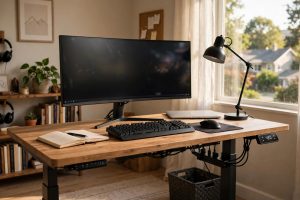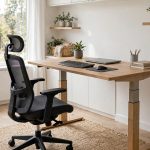
Working from home sounds easy. The commute is ten steps. The dress code is soft pants. But the desk tells a different story. Papers stack up. Cables tangle. The chair faces a blank wall, and every knock at the door makes you jump. This guide covers feng shui desk in plain steps.
Table of Contents
Table of Contents
- Feng Shui Desk: Start with the command position
- Keep your back supported
- Clear the clutter, keep the calm
- Let light come from the side
- Balance the five elements
- Choose colors that settle you
- Mind the "poison arrows"
- Keep the area in front open
- Add life, not noise
- Mark the start and end of work
- A simple weekend reset plan
- References
You do not need a new office to fix this. A few old ideas from feng shui can make your workday feel calmer. Feng shui is the Chinese practice of arranging space so energy, or chi, moves well. You do not have to believe in energy to use it. Most of its desk advice lines up with plain common sense.
Feng Shui Desk: Start with the command position
When it comes to feng shui desk, getting the details right makes all the difference.
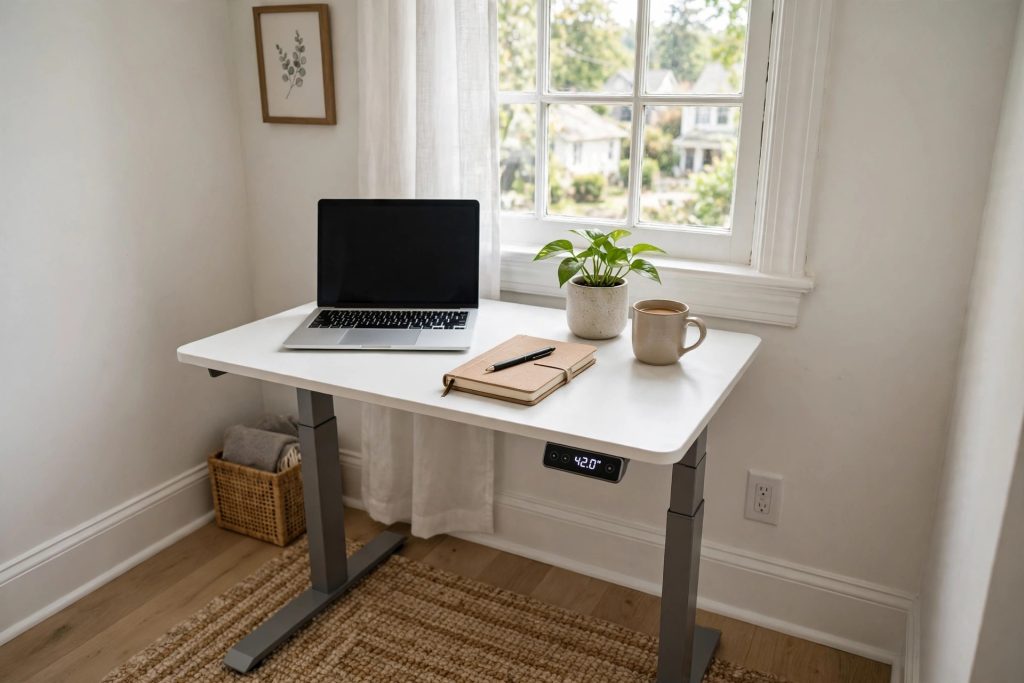
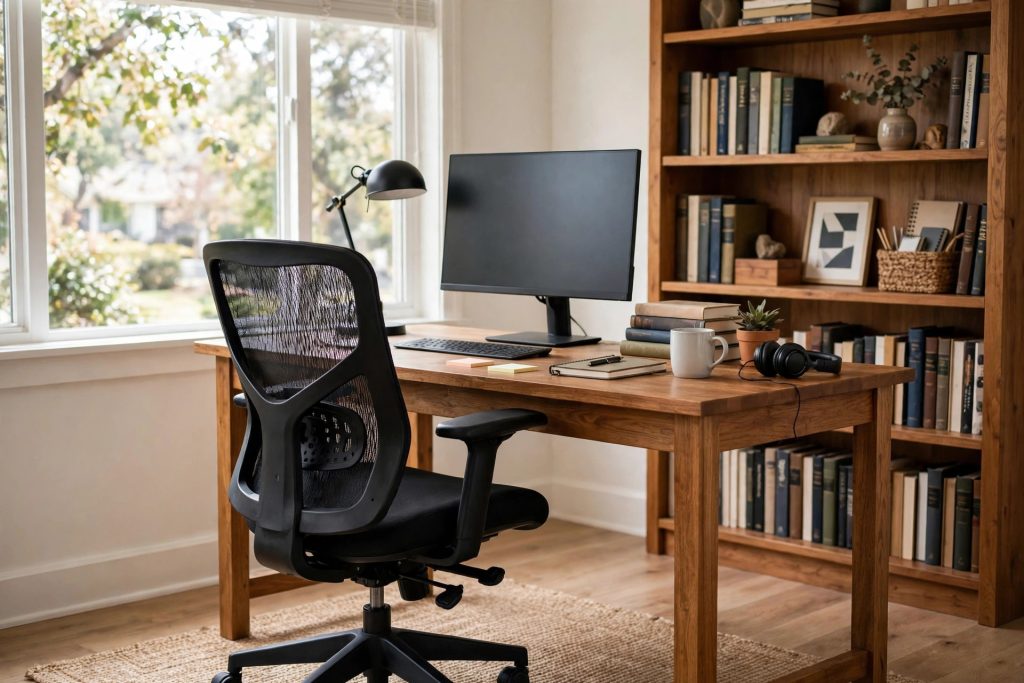
Many homeowners find that feng shui desk is easier than they expected once they know the basics.
The single biggest change is where your desk sits. Feng shui says to place your desk in the "command position." That means you sit as far from the door as you can, and you can see the door without turning around. Your back rests against a solid wall.
A feng shui guide for offices from Healthline notes that this setup gives a feeling of control and security, which lowers background stress during the workday. A master feng shui practitioner quoted by Informed Investor calls desk position the top priority, ahead of any decor, and advises angling the chair slightly so you can see the entry without sitting in the direct line of the doorway.
Why does this matter? When your back is to the door, part of your mind stays on guard. You startle at sounds. You lose focus. When you can see the entrance, that watchfulness fades. You settle in.
If you cannot move the desk, try a small mirror on the desk or wall so you can see the door over your shoulder. It is a simple workaround that many feng shui guides recommend for tight rooms, including this home office feng shui walkthrough.
Keep your back supported
Many homeowners find that feng shui desk is easier than they expected once they know the basics.
The key to feng shui desk is choosing the right approach for your space and budget.
A solid wall behind you is the feng shui ideal. It stands for backing and support, like a mountain at your back. In practical terms, a wall behind your chair means nobody walks behind you. That alone makes video calls calmer.
No wall available? Place a tall bookcase, a room screen, or a row of large plants behind your seat. Even a high-backed chair helps. The point is a clear sense of something solid at your back.
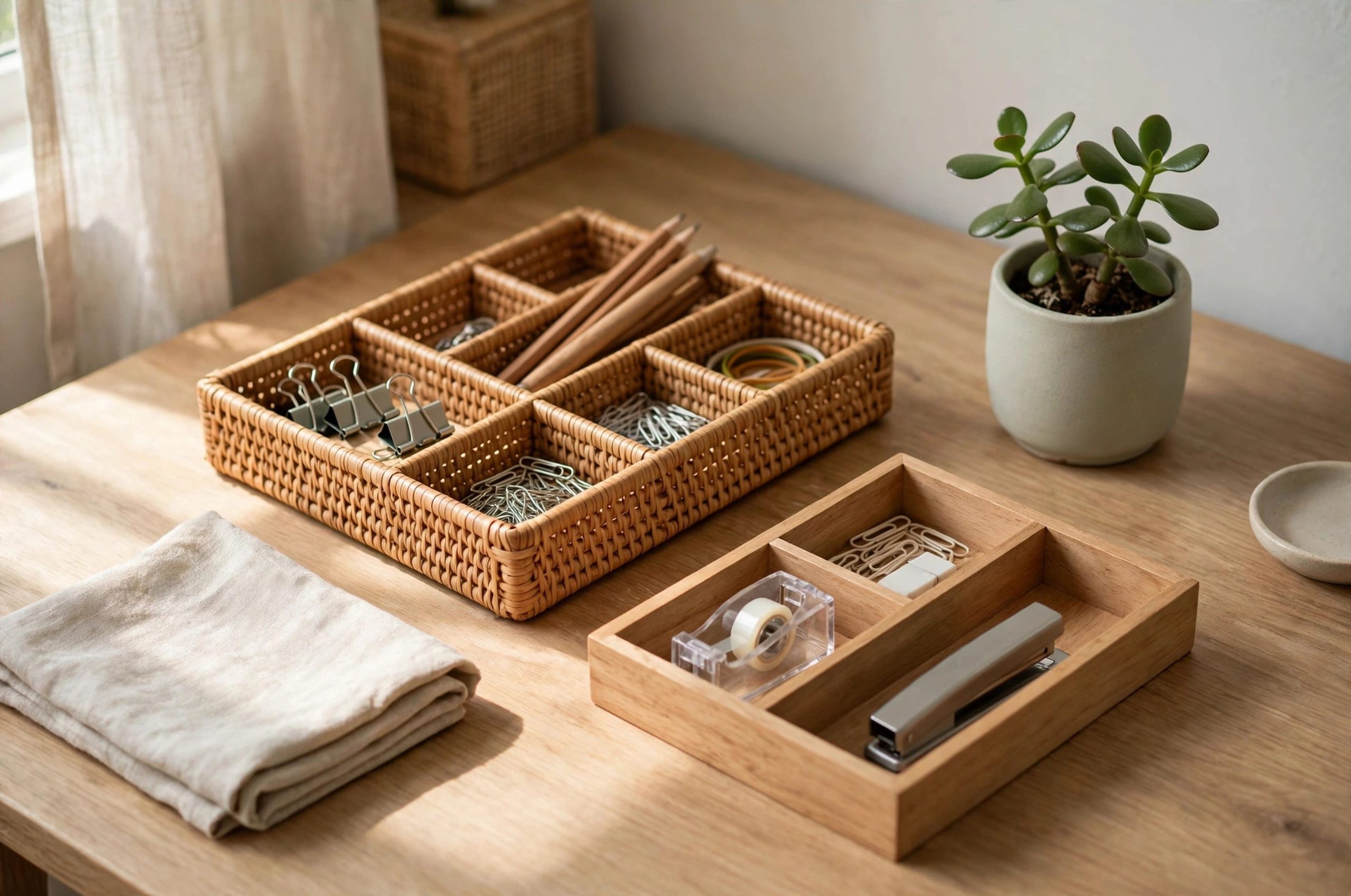
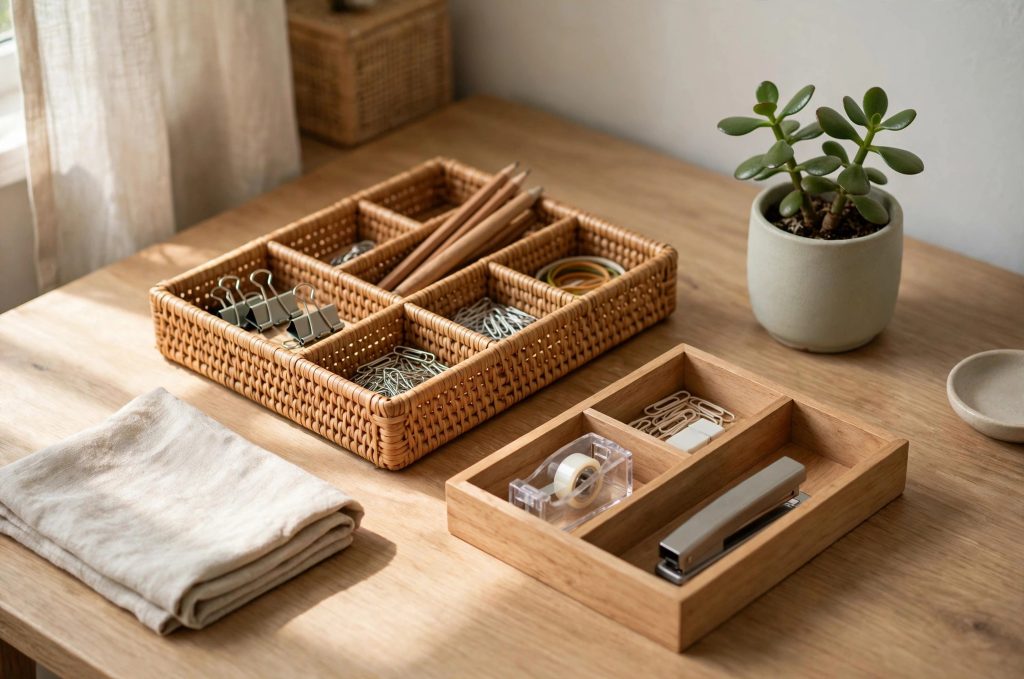
A well-chosen desk organizer set for a small office desk can also free up the space behind your monitor, so the area around you feels open rather than crowded.
Clear the clutter, keep the calm
The key to feng shui desk is choosing the right approach for your space and budget.
With a little planning, feng shui desk can fit even a busy schedule.
Clutter is the enemy in feng shui. Piles of paper and random gadgets create visual noise. Your eyes keep catching on them. Your mind keeps a small running list of everything unfinished.
Do a real reset. Take everything off the desk. Put back only what you use every day: computer, lamp, notebook, pen, water. Give everything else a home in a drawer, tray, or shelf. A simple two-minute tidy at the end of the day keeps the reset working (Informed Investor, n.d.).
The old rule still works: a place for everything, and everything in its place. When the desk is clear, the mind has less to sort. Feng shui calls this letting chi flow. You can just call it peace.
If your desk is small, a small desk with a built-in bookshelf for students style unit gives papers and books a place to live off the surface. A home office bookshelf with a desk combo unit does the same job in a bigger room.
Let light come from the side
With a little planning, feng shui desk can fit even a busy schedule.
Before you start, it helps to understand how feng shui desk works in real homes.
Natural light helps mood and focus. But light straight behind your screen creates glare, and light straight in your eyes causes squinting. Feng shui favors balanced light, and modern guides agree: the best setup puts the window to your side.
Ideal Home quotes interior designers who suggest placing the desk in front of a window for distance viewing, but keeping the window behind the screen to cut glare. Engineer Fix makes the stronger case for the perpendicular setup, with the window at ninety degrees to your line of sight, so light washes across the desk evenly without fighting the screen.
If the window sits behind you, your screen becomes a mirror. If it sits in front of you, your eyes must adjust between bright glass and dim screen all day. Side light avoids both problems. Add a sheer curtain to soften harsh sun during peak hours.
Balance the five elements
Before you start, it helps to understand how feng shui desk works in real homes.
A good plan for feng shui desk saves time, money, and frustration.
Feng shui works with five elements: wood, fire, earth, metal, and water. You do not need to study them deeply. Just check whether your desk has a little of each.
- Wood: a plant, a wooden tray, a bamboo pen cup. Wood stands for growth.
- Fire: a small lamp, a red accent, a candle. Fire stands for energy and drive.
- Earth: a stone, a ceramic mug, warm tan colors. Earth stands for steadiness.
- Metal: a metal lamp base, a tidy frame, white or gray tones. Metal stands for order.
- Water: a small fountain, a blue accent, a glass of water. Water stands for flow and ideas.
Healthline lists these same five elements and suggests simple ways to add each one, from a moving-water feature to a metal desk lamp, in its feng shui office tips. A tiny desktop fountain covers water and adds soft background sound. One live plant covers wood and freshens the air.
Keep it light. A desk crowded with objects breaks the calm you are trying to build.
Choose colors that settle you
A good plan for feng shui desk saves time, money, and frustration.
For most people, feng shui desk comes down to a few smart choices.
Color affects mood. Feng shui assigns meanings to colors, but you can simply pick tones that feel restful to you.
Soft greens and blues encourage calm focus. Warm beiges and creams feel steady and welcoming. A touch of warm yellow or orange in a small accent can lift energy without shouting. Verum Contracting notes that earthy tones like beige and soft green create a calming backdrop for thought, while small vibrant accents stimulate creativity.
Avoid a whole desk in harsh red or neon colors. A little red goes far. If your walls are already painted a strong color, balance them with neutral desk accessories.
Mind the "poison arrows"
For most people, feng shui desk comes down to a few smart choices.
If you are new to feng shui desk, start with the simplest option and build from there.
Feng shui warns against sharp corners and edges pointing at you, called poison arrows. A bookshelf corner aimed at your chair. An open file cabinet edge. A jutting shelf at head height.
You do not need to fear them. Just soften them. Move the chair a few inches. Drape a plant in front of the sharp edge. Round the corner with a cloth or a curved object. All Remote Jobs suggests using plants or screens to soften sharp angles near the workstation.
Also watch what sits above you. A heavy shelf directly over your head can feel oppressive. Move it, or move the desk. Open space above the desk lets ideas breathe.
Keep the area in front open
If you are new to feng shui desk, start with the simplest option and build from there.
Feng shui calls the space in front of your desk the "bright hall." It should feel open, not blocked. Dezctop's feng shui desk placement guide advises keeping an open, uncluttered space in front of the desk so energy, and your sense of possibility, has room to gather.
In plain terms: do not face a wall six inches from your nose. Leave visual breathing room. If you must face a wall, hang a picture with depth, a landscape or a horizon, so your eyes have somewhere to go during thinking breaks.
A document holder for typing at your desk keeps papers upright and off the surface, which helps keep that foreground clear.
Add life, not noise
When it comes to feng shui desk, getting the details right makes all the difference.
A living plant on or near the desk is one of the easiest feng shui wins. Plants add the wood element, soften hard office edges, and give your eyes a rest from the screen. Pick something tough: a pothos, a snake plant, a small peace lily. All of them forgive missed waterings.
Skip noisy gadgets on the desk itself. A buzzing phone, a ticking clock, a rattling fan all chip away at calm. Put the phone on silent and face down. Move the loud stuff to a shelf.
Colorado State University's ergonomics guide makes the same point from the health side: the air, light, and noise of your workspace shape your comfort as much as the chair does, and small fixes like a fan or a window crack can change the feel of the whole day.
Mark the start and end of work
Many homeowners find that feng shui desk is easier than they expected once they know the basics.
One of the hardest parts of remote work is that the office never closes. The desk sits there all evening, glowing softly, pulling your attention.
Feng shui values clear boundaries. Give your workday a beginning and an end with small rituals. Open the blinds when you start. Close the laptop and clear the desk when you stop. Some people lay a cloth over the desk or turn the chair to the wall. It sounds small. It works.
If your desk lives in a shared room, a folding screen or even a tall plant can mark the edge of "the office." When the screen closes, work is done.
A simple weekend reset plan
You can feng shui your desk in one afternoon. Work in this order:
1. Move the desk to the command position, or as close as the room allows. 2. Put something solid behind your chair. 3. Strip the desk to daily essentials only. 4. Shift the desk so window light comes from the side. 5. Add one plant and one small water or metal accent. 6. Soften any sharp corners pointed at your seat. 7. Open up the space in front of the desk. 8. Set a start-of-day and end-of-day ritual.
None of this costs much. A mirror, a plant, a tray, and an hour of moving furniture. What you get is a desk that stops nagging you. The workday feels calmer because the space finally makes sense. With these steps, feng shui desk stays simple and safe.
References
All Remote Jobs. (n.d.). Setting up your home office as per feng shui: Ideas, tips, and more. https://allremote.jobs/blog/Setting-up-your-home-office-as-per-Feng-Shui-Ideas-tips-and-more
Colorado State University. (n.d.). Ergonomic tips for working from home. https://source.colostate.edu/ergonomic-tips-for-working-from-home/
Dezctop. (n.d.). Feng shui guide to office desk placement and setup. https://dezctop.com/blog/setup-inspirations/feng-shui-desk-placement
Elfenshui. (n.d.). How to feng shui your home office for productivity. https://elfengshui.org/home-office-feng-shui-productivity/
Engineer Fix. (n.d.). Should you put your desk in front of a window? https://engineerfix.com/should-you-put-your-desk-in-front-of-a-window/
Healthline. (n.d.). Feng shui office: What to do, what to avoid. https://www.healthline.com/health/feng-shui-tips-for-your-office
Ideal Home. (n.d.). Where to position a desk in a home office to boost productivity. https://www.idealhome.co.uk/home-office/where-to-position-a-desk-in-a-home-office
Informed Investor. (n.d.). A clearer desk for a clearer mind – five feng shui tips for WFH. https://informedinvestor.co.nz/a-clearer-desk-for-a-clearer-mind-five-feng-shui-tips-for-wfh/
Verum Contracting. (n.d.). Home office remodel: Transform with feng shui magic. https://www.verumcontractinginc.com/post/unleash-your-productivity-transform-your-home-office-with-feng-shui-magic
Was this guide helpful?

About My Garden US
The My Garden US editorial team writes practical, in-depth home and garden guides for American homeowners — tested advice, no fluff.
You May Also Like

The Best Home Office Setup for Software Developers
March 28, 2026 22 views
Best Task Lighting for Home Office Desk Setup
June 14, 2026 15 views
Ergonomic Laptop Stand for Couch and Bed: A Buyer Guide
September 26, 2026 24 views