---
Table of Contents
Table of Contents
Old houses wear their history on the walls. Under the paint in a hallway or bedroom you may find layer upon layer of vintage wallpaper, each one a decade of someone's taste. Florals from one era, stripes from another, all glued down with paste that has had half a century to harden. Peeling it dry is a fantasy. Soaking it takes forever. Here is what to know about steaming off vintage wallpaper before you start.
A wallpaper steamer is the tool that ends the stalemate. Hot steam melts the old adhesive so the paper lifts off in sheets. On plaster walls, which most old houses have, steaming is often the fastest and cleanest method available. This guide covers how to steam off vintage wallpaper safely, what to watch out for in an old house, and how to get the walls ready for paint when the paper is gone.
Steaming Off Vintage Wallpaper: Why Steam Works on Old Wallpaper
When it comes to steaming off vintage wallpaper, getting the details right makes all the difference.
Many homeowners find that steaming off vintage wallpaper is easier than they expected once they know the basics.
Wallpaper paste is water-soluble. That is true whether it was hung recently or decades ago. The problem with vintage paper is that the top layers seal the paste away from moisture. Painted-over wallpaper is worse. Nothing soaks through a coat of paint.
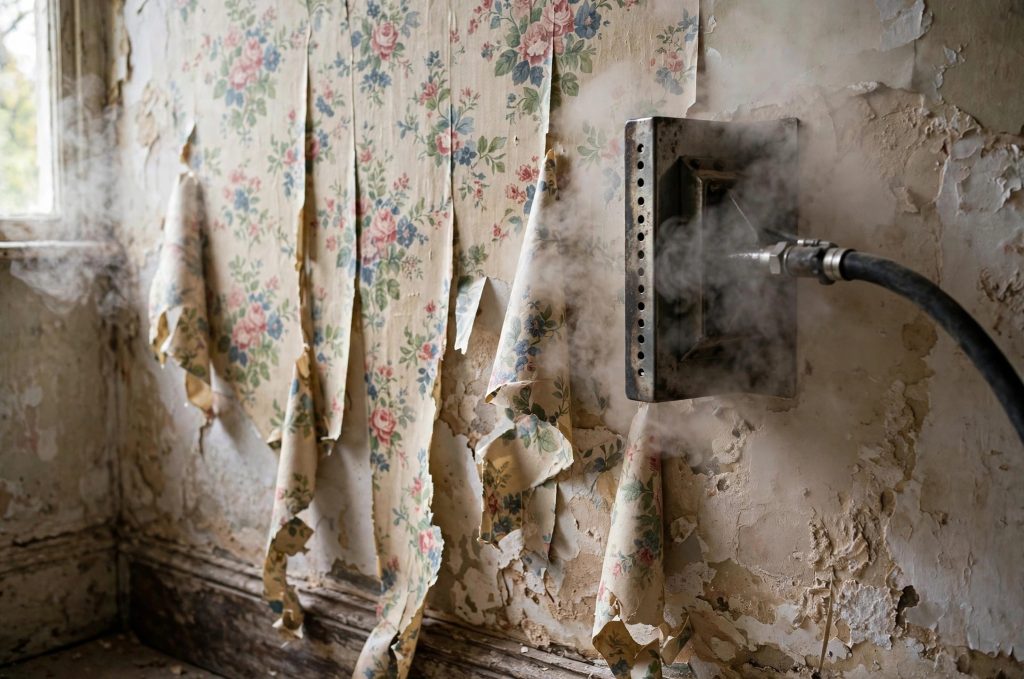
Steam solves this by driving heat and moisture through the paper from the outside. The steam plate presses against the wall, heat softens the paste, and condensation wets it. After ten to fifteen seconds, the paper loosens and a scraper slides underneath. Steam melts the adhesive through scored holes in the paper, which is why scoring the surface first makes such a difference.
Steaming is especially good on plaster walls. Plaster is hard and takes heat well, unlike drywall, whose paper face can bubble and tear under a steamer. If your old house has plaster walls, the steamer is working with you, not against you. On wet plaster walls, steamers are the tool experienced strippers reach for when layers of ancient paper refuse every gentler method.
Safety First in an Old House
Many homeowners find that steaming off vintage wallpaper is easier than they expected once they know the basics.
The key to steaming off vintage wallpaper is choosing the right approach for your space and budget.
Old houses hide hazards in their walls. Take these seriously before you start.
Lead paint. Paint under or over old wallpaper in an older home may contain lead. Steaming does not create the same dust as sanding, but scraping can disturb paint layers. If you suspect lead, get the paint tested first and follow EPA guidance for the work.
Asbestos. Some vintage vinyl wallpapers and their adhesives contain asbestos. Do not steam or scrape suspect vinyl until it has been tested. If the test is positive, hire an abatement professional.
Electrical. Steam and water near outlets and switches are a shock risk. Turn off the circuits for the room at the breaker. Tape over outlets and switches with waterproof tape.
Burns. A wallpaper steamer is a kettle that produces a continuous jet of steam. The plate, the hose, and the drips are all hot enough to scald. Wear gloves, long sleeves, and eye protection. Keep the hose straight so it cannot kink and blast steam sideways.
Plaster damage. Steam held too long in one spot can soften old plaster or pop loose patches. Keep the plate moving and never park it on the wall while you answer the phone.
What You Will Need
The key to steaming off vintage wallpaper is choosing the right approach for your space and budget.
With a little planning, steaming off vintage wallpaper can fit even a busy schedule.
- A wallpaper steamer. You can buy one for the price of a few hours of a pro's time, or rent one from a tool rental shop. Either way, get the largest water tank you can. Refilling a small tank every twenty minutes gets old fast.
- A wallpaper perforator, sometimes called a scoring tool. It rolls hundreds of tiny holes in the paper so steam can reach the paste.
- A 3-inch stripping knife or wallpaper scraper. A plastic scraper is gentler on plaster than a steel one.
- Drop cloths, painter's tape, and a bucket for the stripped paper.
- A spray bottle of hot water for stubborn spots.
- Sugar soap or a TSP substitute, sponges, and clean water for the final wash.
Fill the steamer's tank with hot water from the tap. It reaches steaming temperature faster than starting from cold, which saves you the long initial wait.
A little planning makes steaming off vintage wallpaper much easier.
The Steaming Process Step by Step
With a little planning, steaming off vintage wallpaper can fit even a busy schedule.
Before you start, it helps to understand how steaming off vintage wallpaper works in real homes.
Step 1: Protect the room. Lay drop cloths over the entire floor. Steamed wallpaper falls in wet sheets, and dried paste sticks to floors like glue. Tape the cloths to the baseboards. Move furniture out or cover it completely.
Step 2: Score the paper. Run the perforator over the whole wall in overlapping passes. Press firmly enough to puncture the paper but not so hard that you gouge the plaster. On painted-over paper, score twice. This step is tedious and it is also the step that makes everything else work.
Step 3: Start at the bottom. Hold the steam plate flat against the wall for ten to fifteen seconds. Working from the bottom up lets the rising steam pre-heat the paper above, which speeds the whole job. You will feel the paper loosen under the plate.
Step 4: Scrape as you go. With one hand on the steamer and the scraper in the other, peel the loosened paper downward in strips. Keep the scraper flat against the wall and push with even pressure. If a section resists, steam it again for a few more seconds rather than forcing it. Forcing the scraper digs into the plaster.
Step 5: Work in sections. Steam a patch, scrape it, move on. Do not steam a whole wall and then start scraping. The paste re-hardens as it cools, and you will steam everything twice.
Step 6: Clear as you go. Drop stripped paper straight into the bucket or onto the drop cloth. Do not leave wet paper lying on the floor. Once the paste dries, it bonds to whatever it touches.
Dealing With Multiple Layers
Before you start, it helps to understand how steaming off vintage wallpaper works in real homes.
A good plan for steaming off vintage wallpaper saves time, money, and frustration.
Old houses rarely have one layer of wallpaper. Three, four, or five layers are common, sometimes with paint between them. The good news is that steam works on all of them. The bad news is that you work through them one layer at a time.
Peel off whatever comes off dry first. Many top layers of vinyl or coated paper pull away from their backing with a firm tug, leaving the backing paper stuck to the wall. Score the backing and steam it. Each layer takes less time than the one before it because the steam has less to penetrate. Removing one layer at a time is the practical approach when the wall holds a history of papers.
Borders are their own special misery. They were often hung with stronger adhesive and they sit at the top of the wall where the steamer is hardest to hold. Experienced DIYers favor steamers over chemical strippers for the toughest old paper, but even they score borders well and work in short bursts. Be patient.
When Steam Is Not the Answer
A good plan for steaming off vintage wallpaper saves time, money, and frustration.
For most people, steaming off vintage wallpaper comes down to a few smart choices.
Steam is powerful, but it is not always the right first move. Try the gentler methods first and escalate only as needed.
Dry peeling. Some papers, especially modern strippable ones, pull off cleanly with no water at all. Always try a corner first.
Hot water and vinegar. A one-to-one mix of hot water and white vinegar in a spray bottle, left to soak for ten to fifteen minutes, loosens many traditional papers. This is the gentlest effective method on plaster and it costs almost nothing.
Enzyme strippers. Products made for wallpaper removal dissolve paste chemically. They work well on stubborn backing and paste residue, and they are less risky than steam on delicate walls.
Steam. The heavy tool for plaster walls, multiple layers, and painted-over paper. Highest on effectiveness, highest on risk to the wall. Steam beats chemical strippers on old plaster but demands more care because of the heat and moisture involved.
One caution from experience: on drywall, steam can destroy the wall surface. If your old house has had drywall installed in some rooms, test in a hidden spot first and keep the plate moving. When in doubt, use water and stripper on drywall and save the steamer for the plaster.
After the Paper Is Gone
For most people, steaming off vintage wallpaper comes down to a few smart choices.
The wall is not ready for paint yet. Paste residue will ruin a paint job. It shows through as shiny patches and it can make new paint peel.
Wash the walls with a sugar soap solution and a sponge, then rinse with clean water. The wall should feel clean, not slimy, when you run your hand over it. Let it dry completely, which can take a day or two in a cool old house.
Inspect the plaster. Old walls often have cracks, popped patches, and rough spots that the wallpaper was hiding. Fill small cracks with patching compound, sand smooth when dry, and spot-prime the repairs. For larger damage, a skim coat of joint compound gives a fresh surface. A clothes steamer can even substitute for a wallpaper steamer on small areas, but for whole rooms the real tool is worth it.
Prime the whole wall before painting. Bare plaster and patching compound absorb paint at different rates, and primer evens that out. A stain-blocking primer also seals any ghost of old paste that survived the wash. Then paint as normal, and enjoy walls that are yours for the first time in decades.
If you like the look of pattern but not the removal ordeal, consider removable wallpaper for the next round. It peels off cleanly when tastes change. For a different kind of texture, faux brick wall panels give an old-house feel with none of the paste. And if the dining room needs a pro touch after your DIY prep, our wallpaper installer guide explains what to ask for. Once you try it, steaming off vintage wallpaper gets easier each time.
References
If you are new to steaming off vintage wallpaper, start with the simplest option and build from there.
- Domain.com.au. (n.d.). Stripping old wallpaper. http://www.domain.com.au/news/stripping-old-wallpaper-20120524-1z74g/
- Sydenhams. (n.d.). Wallpaper removal: Mastering the art of stripping down. https://www.sydenhams.co.uk/blog/wallpaper-removal-mastering-the-art-of-stripping-down
- The Free Library. (n.d.). Get stripping: Steam your way to smooth, paper-free walls. https://www.thefreelibrary.com/Get+stripping%3B+Steam+your+way+to+smooth%2C+paper-free+walls.+Julia+Gray...-a0253031138
- Ironing Lab. (n.d.). How to easily remove wallpaper with a clothes steamer. https://ironinglab.com/how-to-remove-wallpaper-with-a-clothes-steamer/
- Meltflex AI. (n.d.). How to remove wallpaper and glue: The method for each type. https://www.meltflexai.com/blog/how-to-remove-wallpaper
- GardenWeb. (n.d.). Wallpaper removal from old plaster. https://www.gardenweb.com/discussions/2468057/wallpaper-removal-from-old-plaster
- DoItYourself.com. (n.d.). Wallpaper removal: Steam vs. others. https://www.doityourself.com/forum/walls-ceilings/88542-wallpaper-removal-steam-v-others.html
- WoodNet Forums. (n.d.). Wallpaper removal: Best spray/goop? https://forums.woodnet.net/showthread.php?tid=7083382&pid=7083414
When it comes to steaming off vintage wallpaper, getting the details right makes all the difference.
Many homeowners find that steaming off vintage wallpaper is easier than they expected once they know the basics.
The key to steaming off vintage wallpaper is choosing the right approach for your space and budget.
Was this guide helpful?

About My Garden US
The My Garden US editorial team writes practical, in-depth home and garden guides for American homeowners — tested advice, no fluff.
You May Also Like

Cedar Siding Stain Colors for USA Homes: A Complete Guide
August 3, 2026 19 views
Spray Painting Kitchen Cabinets Cost Near Me: A Plain Guide to Prices and Hiring
September 26, 2026 21 views
Whitewash Brick Fireplace Cost Near Me
March 12, 2026 15 views