---
Table of Contents
Table of Contents
- Store Kids Art Projects without Clutter: Set Up a Rotating Gallery
- Photograph Everything Before It Goes
- Keep a Small Favorites Bin
- Make a Photo Book Each Year
- Turn Art Into Useful Things
- Handle the Guilt of Letting Go
- Go Digital With a Simple Photo Setup
- Protect Keepers From Damage
- A System That Runs Itself
- References
Kids make art the way trees make leaves: constantly, joyfully, and in overwhelming volume. Every day brings home another painting, another sculpture made of glued-together boxes, another drawing that must be saved forever. The love is real. The paper piles are also real. The trick is to store kids art projects without clutter by giving the art a system: a place to be seen, a place to be kept, and a kind way to let the rest go. Here is how to store kids art projects without clutter without fuss.
You do not have to save everything to honor your child's creativity. What you need is a rotation for display, a simple archive for favorites, and a habit of photographing the rest.
Store Kids Art Projects without Clutter: Set Up a Rotating Gallery
When it comes to store kids art projects without clutter, getting the details right makes all the difference.
Many homeowners find that store kids art projects without clutter is easier than they expected once they know the basics.
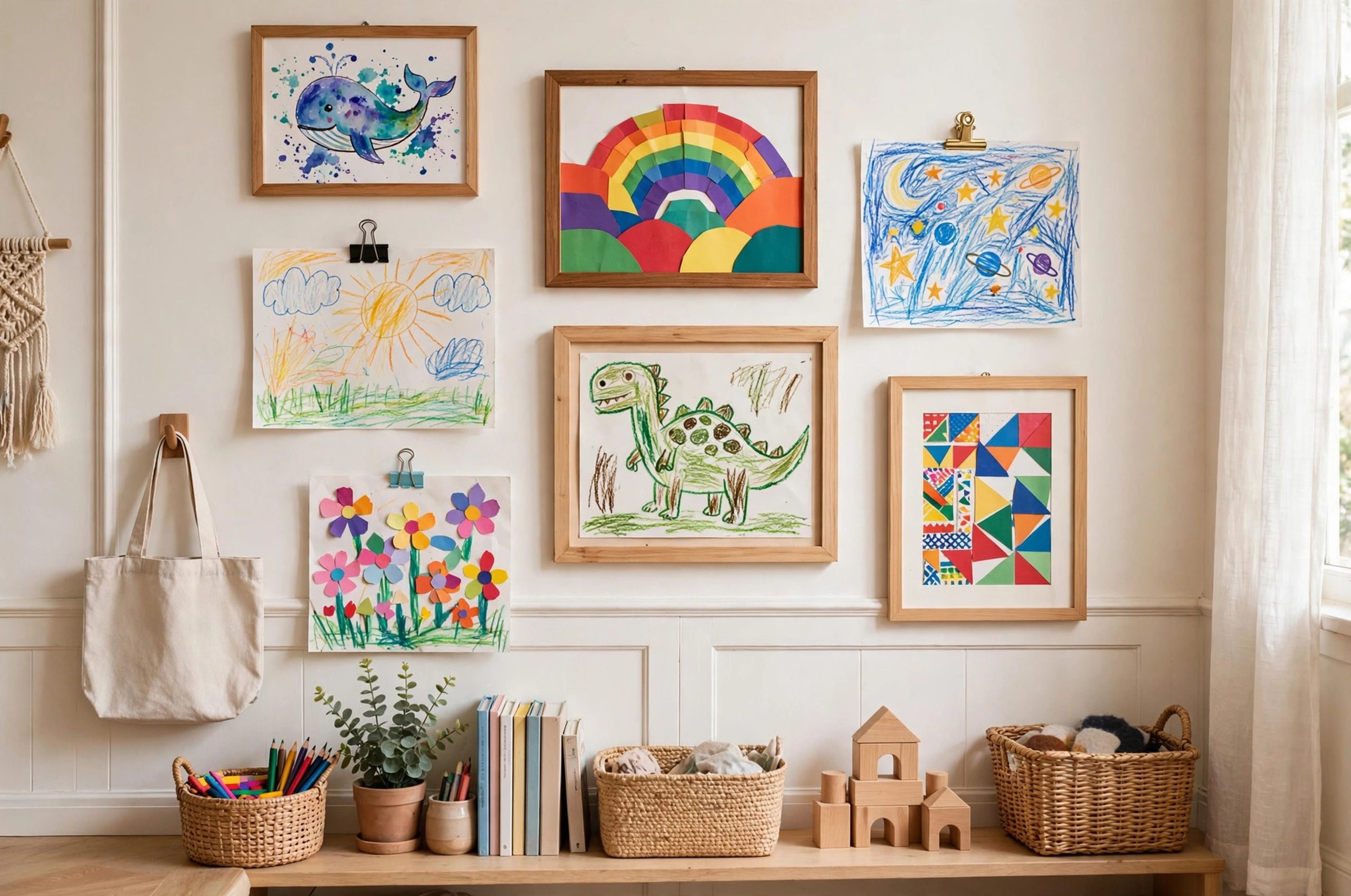
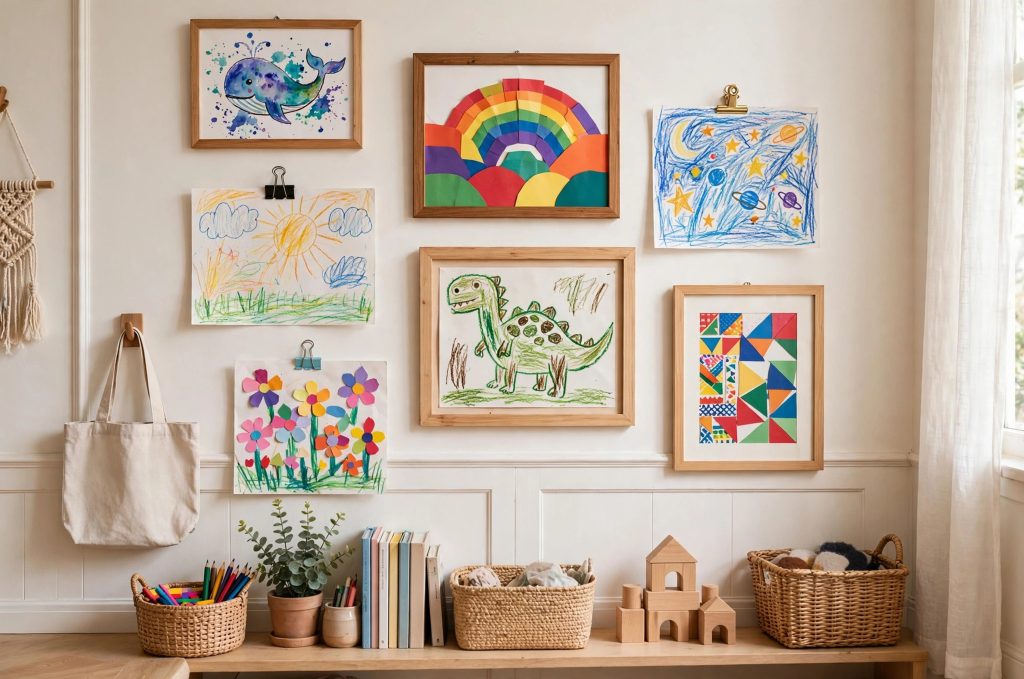
Give art one defined display zone and stick to it. A wire with clips, a row of clipboards, a corkboard, or a set of simple frames all work. The key word is rotating. When a new piece comes home, it goes up, and an older piece comes down. One in, one out.
This keeps the display fresh and the walls calm. Seattle's Child suggests open frames strung with wire and clothespins, or painted clipboards hung in a row, both of which make swapping art a two-minute job. Let the child choose what goes up. Choosing builds pride, and pride makes the gallery feel like theirs.
Keep the gallery to one wall or one hallway. When art spreads to every room, it stops looking like a display and starts looking like clutter. Boundaries help everyone.
Photograph Everything Before It Goes
Many homeowners find that store kids art projects without clutter is easier than they expected once they know the basics.
The key to store kids art projects without clutter is choosing the right approach for your space and budget.
A photo costs nothing and takes no shelf space. Before a piece leaves the gallery, snap a clear photo of it in good light. Include the child holding it if you like. These photos become the real archive.
Organize the photos in a folder per child, with subfolders per school year or age. Back them up like any family photos. LifePhoto's art preservation guide recommends digitizing the collection as the core strategy, then using the photos for albums, gifts, and keepsakes. Three-dimensional projects, which are the hardest to store and the first to break, are perfect subjects for photography.
Write the child's name and age on the back of physical pieces you keep, along with a note about what the drawing shows. Future you will thank present you.
Keep a Small Favorites Bin
The key to store kids art projects without clutter is choosing the right approach for your space and budget.
With a little planning, store kids art projects without clutter can fit even a busy schedule.
Not every piece needs a photo-only fate. Keep one bin per child for the true favorites: the first recognizable drawing, the handmade gift, the piece they are proudest of. Use a flat plastic bin, an artist's portfolio case, or a large mailing tube for oversized work. Label it with the child's name.
At the end of each school term, sit down together and pick the best pieces to keep. Make it a game: choose the top ten. Compliment the work, talk about memories, and let the child decide. Extra Space Storage's shared room guide describes a similar two-part approach: a changeable art gallery for current favorites and tidy storage for the keepers.
One bin per child per stage of childhood is plenty. When the bin is full, something must graduate to photo-only status. The limit is what keeps the system working.
Make a Photo Book Each Year
With a little planning, store kids art projects without clutter can fit even a busy schedule.
Before you start, it helps to understand how store kids art projects without clutter works in real homes.
A printed photo book turns a phone full of art photos into a keepsake the family actually looks at. At the end of each school year, pick the best shots, add the child's quotes about the pieces, and order a simple book. It takes an afternoon and costs less than a night out.
Photo books solve the grandparent problem too. Instead of mailing stacks of originals, send a book. Grandparents get the art, you keep the shelf space. Vocal Media's clutter-free art guide lists photo books as the best low-space way to preserve a child's whole body of work.
Turn Art Into Useful Things
Before you start, it helps to understand how store kids art projects without clutter works in real homes.
A good plan for store kids art projects without clutter saves time, money, and frustration.
Some pieces deserve a second life beyond the bin. Print favorite drawings on mugs, tote bags, puzzles, or throw pillows as gifts for family. Scan a drawing and use it as a phone wallpaper or a rotating computer screensaver. Frame one standout piece per year for the hallway.
These uses honor the art without storing the original. The child sees their work valued in daily life, which matters more than a box in the attic. The Art Pantry's display guide suggests choosing one piece for permanent display each year while rotating the rest, a balance that keeps the home personal without letting paper take over.
Handle the Guilt of Letting Go
A good plan for store kids art projects without clutter saves time, money, and frustration.
Throwing away a child's drawing can feel wrong. Reframe it: you are not discarding the creativity, you are curating it. The photo preserves the image. The favorites bin preserves the best originals. The rest has done its job. It was made, it was admired, and now it can go.
Involve the child in the sorting. Kids are often less attached than parents expect, especially when they helped choose the keepers. Thank each piece as it goes, or hold a little "art show" before recycling day. Rituals make letting go feel respectful instead of sneaky. ProKerala's guide to displaying kids' art notes that a simple rotation system, where children choose which pieces get displayed, makes the whole process feel fair and fun.
Go Digital With a Simple Photo Setup
For most people, store kids art projects without clutter comes down to a few smart choices.
Good photos make the digital archive worth keeping. You do not need fancy gear. Tape a large sheet of white paper to a wall as a backdrop, lay the art flat on it, and photograph from straight above or straight on in daylight. Turn off the flash to avoid glare. For 3D projects like clay figures or glued-together boxes, set them on a plain table and take shots from two or three angles.
Name the files clearly: child-name, age, and a short title. A folder sorted by name and age becomes a timeline of your child's creativity that you can scroll through in minutes. Share the folder with grandparents so they can enjoy the art without you mailing boxes of paper across the country.
If you want to go further, scan the flattest pieces at a local library or with a phone scanning app. Scans capture truer colors than photos and print better in photo books. Either way, the digital copy outlives the paper, takes no space, and cannot be damaged by a spilled drink. For fragile or fading pieces, digitizing is the kindest form of preservation there is.
Protect Keepers From Damage
If you are new to store kids art projects without clutter, start with the simplest option and build from there.
The pieces you save deserve a little care. Store originals flat in acid-free folders or an artist's portfolio so colors do not fade and paper does not yellow. Keep the bin in a cool, dry spot, not a damp basement or a hot attic. Sunlight fades marker and crayon fast, so keep the favorites bin closed and out of direct sun.
For extra-special pieces, slip them into clear sleeves inside a binder. The child can flip through their own art book whenever they like, and the pages stay clean. Label each sleeve with the age and a one-line note about the piece. Years from now, those little notes will be the best part.
A System That Runs Itself
When it comes to store kids art projects without clutter, getting the details right makes all the difference.
Put the pieces together into a weekly habit:
1. New art arrives: It goes on the fridge or in the inbox tray for one week of glory. 2. Weekly swap: The child picks what moves to the gallery wall. The replaced piece gets photographed. 3. After the photo: The piece goes to the favorites bin or the recycling pile, per the child's choice. 4. End of term: Sort the favorites bin together, keep the top ten, and order the photo book.
The A Life More Organised guide to children's art recommends exactly this one-in-one-out rhythm, plus writing the date on the back of keepers. Small, steady habits beat an annual paper avalanche.
Pair the system with good general storage. Our kids wall decal growth chart marks milestones without taking space, nursery wall letters personalize the gallery wall, and a kids bookshelf with toy bins keeps supplies corralled. A toddler reading nook canopy tent gives young artists a cozy corner to create in. For the emotional side, HealthyChildren.org's guide to positive experiences for toddlers notes that displaying a child's creations shows them their work is valued, which fuels the desire to keep creating. Once you try it, you can store kids art projects without clutter with ease.
References
- Seattle's Child. (n.d.). End-of-year art overwhelm: Tips for storing, displaying, and making keepsakes of your child's art. https://www.seattleschild.com/end-of-year-art-overwhelm-tips-for-storing-displaying-and-making-keepsakes-of-your-childs-art/
- Extra Space Storage. (n.d.). 16 shared room ideas for your kids bedroom. https://www.extraspace.com/blog/home-organization/baby-toddler-shared-room-ideas/
- ProKerala. (n.d.). Fridge art by kids: How it can encourage creativity. https://www.prokerala.com/kids/fridge-art-by-kids-why-displaying-their-artwork-matters.htm
- A Life More Organised. (n.d.). Organising and storing kids artwork. https://www.alifemoreorganised.co.uk/post/top-tips-for-organising-childrens-art
- Vocal Media. (n.d.). Creative ways to preserve and display your kids' art without the clutter. https://vocal.media/families/creative-ways-to-preserve-and-display-your-kids-art-without-the-clutter
- The Art Pantry. (n.d.). Displaying children's artwork. https://www.theartpantry.com/displaying-childrens-artwork/
- LifePhoto. (n.d.). How to preserve your children's artwork. https://lifephoto.com/site/blog/how-to-preserve-children's-artwork
- HealthyChildren.org. (n.d.). Creating positive experiences for toddlers and preschool-age children. https://www.healthychildren.org/English/healthy-living/emotional-wellness/Building-Resilience/Pages/Creating-Positive-Experiences-for-Toddlers-&-Preschool-Age-Children.aspx
Was this guide helpful?

About My Garden US
The My Garden US editorial team writes practical, in-depth home and garden guides for American homeowners — tested advice, no fluff.
You May Also Like

Nursery Diaper Caddy Organizer Portable: A Complete Guide
October 4, 2026 21 views
Best Kids Bed Rail for Top Bunk Safety: A Parent's Guide
February 17, 2026 19 views
Toddler Reading Nook Canopy Tent for Bedroom
September 28, 2026 19 views