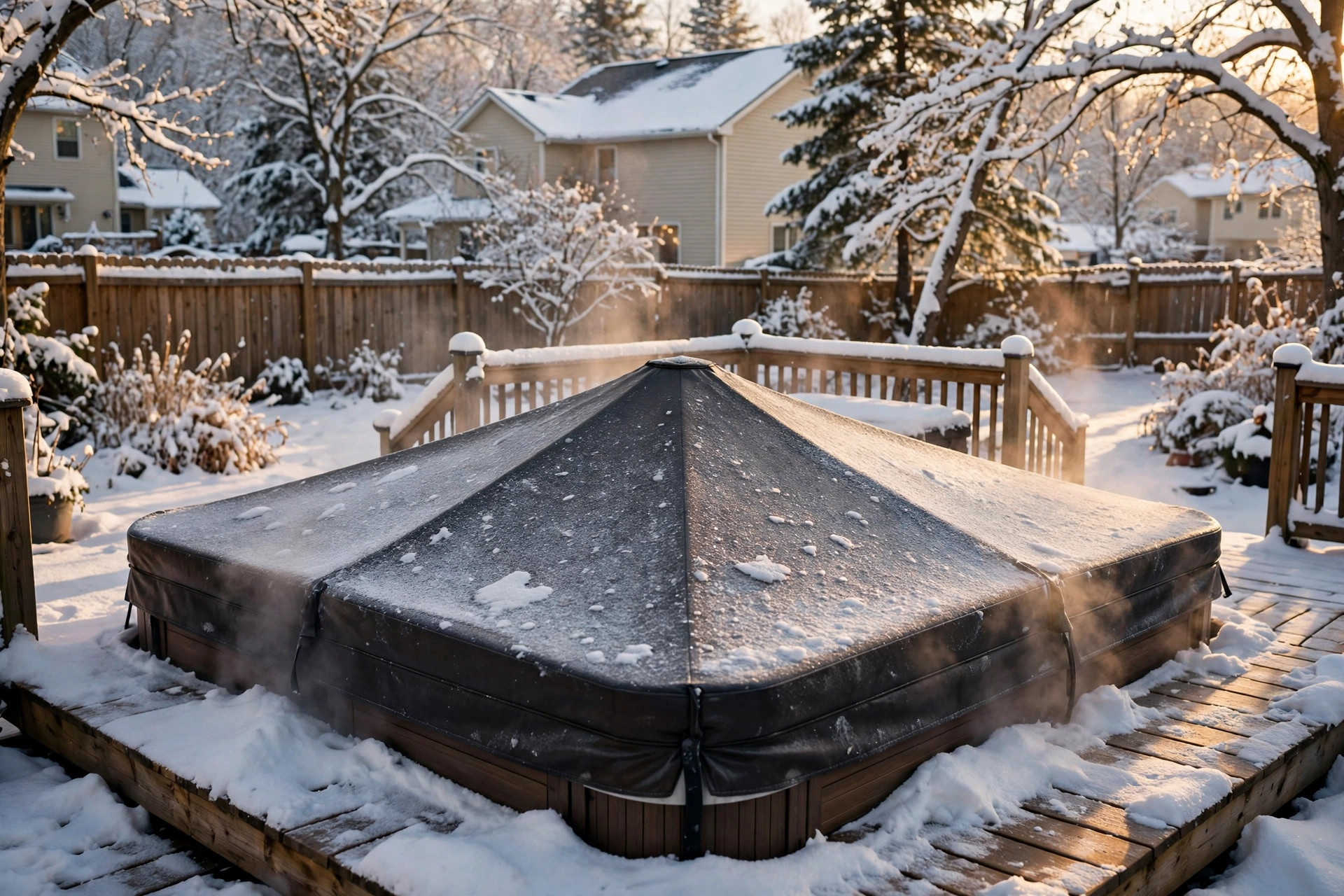

A hot tub in winter is one of the great comforts of a cold-climate home. Stepping into warm water while snow falls is a pleasure many owners look forward to all year. Yet snow is heavy. It is also the main cause of cover failure. The best hot tub cover for snow load does two jobs at once. It holds heat in the water so the heater works less. It also stands up under heavy snow without bending, cracking, or soaking through. Shoppers who compare these two jobs before they buy save money and trouble later.
Most covers fail in the coldest months. A flat cover collects snow in the middle and sags. A thin cover soaks up meltwater and grows heavy. A cover with weak straps can slide off in a storm. Each failure costs money. The spa loses heat, the heater runs longer, and in the worst case the owner must buy a new cover in the middle of the season. A little study before winter prevents all of this.
This guide explains what to look for when you shop. You will learn how taper, foam density, and seams affect strength. You will see the main types of covers on the market. You will also find plain advice on cost, care, safety, and the questions buyers ask most. With the right choice, one cover can serve your spa for five or more winters.
Why Snow Load Matters
Snow looks light as it falls. One cubic foot of fresh snow can weigh five to ten pounds. Wet snow can weigh twenty pounds or more. A seven-foot cover can hold hundreds of pounds of snow after a single storm. That is more than the weight of three grown adults standing on the cover at one time.
Many standard covers are rated for only about two hundred pounds. In regions with light snow, that rating is enough. In the snow belt, from upstate New York through the Great Lakes to the mountain West, it is not. Owners in these areas need a cover with a true snow-load rating, not just a marketing claim. Home improvement retailers such as Home Depot and Lowe’s sell covers across the country, and the weight rating on the label is a good first thing to check.
There is also an energy question. A cover that sags lets steam escape around the edges. The water cools faster, and the heater runs longer to make up the loss. The U.S. Department of Energy offers advice on cutting hot tub energy use, and a tight, strong seal is one of the simplest steps a homeowner can take. A snow-rated cover is therefore an energy saver as well as a protector. It keeps the heat bill down all winter long.
What to Look for in a Snow-Rated Cover: Best Hot Tub Cover for Snow Load
Taper and Slope
Taper is the slope built into the cover. A tapered cover is thick in the middle and thinner at the edges. The slope lets snow slide off instead of sitting in a flat pool. A common taper is four inches at the center and two inches at the edge. For heavy snow country, look for five inches at the center and three inches at the edge. That steeper pitch sheds snow far better.
A flat cover may look much the same in the store. After the first storm, the difference is plain to see. The flat cover holds a white blanket across its middle. The tapered cover sheds most of it on its own. When you compare models, ask for the taper numbers. They are the best single sign of snow performance. A hot tub cover for heavy snow should always have a clear, stated taper.
Foam Density and Thickness
The core of most covers is foam board wrapped in a vapor barrier and a vinyl skin. Foam density is measured in pounds per cubic foot. Standard covers use 1.5-pound foam. Snow-rated covers often use 2-pound foam. Denser foam bends less under weight and soaks up less water over time.
Thickness works with density. A thick, dense core is stiff. A thin, light core flexes. Flex leads to sag, and sag leads to puddles of meltwater in the middle of the cover. Waterlogged foam is the reason many old covers weigh twice what they did when new. A thick plastic vapor barrier slows this process. Ask how the core is sealed. Heat-sealed seams hold up far better than taped seams, which loosen in the cold.
Seams, Hinges, and Straps
The hinge is the weak point of every folding cover. Snow piles up along the hinge line and presses down on the weakest part of the whole cover. Look for a hinge with double stitching and a rain flap that keeps water out. Some makers add a metal channel along the hinge for extra strength. It is a small detail that adds years of life.
Straps matter in storms. Wind straps with locks hold the cover down and keep children out. Four straps are standard. Six straps are better for open, windy yards. Check that the straps have real buckles, not thin plastic clips that crack in the cold. Spa care guides at Swim University explain how straps and locks protect both the cover and the people around the tub.
Types of Hot Tub Covers
The standard tapered foam cover is the most common choice. It comes in many sizes and fits most round, square, and rectangular spas. A good one costs a few hundred dollars and lasts three to five years with care. For mild winters, it is often enough.
Snow-rated covers are a step up. They use denser foam, steeper taper, and stronger hinges. They cost more, often five hundred to nine hundred dollars. In heavy-snow country, they pay for themselves. One snow-rated cover can outlast two standard covers, and it protects the heater from extra work the whole time.
Custom covers are made to the exact shape of the spa. Odd shapes, swim spas, and older models often need a custom fit. A tight fit keeps heat in and keeps wind out. Expect to wait two to four weeks for delivery, so order before the first snow.
Hard-top covers are the heavy-duty option. Some are made of molded plastic or aluminum panels. They hold the most weight but cost the most and need a strong lifter to move them. They suit owners who get several feet of snow each year and want the toughest lid made.
Whatever type you choose, a lifter makes daily use far easier. A cover lifter takes the weight off your back and keeps the cover off the ground, where it can soak up moisture. Before you buy one, read our roundup of the best hot tub cover lifter reviews to find a model that fits your spa and your space.
Cost and Price
Prices vary by size, density, and brand. Standard replacement covers run from about 250 to 450 dollars. Snow-rated covers run from about 500 to 900 dollars. Custom covers add 100 to 200 dollars more. Hard tops can pass 1,000 dollars. A lifter adds another 100 to 300 dollars but is worth the price in saved effort and longer cover life.
The price tag is only part of the cost. A weak cover that dies in two winters costs more over time than a strong cover that lasts six. A waterlogged cover also raises the power bill, because the heater must replace the heat that escapes. When you shop, think in cost per winter, not cost at the register. Specialty sellers such as Leslie’s and Pool Warehouse list covers by spa size, which makes price comparison simple.
Delivery matters too. A cover is large and light, so shipping is usually cheap. But a poor fit wastes heat every day for years. Measure the spa twice. Measure corner to corner, and note the corner radius on rounded tubs. A cover that is one inch too small will never seal right.
Care and Upkeep in Winter
A strong cover still needs care. After each storm, brush snow off with a soft broom or a plastic snow rake. Never use a metal shovel. One slip can cut the vinyl and let water into the foam. Never walk on the cover. Even a snow-rated cover is not a bridge, and one footstep can crack the core.
Keep the straps locked. Wind can lift one side of a cover and let cold air pour in. Check the straps each month. Sun and cold make them brittle over time, and a broken strap is a useless strap.
Treat the vinyl twice a year with a protectant made for spa covers. It slows cracking from sun and cold. Wipe the underside of the cover now and then to stop mold from growing in the damp warmth. A clean cover seals better against the shell.
Many owners add a floating thermal blanket under the cover. It cuts heat loss and keeps steam off the foam. Steam is what waterlogs covers from the inside, so the blanket attacks the problem at its source. It is a cheap upgrade that adds years of life.
If lifting the cover gets hard, take it as a warning sign. The foam may be waterlogged. A lifter helps with the weight, but it cannot fix soaked foam. When the cover feels twice as heavy as it did when new, start shopping for a replacement before it fails in a storm.
Safety
A cover is a safety device, not just a lid. The U.S. Consumer Product Safety Commission warns that hot tubs pose a drowning risk for small children. A locking cover is the first line of defense. Lock the straps every time you leave the tub. Do not rely on memory. Make it a habit, like locking the front door at night.
Snow adds a second danger. A sagging cover can drop a child or a pet into the water if it gives way under weight. A snow-rated cover with strong straps lowers this risk a great deal. Keep the area around the tub clear of deep drifts so no one must climb over snowbanks to reach the water.
Water chemistry needs care in winter too. Test the water on the same schedule as in summer. Cold air does not stop bacteria from growing in warm water. A stable, well-sealed cover keeps the water warm, which keeps the sanitizer working as it should.
Frequently Asked Questions
How much snow can a hot tub cover hold?
Most standard covers are rated for about 200 pounds. Snow-rated covers often carry 400 pounds or more. Check the label before you buy, and do not trust a cover that lists no rating at all. After a big storm, clear the snow rather than testing the limit.
Should I leave the cover on during a storm?
Yes. The cover protects the water and the shell from the worst of the weather. Brush heavy snow off during breaks in the storm. Do not let it pile up for days, since the weight grows as the snow settles and melts and refreezes.
Can a hot tub stay open all winter?
It can, if the climate and the equipment allow. Owners who want year-round soaking often choose the best hot tub for cold climates, which pairs full foam insulation with a strong cabinet. A snow-rated cover is still needed for all the hours the tub is not in use.
How long should a snow-rated cover last?
Five to seven years is common with good care. Standard covers often last three to five years. Waterlogging is the main killer of covers. A good vapor barrier, a thermal blanket, and regular snow removal all slow it down.
Do I need a special cover for an inflatable hot tub?
Inflatable tubs need covers made for their shape and their lower weight limits. A heavy foam cover can stress the soft walls. Follow the guidance of the maker. Spa makers such as Hot Spring and Bullfrog Spas publish winter care guides for their own models, and home advice sites like The Spruce cover general winter spa care for all types.
Are winter pool covers the same as hot tub covers?
No. Pools and spas use different covers built to different sizes and weights. But the idea is the same: keep debris out and protect the water through the cold months. If you also own a pool, our roundup of the best pool cover for winter reviews can help you choose the right one.
A Short Final Word
Winter does not have to be hard on a hot tub. A cover with strong taper, dense foam, and good straps will carry the snow and hold the heat. Clear it after storms, lock it every time you step away, and treat the vinyl twice a year. Do that, and the tub will be ready on the coldest night of the year.
References
Bullfrog Spas. (n.d.). Hot tubs and spas. https://www.bullfrogspas.com Hot Spring Spas. (n.d.). Hot tubs and spas. https://www.hotspring.com Leslie’s Pool Supplies. (n.d.). Pool supplies and equipment. https://www.lesliespool.com Lowe’s. (n.d.). Home improvement products. https://www.lowes.com Pool Warehouse. (n.d.). Pool equipment and supplies. https://www.poolwarehouse.com Swim University. (n.d.). Pool and hot tub care guides. https://www.swimuniversity.com The Home Depot. (n.d.). Home improvement products. https://www.homedepot.com The Spruce. (n.d.). Home and garden advice. https://www.thespruce.com U.S. Consumer Product Safety Commission. (n.d.). Product safety information. https://www.cpsc.gov U.S. Department of Energy. (n.d.). Energy efficiency and renewable energy. https://www.energy.gov
Was this guide helpful?

About Jennifer Lee
The My Garden US editorial team writes practical, in-depth home and garden guides for American homeowners — tested advice, no fluff.
You May Also Like

Inground Pool Steps Replacement Cost: What Homeowners Should Expect to Pay
February 28, 2026 0 views
Best Pool for Kids with Slide: A Parent Guide
March 7, 2026 0 views
Salt Water Pool Pump Sizing Guide: How to Pick the Right Pump for Your Pool
February 2, 2026 0 views