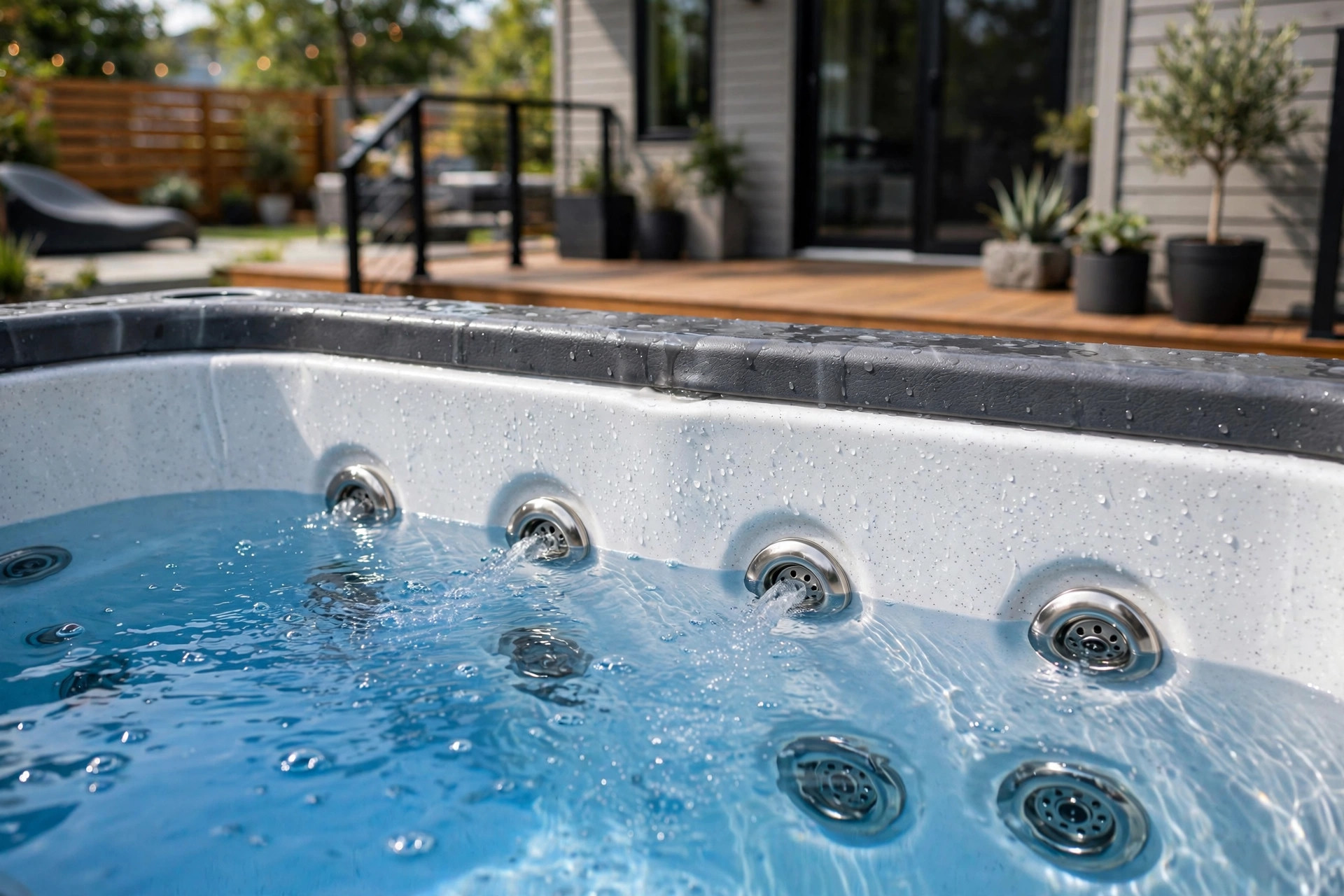
Learning how to clean hot tub jets properly is one of the most useful skills a spa owner can pick up. The jets do most of the work in your hot tub. They push the water, they make the bubbles, and they give you the massage you bought the tub for in the first place. When the jets get dirty, the water turns cloudy, the pressure drops, and the tub starts to smell. The good news is that jet cleaning is not hard. With a few supplies and about an hour of time, you can bring your jets back to life.
This guide walks you through the whole process. You will learn why jet cleaning matters, what supplies you need, and the exact steps to follow. It also covers how often to clean, what to avoid, and how to keep the jets in good shape between cleanings. The steps work for almost every home hot tub, whether it sits on a back deck or in a covered patio.
Why It Matters
Hot tub jets are small openings with many moving parts inside. Water passes through them at high speed, and that is exactly why they collect grime. Body oils, lotions, soap, and minerals settle inside the jets over time. Once the buildup starts, it feeds bacteria. The bacteria then cause odors and cloudy water. Even worse, clogged jets force the pump to work harder, which can shorten the life of the equipment.
A good cleaning restores the jet pressure you remember from the first day. It also keeps the water safe. The Centers for Disease Control has warned for years that warm, still water can harbor germs if it is not kept clean. The U.S. Consumer Product Safety Commission also reminds spa owners that clean equipment is part of safe ownership. For more on water care basics, see our guide on how to maintain hot tub water chemistry.
Signs Your Jets Need Cleaning: How to Clean Hot Tub Jets Properly
It helps to know what dirty jets look and feel like. The signs show up long before the tub becomes a real problem.
The first sign is weak pressure. If the jets felt strong when the tub was new but now feel soft, grime is likely blocking the flow. Small bits of scale and oil narrow the openings over time.
The second sign is cloudy water that will not clear. You may test the water, add the right chemicals, and still see a haze. That haze often comes from oils trapped in the jet lines. The water looks clean after a drain and refill, then clouds again within days.
The third sign is a smell. A clean hot tub has almost no odor. If you notice a sour or musty smell when the jets run, bacteria are growing inside the plumbing. A line flush will usually fix it.
The fourth sign is visible gunk. Look closely at the jet faces. If you see brown or green film around the edges, or feel a slippery layer, the jets need attention now. White flakes in the water can also point to mineral scale breaking loose from inside the lines.
If you notice any of these signs, run the full cleaning process described below. Do not wait. The longer buildup sits, the harder it becomes to remove.
What You Will Need
Before you start, gather your supplies. You will not need anything fancy.
– A spa-safe jet cleaner or plumbing line cleaner – White vinegar for light descaling – A soft cloth or sponge – An old toothbrush for tight spots – A garden hose with a spray nozzle – Clean towels
Do not use dish soap or household cleaners. Most of them leave foam and residue that will stay in the lines for weeks. Spa products are made to break down oils without leaving anything behind. A best hot tub chemicals starter kit is a good place to begin if you do not have supplies yet. You can find spa cleaners at retailers like Home Depot or Leslie’s Pool Supplies.
How to Clean Hot Tub Jets Properly: Step by Step
Follow these steps in order. The whole job takes about an hour, plus the time your cleaner needs to circulate.
Step 1: Turn Off the Power
Safety comes first. Switch off the power to the hot tub at the breaker. This protects you and the equipment while you work. Do not skip this step.
Step 2: Remove the Filter
Take out the filter cartridges and rinse them with a hose. A dirty filter puts dirty water right back into the tub. If the filter is worn or torn, replace it. Cleaning the jets works best when the filter is clean too.
Step 3: Add a Line Cleaner
Fill the tub to its normal level if it is not already full. Add a spa line cleaner or jet cleaner following the label directions. These products are made to loosen oils and gunk inside the plumbing. Some owners use a product called a plumbing purge for this step. Guides at Swim University explain how these cleaners work and how much to use.
Step 4: Run the Jets
Turn the power back on and run the jets on high for at least 20 minutes. You may see foam and dark bits rise to the surface. That is a good sign. The cleaner is pulling the buildup out of the lines. Remove any debris with a skimmer net as it appears.
Step 5: Drain the Tub
Turn the power off again and drain the tub fully. Use a garden hose or a sump pump to speed the job. As the water leaves, wipe the shell with a soft cloth. Pay close attention to the waterline, where oils tend to collect.
Step 6: Scrub Each Jet
Now clean the jets by hand. Turn each jet face counter-clockwise to remove it if your model allows. Soak the jet faces in a bucket of warm water with white vinegar. Use an old toothbrush to scrub around each jet opening on the tub wall. For extra help, The Spruce has plain-language cleaning advice for home fixtures that applies well here.
Step 7: Rinse and Refill
Rinse the tub shell with a hose to wash away loose grime. Put the jet faces back on and reinstall the filter. Refill the tub with fresh water. Balance the chemicals before you use it. Manufacturers like Hot Spring and Bullfrog Spas both stress that fresh, balanced water is the foundation of a healthy spa.
Types of Jet Cleaning
Not every cleaning job needs to be the same. There are three levels of jet care.
Quick surface wipe. During your weekly water check, wipe the jet faces with a soft cloth. This takes two minutes and stops oils from building up.
Line flush. Every one to three months, add a line cleaner and run the jets, then drain and refill. This is the deep clean described above. It clears the plumbing you cannot see.
Full jet removal soak. Once or twice a year, remove the jet faces and soak them overnight in vinegar or a spa descaler. This handles mineral scale in hard-water areas.
Cost and Price
Jet cleaning is one of the cheapest maintenance jobs you can do. A bottle of spa line cleaner costs between 10 and 20 dollars and treats several cleanings. White vinegar costs only a few dollars. If you hire a service tech to purge the lines, expect to pay 150 to 300 dollars for a full drain-and-clean visit. Most owners do the job themselves and spend under 25 dollars per year on jet cleaning supplies. Pool Warehouse lists a range of spa maintenance products with prices so you can plan ahead.
Care and Upkeep
The best jet cleaning is the one you do not have to do often. A few habits keep the jets cleaner for longer.
Shower before you soak. Lotions, sunscreen, and deodorant are the main source of jet grime. A quick rinse takes a minute and makes a real difference.
Keep the cover on. A good cover keeps out leaves, dust, and rain that bring dirt into the water. Read our review of the best hot tub cover lifter if you need an easier way to handle a heavy cover.
Test the water twice a week. When sanitizer and pH are in range, bacteria cannot grow in the lines. Low sanitizer lets slime form inside the jets.
Change the water on schedule. Most makers suggest a full drain every three to four months with normal use. Fresh water means fewer dissolved solids for the jets to fight.
If you use the tub less in summer, you can stretch the cleaning schedule a little. Heavy winter use, with more people soaking, calls for more frequent care. Match your routine to how often the tub runs and how many people use it. A tub used by a family of five needs more care than one used by a single couple.
Safety Notes
Hot tub chemicals are safe when used as directed, but they are still chemicals. Wear gloves when handling concentrated cleaners. Never mix different chemical products. Keep all supplies away from children and pets. Make sure the area has fresh air if you are using strong cleaners. If anyone in your home has sensitive skin, rinse the tub well after cleaning so no residue remains.
Water temperature matters too. Keep the spa at or below 104 degrees Fahrenheit. This is the standard limit set by industry groups and backed by federal safety guidance.
Frequently Asked Questions
How often should I clean my hot tub jets?
Wipe the jet faces every week during your normal water check. Do a full line flush with a spa cleaner every one to three months. In hard-water areas or with heavy use, aim for the shorter end of that range.
Can I use vinegar to clean hot tub jets?
Yes. White vinegar is fine for soaking jet faces and wiping light mineral scale. Do not pour large amounts of vinegar into the full tub as a substitute for a proper line cleaner. Vinegar cannot dissolve body oils the way a spa purge product can.
Why are my jets weak even after cleaning?
Weak jets can mean an air lock in the pump, a clogged filter, or a worn pump. First check the filter and the water level. If the problem remains, the pump may need service. Cleaning fixes grime, but it cannot fix broken parts.
Is it safe to remove the jet faces?
On most home spas, yes. Jet faces usually twist out by hand. Check your owner manual first. If a jet does not turn easily, do not force it. Soak the area with warm water and try again, or call your dealer.
Do I need to drain the tub to clean the jets?
For a deep clean, yes. The line cleaner works best when you run it through full plumbing and then drain the dirty water away. For quick weekly care, you can wipe the jets with the tub full.
What should I never put in my hot tub?
Never use bleach, dish soap, laundry detergent, or household bathroom cleaners. They foam, leave residue, and can damage the shell and seals. Stick to products made for spas.
A Short Final Word
Knowing how to clean hot tub jets properly takes the worry out of spa ownership. The job is simple, the supplies are cheap, and the payoff is clear water and strong jets every time you step in. Make it a habit: wipe the jets weekly, flush the lines every few months, and keep the water balanced in between. Your tub will last longer, and your soaks will feel like they did on day one.
References
Bullfrog Spas. (n.d.). Hot tubs and spas. https://www.bullfrogspas.com Hot Spring Spas. (n.d.). Hot tubs and spas. https://www.hotspring.com Leslie’s Pool Supplies. (n.d.). Pool supplies and equipment. https://www.lesliespool.com Pool Warehouse. (n.d.). Pool equipment and supplies. https://www.poolwarehouse.com Swim University. (n.d.). Pool and hot tub care guides. https://www.swimuniversity.com The Home Depot. (n.d.). Home improvement products. https://www.homedepot.com The Spruce. (n.d.). Home and garden advice. https://www.thespruce.com U.S. Consumer Product Safety Commission. (n.d.). Product safety information. https://www.cpsc.gov
Was this guide helpful?

About James Carter
The My Garden US editorial team writes practical, in-depth home and garden guides for American homeowners — tested advice, no fluff.