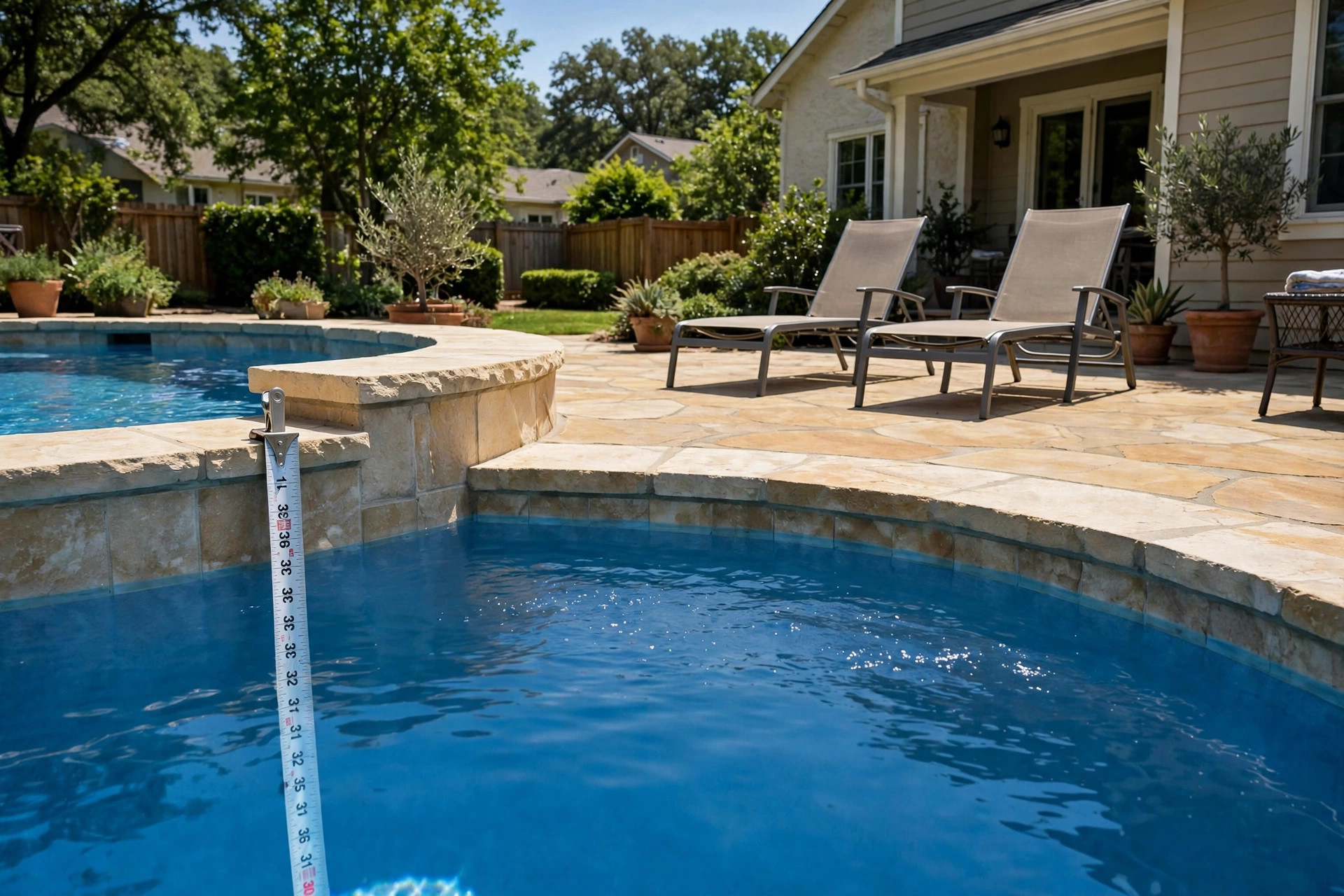

If you type “pool leak detection service near me” into your phone, you probably have a pool that is losing water faster than it should. A little loss from the sun and heat is normal. A pool that drops an inch or more in a single day has a problem. The sooner you act, the less damage a leak can do to your yard, your pool shell, and your wallet. This guide explains how to confirm a leak, how professionals find it, what the work costs, and how to choose a service you can trust.
Why a Pool Leak Is Not Something to Ignore
A swimming pool holds thousands of gallons of water. When even a small hole lets water escape day after day, the water bill climbs fast. More than that, leaking water can wash away the soil under the deck or behind the walls. Over time the pool may settle or shift, and repairs become much larger than fixing one hole.
Leaking pool water can also hurt your equipment. A low water line lets air into the pump and filter. Air in the pump wears the seals and the motor. Chemicals become harder to balance, and the water can turn cloudy or green. If you are fighting how to clean green pool water fast, a hidden leak may be part of the reason the water never stays clear.
Many owners put off the search because they fear the cost. But a quick test by a local company usually costs far less than the damage of waiting. The sooner the hole is found, the cheaper the fix. For more on how pools stay balanced, Swim University offers clear guides written for owners.
How Much Water Loss Is Normal?: Pool Leak Detection Service near Me
Every pool loses some water to evaporation. In a hot week you may lose a quarter of an inch a day, and in dry wind a little more. Splashing from play also takes water out. If the pool drops half an inch or less in a day during summer heat, that is usually normal.
A drop of more than half an inch a day, every day, points to a leak. A drop of an inch or more is a strong sign. In cool weather, any steady loss is worth checking, since evaporation is low. Keep in mind that an automatic fill valve can hide a leak by adding water on its own, so watch the meter or shut the fill off during a test.
The Bucket Test: Check for a Leak Yourself
Before you call a service, do the bucket test. It takes one day and tells you if water is leaving the pool itself.
Fill a bucket with pool water and set it on a step inside the pool. Mark the water level inside the bucket and the water level of the pool on the outside of the bucket with tape. Wait 24 hours with the pump off. If the pool level drops more than the bucket level, the pool is leaking somewhere in the shell or the plumbing.
Do the test again with the pump on. If the pool loses more water with the pump running, the leak is likely in the return lines or the equipment pad. If it loses the same amount with the pump on or off, the leak is likely in the pool body or a fitting. This simple test saves money, because the service company will know where to start.
Where Pool Leaks Usually Happen
Most leaks come from a short list of places. Fittings such as skimmers, lights, and jets can crack or pull loose from the shell. Vinyl liners can tear at the corners, near the steps, or along the floor. Concrete pools can crack in the plaster or around drains. Return and suction pipes can break underground when the soil shifts or freezes.
Age plays a role. A vinyl liner past its tenth year is more likely to tear than a new one. If your liner is old, it may help to read about pool liner replacement cost estimate so you know your options if the liner itself is the problem. Equipment pads are another common spot: look for damp soil around the pump and filter, and for air bubbles in the pump basket, which point to a suction leak.
How a Pool Leak Detection Service Finds the Problem
A professional service does not guess. Most companies follow the same careful steps, and knowing the process helps you judge the quality of the work.
First, the technician repeats the bucket test or a pressure test to confirm the loss. Then they inspect the pool by hand, feeling around fittings, lights, and drains for loose parts. Next comes the listening. Many services use a ground microphone that hears the sound of water escaping through a crack. The sound grows louder as the tool gets closer to the leak.
For plumbing leaks, the technician caps the pipes and adds pressure with air or water. A line that will not hold pressure has a break. Some companies send a tiny camera into the pipe to see the break. For vinyl liners, the tech may use a small dye test. A few drops of dye are released near a suspect spot. If the dye is pulled toward the wall or the floor, the hole is there.
A good service finds the exact spot, not just the general area. Ask the company to show you the leak and explain how they found it. A mark on the liner or a photo from the pipe camera is a good sign of honest work. Home guides at Bob Vila and The Spruce describe these steps in plain language for owners who want to understand the process.
What to Look For When You Choose a Service
Search results for a pool leak detection service near me can be long. Not every company does the same quality of work. Use these points to pick well.
Look for a company that does leak detection as its main work, not as a side job. Specialists own the listening gear and pressure tools that general handymen lack. Ask how long they have done this work and whether they are licensed and insured in your state.
Ask for a clear price before the visit. Many companies charge a flat fee for the detection visit. Ask what the fee covers and whether a written report is included. Ask how long the visit takes and what happens if they cannot find the leak. A fair company will tell you the next steps instead of charging again and again.
Read local reviews, but read them with care. Look for reviews that mention the leak was found on the first visit and repaired or clearly marked. Ask neighbors and pool stores who they recommend. Large retailers such as Leslie’s Pool Supplies, Pool Warehouse, and The Home Depot often keep lists of local service pros. Lowe’s also points customers toward local contractors in many areas.
Finally, ask if the company does the repair or only the detection. Some services only find leaks and leave the repair to someone else. That is fine, but you should know before the visit so you can plan the repair step.
Cost and Price: What to Expect
Prices vary by region and by the type of pool. A standard leak detection visit in most American markets runs between one hundred and four hundred dollars. Inground pools cost a little more to test than above ground pools because there is more shell and more plumbing to check.
Repairs are extra. A small patch on a vinyl liner may cost under two hundred dollars. Replacing a skimmer or a light fitting can run several hundred dollars. Underground pipe repairs cost more because the deck or soil must be opened to reach the break. If the pool needs a full new liner or a new surface, the cost climbs into the thousands, and guides like pool resurfacing options pros cons can help you weigh the choices.
Ask the company for the repair price in writing before they start. A detection fee that is applied toward the repair is a common and fair arrangement. Get the warranty terms in writing too, so you know what happens if the leak returns.
Care and Upkeep After the Leak Is Fixed
Finding and fixing a leak is only half the job. A little care keeps the next leak from forming. Keep the water at the right level, about halfway up the skimmer mouth. Too low and the pump pulls air. Too high and the skimmer cannot catch debris.
Keep chemicals in balance. Low pH eats at liners and plaster over time, and high pH leaves scale that can crack fittings. Test the water at least twice a week in summer. Rinse the filter on schedule and watch the pressure gauge. A sudden change in pressure can be the first sign of a plumbing problem.
Walk around the pool once a week and look at the deck and the soil near the equipment. New cracks, damp spots, or settling are early warnings. Fix small problems while they are small. Owners of hot tubs face the same upkeep, and maker sites such as Hot Spring Spas and Bullfrog Spas publish plain care guides for their products.
Safety Comes First
Water and electricity do not mix. If a leak is near the pool light or the equipment pad, turn off the breaker before you touch anything. Never open the light fixture or the pump motor yourself if you are not trained. A leak detection service has the tools to work around live equipment safely.
Pools also need layers of safety beyond the leak itself. Fences, alarms, and covers keep children safe around the water. The U.S. Consumer Product Safety Commission publishes pool safety guidance that every pool owner should read.
FAQ
How do I know if my pool has a leak or is just evaporating? Do the bucket test. Set a bucket of pool water on a step, mark both levels, and wait 24 hours. If the pool drops more than the bucket, water is leaving the pool through a leak, not through the air.
What does a pool leak detection service near me usually cost? Most visits run between one hundred and four hundred dollars for detection alone. Repairs are extra and depend on where the leak is. Always ask for the detection fee in writing before the visit.
Can a leak be found without draining the pool? Yes. Almost all modern detection is done with the pool full. Technicians use listening tools, pressure tests, pipe cameras, and dye tests that work underwater. Draining a pool can damage some shells, so a full pool is the norm.
How long does a leak detection visit take? A simple case may take one to two hours. A large pool with a plumbing leak can take half a day. Ask the company for a time estimate when you book, and ask what they will do if the first visit does not find the leak.
Should I fix the leak myself after it is found? Small liner patches are a common do-it-yourself job if you follow the kit instructions. Fittings, pipes, and electrical parts are best left to a licensed pro. Poor repairs often leak again and can cost more to fix twice.
How often should I check for leaks? Do a quick check every spring when you open the pool, and watch the water level weekly through the summer. Older liners and older plumbing deserve a closer eye. Catching a leak in its first weeks keeps the repair small.
A Short Final Word
A pool that keeps losing water is telling you something. A day of testing at home can confirm the problem, and a local leak detection service can find the exact spot with tools built for the job. Choose a company that specializes in this work, get the price in writing, and ask them to show you what they found. With the leak fixed and steady care through the season, your pool will be ready for many more summers of clear, calm water.
References
Bob Vila. (n.d.). Home improvement advice. https://www.bobvila.com Bullfrog Spas. (n.d.). Hot tubs and spas. https://www.bullfrogspas.com Hot Spring Spas. (n.d.). Hot tubs and spas. https://www.hotspring.com Leslie’s Pool Supplies. (n.d.). Pool supplies and equipment. https://www.lesliespool.com Lowe’s. (n.d.). Home improvement products. https://www.lowes.com Pool Warehouse. (n.d.). Pool equipment and supplies. https://www.poolwarehouse.com Swim University. (n.d.). Pool and hot tub care guides. https://www.swimuniversity.com The Home Depot. (n.d.). Home improvement products. https://www.homedepot.com The Spruce. (n.d.). Home and garden advice. https://www.thespruce.com U.S. Consumer Product Safety Commission. (n.d.). Product safety information. https://www.cpsc.gov
Was this guide helpful?

About James Carter
The My Garden US editorial team writes practical, in-depth home and garden guides for American homeowners — tested advice, no fluff.
You May Also Like

Best Inflatable Hot Tub for Couples: A Practical Buying Guide
July 17, 2026 0 views
Pool Equipment Pad Installation Guide
March 31, 2026 0 views
Best Pool Vacuum for Leaves Reviews: A Plain Guide for Pool Owners
January 18, 2026 0 views