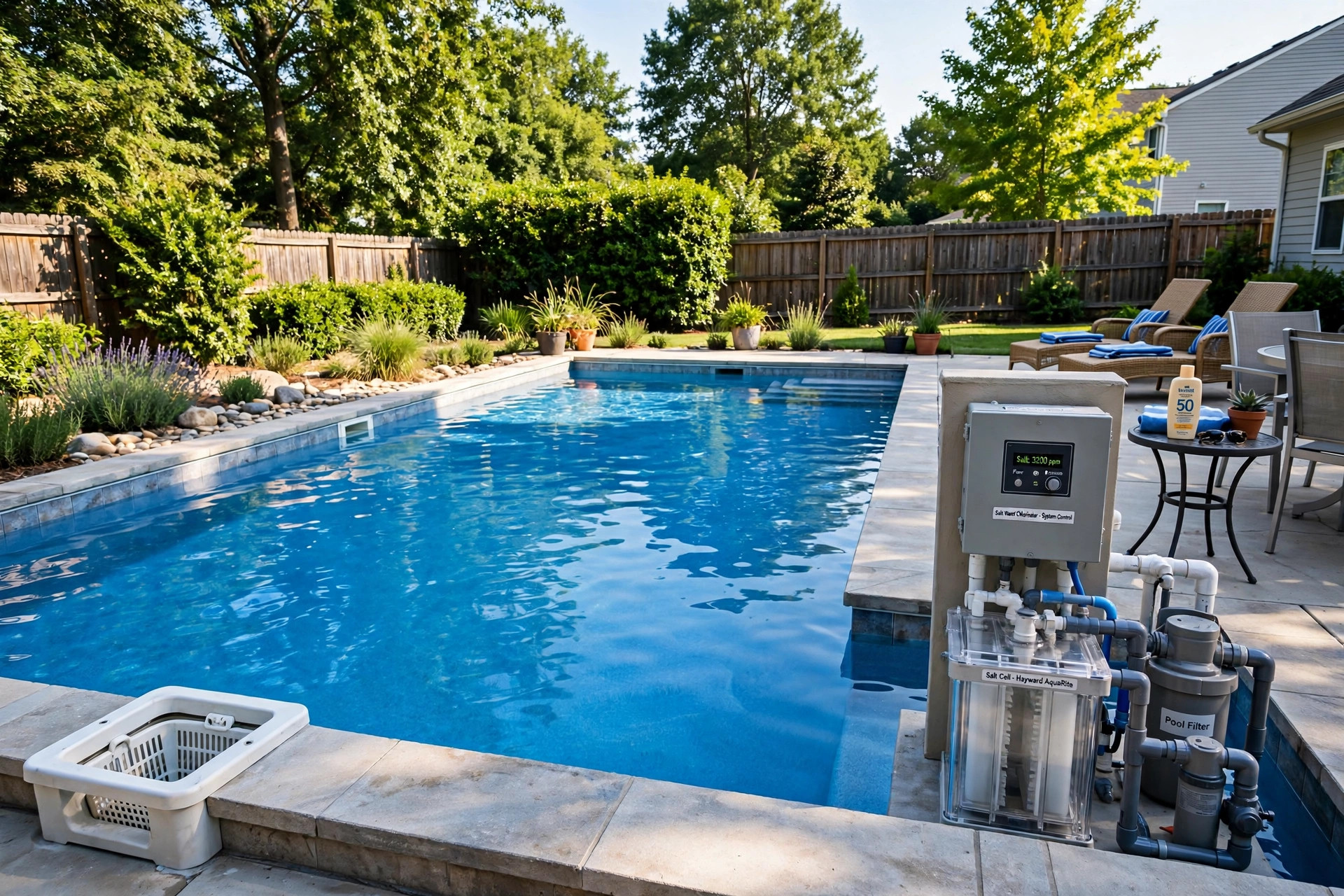

A salt water pool can make swimming more pleasant. The water feels soft. It does not smell as strong as a regular chlorine pool. But a salt water pool is not a no-care pool. It still needs steady work. This salt water pool maintenance schedule guide explains the simple jobs you should do each week, each month, and each season. If you follow a set plan, the water stays clear and the equipment lasts longer.
Why a Salt Water Pool Still Needs a Schedule
Many pool owners think a salt system takes care of itself. That is not true. A salt water chlorinator turns dissolved salt into chlorine. That chlorine still gets used up each day. The sun burns it off. Leaves and dirt add waste. Rain changes the water balance. Without a plan, small problems grow. Green water, rough cell plates, and broken pumps often come from months of missed checks.
A written schedule keeps you honest. You know what to test, what to clean, and when to act. It also saves money. A salt water pool maintenance schedule that you follow each week costs less than one emergency repair. Guides from large pool supply retailers such as Leslie’s and Pool Warehouse give the same advice: test often, clean often, and fix small problems early.
What to Look for When You Choose Your Routine: Salt Water Pool Maintenance Schedule Guide
Before you start, gather the right tools. You will need test strips or a drop test kit, a pool brush, a skimmer net, a vacuum or automatic cleaner, and a small logbook or notebook. Keep all of them in one place near the pool. A home improvement store like The Home Depot carries test kits and cleaning tools in one aisle.
Pick a test method and stay with it. Drop kits cost more but read more true. Strips cost less and work fine for weekly checks. Write down each result. Numbers that look fine today may show a slow drift over three weeks. A log helps you spot that drift.
How to Choose a Weekly Test Day
Choose one day and keep it. Saturday morning works well for most homes. The pump has run all night. The water is calm. Test before anyone swims. If you test on different days each week, you lose track. Set a phone reminder. The best salt water pool maintenance schedule is the one you can repeat without thinking.
The Weekly Schedule
Run these jobs every week during swim season. They take about thirty minutes total.
Test the Water
Test free chlorine, pH, and total alkalinity each week. Ideal ranges: free chlorine 1 to 3 parts per million, pH 7.2 to 7.6, total alkalinity 80 to 120 parts per million. Salt pools tend to push pH up. That is normal. If pH climbs high, use the steps in this related guide on how to lower pool ph levels safely. Test salt level and stabilizer once a month, since they move more slowly.
Check the Chlorinator Cell
Look at the salt cell for white crust. A light scale is normal and the cell may clean itself with a reverse cycle. Heavy crust needs an acid bath. Never scrape plates with metal tools. Rinse the cell with a hose first, and soak it in a mild acid mix only as the manual directs. Retail how-to guides from The Spruce show safe cleaning steps for most cell brands.
Skim, Brush, and Empty Baskets
Skim leaves from the surface. Empty the skimmer baskets and the pump basket. Brush the walls and steps once a week. Brushing stops algae before it roots. Run the automatic cleaner on its normal cycle. If you use a cartridge filter, rinse it when the pressure gauge rises 8 to 10 pounds above the clean reading. The right filter makes weekly work lighter; see this review of the best pool filter for saltwater systems for filter choices.
Run the Pump Long Enough
Run the pump 8 to 12 hours a day in warm weather. The chlorinator only makes chlorine while water flows. Short pump hours mean low chlorine and green water. Hot climates need the longer end of that range. Check the pump strainer basket each week for leaves and hair.
The Monthly Schedule
Do these jobs once a month.
Test Salt and Stabilizer
Ideal salt level is 2700 to 3400 parts per million for most systems. Check your manual for the exact target. Add pool salt in small doses and let it dissolve fully before you retest. Ideal cyanuric acid, the stabilizer, is 70 to 80 parts per million for salt pools. Sunlight eats chlorine fast without stabilizer. Do not add too much; the only fix for too-high stabilizer is to drain and refill part of the pool.
Inspect the Equipment Pad
Look at pipes, valves, and the cell housing for drips. Salt water can corrode metal parts over time. Check sacrificial anodes if your system has one. Tighten loose fittings by hand. Catching a slow leak in month one is far cheaper than replacing a pump motor in month six.
Deep Clean the Cell if Needed
If the cell still shows scale after weekly checks, do a full acid soak. Mix one part muriatic acid to ten parts water in a plastic bucket. Always add acid to water, never water to acid. Soak the cell for five to fifteen minutes. Rinse it well before you put it back. Wear gloves and eye cover. Safety advice from the U.S. Consumer Product Safety Commission warns that pool chemicals cause many injuries each year, so handle them with care.
Seasonal Jobs
Opening the Pool
When you open the pool in spring, clean the cover before you remove it. Fill the water to the right level. Start the pump and let it run a full day. Then test everything and balance the water before you start the chlorinator. New fill water often needs pH work, so review how to lower pool ph levels safely before you add acid.
Winter Care
In cold states, close the pool properly. Clean the cell and store it indoors. Lower the water below the skimmer. Blow out the lines. Cover the pool with a tight winter cover. In warm states where the pool stays open, cut pump hours and testing back to half the summer plan. Winterizing wrong can crack pipes and void warranties.
Cost and Price of Salt Pool Care
A salt system costs more up front than a chlorine feeder. A cell unit often runs a few hundred dollars, and full systems with installation can run higher. But the weekly chemical bill is lower. Many owners spend 50 to 100 dollars per month on salt, acid, test supplies, and stabilizer during the season. The cell itself lasts three to seven years and costs several hundred dollars to replace.
Compare that to a standard chlorine pool before you buy. This salt water vs chlorine pool pros cons comparison walks through costs and trade-offs for both systems. Spa owners can also look at spa care resources from makers like Hot Spring and Bullfrog Spas, since hot tubs share many water balance rules with pools.
Safety Rules for Salt Pools
Keep all chemicals locked away from children and pets. Store acid and salt apart from each other. Never mix chemicals together. Add them to the pool one at a time, with the pump running. Wait between doses and retest before you add more.
Electrical safety matters too. Keep the pump, timer, and cell wiring dry and covered. Do not touch wet electrical parts with wet hands. If a breaker trips, find the cause before you reset it. Teach children that the equipment pad is off limits. A pool fence with a self-closing gate remains the best guard against accidents, and the CPSC offers a free pool safety guide on cpsc.gov.
Care and Upkeep Tips That Extend Equipment Life
Salt is hard on metal. Use pool parts rated for salt water. Ladder bolts, light rings, and railings in stainless steel hold up better. Rinse the deck with fresh water now and then to keep salt crust off the stone. Keep the water level steady; a low level can starve the pump and overheat the cell. Small habits, done on schedule, add years to the equipment.
Tools to Keep on Hand
A simple kit makes the schedule easy to follow. Keep a test kit or strips, a bottle of muriatic acid, a bag of pool salt, stabilizer, and a small amount of shock. Add a telescopic pole, a leaf net, a pool brush, and a spare set of basket inserts. Store test reagents in a cool, dry place and check their dates each spring, since old reagents read wrong. Pool supply stores listed in the References section, including Leslie’s and Pool Warehouse, sell pre-made salt pool start-up kits that cover most of the monthly list.
Frequently Asked Questions
How often should I test a salt water pool?
Test free chlorine and pH every week. Test total alkalinity weekly as well. Test salt, calcium hardness, and stabilizer once a month. During heat waves or heavy swim weeks, test twice a week. A steady salt water pool maintenance schedule beats testing only when the water looks wrong.
Do I still need to shock a salt water pool?
Yes, at times. The chlorinator makes a steady low level of chlorine. After a storm, a pool party, or a green tint, the water needs a strong dose. Use a pool shock product or set the chlorinator to super-chlorinate for a day. Then let chlorine fall back to normal before swimming.
Why does my salt cell get crusty?
Hard water leaves calcium scale on the cell plates. High pH makes it worse. Keep pH near 7.4 and brush the pool weekly. If scale builds fast, check calcium hardness. A monthly acid soak handles normal scale. If the cell scales in a week or two, something is out of balance.
Can I add salt directly to the pool?
Yes. Pour pool-grade salt into the deep end with the pump running. Brush it around so it dissolves. Wait a full day before you retest the salt level. Never pour salt through the skimmer. Keep the chlorinator off while the salt dissolves if your manual says so.
Is salt water better for skin and eyes?
Most swimmers say yes. Salt pools run at lower chlorine levels than hand-dosed pools, and the salt level is far below ocean water. Eyes sting less and skin feels less dry. This is one reason many families compare systems with a salt water vs chlorine pool pros cons guide before they convert.
What does a salt pool cost per year?
Plan on a few hundred dollars per year for chemicals and test supplies, plus electricity for the pump. Add a cell replacement every three to seven years. Compared with a chlorine pool, the weekly chemical cost is lower but the equipment cost is higher. Home improvement resources at The Home Depot list current prices for salt, cells, and test kits.
Can I leave the pump off in winter?
Only if the pool is fully winterized. Standing water with no flow will freeze and crack pipes in cold states. If the pool stays open, keep the pump running at least a few hours each night. Stagnant water turns green fast, and a green pool takes far longer to fix than a running one.
A Short Final Word
A salt water pool rewards a steady hand. Test each week. Clean each week. Check the cell each month. Handle chemicals with care. None of these jobs is hard. The hard part is skipping them. Keep a log, keep your tools close, and keep the schedule. Do that, and the water stays blue all season. In time the routine takes less than half an hour a week, and you will know the health of your pool by heart.
References
Bullfrog Spas. (n.d.). Hot tubs and spas. https://www.bullfrogspas.com Hot Spring Spas. (n.d.). Hot tubs and spas. https://www.hotspring.com Leslie’s Pool Supplies. (n.d.). Pool supplies and equipment. https://www.lesliespool.com Pool Warehouse. (n.d.). Pool equipment and supplies. https://www.poolwarehouse.com Swim University. (n.d.). Pool and hot tub care guides. https://www.swimuniversity.com The Home Depot. (n.d.). Home improvement products. https://www.homedepot.com The Spruce. (n.d.). Home and garden advice. https://www.thespruce.com U.S. Consumer Product Safety Commission. (n.d.). Product safety information. https://www.cpsc.gov
Was this guide helpful?

About Emily Rodriguez
The My Garden US editorial team writes practical, in-depth home and garden guides for American homeowners — tested advice, no fluff.
You May Also Like
Salt Water Pool Problems Troubleshooting Guide
September 30, 2026 0 views
Salt Water Pool Cost Per Month: What You Will Really Pay
June 6, 2026 0 views
How to Winterize Above Ground Pool: A Simple Step-by-Step Guide
February 18, 2026 0 views