
Why the Best Pool Heater for Inground Pools Matters
A pool is a big investment. Without heat, most pools stay too cold to use for half the year. The best pool heater for inground pools changes that. It stretches the swim season from a few summer months into spring and fall. In warmer states, it can make the pool usable all year.
Warm water feels good. It also invites use. Families get more value from the pool when the water sits near 80 degrees. Friends stay in longer. Kids swim more often. A good heater turns a decoration into a daily part of life.
Heat also protects the pool. Water that swings between hot and cold puts stress on liners and plaster. Steady heat keeps the chemistry stable. Chemicals work better in water that stays in a narrow range. This saves money over time.
Choosing wrong costs money. An undersized heater runs all day and never warms the pool. An oversized one wastes fuel. The right unit matches the pool size and the local climate. This guide shows how to pick it.
The Main Types of Pool Heaters: Best Pool Heater for Inground Pools
Gas Heaters
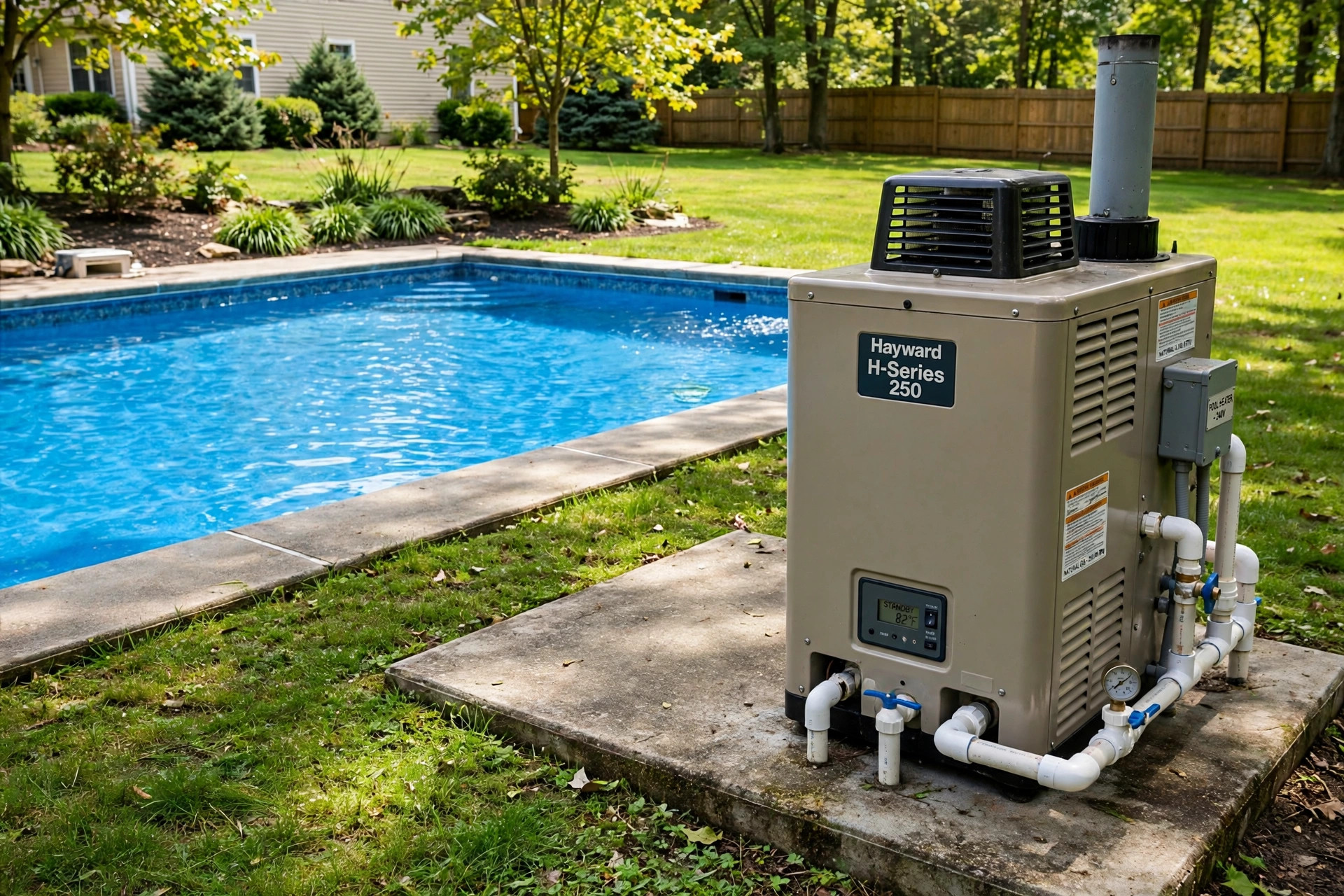
Gas heaters burn natural gas or propane. They heat water fast. A gas unit can raise pool temperature by several degrees in a few hours. This makes gas the top pick for people who heat on demand. Many retailers list gas models first because of this speed. For a quick look at what stores carry, the pool equipment pages at Home Depot give a good sense of the range.
Gas heaters work in any weather. They do not depend on air temperature the way heat pumps do. In cold climates, this matters a lot. The trade is running cost. Gas is the most expensive fuel per degree of heat. Many pool owners use gas to boost the water for a weekend party, then let it cool.
Heat Pumps
Heat pumps pull warmth from the air and move it into the water. They use electricity. They are far more efficient than gas in mild weather. For the cost of one dollar of gas heat, a heat pump can deliver several dollars of heat. That is why they are popular in warm and mild states.
Heat pumps heat slowly. They work best when run for long periods. They struggle when air drops below about 50 degrees. If you keep the pool warm all season, a heat pump is often the cheapest choice. Sites like Swim University explain how heat pump sizing relates to local weather.
Solar Heaters
Solar heaters use roof panels or ground racks to warm water with sunlight. The fuel is free. Running cost is near zero after the install. They work well in sunny regions. Many pool owners pair solar with a small backup heater.
Solar heat is gentle. Panels raise temperature slowly over the day. They do not help on cloudy days. They also need roof space and a strong pump. The ENERGY STAR program offers general guidance on efficient pool equipment that pairs well with solar.
Electric Resistance Heaters
These units heat water with an electric element, much like a kettle. They are small and cheap to buy. They suit spas and very small pools. For a full inground pool, they use too much power. Most owners skip them except for hot tubs.
How to Choose the Best Pool Heater for Inground Pools
Match the Size to the Pool
Heater size is measured in BTUs. A small pool needs fewer BTUs than a large one. A common rule is to figure the pool volume and the desired temperature rise. Then pick a unit that can deliver it in a reasonable time.
Undersizing is the most common error. A small heater on a big pool runs nonstop and still falls short. Oversizing by a little is safer than undersizing. Most guides suggest sizing up when the pool sits between two heater sizes. Leslie’s Pool Supplies offers sizing charts that make this math easy.
Know Your Climate
Climate decides which type wins. In the deep south, a heat pump runs cheap almost all year. In the northeast, gas gives fast heat for a short season. In the southwest, solar carries most of the load.
Wind matters too. Wind strips heat from the pool surface. A pool in a windy yard loses heat fast. This pushes some owners toward a larger heater or a solar cover to hold the warmth in. Readers who already manage leaves and windblown debris may find the guide to the best pool cover for leaves autumn a useful partner to this one.
Check the Fuel You Have
Pick a heater that fits the fuel at the house. Natural gas lines make gas heaters easy. Rural homes may only have propane or electricity. Running a new gas line costs money. That cost belongs in the budget before the heater is bought.
Electrical panels matter for heat pumps. A large heat pump needs a dedicated breaker. An old panel may need an upgrade. Check this with an electrician before buying.
Look at Efficiency Ratings
Gas heaters list thermal efficiency as a percent. Heat pumps list a coefficient of performance, called COP. Higher numbers mean lower running cost. A high efficiency unit costs more up front but pays back over years of use. The U.S. Department of Energy publishes facts on appliance efficiency that help make sense of these numbers.
Mind the Noise
Gas heaters make a steady roar when they fire. Heat pumps hum like an air conditioner. If the equipment pad sits near a bedroom window or a neighbor fence, noise counts. Newer models run quieter than old ones. Ask about decibel ratings before you buy.
Cost and Price
Purchase Price
Gas heaters for inground pools often cost the least to buy. Heat pumps cost more up front. Solar systems vary with the number of panels. Electric resistance units are cheapest but rarely suit full pools.
Prices shift by size and brand. A fair budget covers the unit plus tax and delivery. It is smart to get quotes for the heater and the install together. Pool equipment sellers such as Pool Warehouse list current prices that help set a budget.
Installation Cost
Install cost can rival the heater itself. Gas units need gas lines and venting. Heat pumps need electrical work and a level pad. Solar needs panel mounts and plumbing runs. Always hire a licensed pro for gas and electrical hookups.
Running Cost
Running cost is where the types split apart. Gas costs the most per month of steady use. Heat pumps cost much less in mild weather. Solar costs almost nothing to run.
A solar cover cuts all types of running cost. It traps heat at night. Covers are cheap and pay for themselves fast. Many owners call the cover the best value in pool care.
Repair and Life Span
Gas heaters often last five to ten years before a major repair. Heat pumps often last ten to fifteen years. Solar panels can last twenty years or more. Set aside a small yearly budget for parts. Salt systems add a wrinkle here: owners weighing salt water vs chlorine pool pros cons should know salt can wear some heater metals faster, which affects long term cost.
Care and Upkeep
Regular Cleaning
Keep the heater area clear. Leaves and trash block air flow on heat pumps and gas vents. Rinse the outside with a hose now and then. Do not use a pressure washer on the fins.
For gas units, check the burner tubes for soot or webs each spring. Spiders love burner tubes. A blocked tube makes the flame burn yellow instead of blue. Call a pro if the flame looks wrong.
Water Chemistry
Bad chemistry kills heaters. Low pH eats metal from the inside. High chlorine burns seals. Test the water weekly. Keep pH between 7.2 and 7.6. This one habit adds years to any heater.
Salt pools need extra care. Salt speeds corrosion on copper and some steels. Many owners of salt pools track the salt water pool cost per month and fold heater wear into that math. Use a heater rated for salt if you run a salt system.
Winter Steps
In cold regions, winterize the heater. Drain the water from the unit. Blow out the lines. Cover the heater to keep out snow and ice. A frozen heater can crack. That repair costs more than a new small heater in some cases.
Yearly Service
Have a pro service the heater once a year. They check gas pressure, clean the heat exchanger, and test the controls. Yearly service catches small faults before they grow. It also keeps the warranty valid. General pool care advice from The Spruce covers many of these seasonal steps in plain terms.
Safety
Gas Safety
Gas heaters need proper venting. Exhaust must go up and away from windows and doors. Never run a gas heater with a damaged vent. If you smell gas, turn the unit off and leave the area. Call the gas company from outside.
Keep kids away from the heater when it runs. The cabinet gets hot. Add a fence or screen if the pad sits near a play area.
Electrical Safety
Heat pumps and controls run on high voltage. Never open the electrical panel on the heater. Keep water away from the disconnect box. Ground fault protection is a must near pools. The U.S. Consumer Product Safety Commission publishes pool safety guidance every owner should read.
Hot Water Safety
Heated pools can get too hot for small children. Keep the pool below 90 degrees when kids swim. Hot tubs attached to the pool need their own care. Spas and pool combos share equipment, and brands like Hot Spring and Bullfrog Spas publish clear safe temperature ranges for spa use.
FAQ
How long does it take to heat an inground pool?
It depends on the heater type and the pool size. A gas heater may warm a medium pool in a few hours. A heat pump may need a day or more to reach the same point. Solar adds a few degrees per sunny day. Set the target temperature a day ahead of a party.
What size heater do I need for my inground pool?
Size follows pool volume and climate. A 20,000 gallon pool in a mild climate needs less heat than the same pool in a cold one. Most pros size gas heaters from 200,000 to 400,000 BTUs for home pools. Get a sizing chart or ask a dealer to run the numbers.
Is a heat pump better than gas for an inground pool?
For steady, season long heat in mild weather, yes. Heat pumps cost less to run. For fast heat on demand or very cold weather, gas wins. Many owners in the middle climates pick a heat pump and add a solar cover. That combo keeps bills low and the water ready.
Can I install a pool heater myself?
Small electrical hookups and plumbing are tempting do it yourself jobs. Gas lines and main electrical feeds are not. Mistakes with gas can kill. Most towns also require permits and inspections. Hire licensed pros for gas and electrical work. You can handle the cover and the thermostat settings yourself.
How much does it cost to run a pool heater each month?
It varies widely. A gas heater run daily can add hundreds of dollars a month. A heat pump in mild weather may add a fraction of that. Solar adds almost nothing. A solar cover is the single best way to cut the bill for any type.
Do pool heaters work with salt water pools?
Yes, with the right model. Salt speeds corrosion, so pick a heater with a salt rated heat exchanger, such as cupronickel or titanium. Keep chemistry balanced. Rinse parts as the maker directs. With care, a salt pool heater lasts nearly as long as one on a chlorine pool.
A Short Final Word
The best pool heater for inground pools is the one that fits your pool, your climate, and your fuel. Gas heats fast. Heat pumps heat cheap. Solar heats free. Size it right, keep the chemistry clean, and service it yearly. Do that, and the pool stays warm, the bills stay fair, and the swim season lasts months longer.
References
Bullfrog Spas. (n.d.). Hot tubs and spas. https://www.bullfrogspas.com ENERGY STAR. (n.d.). Energy efficient products. https://www.energystar.gov Hot Spring Spas. (n.d.). Hot tubs and spas. https://www.hotspring.com Leslie’s Pool Supplies. (n.d.). Pool supplies and equipment. https://www.lesliespool.com Pool Warehouse. (n.d.). Pool equipment and supplies. https://www.poolwarehouse.com Swim University. (n.d.). Pool and hot tub care guides. https://www.swimuniversity.com The Home Depot. (n.d.). Home improvement products. https://www.homedepot.com The Spruce. (n.d.). Home and garden advice. https://www.thespruce.com U.S. Consumer Product Safety Commission. (n.d.). Product safety information. https://www.cpsc.gov U.S. Department of Energy. (n.d.). Energy efficiency and renewable energy. https://www.energy.gov
Was this guide helpful?

About Emily Rodriguez
The My Garden US editorial team writes practical, in-depth home and garden guides for American homeowners — tested advice, no fluff.
You May Also Like

Best Hot Tub for Couples Retreat: A Complete Buying Guide
September 20, 2026 0 views
How to Add Salt to a Pool Correctly: A Simple Step-by-Step Guide
January 17, 2026 0 views
Hot Tub Maintenance Cost Per Year: A Plain Budget Guide
May 11, 2026 0 views