
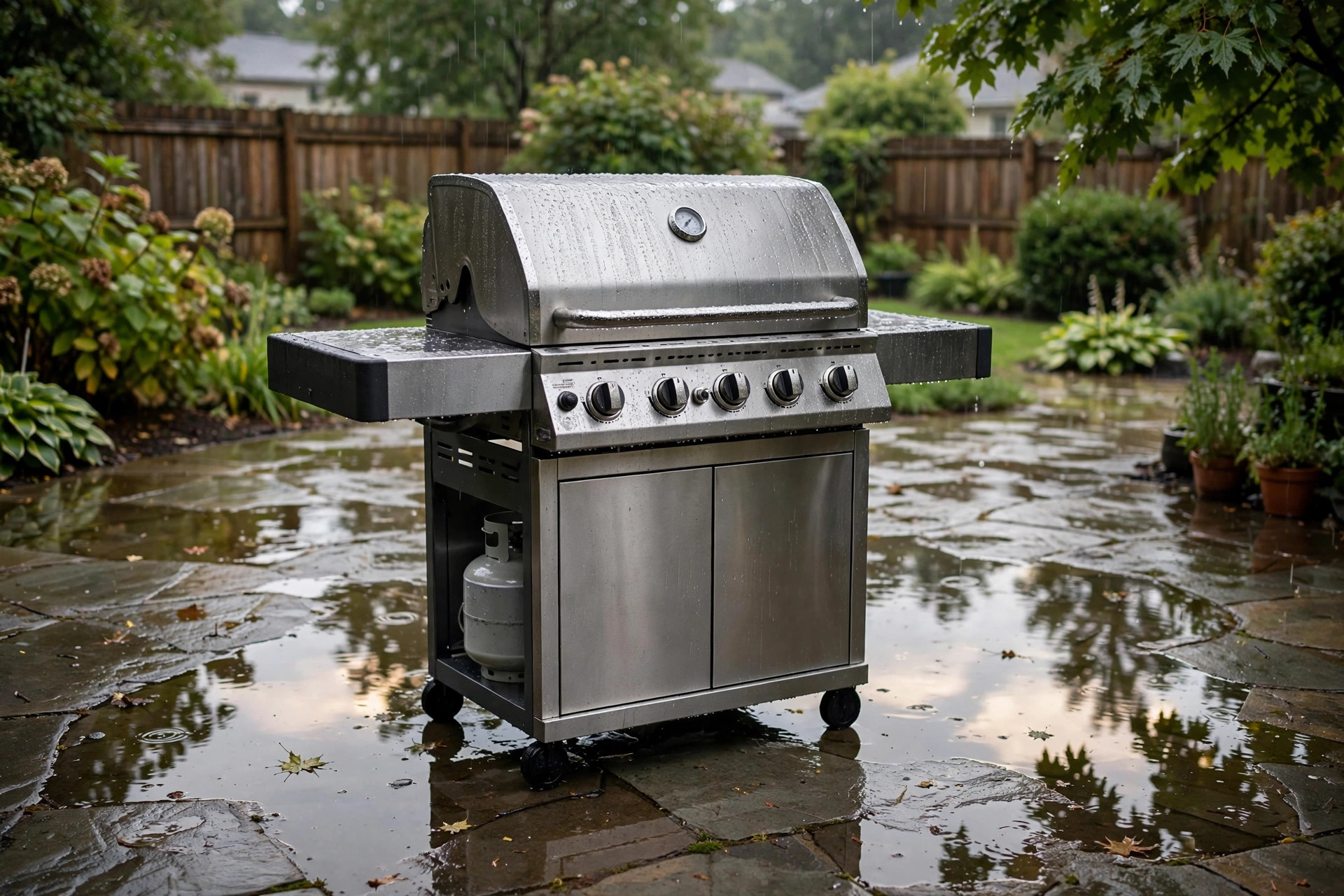

Many grill owners live where rain falls often. In such places, a grill must do more than cook well. It must stand up to water, damp air, and long wet seasons. The best outdoor grill for rainy climate does both. It gives you good heat and good flavor, and it resists rust and wear year after year.
Rain does not have to end your grilling plans. A well built grill can cook fine in light rain. The key is to pick the right kind of grill, use a good cover, and care for it in the right way. This guide will show you what to look for, which types of grills work best in wet weather, and how to keep your grill in good shape.
Why Rain Changes the Way You Grill
Water is the enemy of most metal. When rain hits a grill again and again, bare steel can rust. Cheap paint can chip and peel. Grease traps can fill with water. Electronic parts can fail. Over time, even a strong grill can weaken if it is not made for wet weather.
Rain also changes how you cook. Wind often comes with rain, and wind can blow heat away from the cooking grate. Wet charcoal is hard to light and hard to keep lit. People in wet regions like the Pacific Northwest, the Gulf Coast, and the rainy South have dealt with them for decades. The answer has always been the same: pick a grill made to face the weather.
A grill built for rain gives you steady heat. It keeps water away from the fire and the fuel. It dries out fast after a storm.
What to Look for in a Grill for Wet Weather: Best Outdoor Grill for Rainy Climate
Rust-Proof Materials
The body of the grill matters most. Look for stainless steel, porcelain-coated steel, or thick cast aluminum. Stainless steel resists rust far better than painted steel. Porcelain enamel over cast iron is another good choice. It holds heat well and sheds water. Thin painted steel is the worst choice for a wet climate.
Check the grates too. Cast iron grates cook well, but they need oil and care to keep rust away. Stainless steel grates need less care and still give good sear marks. Porcelain-coated grates sit in the middle. They are easy to clean, but the coating can chip if you scrape too hard.
Good Drainage and Sealed Parts
A grill for rain should shed water, not hold it. Look for a lid that fits tight and vents that close. The firebox should have a drain hole or a grease cup that does not fill with rain. Carts and cabinets should have holes or gaps so water can run out. Wood parts should be sealed or avoided. Unsealed wood swells and rots in damp air.
Pay attention to the small parts. Wheels, hinges, and handles take a beating from rain. Solid metal hardware lasts longer than cheap plastic. A grill from a maker like Weber often uses parts that are made to last in bad weather, which is one reason such brands have a loyal following.
Stable Ignition
In damp weather, a weak igniter is a big problem. Piezo igniters work by spark, and moisture can stop the spark. Electronic igniters are often more sure. Battery-powered igniters also tend to work better in the wet. Some grills have a backup, such as a match holder built into the side. If you live where it rains most weeks of the year, this small detail matters a great deal.
Types of Grills That Do Well in the Rain
Gas Grills
Gas grills are the most common choice in rainy regions. They light fast, even in damp air. The closed lid keeps rain off the food and the burners. Heat is easy to control with knobs, so a sudden gust of wind is less of a problem. Look for a model with at least two burners, heavy grates, and a cabinet that drains well. A full comparison of fuel types can be found in this guide to pellet grill vs gas grill pros cons, which lays out the strengths of each.
Gas grills do have weak points. The burners can clog with rust if water sits inside the tubes. Spider webs and dirt also block the gas ports. A maker such as Char-Broil sells grills with coated burners that stand up better to damp conditions. Clean the burner tubes each season and you will avoid most trouble.
Charcoal Grills With Lids and Vents
A kettle-style charcoal grill can work in the rain. The round lid sheds water, and the vents let you control the heat. The catch is the charcoal itself. Dry charcoal lights fast. Wet charcoal is almost useless. Keep your charcoal in a dry bin with a tight lid, not in a bag on the patio.
Once the fire is going, a closed lid protects it from rain. A grill with a good lid seal, like the classic kettle design, can cook steady in a shower. Use a best grill cover for weber kettle between cooks to keep the whole grill dry. Charcoal also gives a smoky flavor that gas cannot match, which is why many grill lovers keep a kettle even in wet towns.
Kamado Grills
A kamado grill is a thick ceramic egg. The heavy walls hold heat for hours and laugh at rain. Water runs off the glazed surface. The fire sits deep inside, safe from weather. Kamados can sear at very high heat or smoke low and slow. They are heavy and costly, but they are among the toughest grills you can buy.
The main risk is the metal parts. Hinges, bands, and vents are metal and can rust. Wipe them dry and oil them now and then. Makers like Big Green Egg publish care guides for the hardware, and it is worth following them in a rainy climate.
Pellet Grills
Pellet grills burn small wood pellets fed from a hopper. They give real wood smoke flavor with easy temperature control. In rain, they have one big weakness: wet pellets. Pellets are made of pressed sawdust. They swell and crumble when wet, and wet pellets can jam the feed system. Keep pellets in a sealed bucket at all times.
The electronics are another weak point. The control board, the fan, and the auger motor do not like water. Some pellet grills have better-sealed electronics than others. Traeger and other brands now sell covers made for their models, and a cover is close to a must in a wet climate. If you buy a pellet grill where it rains often, plan on a covered spot or a quality cover from day one.
Cost and Price
Grills for rainy climates cost about the same as other grills. The price range is wide. A basic kettle charcoal grill can cost under one hundred dollars. A mid-size gas grill from a known brand often runs from three hundred to eight hundred dollars. A large kamado or a high-end pellet grill can pass one thousand dollars.
Do not judge by price alone. A cheap grill with thin painted steel will rust in a year or two in a wet climate. A mid-priced grill with stainless steel or porcelain parts can last ten years or more. The long-term cost is what matters. Read test results from groups like Consumer Reports before you buy. Their tests cover rust, heat evenness, and build quality, which is exactly what a buyer in a rainy region needs to know.
Retailers like Home Depot carry a wide range of grills and covers in one place. That can help you compare build quality in person. Lift the lid. Feel the weight. Check how the vents close. A grill that feels solid in the store will likely stand up to weather at home.
Care and Upkeep in a Wet Climate
Care matters more in the rain than anywhere else. A good grill can still fail if it is left wet and dirty. These steps will add years to its life.
First, buy a cover and use it. A heavy-duty cover keeps most rain off the grill. Make sure the cover fits well and has vents. A cover that traps damp air can cause as much rust as no cover at all. After heavy rain, pull the cover off for a few hours on a dry day so the grill can air out.
Second, clean the grill after each cook. Brush the grates while they are still warm. Empty the grease cup or tray. Grease mixed with rainwater turns into a sticky mess that traps moisture against the metal. A clean grill dries faster.
Third, oil the grates. A thin coat of cooking oil on cast iron grates keeps rust away. Do this after cleaning, while the grates are warm. Stainless grates need less oil, but a light coat does no harm.
Fourth, check the hardware each season. Tighten bolts. Oil hinges. Look for paint chips and touch them up with high-heat paint. If you own a gas grill, plan a full service each year. Guides on how to winterize gas grill for storage walk through the steps: clean the burners, check the gas lines, and store the tank safely. Even if your winters are mild, the same steps protect against rain damage.
Fifth, think about where the grill sits. A spot under a roof overhang or a patio cover is ideal. If you have no cover, place the grill where water drains away from it. Never let the grill sit in a puddle.
For more tips on technique and upkeep, the editors at The Spruce Eats keep a large library of grilling guides. The old hands at AmazingRibs.com also share deep, practical advice on charcoal and smoke cooking that applies in any weather.
Safety in the Rain
Grilling in rain is safe if you follow a few rules. Never grill in a thunderstorm. Lightning is a real danger, and a metal grill on a wet patio is no place to stand when bolts strike. Wait for the storm to pass.
Keep the grill at least ten feet from the house, even in rain. Do not move the grill under a roof to stay dry unless the space is open on at least two sides and the ceiling is high. Grilling under a low roof or inside a garage can trap carbon monoxide, which has no smell and can kill. This is a rule that applies to gas, charcoal, and pellet grills alike.
Watch your footing. A wet patio can be slick. Wear shoes with good grip, not sandals. Keep a dry towel nearby for your hands. Water and hot grease are a bad mix, so close the lid before the rain gets heavy and open it with care. Steam will rise when you lift the lid, so stand back a little.
Gas users should check the tank and hose in wet weather. Look for cracks in the hose and rust on the tank. Makers such as Napoleon and Broil King include leak-test steps in their manuals. A simple soap-water test on the hose connections once a season takes five minutes and can prevent a fire.
Frequently Asked Questions
Can I grill in the rain? Yes, in light or steady rain. Use a grill with a closed lid, keep the vents set, and cook as normal. Avoid grilling in thunderstorms, high wind, or driving rain. When the rain is too heavy to see the food, it is time to stop.
Will rain damage my grill? Rain itself does less harm than standing water and damp air over time. A grill that dries out between storms will last. A grill that sits wet for weeks will rust. Use a vented cover, clean often, and keep water from pooling in trays and cabinets.
Which fuel works best in wet weather? Gas is the easiest. It lights fast and the heat is simple to control. Charcoal works too if you keep it dry and use a lidded grill. Pellets need the most care, since wet pellets ruin the fuel and can jam the grill. Pick the fuel that fits your habits, then protect it from moisture.
Do I need a special cover for a rainy climate? A heavy-duty, water-resistant cover with vents is worth the money. Cheap thin covers tear in one season and trap moisture. Measure your grill and buy a cover made for its size. In very wet regions, some owners use a cover plus a small pop-up canopy over the cooking area.
How long should a grill last where it rains a lot? A well-built stainless steel or porcelain-coated grill can last ten to fifteen years with care. A cheap painted-steel grill may last two to four years. The gap is large, which is why build quality matters more than the brand name on the box.
Is it safe to store a propane tank outside in the rain? Yes. Propane tanks are made to sit outside. Keep the tank upright, off bare soil, and away from puddles. A little surface rust on the tank is normal. If the rust is deep or flaking, have the tank checked or swapped by your propane dealer.
A Final Word
The best outdoor grill for rainy climate is the one that fits your cooking style and your weather. Gas grills offer ease and control. Charcoal kettles offer flavor and simple, tough design. Kamados offer unmatched heat retention. Pellet grills offer wood smoke with push-button ease, as long as you guard the pellets and the electronics.
Whatever you choose, spend a little extra on build quality and a good cover. Clean the grill, oil the grates, and give it a dry place to rest. Do that, and rain becomes part of the routine instead of the end of the season.
References
AmazingRibs.com. (n.d.). Barbecue and grilling science. https://www.amazingribs.com Big Green Egg. (n.d.). Kamado grills and outdoor cooking. https://www.biggreenegg.com Broil King. (n.d.). Gas and charcoal grills. https://www.broilkingbbq.com Char-Broil. (n.d.). Gas and charcoal grills. https://www.charbroil.com Consumer Reports. (n.d.). Product reviews and ratings. https://www.consumerreports.org Napoleon. (n.d.). Fireplaces, grills, and heating products. https://www.napoleon.com The Home Depot. (n.d.). Home improvement products. https://www.homedepot.com The Spruce Eats. (n.d.). Recipes and cooking guides. https://www.thespruceeats.com Traeger. (n.d.). Wood pellet grills. https://www.traeger.com Weber. (n.d.). Grills and outdoor cooking. https://www.weber.com
Was this guide helpful?

About David Wilson
The My Garden US editorial team writes practical, in-depth home and garden guides for American homeowners — tested advice, no fluff.
You May Also Like
Gas Grill Clearance Sale Near Me: How to Save Big on a Quality Grill
August 18, 2026 0 views
Best Kamado Grill for the Money: What to Know Before You Buy
May 9, 2026 0 views
Best Outdoor Paper Towel Holder for Grill: What to Buy and Why
September 13, 2026 0 views