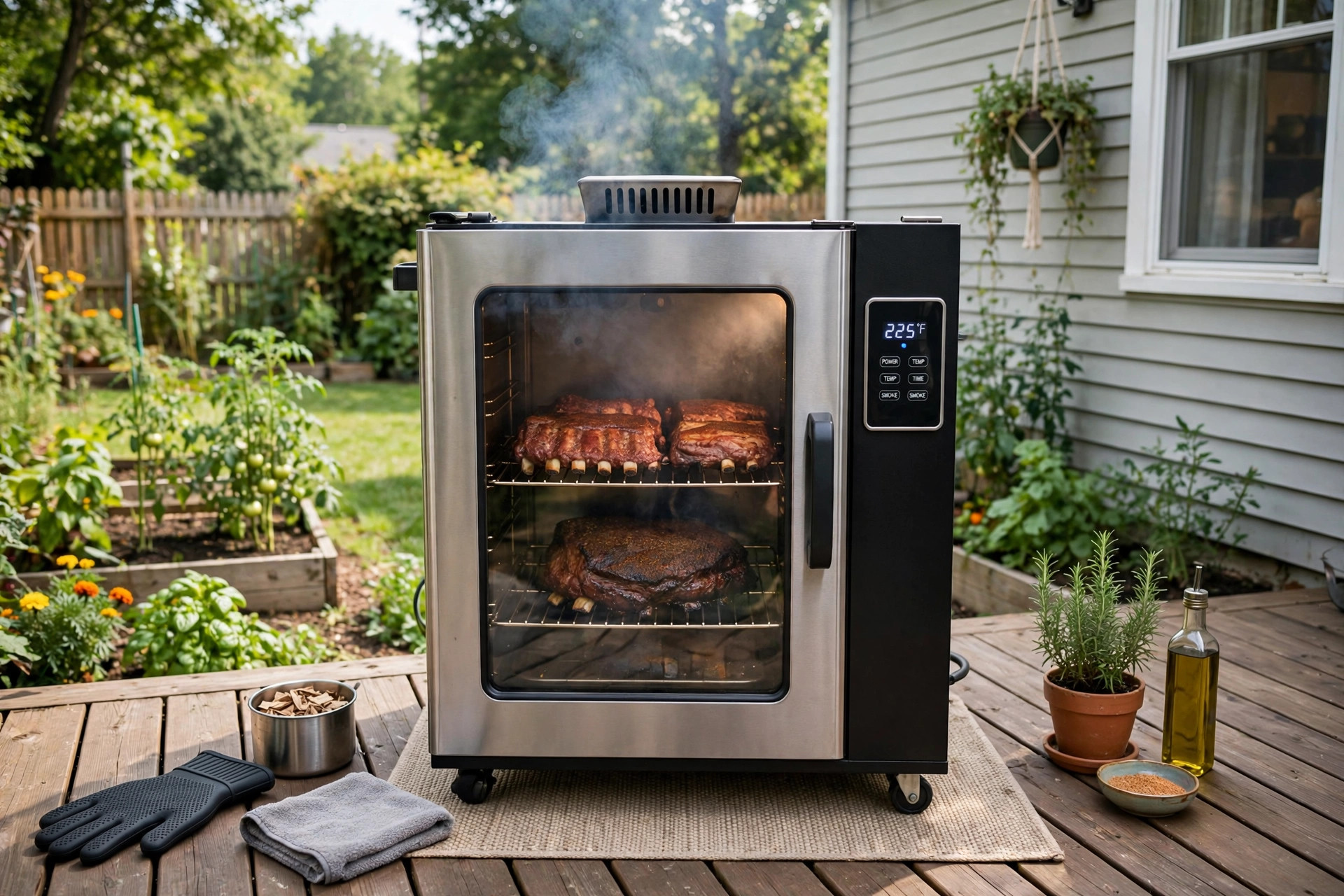

A dirty glass door is a small problem that causes big trouble. When the glass turns black, you cannot see the food inside. Many cooks then open the door to check. Each time the door opens, heat escapes. The cook takes longer. The meat dries out. This article explains how to clean smoker glass door panels in a simple and safe way.
Smoke, grease, and ash build up on the glass with every cook. This is normal. It happens on electric smokers, pellet smokers, gas smokers, and wood smokers alike. The good news is that the film comes off with basic tools and a little patience. You do not need harsh chemicals. You do not need special skill. You need a plan, the right cleaner, and a soft touch.
Why It Matters
A clear glass door is more than a matter of looks. It is a tool. When you can see the meat, you can judge its color. You can watch the bark form. You can spot problems early. A rub that burns, a fire that fades, or a drip pan that fills too high can all be seen through clean glass.
Opening the door to check costs real money and time. A smoker needs thirty minutes or more to return to full heat after the door opens. On a long brisket cook, this can add hours. Food that cooks longer also dries out. A clear door means fewer openings. Fewer openings mean better food and lower fuel bills.
A film of grease can also hold odors. Old smoke layers may turn rancid between cooks. A clean door smells fresh. It also shows care. A smoker that looks cared for will last longer and sell better if you ever pass it on.
What You Will Need: How to Clean Smoker Glass Door
Gather your tools before you begin. You will not need much. Most of these items sit in a normal kitchen or garage.
– A bucket of warm water – Mild dish soap – Baking soda – White vinegar in a spray bottle – A soft sponge or microfiber cloth – An old toothbrush for corners – A plastic scraper or an old credit card – Clean towels for drying – Heat-proof gloves
Avoid steel wool. Avoid metal scrapers. Avoid oven cleaner sprays. These can scratch the glass or leave residue that harms food. Many makers, such as Weber and Traeger, warn against harsh chemicals on smoker parts. Soft tools and mild cleaners do the job without harm.
Step by Step: How to Clean a Smoker Glass Door
Work with a cool smoker. Never clean glass on a hot unit. Sudden cold water on hot glass can crack it. Wait at least two hours after the last cook, or clean the day before your next cook.
Step 1: Empty and Open the Smoker
Remove grates and pans from the door area. Open the glass door fully. Place a towel on the ground under the door. This catches drips and protects the ground.
Step 2: Wipe Off Loose Ash
Use a dry cloth to wipe loose ash and dry flakes from the glass. Work from the top down. Loose soot comes off fast. This step makes the deep clean shorter.
Step 3: Apply a Baking Soda Paste
Mix three spoonfuls of baking soda with a small amount of warm water. Stir until it forms a thick paste. Spread the paste across the glass with your sponge. Cover every black spot. Let it sit for ten to fifteen minutes. Baking soda lifts grease without scratching the glass.
Step 4: Scrub Gently in Circles
Rub the paste into the glass with small round motions. Use the soft side of the sponge. For tough corners and edges, use the old toothbrush. Do not press hard. Let the paste do the work. Wipe once with a damp cloth to check progress. If black film remains, apply more paste and wait five more minutes.
Step 5: Scrape Off Stubborn Spots
For hard tar spots that resist scrubbing, use the plastic scraper. Hold it at a low angle. Push forward with light pressure. A plastic edge will not scratch tempered glass. If you do not have a plastic scraper, an old credit card works well.
Step 6: Spray With Vinegar
Fill a spray bottle with plain white vinegar. Spray the whole glass. The vinegar will fizz on the baking soda that is left. This fizz helps lift the last thin film of grease. Let it sit for two or three minutes.
Step 7: Wipe Clean and Dry
Wipe the glass with a clean damp cloth. Rinse the cloth often. Finish with a dry microfiber cloth. Drying matters. Air drying can leave spots. A dry cloth leaves the glass clear and bright.
Stand back and look through the door. You should see straight through. If thin haze remains, repeat the paste step once more. Thick builds from many cooks may need two rounds.
Gentle Cleaners That Work Well
Baking soda and vinegar suit most jobs. A few other mild options exist for stubborn cases.
Dish soap and water. A drop of mild dish soap in warm water cuts fresh grease. Use this for light film after short cooks.
Wood ash paste. Old pit masters use cool ash from the smoker itself. Mix ash with a little water into a paste. The ash is a mild abrasive. It works much like baking soda. Use only ash from clean hardwood with no lighter fluid.
Cream of tartar. Mix cream of tartar with vinegar into a paste. This mild acid mix handles mineral spots well.
Commercial smoker cleaners. Some brands sell cleaners made for smoker glass. Check that the label says safe for glass and food areas. Rinse well after use. Guidance from makers such as Char-Broil and Broil King often points owners toward mild cleaners first.
Never use oven cleaner. It can pit the glass and leave toxic residue. Never use bleach. Never use ammonia on a smoker door. These are too harsh for a food cooker.
Types of Smoker Glass Doors
Not all smoker doors use the same glass. The care steps above suit all types, but a few details help.
Tempered glass. Most modern smokers use tempered glass. It handles heat well and resists breaking. It still needs gentle tools. Metal scrapers can scratch it.
Double-pane glass. Some high-end units use two layers of glass. Clean only the outside and inside faces you can reach. Do not take the door apart unless the manual allows it. Moisture trapped between panes must be handled by the maker.
Glass with gaskets. Many doors have rubber or fiberglass seals around the glass. Keep cleaners off the gasket when you can. Soapy water is fine on gaskets. Scrubbing them hard will wear them out. Dry them well to stop mold.
If your smoker has a full glass window panel, the same routine applies to pellet grill maintenance tips for beginners and to learning how to clean pellet grill after use.
How Often Should You Clean the Glass
Clean the glass after every cook if you can. Fresh film comes off in minutes. Film from five cooks takes much longer. A quick wipe after each cook is the best habit.
At the very least, clean the door before each cook. A clean start means a clear view from the first hour. On long cooks of twelve hours or more, you may wipe the inside of the glass once halfway through with a damp cloth while the smoker runs. Wear heat gloves and keep the door open only for a moment.
Cost and Price
Cleaning a smoker glass door costs almost nothing. Baking soda, vinegar, dish soap, and water are kitchen basics. A spray bottle costs a few dollars at most. A pack of microfiber cloths costs little and lasts for years. A plastic scraper costs a few dollars.
Commercial smoker glass cleaners cost more, often between eight and fifteen dollars a bottle. They are not needed for normal use. They may help on glass that has not been cleaned in a year or more. Even then, a second round of baking soda paste often works just as well for free.
The real cost of a dirty door is fuel and time. Every door opening wastes heat. Pellet, charcoal, or propane all cost money. Keeping the glass clear saves both.
Care and Upkeep Between Cooks
A few small habits keep the glass clear for longer.
Wipe the glass with a dry cloth while the smoker is still warm after a cook. Not hot, just warm. Warm grease wipes off far easier than cold grease.
Keep the door closed during the cook. Every opening lets smoke rush out, then fresh air rushes in when the door shuts. This cycle bakes grease onto the glass faster.
Use a drip pan under fatty meats. Much of the grease film comes from dripping fat, not from smoke. A pan catches the fat before it splatters.
Cover the smoker between uses. A good cover keeps rain and dust off the door. Wet soot turns into a hard paste that is much harder to clean. A grill cover from a store such as Home Depot is a simple buy.
Check the gasket each season. A worn gasket leaks smoke around the door edge. Smoke that leaks across the glass edge bakes on fast. Replace worn seals to keep the view clear.
When choosing your next cooker, compare models in our guide to the best smoker for beginners under 300 and look for doors with easy-open latches and thick tempered glass.
Safety Notes
Safety comes first with any cooker.
Let the smoker cool. Glass can crack if cold cleaner hits hot glass. Hands can burn on a warm door. Wait until the unit is fully cool.
Wear gloves. Heat-proof gloves protect against rough edges and hot spots. They also keep cleaner off your skin during long scrubbing.
Keep cleaners away from food. Remove all food and grates before you clean. Rinse the glass well. Leftover cleaner can touch food on the next cook.
Mind the fumes. Vinegar smells strong in a closed space. Clean outdoors or with the door open to fresh air.
Check the manual. Some makers have door-specific rules. A quick check of the manual protects your warranty. Safety rules from groups such as Consumer Reports also apply to outdoor cookers.
Mind your back. Smoker doors can be heavy. Do not lean the full door weight on the glass. Support the door with one hand while you scrub.
Common Mistakes to Avoid
New owners make the same few errors. Avoid them and the job stays easy.
Cleaning while hot. This risks cracked glass and burns. Patience is the fix.
Using a razor blade. Metal blades scratch tempered glass. Scratches catch grease and make each later cleaning harder.
Using oven cleaner. The chemicals are too strong for smoker glass. They can etch the surface and taint food.
Skipping the dry step. Wet glass spots as it dries. A final dry wipe gives a streak-free finish.
Cleaning once a year. Thick built-up tar is a hard job. Light monthly cleaning is far easier than one heavy yearly job.
For more on heat and smoke control, see the expert guides at AmazingRibs and The Spruce Eats. Both cover how smoke and grease behave in cookers.
Frequently Asked Questions
Can I use window cleaner on my smoker glass door?
Plain glass cleaner is mild, but many contain ammonia. Ammonia can harm gaskets and may leave residue near food. Baking soda and vinegar work better and cost less. Save the window cleaner for house windows.
Will the black film hurt my food?
No. The black film is baked-on smoke and grease. It does not poison the food. But it blocks your view. A blocked view leads to more door openings, and that does hurt the food through heat loss.
How do I clean the glass without scratching it?
Use only soft tools. A sponge, a microfiber cloth, and a plastic scraper are safe. Work in gentle circles. Test any new cleaner on a small corner first. If you hear grit under the sponge, stop and rinse the sponge clean.
Can I clean the glass while the smoker is still warm?
It is better to wait until the smoker is cool. Warm glass cleans a bit easier, but the risk of burns and cracked glass is real. A full cool-down is the safe choice. Clean the day before your next cook.
What if the glass stays hazy after cleaning?
A thin haze after cleaning is common on old smokers. Try a second round of baking soda paste with a longer wait. A vinegar spray after the second round often clears the haze. Deep scratches or etched glass may never look new, but the view should still be clear enough to read the meat.
Should I take the door off to clean it?
No. Leave the door on its hinges. Removing the door risks bent hinges and a poor seal when you put it back. Every step of this guide works with the door in place.
A Final Word
Learning how to clean smoker glass door panels is a small skill with a big payoff. A clear door means fewer openings, steadier heat, and better meat. The tools are simple. The cleaner is mild. The steps take less than half an hour on most smokers.
Make it a habit. Wipe the glass after each cook. Do a full clean once a month in cooking season. Your smoker will thank you with clearer views and tastier food. For maker-specific care tips, check resources such as Napoleon for your model. A little care keeps the glass bright for years of good cooks.
References
AmazingRibs.com. (n.d.). Barbecue and grilling science. https://www.amazingribs.com Broil King. (n.d.). Gas and charcoal grills. https://www.broilkingbbq.com Char-Broil. (n.d.). Gas and charcoal grills. https://www.charbroil.com Consumer Reports. (n.d.). Product reviews and ratings. https://www.consumerreports.org Napoleon. (n.d.). Fireplaces, grills, and heating products. https://www.napoleon.com The Home Depot. (n.d.). Home improvement products. https://www.homedepot.com The Spruce Eats. (n.d.). Recipes and cooking guides. https://www.thespruceeats.com Traeger. (n.d.). Wood pellet grills. https://www.traeger.com Weber. (n.d.). Grills and outdoor cooking. https://www.weber.com
Was this guide helpful?

About Michael Thompson
The My Garden US editorial team writes practical, in-depth home and garden guides for American homeowners — tested advice, no fluff.
You May Also Like
The Best Outdoor Deep Fryer for Turkey: A Buyer’s Guide
January 28, 2026 0 views
Best BBQ for Camping Trips Reviews: What to Buy and Why
April 24, 2026 0 views
The Best Outdoor Grill for Mountain Cabin Weekends
September 23, 2026 0 views