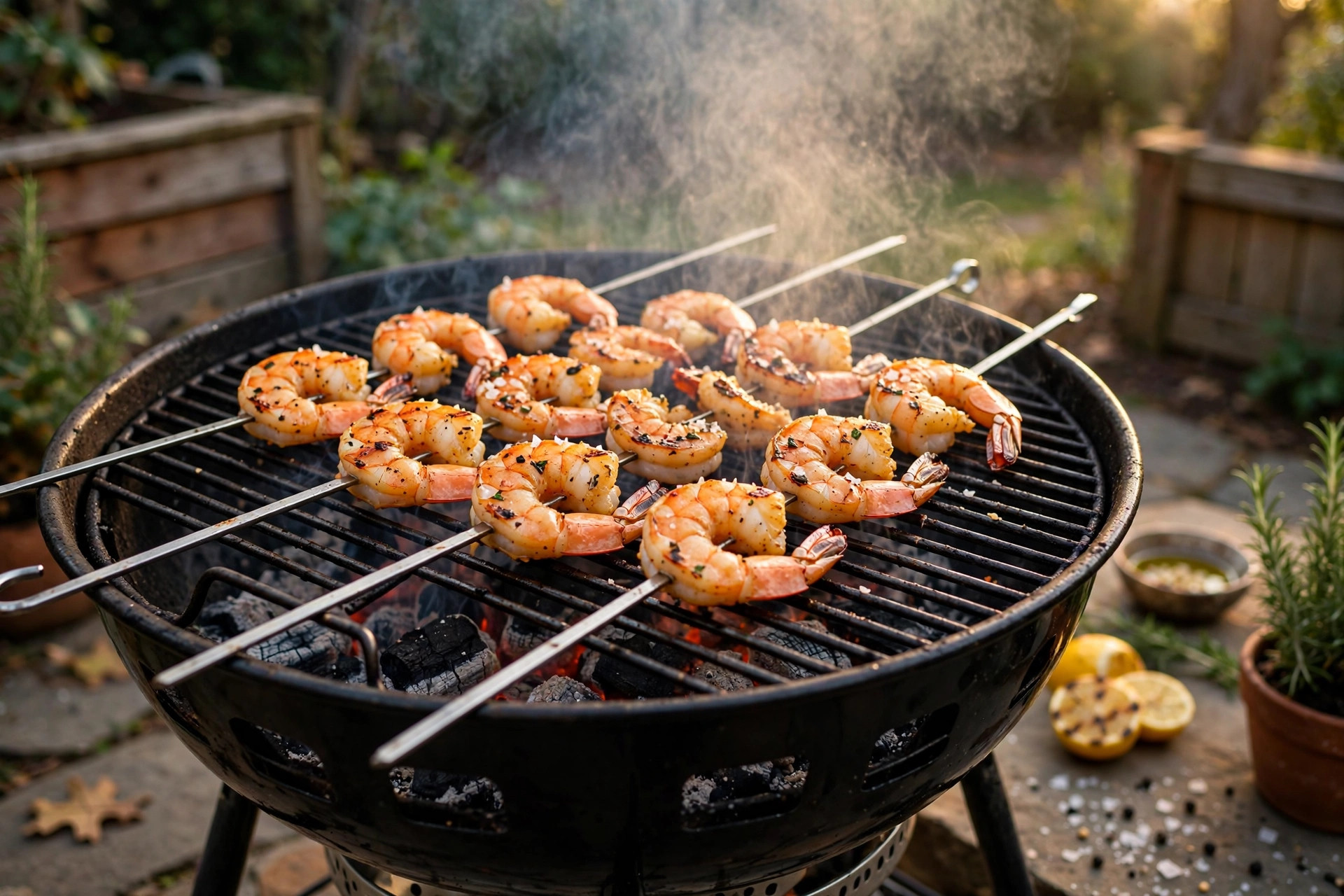
Shrimp are among the fastest foods you can cook on a grill. They go from raw to done in minutes. That speed is a gift and a risk. One minute too long and they turn rubbery. Learn how to grill shrimp on skewers the right way and you will get plump, juicy shrimp every time. Skewers keep the shrimp together, make turning easy, and stop them from falling through the grates. This guide walks through the whole process, from the store to the plate.
Why It Matters
Shrimp cook quicker than almost any other food you will put on a grill. A steak gives you room for error. Shrimp give you none. The window between raw and overcooked can be less than a minute.
Skewers solve several problems at once. Loose shrimp fall through wide grill grates. Small shrimp are hard to turn one by one with tongs. Threaded on a skewer, a dozen shrimp move as one piece. You flip once instead of twelve times. Every shrimp gets the same heat on each side.
Skewers also even out the cooking. Shrimp lying flat and close together get uniform heat, with no piece hiding in a cold spot.
A skewer is a natural portion. Four to six shrimp on a stick make a tidy appetizer that guests can eat without utensils.
The method works on any grill: gas gives steady heat, charcoal adds smoky flavor. Pellet grills, like those from Traeger, give gentle heat that suits shrimp well. The steps below fit all of them. What changes is only how you set up the fire.
Choosing the Right Shrimp: How to Grill Shrimp on Skewers
The shrimp you buy decide the result before you ever light the grill. Size, freshness, and prep all matter. Take time at the store and the rest gets easier.
Size Counts
Buy large or jumbo shrimp. Look for counts like 16/20 or 21/25 per pound. Those numbers mean 16 to 20 shrimp per pound. Larger shrimp stay juicy longer over high heat. Small shrimp overcook in seconds and dry out fast.
Very large shrimp, like U8 to U12, forgive small timing mistakes but cost more. For a first try, 21/25 shrimp hit the sweet spot of price and ease.
Fresh or Frozen
Most “fresh” shrimp at the counter were frozen at sea and thawed at the store. There is nothing wrong with that. But buying frozen shrimp yourself is often the better move. You control the thaw. You know they were kept cold the whole time.
Thaw frozen shrimp in the refrigerator overnight, or seal them in a bag under cold running water for twenty to thirty minutes. Never thaw at room temperature or in hot water. Both invite bacteria and harm texture.
Good frozen shrimp taste as good as fresh ones on the grill. Many grill makers and food writers agree on this point, and guides at Char-Broil say the same about frozen seafood.
Peeled and Deveined
Buy shrimp already peeled and deveined when you can. Peeling a pound of shrimp takes time and leaves a mess. The dark vein is the digestive tract; leaving it in is safe but unpleasant.
Some cooks grill shrimp with the shells on, which shields the meat from direct heat. For skewers, peeled shrimp are the simpler choice. They thread cleanly and eat cleanly.
If you buy shell-on shrimp, peel them before skewering. Leave the tails on for looks; they give guests a handle.
Picking the Best Skewers
Not all skewers behave the same on a grill. The wrong skewer spins, burns, or bends. The right one holds shrimp steady and lasts for years.
Flat Metal Skewers
Flat metal skewers are the best tool for this job. Their flat shape stops shrimp from spinning when you flip them. Round skewers let food rotate, so one side burns while the other stays pale.
Stainless steel skewers cost a few dollars each, never burn, and last for years. If you grill often, buy a set. Grill brands such as Napoleon and Broil King sell sturdy flat skewers that work for shrimp and for larger foods like grilling juicy pork chops.
Bamboo Skewers
Bamboo skewers are cheap and easy to find. A pack of one hundred costs a few dollars at any grocery store or at Home Depot. They work fine for shrimp.
Soak bamboo skewers in water for at least thirty minutes before grilling, since dry bamboo catches fire. The exposed ends may still char, which is harmless; wrapping them in foil adds safety.
Bamboo skewers are single use. Throw them away after the meal. For a one-time party, they are the practical pick.
Double-Pronged Skewers
Double-pronged skewers have two parallel rods. They hold food even more firmly than flat single skewers. They shine with slippery foods. Shrimp are slippery, so these work very well.
They cost more than bamboo and are worth trying if you see them in a store.
How to Grill Shrimp on Skewers: Step by Step
Follow these steps in order. The whole cook takes under ten minutes once the grill is hot.
1. Dry the Shrimp
Pat the thawed shrimp dry with paper towels. Dry surfaces sear better. Wet shrimp steam instead of browning. Take an extra minute here. It pays off in flavor.
2. Season Simply
Toss the shrimp with oil, salt, and pepper. Olive oil or any neutral oil works. Use about one tablespoon of oil per pound of shrimp. Salt lightly. Shrimp are small and over-salting is easy.
Keep seasoning simple on your first try. Plain salted shrimp teach you the timing; add garlic, lemon, paprika, or herbs once you know it.
3. Marinate Briefly If You Like
If you use a marinade, keep it under thirty minutes. Acidic marinades with lemon juice or vinegar turn the texture mushy if left too long. A light coating of oil and spices needs no wait at all. Recipe collections at The Spruce Eats offer marinade ideas for later cooks.
4. Thread the Shrimp
Push the skewer through the thick end of each shrimp and out near the tail. Curve each shrimp slightly so it lies flat against the next one. Leave a small gap between pieces so heat reaches all sides. Four to six shrimp per skewer is right.
Thread shrimp snugly without crushing them. They shrink as they cook, so a firm fit loosens on the grill.
5. Heat the Grill
Set up for direct medium-high heat. On a gas grill, that means all burners on medium-high, lid closed, for ten minutes. On charcoal, spread a full chimney of lit coals in an even layer. You want heat you can hold your hand over for about three seconds.
Very high heat chars the outside before the inside cooks. Medium-high gives a golden sear with a tender center. Kamado grills like the Big Green Egg hold this range well with the vents set partway.
6. Oil the Grates
Clean the grates with a grill brush first. Then wipe them with an oil-soaked paper towel held in tongs. Hot, clean, oiled grates are the secret to shrimp that release instead of sticking. Do this step every time.
7. Grill Two to Three Minutes per Side
Lay the skewers across the grates, not parallel to the bars. Across the bars they cannot slip through. Close the lid if your grill has one.
Cook for two to three minutes on the first side. Look for pink color and light grill marks. Flip once. Cook one to two minutes on the second side. Total time is rarely more than five minutes.
Shrimp are done when they curl into a loose C shape and turn opaque pink; a tight O shape means overcooked. The safe internal temperature is 145 degrees Fahrenheit. Pull them just as they reach it.
8. Rest and Serve
Move the skewers to a clean platter, rest them two minutes, squeeze fresh lemon over them, and serve right away. Shrimp cool fast and are best hot.
Set out the skewers on a tray with lemon wedges and a dipping sauce, and keep prep tidy with an outdoor prep table if you grill often.
What It Costs
Grilling shrimp on skewers is not the cheapest cookout, but it is far from the priciest. Knowing the costs helps you plan.
A pound of large frozen shrimp costs about eight to fifteen dollars at most stores, depending on size and region. That pound makes four to six skewers, enough for four people as an appetizer or two as a main dish.
Skewer costs are small: bamboo costs pennies each, and a set of six flat metal skewers runs ten to twenty dollars and lasts for years. A grill brush, tongs, and an instant-read thermometer are one-time buys.
Compared with steak or ribs, shrimp are a mid-range choice: more than chicken, less than beef, and worth it for the speed and ease. Shoppers comparing gear often check Consumer Reports for grill ratings before they buy, since the right grill makes every cook easier.
Compact grills made for apartment dwellers handle a few skewers with no trouble.
Care and Upkeep
Good tools last longer when you care for them. Skewers and grates need little work, but they need some.
Wash metal skewers with hot soapy water after each use. Hand washing keeps them looking sharp. Dry them fully before storing so they do not spot.
Throw bamboo skewers away after use. They weaken in heat and can splinter.
Clean the grates while they are still warm. A stiff brush takes off most residue; for stuck bits, heat the grill ten minutes and brush again. Deep-clean the whole grill once a season. Grill makers like Weber publish simple cleaning guides for their models.
Cover the grill between uses. A cover keeps rain and dust out and adds years to its life, whatever the fuel.
Check gas lines and connections once a year. Look for cracks in hoses. Test for leaks with soapy water. Small care steps prevent big problems.
Safety
Shrimp are seafood, and seafood demands care. Follow a few rules and the cook stays safe.
Keep raw shrimp cold until they go on the grill. Keep them in the refrigerator while the grill heats.
Wash your hands after touching raw shrimp, and wash the platter, tongs, and tools before they touch cooked food. Never put cooked skewers back on the plate that held the raw ones.
Cook shrimp to 145 degrees Fahrenheit inside. Pink opaque color is a good visual sign, but a thermometer is certain.
Watch for flare-ups. Shrimp are lean, so grease fires are rare, but dripping oil can flame on charcoal. Keep a spray bottle of water nearby and move skewers to a cooler spot if flames rise.
Let coals cool fully before leaving the grill. On gas, turn off the burners and close the tank valve. Keep children at least three feet away from the hot grill.
FAQ
How long does it take to grill shrimp on skewers?
Five minutes or less in most cases: two to three minutes on the first side, one to two after flipping. Large shrimp may need an extra minute. Start checking early, since you cannot uncook shrimp.
Should I peel shrimp before grilling on skewers?
Peeling is best for skewers. Peeled shrimp thread cleanly and eat cleanly. Shell-on shrimp stay a bit juicier, but expect messier eating; for guests, peeled is the kinder choice.
Can I grill frozen shrimp without thawing?
Thaw them first. Frozen shrimp cook unevenly, with the outside overcooking while the center stays cold. A quick cold-water thaw takes twenty to thirty minutes. Pat them dry after thawing.
Is gas or charcoal better for shrimp skewers?
Both work well. Gas gives steady heat and easy control; charcoal adds smoky flavor. Technique matters more than fuel: dry shrimp, clean oiled grates, and right timing beat any fuel advantage. Deep technique guides at AmazingRibs.com cover both fuels in detail.
How do I keep shrimp from sticking to the grill?
Clean the grates with a brush, wipe them with oil on a paper towel, and make sure the shrimp are dry and lightly oiled. Do not move shrimp before they release; once the sear forms, they lift off on their own.
Can I prepare shrimp skewers ahead of time?
Yes, with limits. Thread and season the skewers up to a few hours ahead and keep them covered in the refrigerator. Do not add acidic marinades ahead of time; lemon or vinegar change the texture if left too long.
A Final Word
Grilled shrimp on skewers reward simple cooking: buy large shrimp, keep them dry, use medium-high heat, flip once, and pull them the moment they turn pink. Practice it once or twice and the skewers become the fastest crowd-pleaser in your backyard.
References
AmazingRibs.com. (n.d.). Barbecue and grilling science. https://www.amazingribs.com Big Green Egg. (n.d.). Kamado grills and outdoor cooking. https://www.biggreenegg.com Broil King. (n.d.). Gas and charcoal grills. https://www.broilkingbbq.com Char-Broil. (n.d.). Gas and charcoal grills. https://www.charbroil.com Consumer Reports. (n.d.). Product reviews and ratings. https://www.consumerreports.org Napoleon. (n.d.). Fireplaces, grills, and heating products. https://www.napoleon.com The Home Depot. (n.d.). Home improvement products. https://www.homedepot.com The Spruce Eats. (n.d.). Recipes and cooking guides. https://www.thespruceeats.com Traeger. (n.d.). Wood pellet grills. https://www.traeger.com Weber. (n.d.). Grills and outdoor cooking. https://www.weber.com
Was this guide helpful?

About David Wilson
The My Garden US editorial team writes practical, in-depth home and garden guides for American homeowners — tested advice, no fluff.