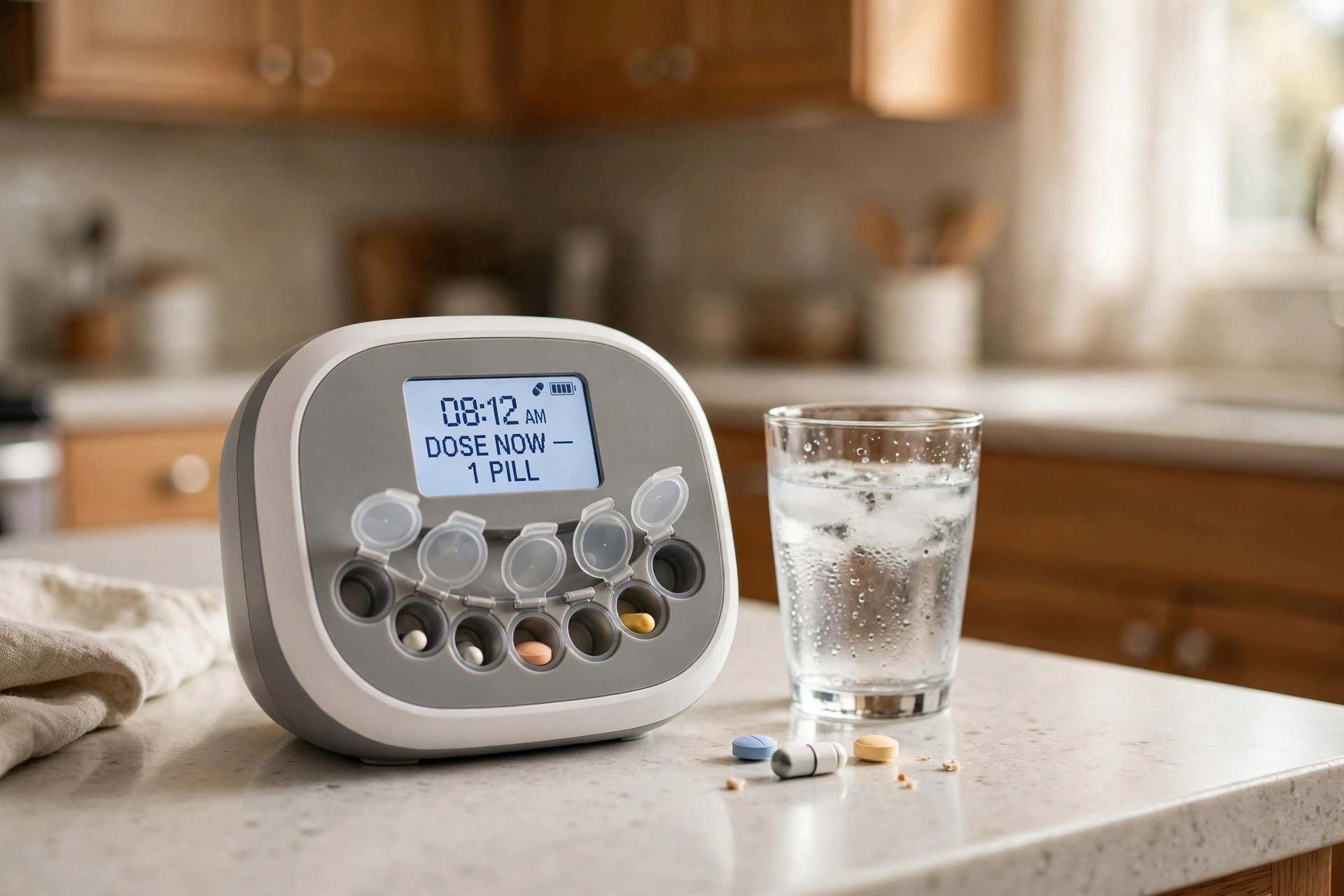

Taking medicine on time is hard. A person may forget. A person may take a dose twice by mistake. This is true for older adults. It is also true for busy workers and for parents. A smart medication reminder dispenser can help. It stores pills. It sounds an alarm at set times. Some models send a message to a phone. This guide gathers the key points from smart medication reminder dispenser reviews usa shoppers rely on. It explains what these devices do, how to choose one, what they cost, and how to use them with care. Read it before you buy.
Why Medication Reminders Matter
Missed doses are a large problem. Studies from many years show that people skip pills for simple reasons. They forget. They are away from home. They feel fine and think the pill can wait. Each missed dose can reduce the effect of a drug. For blood pressure, diabetes, and heart drugs, a missed dose can be serious.
A reminder device does not replace good habits. It supports them. The alarm tells the person when it is time. The locked tray prevents a double dose. A family member far away can get a notice if a dose is missed. This kind of support gives peace of mind to both the patient and the family. A daughter across the country can check her father’s phone log each evening. She can see that all four doses were taken. If one is missed, she can call right away. Independent testing groups such as Consumer Reports have long noted that simple tools often help more than complex ones. The same idea applies here. A steady alarm beats a clever app that no one opens.
What a Smart Medication Dispenser Does: Smart Medication Reminder Dispenser Reviews Usa
A smart medication reminder dispenser is an electric pill box. It holds pills in separate trays. Each tray stands for one dose time. The user fills it once a week or once a month. The device does the rest.
When dose time comes, the machine makes a sound. Many units also flash a light. Some play a voice message. The correct tray turns or opens. The user takes the pills and the machine notes the time. Many models connect to a home Wi-Fi network. They send alerts to a phone app. Some send email or text messages to a caregiver. Reviews covered by tech outlets such as CNET and PCMag show that app quality varies a lot. The hardware may be fine while the app is weak, or the other way around.
How to Choose a Smart Medication Dispenser
Capacity and Dose Schedule
Count the pills first. Some people take two pills a day. Others take ten. A simple carousel model may hold 28 doses. A large tray model may hold 90 doses. Choose a size that fits the full week or month. Refilling too often invites mistakes. A unit that holds 30 days of doses needs one refill per month. That is easy to keep up with.
Locking and Security
A lock matters in homes with children. It also matters for people with memory loss. A locked dispenser will not release extra pills. Most smart models have a key lock. Some add a passcode. When checking product safety guidance from the CPSC, look for clear warnings about child access. A locking unit works much like the safety mindset behind a door jammer security bar: keep what is precious behind a barrier.
Alarm Style and Volume
An alarm must be loud enough to hear from another room. Many buyers find this out too late. Check the volume in the specs. Look for models with a light signal as well as sound. A flashing light helps people with hearing loss. Some units allow a custom voice message. A familiar voice saying “take your pills now” can work better than a beep.
App and Alerts
The app is the smart part of the device. It should show which doses were taken and which were missed. It should let a caregiver see the same data. Test the app before you commit. Read recent app store reviews. Many reviews in smart medication reminder dispenser reviews usa roundups warn that a good dispenser can be ruined by a poor app. Look for simple screens and plain text. Avoid apps that demand odd permissions.
Power and Battery Backup
The dispenser should keep working when the power goes out. A battery backup holds the schedule during short outages. Check how long the backup lasts. Some units run for days on batteries alone. Others hold only a few hours. A battery is cheap insurance. Note also how the unit is charged or what batteries it takes.
Main Types Available
Rotating Carousel Dispensers
These are the most common. Pills sit in a round tray with separate slots. At dose time, the tray turns so the correct slot opens. They are simple to fill. They are also simple to use. Most hold 28 to 30 doses. They suit people who take medicine two to four times a day.
Tray and Drawer Dispensers
These look like small cabinets. Each drawer holds one day or one dose. The correct drawer unlocks at dose time. They hold more pills than carousel models. Some hold a full month of doses. They take more space on the counter. They are a good pick for people with many prescriptions.
Connected Pill Bottles
These are simpler. A sensor cap fits a normal pill bottle. The cap tracks when the bottle opens. A phone app gives the reminder. There is no lock and no timed release. These suit independent adults who only need a nudge. They cost much less than full dispensers.
All-in-One Systems
Some firms sell a dispenser as part of a home care kit. These units may include fall sensors or door sensors. They tie medicine data into a larger care picture. They cost more. They suit families who watch over an older parent from far away. In this way they share aims with home safety gear such as a home security system with no monthly fee, where the goal is steady protection without heavy cost.
Cost and Price Ranges
Prices vary widely. A basic connected pill bottle may cost about thirty dollars. A mid-range carousel dispenser with lock and app often costs between one hundred and two hundred dollars. Large tray models with full app service can cost three hundred dollars or more.
Some brands add a monthly fee for the app or for caregiver alerts. Read the fine print. A device that seems cheap can cost more over two years than a pricier model with no fee. Shipping and extra trays also add up. Set a budget that covers two years of use, not just the box.
Care and Upkeep
A dispenser is only as good as its refill routine. Set one fixed day to refill it. Sunday morning works for many families. Keep the pill bottles nearby during refill. Double-check each slot against the label. One wrong slot can spoil a week.
Clean the tray once a month. Remove all pills first. Wipe with a dry cloth. Never soak the unit. Water can damage the motor and the electronics. Check the alarm sound each month too. Press the test button if the unit has one. Replace backup batteries once a year even if they still work.
Keep the unit in a stable place. The kitchen counter works well for most people. It should be away from steam and heat. Do not place it above the stove. The app should stay logged in on the caregiver’s phone. Update the app when asked so alerts keep working.
Safety Points
A dispenser is a tool, not a guard. It cannot tell whether a pill is correct. Only the person who fills it can do that. Always fill in good light. Always read each label. If two pills look alike, stop and check.
Keep all medicines locked away from children. The dispenser lock is one layer. The storage of refill bottles is another. Child poisoning from medicines is a known hazard, and safety writers have covered it for years. Homes that protect medicine often protect other points of entry too, from a smart lock on the front door to window latches. Think of the dispenser as part of a safer home.
Tell the doctor about the device. Some drugs must be taken with food or at exact times. The alarm schedule should match the doctor’s orders. If a dose is missed, follow the label’s advice. Do not take a double dose unless the doctor says so.
Frequently Asked Questions
Do these dispensers work without Wi-Fi?
Most do. The alarm and tray release work on the unit itself. Wi-Fi is only needed for phone alerts and remote checks. If the internet drops, the local alarm still sounds. Battery backup covers power cuts. This is a strong point to confirm in reviews before buying.
Can a caregiver in another state get alerts?
Yes, in most cases. The app sends missed-dose notices by text, email, or push alert. The caregiver needs a smartphone and the app installed. Some brands charge a monthly fee for caregiver accounts. Others include it free. Check the pricing page carefully.
What happens if the person is not home at dose time?
The unit waits. Many models keep the dose available for a set window, often one to two hours. After that, the tray may lock the missed dose away. The app records the miss. Some units will sound the alarm again later. Set the dose times to match the real daily routine so misses are rare.
Are smart dispensers covered by insurance?
Usually not. Medicare and most private plans treat them as convenience items. Some plans cover them under durable medical equipment with a doctor’s letter. Call the plan before buying. Keep the receipt in case the rules change.
How do voice assistants fit in?
Many homes already use voice speakers for reminders. A Google smart speaker can announce medicine times through routines. This is a useful backup to the dispenser’s own alarm. Tech coverage at The Verge often notes that simple voice routines are among the most used smart home features. Use the speaker as a backup, not as the only reminder.
What should I do with old or unused pills?
Never pour them down the drain. Take them to a drug take-back program. Many pharmacies offer drop boxes. The DEA runs take-back days twice a year. This keeps old drugs out of the water and out of the wrong hands.
A Final Word
The best smart medication reminder dispenser is the one the person will actually use. A simple carousel with a loud alarm beats a fancy unit with an app no one opens. Start with the person’s real needs. Count the pills. Pick the right size. Make sure the lock is solid and the alarm is loud. Test the app with the caregiver who will watch it. Then build the refill habit and keep it.
Smart home gear keeps growing, from doorbell cameras to whole-home systems sold by firms like Ring, SimpliSafe, and ADT. A medication dispenser belongs in that same family of quiet helpers. It does its job in the background. It asks little. It keeps a simple promise: the right pills at the right time. That promise, kept day after day, is worth more than any feature list. For many families, that steady help is the whole point of the purchase.
References
ADT. (n.d.). Home security and automation. https://www.adt.com CNET. (n.d.). Technology news and reviews. https://www.cnet.com Consumer Reports. (n.d.). Product reviews and ratings. https://www.consumerreports.org Google Store. (n.d.). Smart home devices. https://store.google.com PCMag. (n.d.). Technology product reviews. https://www.pcmag.com Ring. (n.d.). Smart home security devices. https://www.ring.com SimpliSafe. (n.d.). Home security systems. https://www.simplisafe.com The Verge. (n.d.). Technology news and reviews. https://www.theverge.com U.S. Consumer Product Safety Commission. (n.d.). Product safety information. https://www.cpsc.gov
Was this guide helpful?

About Emily Rodriguez
The My Garden US editorial team writes practical, in-depth home and garden guides for American homeowners — tested advice, no fluff.
You May Also Like
Home Assistant vs SmartThings Comparison USA: Which Smart Home Platform Wins
April 30, 2026 0 views
Door Jammer Security Bar Reviews 2026 USA: A Plain Guide for Every Home
January 30, 2026 0 views
Smart Home for Elderly Parents Checklist USA: A Room-by-Room Guide for Families
May 27, 2026 0 views