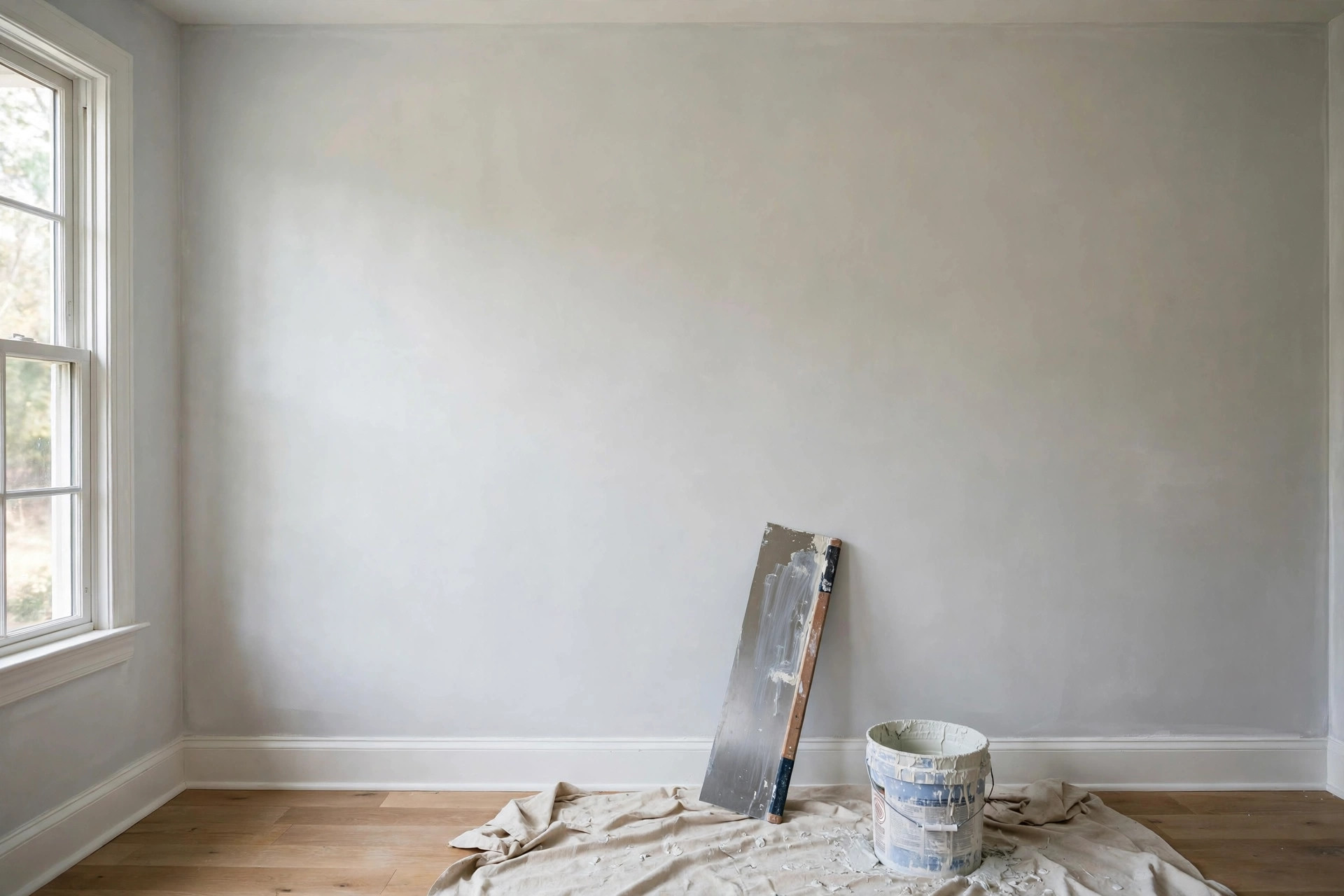

Skim coat drywall cost per square foot is one of the first figures homeowners ask about when their walls look tired. Old walls carry the marks of years. Nail holes, dents, rough patches from torn wallpaper, and uneven joints all show through fresh paint. A skim coat is a thin layer of joint compound spread over the wall. It fills the low spots and smooths the high spots. When it is done well, the wall looks like new plaster. Across the United States, the price for this work runs from about one dollar to about six dollars per square foot. The range is wide because no two walls are the same. The state of the old surface, the size of the job, and the skill of the worker all shape the final bill. This guide explains what a skim coat is, why it matters, what it costs, and how to get the best value for your money.
Why Smooth Walls Matter
Walls are the largest surface in most rooms. Paint can only do so much. If the surface under the paint is rough, the paint will look rough. Light from a window slides across the wall and shows every bump and seam. A skim coat gives paint a clean canvas. It is the step that stands between an ordinary paint job and one that looks truly professional.
Many older homes have walls that were never finished to a high standard. Builders in past decades often stopped at what the trade calls a level four finish. That means the joints were taped and the screw holes were filled, but the paper face of the drywall still shows its texture. Under flat paint, this looks fine. Under eggshell or satin paint, or beside a bright window, the seams can flash. A skim coat brings the wall to a level five finish, the smoothest grade in the drywall trade. For help with damaged areas before the final coat, many homeowners also compare professional drywall repair cost near me so the budget covers both fixes and finishing.
A smooth wall also helps in the long run. New coats of paint go on with fewer coats needed, and rooms feel cleaner and brighter. In a home sale, buyers notice walls. Rough walls suggest neglect, and smooth walls suggest care. The cost of a skim coat is often repaid in how the whole house presents itself.
How to Choose Between Skim Coating and Other Fixes: Skim Coat Drywall Cost Per Square Foot
Not every wall needs a full skim coat. Small damage calls for small repairs. A few nail holes need only a dab of spackle. A single bad seam may need one pass of joint compound. A full skim coat is the answer when the damage is spread across the wall. If you see texture from removed wallpaper over half the wall, or wave after wave of old patches, a skim coat is faster and gives a better result than dozens of small repairs.
When a Skim Coat Is the Right Call
A skim coat is the right call when the wall is sound but ugly. The drywall must be firm. It must not be crumbling, swollen with water damage, or pulling loose from the studs. Those problems need new drywall, not a thin coat of mud. If the wall is solid and the paint sticks well, skimming will work.
Texture removal is the most common reason. Older homes often have orange-peel, knockdown, or popcorn texture on the walls. Skimming over it with joint compound buries the texture under a smooth skin. The result is cleaner and safer than heavy sanding, which raises dust that should be handled with care.
When to Skip It
Skip the skim coat when only one wall in a room is bad. A single wall can be repaired and the room repainted, though matching texture takes skill. Also skip it when the budget is tight and the damage is minor. A good painter can hide small flaws with the right primer and flat paint. For rooms getting a decorative finish instead of plain paint, such as shiplap wall installation cost per square foot projects, the new covering hides the old wall anyway.
Types of Skim Coating Work
Drywall finishers describe skim coating in two main forms. The full skim covers the entire wall from corner to corner. The spot skim covers only the worst areas. Most professionals recommend the full skim for any wall that will carry gloss or semi-gloss paint, or for walls near strong light. Spot skims can telegraph, meaning the edges of the repair show through the paint as a slight ridge.
Level Five Drywall Finish
A level five finish is the trade term for the smoothest drywall work. It means the whole surface gets a thin skim of joint compound after the standard tape and fill work. This is the finish used in high-end new homes, offices with large windows, and rooms with critical lighting. Paint companies describe surface preparation in their guides, and Sherwin-Williams offers useful reading on how surface quality affects the final paint job. If you are paying for a skim coat, you are paying for level five work.
Skim Coating Over Old Paint and Texture
Skimming over old paint is common. The old paint must be cleaned and scuffed so the compound can grip. Two or three thin coats are better than one thick coat. Each coat dries, gets a light sanding, and the next goes on. Patience is what makes the wall flat.
Skim Coat Drywall Cost Per Square Foot: The Price Breakdown
Skim coat drywall cost per square foot in the United States generally falls between one dollar and six dollars. The low end covers simple jobs in areas with low labor rates. The high end covers difficult walls, textured surfaces, high ceilings, and cities where skilled labor costs more. Most homeowners report paying between two and four dollars per square foot for a full skim coat with sanding.
To see what this means in practice, take a standard room. A bedroom with eight-foot ceilings and about 400 square feet of wall surface would cost roughly 800 to 2,400 dollars at the common range. A living room with 600 square feet of wall might run 1,200 to 3,600 dollars. These figures usually include materials, labor, and a light sanding. They do not usually include primer and paint, which is a separate line on the estimate.
Labor, Materials, and Room Conditions
Labor is the largest part of the price. Joint compound is cheap. A bucket of all-purpose compound covers a good deal of wall and costs little. Skill is what you are buying. A good finisher lays the mud thin and even, sands lightly, and leaves no tool marks. This is skilled hand work, and the price reflects it.
Room conditions add to the cost. Furniture must be moved or covered. High ceilings need scaffolds or stilts. Bathrooms and kitchens have pipes and cabinets to work around. Walls with heavy texture need an extra coat. Each of these steps adds time, and time is what the finisher charges for. Retailers such as Home Depot and Lowe’s sell the compound, blades, and sanding tools, so homeowners sometimes price the materials themselves to check an estimate.
What Drives the Cost Up or Down
Several factors move skim coat drywall cost per square foot within that one to six dollar range. The condition of the wall is the first. A wall in fair shape needs two coats. A wall with deep texture or many patches needs three or four. Each coat is a full pass of labor.
The size of the job is the second. Small jobs cost more per square foot. A finisher must still load tools, protect the room, mix compound, and clean up whether the job is one wall or four. Whole-house work spreads those fixed costs across more square feet, so the rate drops. Asking for a per-room price as well as a per-foot price helps you compare bids fairly.
The local market is the third. Big cities carry higher labor rates than small towns. The season matters too. Painters and drywall workers are busiest in spring and summer. A job booked in the slow months may come in lower. Finally, the finish level matters. A true level five finish with full sanding and inspection costs more than a quick two-coat pass. Decide which level the room needs before you ask for bids. Guidance on choosing finishes and paints is easy to find at Behr and Benjamin Moore, both of which publish clear surface preparation advice.
For homeowners comparing many wall projects at once, it helps to put skim coating beside other per-foot jobs. Reading up on stucco painting cost per square foot usa can sharpen your sense of how surface work is priced across different materials.
Care and Upkeep After a Skim Coat
A skim coat needs time to cure. Joint compound feels dry to the touch in a day, but it is best to wait at least two or three days before priming in normal indoor conditions. Damp weather slows the cure. Do not rush it. Paint applied over damp compound can bubble or peel.
Always prime a skimmed wall before painting. Fresh compound is thirsty. It soaks up paint at a different rate than the old wall around it. A coat of drywall primer evens out the absorption so the topcoat looks uniform. Skip the primer and you may see dull patches where the compound drank in the paint. Two finish coats of paint over the primer give the best result.
After the wall is painted, upkeep is simple. Wash marks with a soft sponge and mild soap. Avoid harsh scrubbing in the first month while the paint fully hardens. If a small dent appears later, a dab of spackle and a touch of paint will fix it. Large damage should be handled by the same finisher or painter who did the original work.
Safety Notes for Homeowners
Skim coating is dusty work. Sanding dried compound fills the air with fine dust. A good contractor seals the work area with plastic sheeting and uses a vacuum sander or a respirator. If you do the work yourself, wear a dust mask rated for fine particles, seal doorways, and ventilate the room when sanding is done. Keep children and pets out of the work area until the dust settles.
Older homes need extra care. Walls painted before 1978 may contain lead paint. Sanding or scraping lead paint spreads lead dust, which is a health hazard, especially for children. Do not sand old paint until it has been tested. The same care applies to homes that may have asbestos in old wall materials, though that is less common. When in doubt, have the materials tested before work begins. Practical safety and how-to guidance for wall projects appears regularly at This Old House and Bob Vila, both trusted names in home repair writing.
Frequently Asked Questions
How long does a skim coat take to dry? Each coat of joint compound dries in about 24 hours under normal indoor conditions. Cool or damp rooms take longer. Most walls need two to three coats, so plan on three to five days of drying before sanding and priming.
Can I skim coat over wallpaper? It is not advised. Wallpaper can bubble and peel under wet compound, and the seams will show through. Remove the wallpaper first. The wall left behind is often rough, which is exactly what a skim coat fixes. Tear the paper, wash off the paste, repair the torn spots, and then skim.
Is skim coating a job I can do myself? A handy homeowner can learn it, but the learning curve is steep. The first walls you skim will likely need extra sanding. For one small wall, trying it yourself is reasonable. For whole rooms, most people get a better result and a fair price from a pro.
How is skim coat cost different from regular drywall finishing? Regular finishing covers taping the joints and filling screw holes. Skim coating adds a thin layer over the entire surface. That is more material and more labor, so it costs more. Think of it as the upgrade from a standard finish to a premium finish. The upgrade is what turns good walls into great walls.
Does a skim coat fix cracks? A skim coat hides hairline cracks, but it does not fix movement. If a crack comes from the house settling or from a loose seam, it will come back. Real fixes mean re-taping the joint or securing the drywall to the studs first.
Should I get more than one estimate? Yes. Get at least three written estimates. Each should state the number of coats, whether sanding and cleanup are included, and whether primer and paint are extra. A very low bid may mean fewer coats or no sanding. Comparing line by line keeps the choice honest. Design and remodeling editors at The Spruce and HGTV often remind readers that detailed written bids are the best defense against surprise charges.
A Final Word
Skim coat drywall cost per square foot is a fair price for one of the most visible upgrades a home can get. One to six dollars a foot buys walls that take paint beautifully and make every room look cared for. The key is knowing what you are buying: a skilled hand, two or three thin coats, careful sanding, and a primer before paint. Get written bids, check past work, and do not choose on price alone. Smooth walls reward the care you put into them, and they keep rewarding you every time daylight crosses the room.
References
Behr. (n.d.). Paints, primers, and stains. https://www.behr.com Benjamin Moore. (n.d.). Paints and stains. https://www.benjaminmoore.com Bob Vila. (n.d.). Home improvement advice. https://www.bobvila.com HGTV. (n.d.). Home and garden ideas. https://www.hgtv.com Lowe’s. (n.d.). Home improvement products. https://www.lowes.com Sherwin-Williams. (n.d.). Paints and coatings. https://www.sherwin-williams.com The Home Depot. (n.d.). Home improvement products. https://www.homedepot.com The Spruce. (n.d.). Home and garden advice. https://www.thespruce.com This Old House. (n.d.). Home renovation guidance. https://www.thisoldhouse.com
Was this guide helpful?

About James Carter
The My Garden US editorial team writes practical, in-depth home and garden guides for American homeowners — tested advice, no fluff.
You May Also Like
Fence Staining Service Near Me: Prices and What They Cover
July 18, 2026 0 views
Deck Staining Cost Calculator Near Me: A Plain Guide to Pricing and Planning
May 22, 2026 0 views
Exterior Brick Painting Service Near Me Cost: What Homeowners Should Know
March 11, 2026 0 views