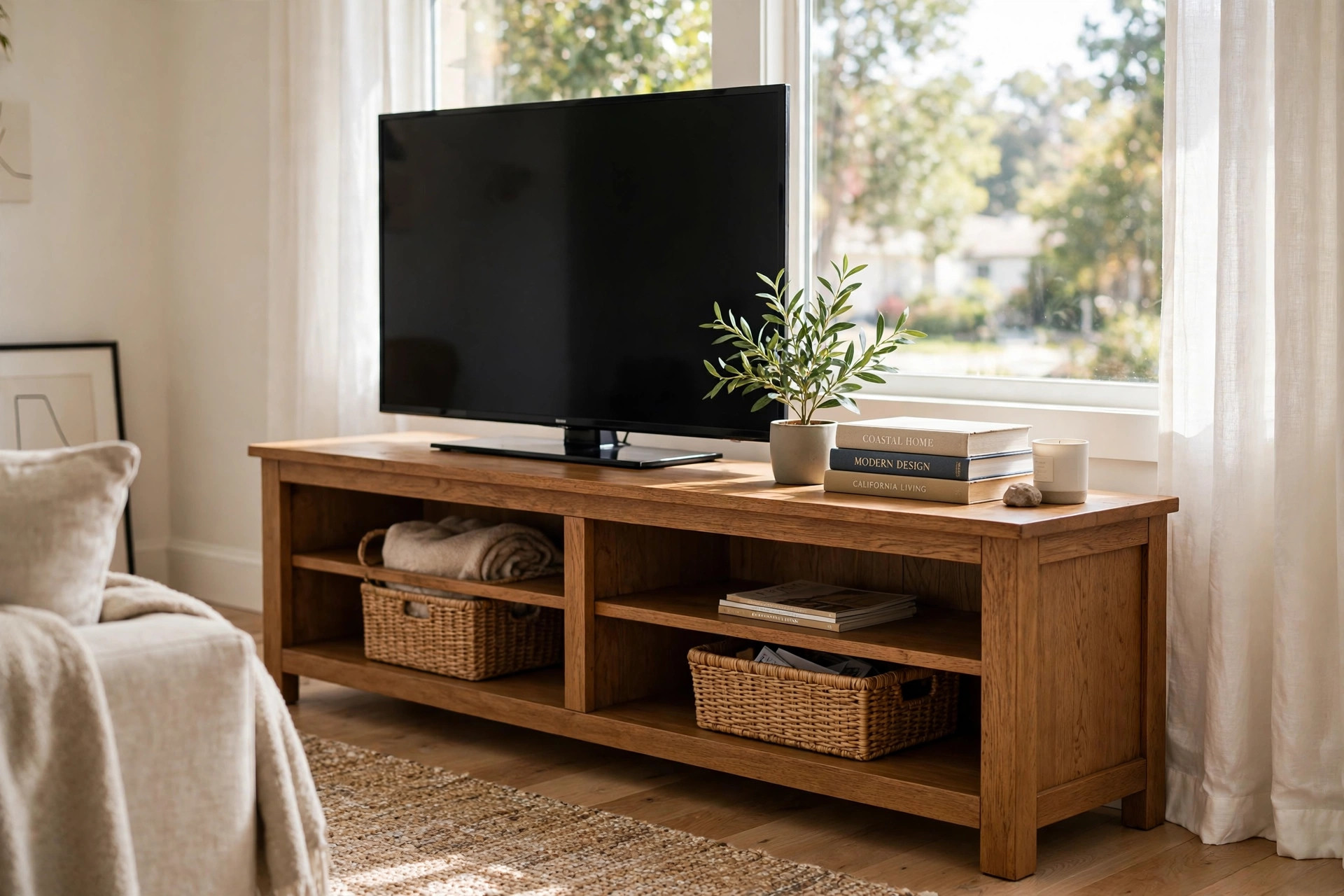

A television set is often the center of the living room. People gather near it to watch films, news, and games. Yet the stand that holds the set gets far less thought than it should. This living room tv stands reviews buying guide USA page is written to fix that. It walks through sizes, types, prices, care, and safety. It is written in plain words. It is meant to help any reader in the United States choose a stand with care.
A TV stand does more than hold a screen. It stores game boxes, sound bars, and cable wires. It sets the look of the whole room. A weak or poorly sized stand can sag, tip, or ruin the view. A good one lasts for years and keeps the room neat. That is why a short study before buying is worth the time.
Why the TV Stand Matters
Many buyers spend a large sum on a new television and then pick the cheapest stand they can find. This is a mistake. The stand carries the full weight of the set. It must stay steady through daily use. A screen of 55 inches or more is not light, and it is not cheap to replace if it falls.
The stand also sets the height of the screen. When the center of the screen sits at eye level for a seated viewer, necks and backs stay relaxed. A stand that is too low or too high can make long viewing hours less pleasant. The right height makes a real difference over months of use.
Storage is another reason to choose with care. Most homes have a cable box, a streaming stick, a game console, and a sound bar. Without shelves and closed cabinets, these items pile up in the open. A good stand hides the clutter and keeps the room calm.
The look of the stand shapes the room as well. A dark wood console can warm a modern space. A white unit with open shelves can suit a small flat. A stand that matches the rest of the furniture makes the room feel planned and settled. For more ideas on matching pieces to a room, see our living room wall art buying guide.
Design guides from outlets such as Apartment Therapy and HGTV often note that one well chosen piece of furniture can pull a whole room together. The TV stand is usually that piece in a living room.
What to Look for When You Buy: Living Room Tv Stands Reviews Buying Guide Usa
Buying a stand is easier when you know what to check. The list below covers the main points. Go through each one before you order or visit a store.
Size and Fit
Measure your television first. Write down the width of the set, not the diagonal size that appears on the box. A 65 inch TV, for example, is often about 57 inches wide. The stand should be at least as wide as the TV, and a few inches wider is better. This gives the set a stable base and a balanced look.
Measure the space in the room as well. Leave room on each side for doors that swing open and for walking past. Note the height you want. For most sofas, the stand should place the center of the screen 40 to 45 inches from the floor. For guidance on matching furniture heights across the room, see our living room floor lamps buying guide. Size charts on retailer sites like IKEA can also help.
Weight and Strength
Check the weight rating of the stand before you buy. The rating must be higher than the weight of your TV plus any items you plan to place on the shelves. Solid wood and thick engineered wood are the common choices. Solid wood costs more but lasts longer. Thick engineered wood is fine for most sets if the shelves are well supported.
Look at how the stand is put together. Dowels, screws, and metal brackets hold better than simple pegs and glue. Wide feet or a full base give more balance than thin legs placed near the corners.
Storage and Cable Control
Count the items you need to store. Leave one open shelf for a sound bar and closed cabinets for items you do not want to see. Some stands come with holes or slots in the back panel for cords. This is a useful feature. It keeps cables off the floor and out of sight.
Adjustable shelves are worth seeking. They let you fit a tall game console or a short stack of discs without wasted space. If you plan to keep many small items, drawers may serve you better than doors.
Types of TV Stands
Stands come in several common types. Each one suits a different room and a different need.
Console Cabinets
The console cabinet is the most common type. It is a low, wide chest with doors and shelves. It suits most living rooms and most TV sizes. Wood consoles are warm and classic. Painted consoles are clean and modern. Reviews on sites like The Spruce and Crate and Barrel often praise consoles for their mix of storage and style.
Open Shelf Stands
Open shelf stands have few or no doors. They are light to look at and easy to keep cool, which helps game consoles and cable boxes that run hot. The trade off is dust. Open shelves show every item, so this type suits people who like a tidy, minimal look.
Corner Stands
Corner stands are made to sit in the corner of a room. They are triangular or angled at the back. They save floor space in small rooms and odd layouts. They usually fit TVs up to 55 inches. If your room has no long free wall, a corner stand is worth a look.
Fireplace Stands
Fireplace TV stands include an electric fireplace in the base. They give the glow of a fire without a chimney or gas line. They are popular in colder states and in homes without a real hearth. They cost more than plain stands and use some power, but they add comfort on winter nights.
Large Entertainment Centers
Entertainment centers are tall, wide units with shelves and towers on both sides. They hold books, discs, and display items as well as the TV. They suit large rooms with big screens. They can crowd a small room, so measure twice before choosing one.
For pairing a stand with matching side pieces, our sofa console tables buying guide covers tables that sit well behind a sofa near the TV wall.
Cost and Price
Prices for TV stands in the USA vary widely. A small open shelf stand can cost under one hundred dollars. A solid wood console of good size often runs from three hundred to eight hundred dollars. Large entertainment centers and fireplace stands can pass one thousand dollars.
Several things push the price up. Solid hardwood costs more than particle board. Soft close hinges and finished backs add cost. Well known brands charge more for their name and their design work. Shops like Article, CB2, and West Elm sit at the higher end, while mass market stores like IKEA sit at the lower end.
Set a budget before you shop. Then check reviews to see which stands in that range earn steady praise. Price alone does not tell you much. A mid priced stand with strong joints and a good finish often beats a costly stand with thin panels. Look for notes about ease of assembly, since a stand that is hard to put together can end up loose and weak.
Sales cluster around major holidays. Presidents Day, Memorial Day, Labor Day, and Black Friday often bring price cuts on furniture. If you are not in a hurry, waiting for one of these dates can save a good sum.
Care and Upkeep
A TV stand needs little care, but regular care keeps it looking new. Dust the top and shelves once a week with a soft dry cloth. For wood stands, a damp cloth with a small amount of mild soap handles most marks. Dry the surface after cleaning so water does not soak in.
Keep the stand out of direct sun when you can. Strong sun fades wood and paint over time. Keep hot items off the top. A warm cable box can leave a mark on a thin finish, so give hot devices room to breathe.
Check the screws and bolts once or twice a year. Use shifts weight over time, and a quick turn of a wrench keeps the stand tight. If a shelf starts to sag, move heavy items to lower shelves or add a support bracket under the middle of the span.
For painted stands, keep a small bottle of touch up paint. Small chips are normal in a busy home, and a quick touch up keeps the finish even.
Safety
Safety is the part of this guide that matters most. A falling TV can hurt a child or a pet badly. Every stand in a home with children should be fixed to the wall with an anti tip strap or bracket. Most new stands ship with one in the box. Use it. It takes ten minutes and a drill.
Place the stand on a level floor. A rocking stand is a warning sign. Check that the TV feet or mount sit fully on the top surface with no overhang. If the set hangs past the edge, the stand is too small.
Keep cords short and tucked away. Loose cords invite tripping and pulling. A pull on a cord can drag a whole set down. Cable covers and the back panel slots of the stand both help.
Do not let children climb the shelves. Teach them early that the stand is not a ladder. Store tempting items, like toys and remotes, out of reach if climbing is a worry. Safety advice from the US Consumer Product Safety Commission covers these steps in more detail.
Frequently Asked Questions
What size TV stand do I need for a 65 inch TV?
A 65 inch TV is about 57 inches wide. Choose a stand that is at least 58 inches wide, and 60 to 72 inches is a comfortable range. The stand must also hold the weight of the set with room to spare. Check the weight rating in the product details before you buy.
Should the TV stand be wider than the TV?
Yes. A stand that is as wide as the TV or a few inches wider looks balanced and holds the set with more safety. A stand that is narrower than the screen can tip more easily and looks awkward.
Are fireplace TV stands safe?
Electric fireplace stands are safe when used as directed. They do not burn fuel and they stay cool on the outside. Keep the vents clear and do not place paper or cloth near the heat outlet. Unplug the unit if you leave home for a long trip.
Wood or metal TV stand, which is better?
Both can serve well. Wood stands are warm, heavy, and steady. Metal stands with wood shelves are light and modern. What matters most is the build quality: strong joints, thick panels, and a fair weight rating. Read reviews for notes on wobble and sag.
How do I hide cables behind a TV stand?
Use the cord holes in the back panel if the stand has them. Bundle extra cord length with ties. Run cables down the back of the stand in a cord cover that sticks to the wall or the stand. Keep the power strip on a low shelf, not on the floor where it collects dust.
Can I mount a TV on the wall above a TV stand?
Yes, and many people do. A slim console under a wall mounted TV looks clean and modern. Make sure the stand is low enough that the screen center stays near eye level when you sit. The stand still holds your boxes and wires, so its storage matters as much as ever.
A Final Word
A TV stand is a simple piece of furniture, but it does hard work every day. It holds a costly screen. It stores the clutter. It sets the tone of the room. Take the time to measure, to read a few reviews, and to check the weight rating. Pick a type that fits your room and your habits. Fix it to the wall if children are near. A little care at the start buys years of quiet, steady service. This living room tv stands reviews buying guide USA edition was written to make that choice an easy one.
References
Apartment Therapy. (n.d.). Home design ideas and inspiration. https://www.apartmenttherapy.com Article. (n.d.). Modern furniture. https://www.article.com CB2. (n.d.). Modern furniture and decor. https://www.cb2.com Crate and Barrel. (n.d.). Furniture and home decor. https://www.crateandbarrel.com HGTV. (n.d.). Home and garden ideas. https://www.hgtv.com IKEA. (n.d.). Home furnishings. https://www.ikea.com The Spruce. (n.d.). Home and garden advice. https://www.thespruce.com West Elm. (n.d.). Modern furniture and home decor. https://www.westelm.com
Was this guide helpful?

About Robert Taylor
The My Garden US editorial team writes practical, in-depth home and garden guides for American homeowners — tested advice, no fluff.
You May Also Like

Bedroom Side Tables for Florida Homes: A Practical Guide
July 30, 2026 0 views
Leather Recliner Chairs for California Homes: A Complete USA Guide
May 7, 2026 0 views
Entryway Storage Benches for Sale USA: What to Know Before You Buy
April 19, 2026 0 views