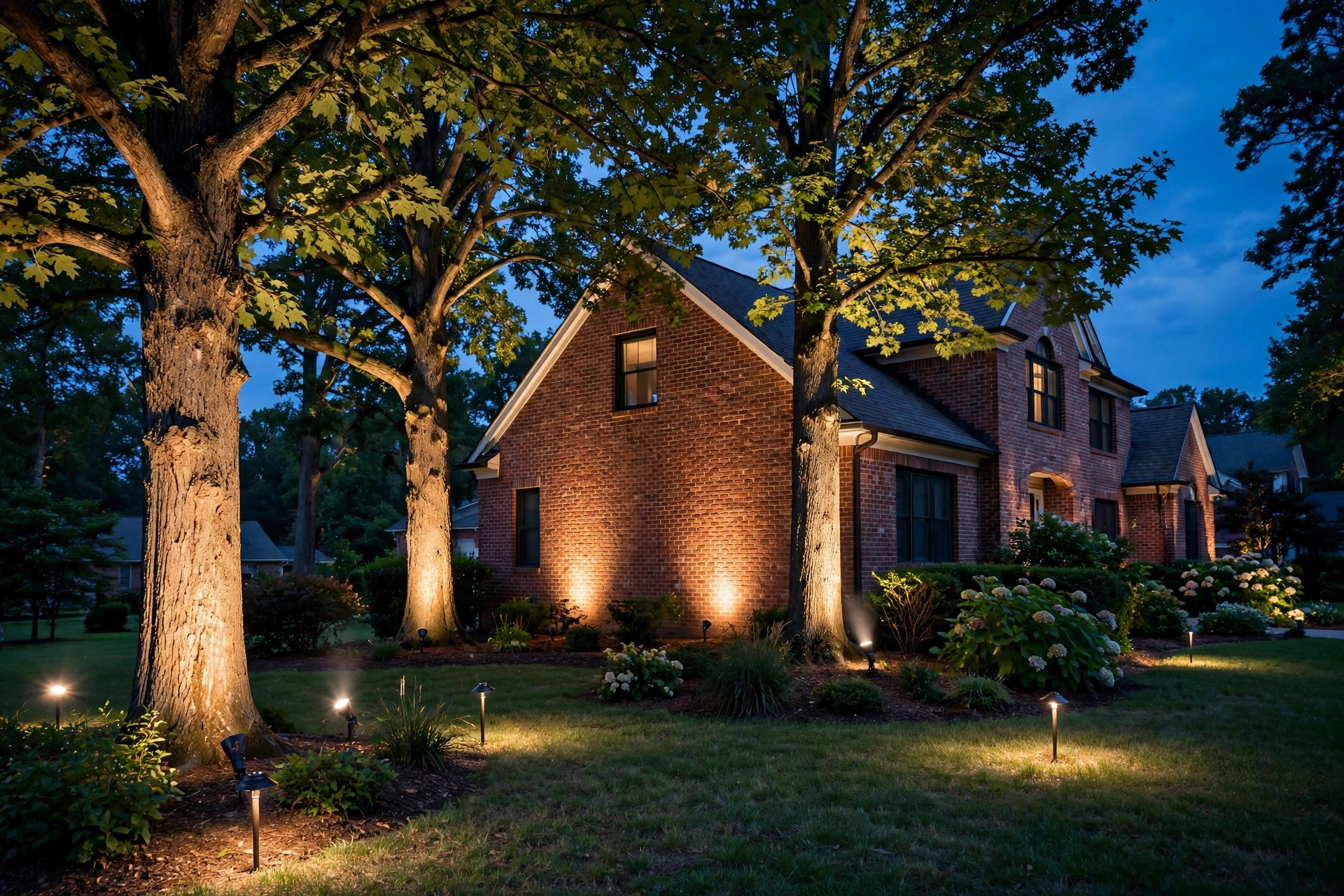

A yard looks different at night when the right lights are on. Trees gain shape. A house front gains warmth. Paths grow safer to walk. This landscape spot lights reviews buying guide usa page was written to help the American home owner choose well. It explains what spot lights do, how to read reviews, and what to check before money changes hands.
Landscape spot lights sit low to the ground. They throw a tight beam up or across. Most owners point them at trees, walls, flags, or garden beds. A review of a good unit almost always mentions three things: brightness, build, and wiring. Hold those three in mind as you read on.
Why Spot Lights Matter for the Yard
A dark yard is a quiet yard, but not always a safe one. Steps hide in shadows. A low branch catches the head. A spot light aimed at a path edge or a stair rail makes these hazards plain to see. This is one of the plain reasons reviews of landscape spot lights run so strong. Owners report fewer slips and a calmer feel at night.
Beauty is the second reason. A tree lit from below looks taller and fuller. A stone wall gains depth. Even a small flag pole takes on pride when lit at night. Light shapes what the eye reads after dark. Spot lights give the owner control over that shape.
Value is the third reason. A lit house front shows care. Real estate writers have long said that first looks matter. A few well aimed spot lights cost little next to paint or plants, yet they change the whole night face of a home.
How to Read Reviews of Landscape Spot Lights: Landscape Spot Lights Reviews Buying Guide Usa
Reviews are the fastest way to learn what a light really does. But not all reviews help. Look first for reviews that mention time. A note written after one week says little. A note written after two winters says much. Outdoor lights face rain, heat, frost, and bugs. Time tests them.
Next, look for detail about the beam. A good review tells how far the light reaches and how wide the spread runs. Words like “narrow beam” or “wide flood” tell more than “very bright.” Brightness alone means little if the beam misses its mark.
Also watch for notes about the wire and the stake. Many one star reviews of spot lights complain not about the light itself but about a stake that snaps in hard ground or a wire too thin for a long run. These small parts decide how long the whole job lasts.
Finally, check how many reviews the unit has. Ten perfect reviews can be friends or chance. Five hundred mixed reviews tell a truer tale. Read the middle ratings, the three star notes, where owners list both praise and fault.
What to Look for When Choosing
Brightness
Brightness is measured in lumens. A small accent spot for a flower bed needs only 100 to 300 lumens. A tall tree needs 500 to 900 lumens. A large wall may take more. Do not buy the brightest unit on the shelf and call the job done. Too much light washes out the plant and blinds the eye. Match the lumen count to the target.
Beam Angle
Beam angle decides the shape of the light pool. A 15 degree beam is a tight shaft for tall narrow targets. A 35 degree beam suits most trees and walls. A 60 degree beam spreads wide and soft. Many owners buy a mix: narrow beams for trees, wide beams for walls.
Power Source
Three power kinds fill the market. Low voltage wired sets run on a 12 volt transformer plugged into an outdoor outlet. They shine steady all night and carry the best reviews for brightness. Solar units need no wire but depend on sun and dim on cloudy weeks. Line voltage 120 volt units wire straight to house power and shine strong, but they need an electrician in most states. For a first buy, low voltage sets give the best mix of ease and strength.
Build and Finish
The body should be metal, brass or aluminum. Plastic bodies crack in sun and cold. The lens should be glass, not thin plastic, so it stays clear. The stake should be thick and long enough to stand firm in soil. Reviews often praise brass housings because they age well and take weather year after year.
Color Temperature
Light color is measured in kelvin. Warm white near 2700 kelvin suits homes, trees, and gardens. It flatters wood, brick, and leaves. Cool white near 5000 kelvin suits security corners and work zones. Most landscape reviews favor warm white for beauty. A set with a switch for color gives room to try both.
Types of Landscape Spot Lights
Stake spots are the common kind. They push into the soil and aim by hand. They suit trees, beds, and walls.
Well lights sink flush into the ground. Only the lens shows. They suit driveways and paths where a stake would trip a foot or a mower.
Surface mount spots screw to decks, fences, or tree trunks. They aim down a fence line or across a deck.
Up and down lights throw beams both ways from one body. They suit pillars and tall posts.
Smart spots link to a phone app or voice box. Owners can dim them, set timers, or shift color. They cost more and draw mixed reviews, since the app must work as well as the light.
Pairing spots with other yard lights gives a full plan. Many owners add solar path lights along walkways and deck cap lights on rail posts, then use spots for the trees and walls. For dark corners that need strong guard light, a motion flood light guide explains the brighter choice.
Cost and Price
Prices in the United States fall into clear bands. A single cheap solar spot runs five to fifteen dollars. A single low voltage LED spot runs fifteen to forty dollars. A strong brass unit with high lumens runs forty to ninety dollars. Full kits with transformer, wire, and six to ten heads run eighty to three hundred dollars.
Cost per year matters more than the price tag. LED heads draw little power and run for tens of thousands of hours. A cheap set that dies in one season costs more over five years than a dear set that runs ten. Reviews that track long life point this out again and again.
Do not forget the extras in the budget. A transformer, extra wire, connectors, and timers add to the kit price. Wire runs longer than fifty feet may need thicker gauge, which costs more per foot. A small solar set needs none of this, which is why renters and small yards favor it.
Care and Upkeep
Spot lights ask little, but they ask it on a schedule. Wipe the lens each month. Dust, pollen, and hard water spots dim the beam more than owners expect. A soft cloth and mild soap do the job.
Trim plants back from the heads twice a year. A shrub that grew over a spot in spring will eat its light by fall. Move the aim after trimming so the beam lands where it should.
Check the wire in spring and fall. Mowers, edgers, and digging cut low voltage wire. A nick in the jacket lets water in and rots the copper. Bury wire six inches deep where feet and tools pass.
For solar heads, wipe the small panel and keep it in true sun. A panel shaded by a new fence or a grown bush will fade by night. If a solar head dims after a year, the small battery may be spent. Many units take a simple swap.
Safety
Low voltage sets are safe to touch, but care still counts. Keep the transformer dry and off the soil. Use only outdoor rated extension cords. Never run wire across a walk where feet trip.
For 120 volt units, hire a licensed electrician. The code in most states bars the home owner from burying line voltage wire without a permit. A licensed worker also fits the right ground fault guard, which cuts power if water enters the line.
Aim beams with care. Do not point spots into a neighbor window or across a street. Glare that hits drivers is a hazard, not a feature. Most towns have no law on the books for yard spots, but courtesy keeps peace.
Hot halogen heads are a burn risk. The market has moved to LED, which runs cool, but old halogen stock still sits on some shelves. If you buy halogen, keep heads clear of dry leaves and mulch. Better still, buy LED and skip the risk.
FAQ
How many spot lights does a yard need?
Start small. Three to six heads cover most small yards: two for trees, one or two for the house front, one for a bed or flag. Walk the yard at night with a flashlight first. Aim the flashlight at each target and note what pleases you. Buy to match that test, not to fill a cart.
Are solar spot lights as good as wired ones?
For small accent jobs, yes. A solar spot by a flower bed or a small shrub does fine. For tall trees, long walls, or all night run time, wired low voltage wins. Reviews agree on this split. Buy solar for ease, wired for muscle.
Do landscape spot lights raise the power bill?
Barely. A ten head LED set at five watts each draws fifty watts, about the same as one old porch bulb. Run eight hours a night and the month adds a few dollars at most. The Energy Star lighting pages list LED as the most efficient common choice, and the U.S. Department of Energy notes the same in its home lighting guides.
What does IP65 mean on the box?
It is a dust and water rating. IP65 means the head stands up to rain and jets of water. IP67 means it can sit in shallow water for a time. For yard spots, IP65 is enough. Well lights in wet soil do better at IP67. The rating is worth the small price step.
Can I mix brands in one set?
With low voltage LED, often yes, as long as the transformer has spare watts and the voltage matches. Keep the total head watts under eighty percent of the transformer rating. With smart sets that use one brand app, mixing brands means two apps, which few owners enjoy.
How long do LED spot lights last?
Good LED heads are rated for 25,000 to 50,000 hours. At eight hours a night, that is eight to seventeen years. The LED chip rarely dies first. Stakes, seals, and wire fail sooner. This is why reviews prize metal bodies and thick wire. The head outlives its small parts, so buy small parts built to last.
A Short Final Word
Choosing spot lights comes down to three habits. Read reviews for time, beam, and build. Match the light to the target, not the shelf. And plan the wire before you buy the heads. Do these three and the yard will glow the way you pictured it.
Shoppers who want to compare models side by side will find spec tables and buyer notes at Philips, Lumens, and Lamps Plus. Big box stock and store brand reviews live at The Home Depot and Lowe’s. Plain how to guides and yard lighting ideas run at The Spruce.
References
ENERGY STAR. (n.d.). Energy efficient products. https://www.energystar.gov Lamps Plus. (n.d.). Lighting and home decor. https://www.lampsplus.com Lowe’s. (n.d.). Home improvement products. https://www.lowes.com Lumens. (n.d.). Lighting and ceiling fans. https://www.lumens.com Philips. (n.d.). Lighting products. https://www.philips.com The Home Depot. (n.d.). Home improvement products. https://www.homedepot.com The Spruce. (n.d.). Home and garden advice. https://www.thespruce.com U.S. Department of Energy. (n.d.). Energy efficiency and renewable energy. https://www.energy.gov
Was this guide helpful?

About Robert Taylor
The My Garden US editorial team writes practical, in-depth home and garden guides for American homeowners — tested advice, no fluff.
You May Also Like
Kitchen Track Lighting Texas Homes USA: A Plain Buyer’s Guide
September 10, 2026 0 views
Patio String Lights Buying Guide USA
April 28, 2026 0 views
Patio String Lights Texas Homes USA: A Practical Buying and Care Guide
July 6, 2026 0 views