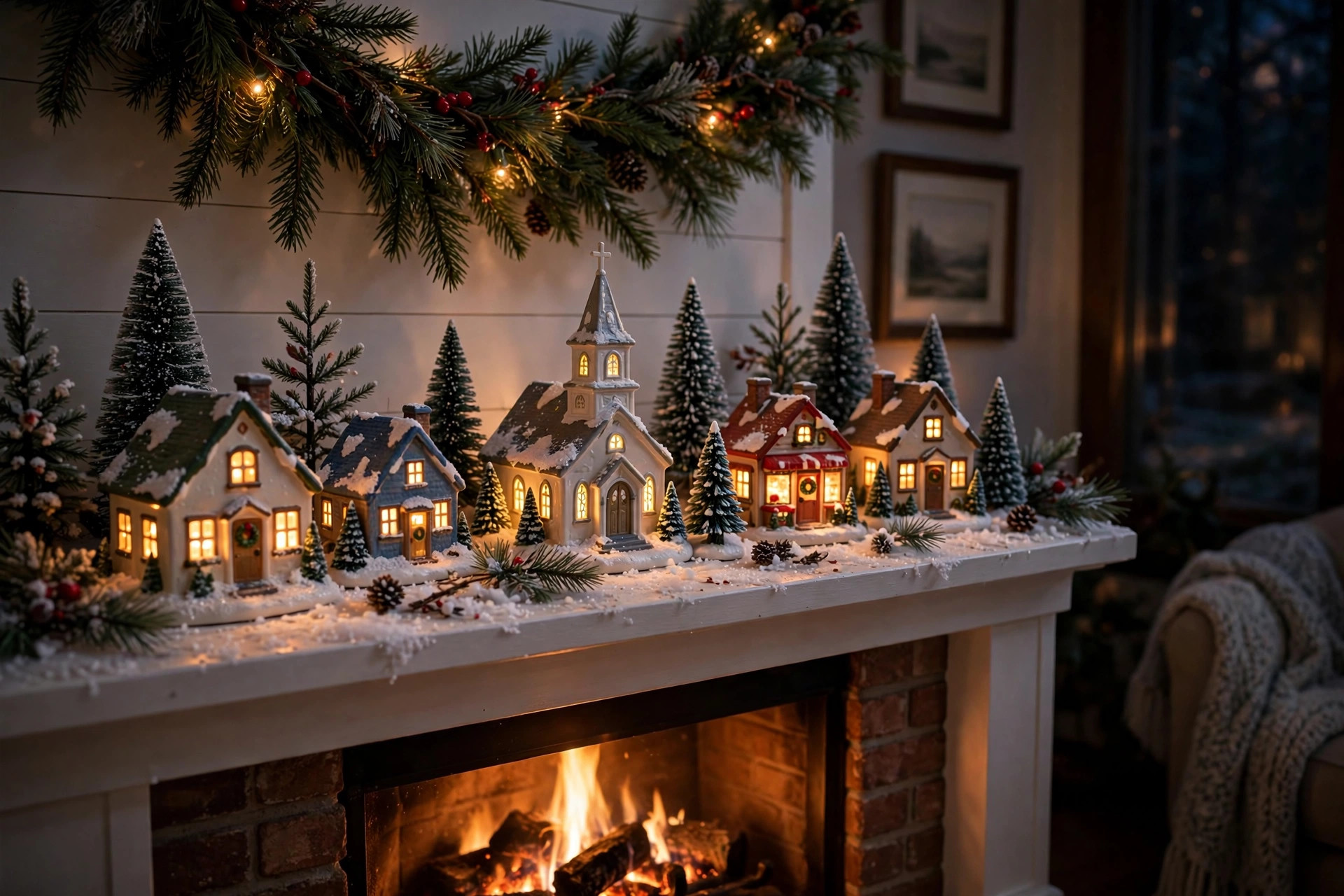

Every December, many American homes glow a little warmer because of one small tradition. Families line up tiny houses along the mantel. Each house has lit windows. A church steeple rises at one end. A train store stands at the other. The whole street looks like a small town on a snowy night. Christmas village houses for mantel display usa shoppers keep buying each year bring that warm feeling into the living room, and they do it without taking up much space.
A village set is not only a decoration. It is a small scene you build with your own hands. You can add one house each year. You can move the trees. You can change the snow. Over time, the display becomes part of your family history. This guide explains how to choose the right houses, how to set them up, what they cost, and how to keep them safe.
Why a Christmas Village Belongs on Your Mantel
The mantel is the natural home for a village display. It sits at eye level, so every window and doorway can be seen. It is usually the center of the room, so the lights draw the eye as soon as guests walk in. And it is long and narrow, which fits a street of small houses better than a round table does.
A village also fits homes of every size. A large living room can hold a long row of twelve houses. A small apartment mantel can hold three houses and a tiny tree. That is one reason these sets stay popular year after year.
There is also a quiet joy in building the scene. Children like to place the figures. Adults like to arrange the snow and the small fences. The work takes an hour or less, but the display stays up for weeks. It becomes a small world you can look at each evening when the house lights are low.
If you are building a full holiday mantel, village houses pair well with other classic pieces. Many families hang christmas stocking holders for mantel heavy duty beside the scene, and drape christmas garland for staircase and mantel usa along the front edge. The green garland frames the little houses, and the stockings add height at each end. Together they make the mantel look full and finished.
How to Choose Christmas Village Houses for Your Mantel: Christmas Village Houses for Mantel Display Usa
Buying the first house is easy. Buying the right houses for your mantel takes a little planning. Measure the mantel before you shop. Write down the length and the depth. Most mantels are between four and six feet long, and about eight to ten inches deep. Keep those numbers with you when you look at houses.
Think about power before you buy. Lighted houses need an outlet nearby. Many mantels have an outlet on the wall above or to one side. If yours does not, you will need a battery set or a small power strip hidden behind the display. Plan this early so you do not have to move houses after they are set.
Size and Scale
Village houses come in several scales. The two most common in American stores are the small porcelain village size and the slightly larger lighted ceramic size. Houses in one set should match each other. A house that is twice as tall as its neighbor will look wrong, even if both are fine pieces on their own.
Check the height listed on the box or the product page. Most mantel houses stand between four and seven inches tall. That size reads well from across the room and still leaves room for trees and figures around them. If your mantel has a mirror above it, shorter houses work better, since the reflection will show them again.
Lighted or Unlit
Lighted houses have a small cord and a warm bulb or LED inside. When the room is dark, the windows glow. This is the classic village look. Most buyers choose lighted houses, and for good reason. The glow is what makes the scene come alive at night.
Unlit houses cost less and need no outlet. Some collectors paint their own or buy them as blanks to decorate by hand. If you want a daytime scene, or if you plan to light the houses with tiny tea lights, unlit houses are a fine choice. Craft stores like Michaels often carry both kinds, along with paint and brushes for custom work.
Style and Theme
Village sets come in many themes. The most common is the old-time American small town, with a general store, a schoolhouse, a church, and a row of shops. Another popular theme is the Victorian street, with tall narrow houses and gas-lamp style lights. Some sets copy famous movie streets or old European towns.
Pick one theme and stay with it. A Victorian house next to a modern diner will break the spell. If you already own a few houses, bring a photo when you shop so new pieces will match. Over the years, a matched set grows into something special.
Types of Village Houses You Will Find
Not every village building is a house. The best displays mix several kinds of buildings so the street feels real. Here are the types you will meet most often in stores across the country.
The home is the base of every set. These are small cottages and farmhouses with pitched roofs and glowing windows. Buy three or four of these before you buy anything else. They fill out the street and give the display its warm base.
The shop adds story. Look for a general store, a bakery, a toy shop, or a barber shop. Shops usually have more detail, such as small signs and display windows. One or two shops are enough for a mantel. More than that will crowd the shelf.
The church is a favorite anchor piece. It stands taller than the houses and often has a steeple and a lit cross. Place it at one end of the mantel or in the center. It draws the eye and gives the street a sense of order.
The public building rounds out the town. Fire stations, schools, and town halls all work well. These pieces are usually a little larger, so they suit the ends of the display where they will not block smaller houses.
Figures and accessories bring the street to life. Lampposts, fences, trees, and tiny people fill the gaps between buildings. Snow blankets hide the shelf surface and give every piece a base to stand on. A small best christmas village tree for tabletop display or two, sized to match your houses, can stand at the end of the street like the town tree.
Cost and Price
Prices for christmas village houses for mantel display usa buyers see each season cover a wide range. A single small unlit house from a craft store may cost ten to fifteen dollars. A lighted ceramic house of good quality usually runs twenty to forty dollars. Larger anchor pieces, such as a church or a train station, can cost forty to eighty dollars or more.
Sets of three or five houses often cost less per piece than single houses. If you are starting out, a starter set is the best value. It gives you matching houses at one price, and you can add single pieces in later years. Home improvement and decor retailers such as Home Depot, Lowe’s, and Target carry village sets each holiday season, and big home stores often put them on sale after Christmas. Many families buy next year’s pieces in January at half price.
Online shops give you a wider choice. Wayfair lists many village sets with buyer reviews, which help you judge size and quality before you order. Decor sites such as The Spruce and HGTV publish holiday decorating guides that show how other families arrange their villages. And magazines like Country Living often feature mantel displays that can give you ideas for your own street.
Plan a budget before you shop. A good starter display of five houses, snow, trees, and a few figures will cost between one hundred and two hundred dollars. Add twenty to fifty dollars each year for one or two new pieces. In five years you will own a rich display, and the cost will have spread out so it never felt heavy.
Care and Upkeep Through the Years
Village houses last for decades if you care for them. The main enemy is careless storage. Each January, when you take the display down, wrap every house in tissue paper or bubble wrap. Keep the original boxes if you can. They fit the houses best. Store the boxes in a dry place where they will not be crushed.
Clean the houses before you store them. Dust the roofs with a soft brush. Wipe fingerprints from the windows with a dry cloth. Do not wash ceramic houses in water. Water can get into the light socket and cause rust, and it can damage painted details.
Check the cords and bulbs each year. Look for frayed wire, loose sockets, or plugs that feel hot. Replace burned-out bulbs with the same type and wattage the maker recommends. LED bulbs last longer and run cooler than old incandescent bulbs, and many newer houses now use them.
Snow blankets can be reused for several years. Shake them out outdoors before you store them so loose glitter does not spread through the house. Trees and figures also last well, but tiny pieces bend easily, so pack them in their own small box.
Safety Tips
A village display is safe when it is set up with care. The main risks are heat and cords, and both are easy to manage.
Keep the display away from open flame. Real candles should never stand near a village scene. The houses are made of ceramic and resin, which do not burn easily, but snow blankets and cotton batting can catch fire. Use battery candles or small LED tea lights if you want extra glow. They look fine and they stay cool.
Do not overload one outlet. Count the cords before you plug them in. If you have more than six lighted houses, spread them across two outlets or use a power strip with a built-in fuse. Turn the display off when you leave the house and when you go to bed. A simple timer plug costs a few dollars and does the job for you.
Check cords for damage every season. If a cord is cracked or the plug is bent, do not use that house until it is repaired or replaced. The U.S. Consumer Product Safety Commission reminds shoppers each year to check holiday lights and cords for wear before use, and that advice fits village sets just as well.
Keep small figures away from very young children and pets. Tiny trees and fences can break off and become choking hazards. Place the most delicate pieces toward the back of the mantel where small hands cannot reach them.
Frequently Asked Questions
How many houses fit on a standard mantel? Most mantels hold five to eight houses comfortably, with room for trees and figures between them. A four-foot mantel fits about five houses. A six-foot mantel can hold eight or more. Measure your mantel and lay the houses out on a table first to test the arrangement.
Do I need an outlet behind the mantel? Lighted houses need power, but the outlet does not have to be right behind the mantel. A nearby outlet on the wall or the side of the fireplace works fine if you run the cords neatly and hide them with snow or garland. Battery-powered houses are also available and need no outlet at all.
Can I mix brands in one village? You can, as long as the sizes match. A house that stands five inches tall will look fine next to another five-inch house from a different maker. What breaks the scene is a big size gap. Keep a ruler handy when you shop, and match heights within an inch.
How do I hide the cords? Run the cords along the back of the mantel and tuck them under the snow blanket. Small cord clips can hold them against the back wall. If your mantel has a lip or edge, you can drop the cords behind it where they will not show from the front.
Should I buy lighted or battery houses? Lighted plug-in houses give the strongest glow and never need new batteries. Battery houses are easier to place and need no cords, but you will replace batteries every season. Many families use both: plug-in houses for the main street and battery houses for corners that are hard to reach.
When is the best time to buy? Prices are best in January, when stores clear holiday stock. Selection is best in October and November, when new sets arrive. If you want a specific piece, buy early in the season. If you want the lowest price, wait for the after-Christmas sales.
A Short Final Word
A christmas village on the mantel is a small thing, but it carries a large feeling. It turns an ordinary shelf into a snowy street. It gives children a world to arrange and adults a quiet sight to enjoy each night. Start with a few houses that you love. Add one piece each year. Store them with care. In time, your mantel will hold a town that is all your own.
References
Country Living. (n.d.). Country home and lifestyle. https://www.countryliving.com HGTV. (n.d.). Home and garden ideas. https://www.hgtv.com Lowe’s. (n.d.). Home improvement products. https://www.lowes.com Michaels. (n.d.). Arts and crafts supplies. https://www.michaels.com Target. (n.d.). Retail store. https://www.target.com The Home Depot. (n.d.). Home improvement products. https://www.homedepot.com The Spruce. (n.d.). Home and garden advice. https://www.thespruce.com U.S. Consumer Product Safety Commission. (n.d.). Product safety information. https://www.cpsc.gov Wayfair. (n.d.). Furniture and home goods. https://www.wayfair.com
Was this guide helpful?

About Jennifer Lee
The My Garden US editorial team writes practical, in-depth home and garden guides for American homeowners — tested advice, no fluff.
You May Also Like

Memorial Day Decorations for Porch American Flag
July 21, 2026 0 views
Christmas Light Clips for Gutters and Shingles USA: A Complete Guide
August 7, 2026 0 views
Christmas Reindeer Decorations for Yard Lighted USA: A Plain Guide
September 8, 2026 0 views