---
Table of Contents
Table of Contents
- Anchor Dresser for Child Safety: Why Dressers Tip Over
- What You Need Before You Start
- Step 1: Move the Dresser Into Place
- Step 2: Find the Wall Studs
- Step 3: Attach the Furniture Side
- Step 4: Attach the Wall Side
- Step 5: Test the Work
- Other Rooms Need Attention Too
- Common Mistakes to Avoid
- When to Call a Professional
- References
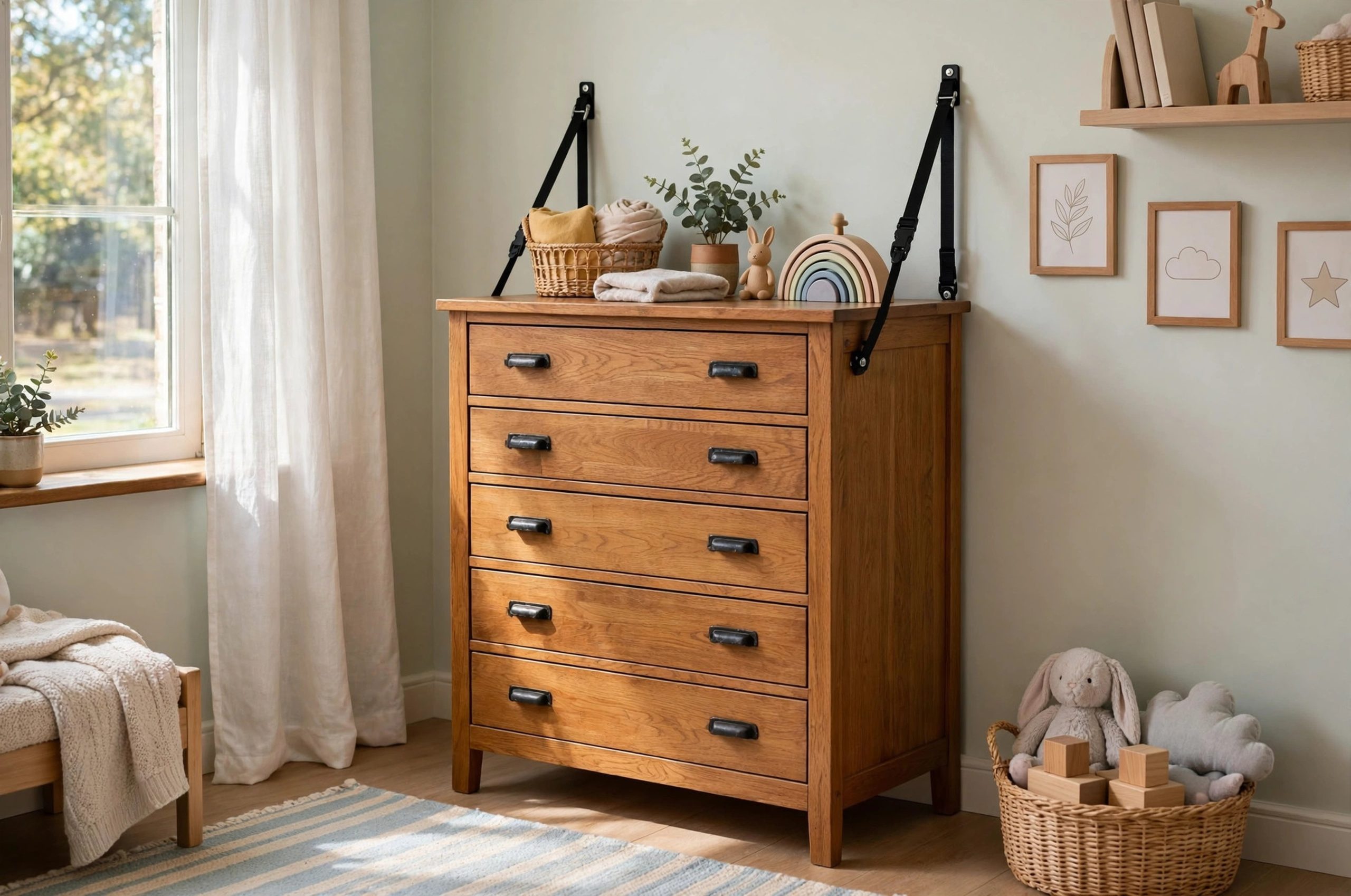
A dresser looks like a quiet piece of furniture. It sits against the wall and holds clothes. But for a small child, a dresser can turn into a ladder and then into a falling hazard. Kids climb. They pull drawers out and step up. When the weight shifts forward, a heavy dresser can tip right over. The good news is that this risk is easy to fix. Learning how to anchor a dresser for child safety takes less than half an hour, and it can prevent a serious injury. This guide covers anchor dresser for child safety in plain steps.
Anchoring means fastening the dresser to the wall so it cannot fall forward. The federal safety agency behind the Anchor It! campaign urges every family with young children to secure dressers, bookcases, and televisions. Safe Kids Worldwide reports that these tip-over accidents send children to the emergency room every single day. A simple strap or bracket stops the story before it starts.
Anchor Dresser for Child Safety: Why Dressers Tip Over
When it comes to anchor dresser for child safety, getting the details right makes all the difference.
Many homeowners find that anchor dresser for child safety is easier than they expected once they know the basics.
Children between one and three years old are the most at risk. They love to climb, and they love to open drawers. A dresser with several drawers pulled out becomes front-heavy. One child standing on an open drawer can shift enough weight to pull the whole piece forward. Carpet makes the problem worse, since tall furniture can rock on soft flooring.
Many parents assume a wide or heavy dresser is safe on its own. It is not. Tests and injury records show that even large dressers can tip when a child climbs them. Safe Kids Worldwide advises treating every dresser in a home where children live or visit as a tip-over risk. That includes the nursery, the kids' bedroom, and even the guest room.
What You Need Before You Start
Many homeowners find that anchor dresser for child safety is easier than they expected once they know the basics.
The key to anchor dresser for child safety is choosing the right approach for your space and budget.
Gather your tools first so the job goes smoothly. You will need:
- An anti-tip kit (furniture straps or brackets). Many dressers ship with one in the box. If yours did not, kits are sold at hardware stores and online.
- A stud finder.
- A drill with the right bits.
- Screws that match your wall type. For drywall with a wood stud behind it, use long wood screws. For drywall without a stud, use heavy-duty toggle or expansion anchors.
- A pencil and a level.
- A screwdriver or a second pair of hands to hold the dresser steady.
Choose the kit based on your dresser. Strap kits work well and hide behind the furniture. L-shaped metal brackets are strong and simple. Either type is fine as long as it is rated to hold the weight of the piece. If you are picking a dresser for a small nursery, our best nursery dresser for small baby rooms guide covers stable, child-friendly options.
Step 1: Move the Dresser Into Place
The key to anchor dresser for child safety is choosing the right approach for your space and budget.
With a little planning, anchor dresser for child safety can fit even a busy schedule.
Empty the drawers first. A lighter dresser is easier to move and safer to work on. Slide the piece against the wall where it will live. Check that it sits flat and does not rock. If the floor is uneven, fix the wobble now, because a rocking dresser puts extra stress on the anchors later.
Think about placement too. Keep the dresser away from windows so a child cannot climb from it to the window. Keep toys, remote controls, and other tempting items off the top, since a child reaching for them may try to climb up. Safe Kids Worldwide recommends keeping attractive items out of reach and storing heavier things in the lower drawers.
Step 2: Find the Wall Studs
With a little planning, anchor dresser for child safety can fit even a busy schedule.
Before you start, it helps to understand how anchor dresser for child safety works in real homes.
The strongest way to anchor furniture is to drive screws into a wall stud. Use your stud finder to locate the studs behind the spot where the dresser will sit. Mark the edges of each stud with a pencil. A solid hit in the middle of the stud gives the anchor its full holding power.
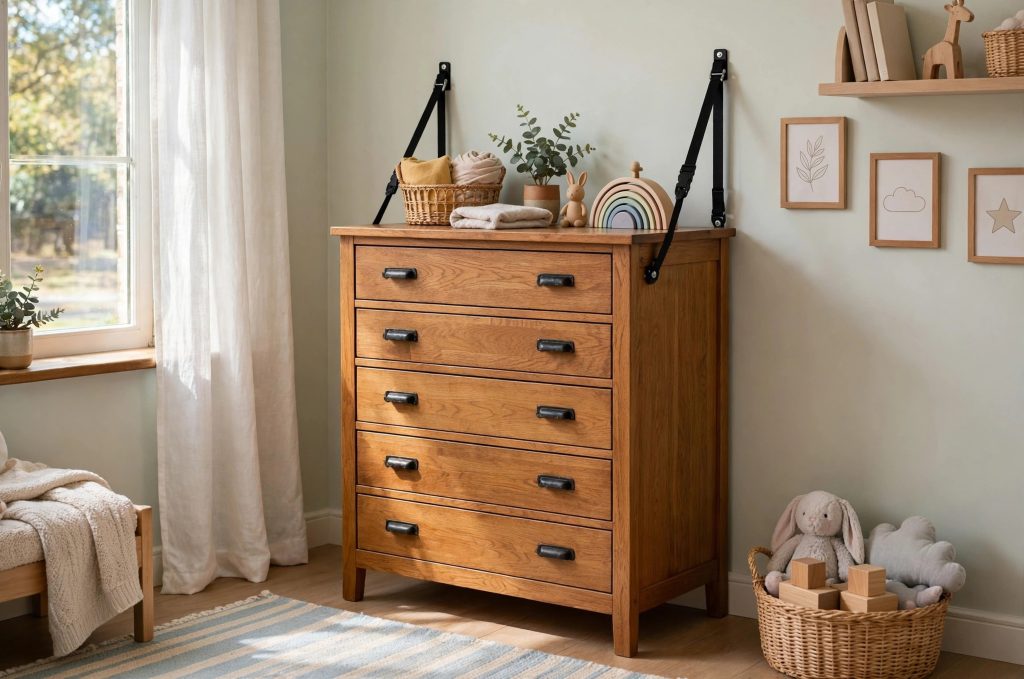
Aim to attach the anchor near the top of the dresser, since that is where it resists tipping best. Place the straps or brackets within the top third of the back of the dresser. For wide dressers, use two anchor points, one near each side. This keeps the piece from twisting or rocking sideways.
Step 3: Attach the Furniture Side
Before you start, it helps to understand how anchor dresser for child safety works in real homes.
A good plan for anchor dresser for child safety saves time, money, and frustration.
Most strap kits have one end that screws into the dresser and one end that screws into the wall. Attach the dresser end first. Look for a thick, solid part of the frame near the top, not the thin back panel. A thin backer board can pull loose under force. Drive the screws into the solid wood of the frame or the top rail.
If you are using L-brackets, hold a bracket against the top back corner of the dresser, mark the holes, drill small pilot holes, and drive the screws in snug. Do not overtighten and strip the wood. The guide from Homes & Gardens on securing furniture to a wall walks through this step with clear detail.
Getting anchor dresser for child safety right takes a little patience, but the steps are simple.
Step 4: Attach the Wall Side
A good plan for anchor dresser for child safety saves time, money, and frustration.
For most people, anchor dresser for child safety comes down to a few smart choices.
Now connect the wall end. Drill a pilot hole into the stud at your pencil mark, then drive the screw through the strap or bracket and into the stud. Pull the strap snug so there is no slack. The dresser should not be able to lean forward at all.
If there is no stud where you need one, use a heavy-duty drywall anchor rated for the load. Q-Furniture explains how to anchor furniture to a wall without a stud, using toggle bolts and steel cable kits. A stud is always the better choice, but a properly rated anchor is far better than nothing. For plaster or masonry walls, use the right anchor for that material, and consider hiring a handyman if you are unsure.
Step 5: Test the Work
For most people, anchor dresser for child safety comes down to a few smart choices.
Grab the top of the dresser and pull forward firmly, the way a climbing child would. The piece should not budge. Check both straps or brackets. Look at the screws to make sure nothing has loosened. Then let the drawers back in and test again with the drawers open, since open drawers change the balance.
Add this check to your home routine. Screws can loosen over time as the house settles and the seasons change the humidity. A quick tug on the straps every few months keeps the setup sound. The University of Georgia Extension childproofing checklist recommends securing unstable or top-heavy furniture with brackets, braces, or wall straps as part of a room-by-room safety pass.
Other Rooms Need Attention Too
If you are new to anchor dresser for child safety, start with the simplest option and build from there.
Do not stop at the kids' room. The same tip-over danger lives in every room with tall furniture. Anchor bookcases in the living room, the TV stand, and the dresser in the master bedroom. Children visit grandparents' houses and friends' homes, so share the tip with family. A guide from Perfect Assembly covers the same methods for wardrobes and shelving units.
While you are at it, install drawer stops so drawers cannot be pulled all the way out. Keep the heaviest items in the bottom drawers. These small habits add layers of safety on top of the anchors.
Common Mistakes to Avoid
When it comes to anchor dresser for child safety, getting the details right makes all the difference.
- Using the thin back panel. Screws driven only into thin fiberboard will rip out. Always anchor into the solid frame.
- Anchoring into drywall alone. Plain drywall crumbles under a sudden load. Use a stud or a rated anchor.
- Leaving slack in the strap. A loose strap lets the dresser lean before it catches, and that lean may be enough to tip it.
- Forgetting rented homes. Renters sometimes skip anchoring to avoid holes. Small screw holes are easy to patch, and the safety is worth it. Some strap kits use adhesive pads for the furniture side, though screws into a stud remain the strongest option.
- Assuming new dressers are safe. Newer dressers may meet stronger stability rules, but anchoring is still the safest choice. Answers.com's guide to attaching a dresser to the wall stresses following the manufacturer's instructions and checking the anchors regularly.
When to Call a Professional
Most dressers are a simple do-it-yourself job. Call a handyman if your walls are brick, stone, or concrete, if the dresser is extra tall or heavy, or if you cannot find a stud. A pro can set masonry anchors and confirm the job is solid. The cost is small compared with the peace of mind.
Anchoring a dresser is one of the fastest safety upgrades a parent can make. In about twenty minutes, you turn a hidden hazard into a non-issue. For more nursery safety ideas, see our nursery diaper caddy organizer guide and our affordable nursery room darkening shades buying guide, both written with small, safe nurseries in mind. With these steps, anchor dresser for child safety stays simple and safe.
References
- U.S. Consumer Product Safety Commission. (n.d.). Anchor It! Secure your TVs and furniture. http://www.anchorit.gov/
- Safe Kids Worldwide. (n.d.). TV and furniture tip-over prevention tips. https://www.safekids.org/tip/tv-and-furniture-tip-over-prevention-tips
- Safe Kids Worldwide. (n.d.). TV and furniture tip-overs. https://www.safekids.org/content/tv-and-furniture-tip-overs
- Homes & Gardens. (n.d.). How to secure furniture to a wall: Steps for peace of mind. https://www.homesandgardens.com/solved/how-to-secure-furniture-to-a-wall
- Q-Furniture. (n.d.). How to anchor furniture to wall without stud. https://q-furniture.com/how-to-anchor-furniture-to-wall-without-stud/
- Perfect Assembly. (n.d.). Securing your furniture to the wall. https://perfectassembly.com/securing-your-furniture-to-the-wall/
- Answers.com. (n.d.). How can I safely attach a dresser to the wall to prevent it from tipping over? https://www.answers.com/interactive-hobbies/How-can-i-safely-attach-a-dresser-to-the-wall-to-prevent-it-from-tipping-over
- Answers.com. (n.d.). How can I properly anchor a dresser to the wall to ensure it is secure and stable? https://www.answers.com/interactive-hobbies/How-can-i-properly-anchor-a-dresser-to-the-wall-to-ensure-it-is-secure-and-stable
- University of Georgia Extension. (n.d.). Childproofing your home: A room-by-room safety checklist. https://fieldreport.caes.uga.edu/publications/C1049/childproofing-your-home-safety-checklist/
Was this guide helpful?

About My Garden US
The My Garden US editorial team writes practical, in-depth home and garden guides for American homeowners — tested advice, no fluff.