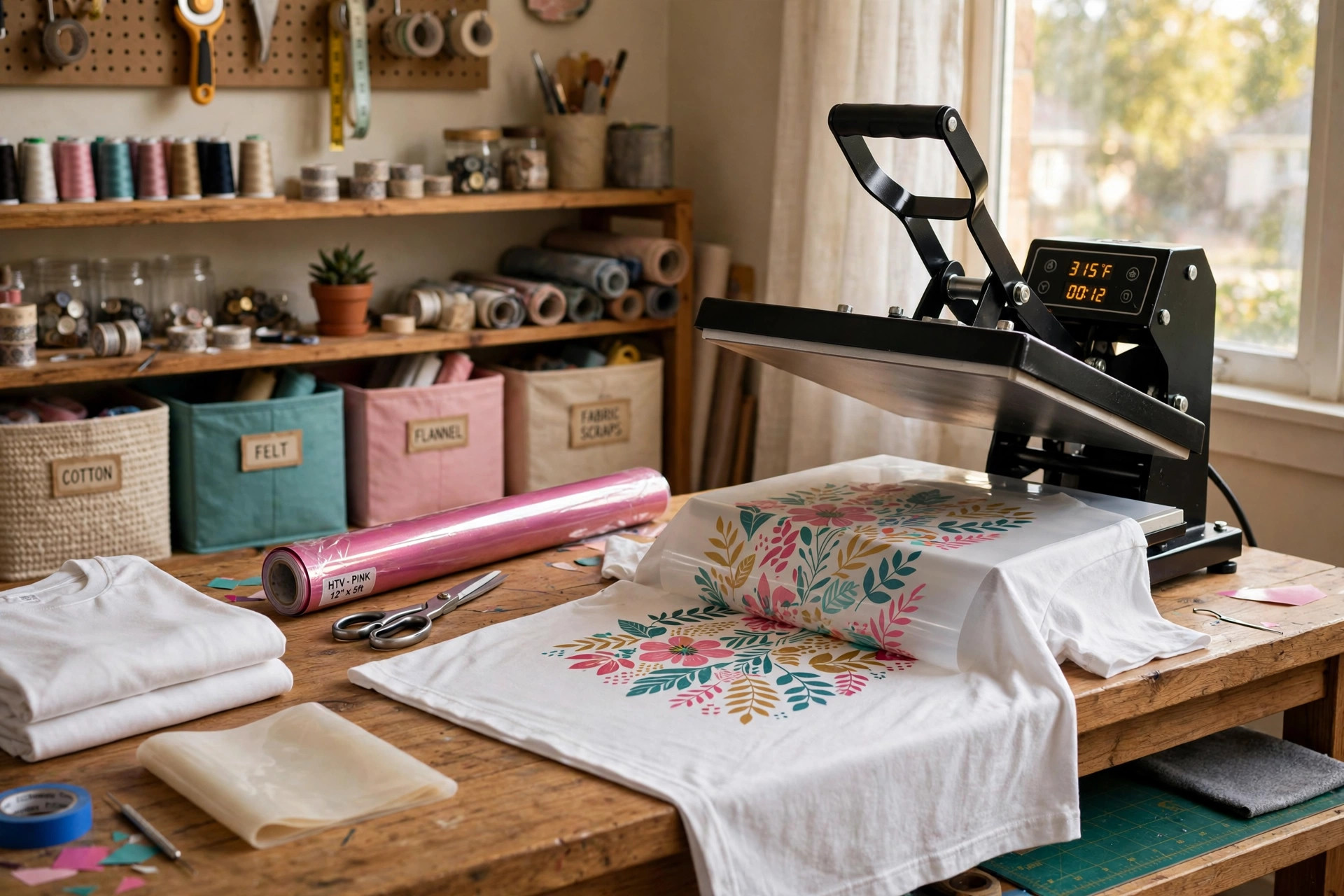

A plain white tee is a blank page. A custom design turns it into a gift, a team uniform, or the start of a small business. Many home crafters start with a hand iron. An iron can work for one or two shirts. But it grows old fast. The heat is not even. The pressure is not steady. Edges lift after a few washes, and the design looks homemade in the wrong way.
A heat press solves these problems. It applies heat across the whole design at once. It presses down with even force. The result looks clean and lasts long. The best heat press machine for home t shirts fits on a craft table and runs on a normal wall outlet. You do not need a shop or special wiring.
This guide walks through what matters before you buy. It covers types, sizes, prices, care, and safety. It also answers common questions. By the end, you will know how to pick a machine that fits your space, your budget, and your plans.
Why a Heat Press Matters for Home Crafters
Crafters who press many shirts learn one truth fast. A hand iron is the weak link. Irons heat in the center and cool at the edges. A big design needs many passes. Each pass adds a chance of error. A corner lifts. A line creases.
A heat press treats the whole design the same. The heating element covers the full platen. The timer counts down. The machine opens when the time is done. You get the same result on shirt one and shirt fifty.
Durability is the second gain. Heat transfer vinyl and ink need a set temperature for a set time to bond with fabric. A press holds that temperature. Washed shirts keep their designs for dozens of cycles when the press work was right. Iron-on designs often crack or peel within months. You can stock up on quality materials at craft retailers such as Michaels, which carry vinyl, blanks, and tools for shirt projects.
Speed is the third gain. Most shirts press in under a minute. A family order of twenty shirts takes an afternoon, not a weekend. For people who sell shirts at school fairs or small online shops, that time math matters. A good press pairs well with a vinyl cutter for a home t shirt business, since cut designs are what the press bonds to the fabric.
What to Look For When You Buy: Best Heat Press Machine for Home T Shirts
Shopping for a press can feel like reading a spec sheet in a foreign tongue. A few terms carry most of the weight.
Size of the Platen
The platen is the flat heated plate. Common home sizes are 9 by 9 inches, 12 by 10 inches, and 15 by 15 inches. A 9 by 9 press handles youth shirts and chest logos. A 12 by 10 press covers most adult shirts. A 15 by 15 press handles large back designs and full front prints.
Buy for the shirts you will make most. A press that is too small forces you to press large designs twice. That doubles your work and risks seams in the print. A press that is too large wastes table space and costs more to run.
Heat and Pressure
Look for digital temperature control that reaches at least 400 degrees Fahrenheit. Vinyl and transfer papers bond between 300 and 380 degrees in most cases. A machine that maxes out at 300 will limit what materials you can use.
Even pressure matters as much as heat. Good machines adjust with a knob or lever. The platen should meet the lower plate flat across the whole surface. A digital timer with an audible signal keeps you from over pressing. Auto open models lift the top on their own, which helps when you press many shirts in a row.
Ease of Use and Build Quality
A press gets hot and stays hot. Sturdy steel frames wobble less than light ones. Teflon coated platens release vinyl cleanly and wipe down fast. Swing away models move the hot top aside so you can place shirts without touching hot metal. Clamshell models open straight up and take less room behind the unit.
Check the weight before you buy. A 15 by 15 press can weigh over 40 pounds. If you plan to store it between uses, make sure you can lift it. Read the plug type too. Most home presses run on standard 110 volt outlets. Large commercial units may need 220 volt wiring, which most homes do not have in a craft room.
Types of Heat Press Machines
Four main styles serve home crafters.
Clamshell presses open like a book. The top lifts straight up on a hinge. They take little depth on a table. They cost less than swing away models. The trade is access. Thick items like sweatshirts can be hard to slide in.
Swing away presses rotate the heated top to the side. You get a clear view of the shirt. You can press thick garments and press twice on large designs with less risk. They need more table space to the side.
Cap and mug presses use curved platens. They serve crafters who make hats and mugs along with shirts. Many buyers skip them at first. They add them later when the business grows.
Portable mini presses are the newest class. They look like small irons with digital controls, and brands such as Cricut have made them popular with home crafters. They suit people who press a few shirts a month or travel to fairs. They cost less and store in a drawer. They can not match the even pressure of a full press. Many owners start with a mini press and upgrade later. If you cut your own designs, machines from Silhouette are another well known option for the cutting side of the work.
Cost and Price Guide
Prices track size and features.
Portable mini presses run from 60 to 150 dollars. They serve light hobby use.
Small clamshell presses, around 9 by 9 inches, run from 150 to 300 dollars. They suit youth shirts and small logos.
Mid size presses, 12 by 10 or 15 by 15 inches, run from 300 to 600 dollars. This is the sweet spot for most home crafters. The machines press full size adult designs and hold up to steady use.
Commercial grade units cost 600 dollars and up. They heat fast, hold temperature well, and run all day. Most homes do not need this level.
Price the whole project, not just the machine. Add vinyl, transfer paper, blank shirts, and a heat resistant mat. A starter kit of supplies often costs 100 to 200 dollars. You can compare machine prices at large retailers such as The Home Depot and then figure your cost per shirt. A shirt that sells for 25 dollars may cost 8 dollars in blanks and vinyl. The press pays for itself after a few dozen sales.
Care and Upkeep
A heat press asks for little care. Give it that care and it lasts for years.
Keep the platen clean. Wipe it with a soft dry cloth after it cools. Never use steel wool or sharp tools on the coating. Use a Teflon sheet or parchment paper between the platen and the design. The sheet blocks adhesive from sticking to the hot plate.
Store the machine in a dry room. Moisture rusts steel parts. Lock the press closed or cover it so dust stays off the plates. Check the power cord each month for wear. A cracked cord is a fire risk. Replace it at once. General maintenance guides from Family Handyman offer useful habits for keeping workshop tools in good shape.
Run a test press on scrap fabric after long storage. Old vinyl stock can go bad too. Test old rolls before a big order so you do not waste good shirts.
Safety in the Home
A heat press is a hot appliance. Treat it with the same respect as a stove.
The platen reaches 400 degrees. That heat burns skin in a second. Keep children and pets out of the work area. Place the press on a stable table away from the edge. Use a heat resistant mat under the unit. The mat guards the table and catches slips.
Never leave a hot press alone. Turn it off when the job is done. Unplug it when it cools. Let the machine cool fully before you store it. Most presses need 30 minutes or more to cool down. Workshop safety advice from This Old House and home safety guides from Bob Vila both stress the same rule: hot tools and children do not mix.
Ventilation matters. Some vinyl and adhesives give off fumes when heated. Work near an open window or run a fan. Read the safety sheet for each material you press. Wear thin heat resistant gloves when you handle hot platens or fresh shirts.
Frequently Asked Questions
How long does it take to press a t shirt? Most designs press in 15 to 60 seconds. Vinyl makers print the exact time and temperature on the package. Preheat the shirt for 5 seconds first. That step drives out moisture and wrinkles. Then press the design. Let the shirt cool before you peel the carrier sheet, unless the vinyl calls for a hot peel.
Can I use a heat press on a folding table? Yes, with care. Set a heat resistant mat under the press. Make sure the table stands level and does not rock. Press down hard on one corner first. If the table wobbles, move the press to a sturdier surface. A press that tips can burn you and ruin the shirt.
What size press is best for home use? A 12 by 10 inch press fits most homes. It handles adult shirts and leaves room on a craft table. Crafters who print large back designs often step up to 15 by 15 inches. Start with the size that matches the shirts you make most.
Do I need special vinyl or paper? Yes. A press works with heat transfer vinyl, inkjet transfer paper, and sublimation prints. Each material has its own temperature and time. Match the material to the fabric. Cotton shirts take vinyl well. Polyester shirts take sublimation well. For smaller hand cut projects, iron on vinyl is a good place to start. Art supply retailers like Blick and fabric stores such as JOANN stock these materials in many colors.
How long do pressed designs last? Dozens of washes when the press work is right. Turn shirts inside out before washing. Use cold water and mild soap. Skip the bleach. Hang dry or tumble on low heat. High dryer heat can loosen the bond over time.
Can a home press support a small business? Yes. Many shirt sellers start at a craft table. A mid size press can finish hundreds of shirts a month. Check local rules for home businesses. Track your costs per shirt. Price your work to cover blanks, vinyl, and your time.
A Final Word
A heat press turns a hobby into a craft with a professional finish. Take time to compare sizes, heat control, and build quality. Start with the machine that fits your space and your budget. The best heat press machine for home t shirts is the one you will use with care, week after week. Happy pressing.
References
Blick Art Materials. (n.d.). Art and craft supplies. https://www.dickblick.com Bob Vila. (n.d.). Home improvement advice. https://www.bobvila.com Cricut. (n.d.). Cutting machines and craft supplies. https://www.cricut.com Family Handyman. (n.d.). DIY home repair and maintenance. https://www.familyhandyman.com JOANN. (n.d.). Fabric and craft supplies. https://www.joann.com Michaels. (n.d.). Arts and crafts supplies. https://www.michaels.com Silhouette America. (n.d.). Electronic cutting machines. https://www.silhouetteamerica.com The Home Depot. (n.d.). Home improvement products. https://www.homedepot.com This Old House. (n.d.). Home renovation guidance. https://www.thisoldhouse.com
Was this guide helpful?

About Michael Thompson
The My Garden US editorial team writes practical, in-depth home and garden guides for American homeowners — tested advice, no fluff.
You May Also Like

Best Watercolor Set for Travel Painting Art: A Plain Guide for Painters on the Move
September 5, 2026 0 views
The Best Stamp Set for Card Making Crafts: A Complete Buyer’s Guide
March 2, 2026 0 views
Best Embroidery Hoop Set for Wall Art DIY
March 3, 2026 0 views