A lamp on the nightstand shapes the last hour of the day. The search for bedroom table lamps for sale USA brings up thousands of choices, from small brass lamps to tall ceramic pieces, and the number alone can wear a shopper out. This guide walks through the matter in plain steps. It explains why the choice matters, what to look for before buying, the main types on the market, what you can expect to pay, how to care for what you buy, and how to keep a bedroom safe around lamps and cords. It ends with answers to the questions most buyers ask.
Why the Right Bedroom Lamp Matters
Most people read, talk, and wind down in bed under lamplight rather than under the ceiling light. A harsh overhead bulb can keep the mind awake. A soft pool of light from a table lamp tells the body that the day is ending. Doctors who study sleep have long said that bright, cool light late at night makes rest harder, and a bedroom lamp is one of the simplest tools for softer evening light. Guidance from ENERGY STAR and the U.S. Department of Energy both note that the kind and color of light in a room affects comfort as much as it affects the power bill.
There is also the plain matter of use. A nightstand lamp lights the pages of a book, the face of a clock, and the path to the door. Bright light bounces off white walls; soft light stays where it is put.
A lamp also sets the look of the room. It is often the last object a guest notices and the first one a person touches each morning. Wood, brass, ceramic, or painted metal — the base material and the shade color speak for the whole bedroom.
How to Choose: What to Look For: Bedroom Table Lamps for Sale Usa
Size and Height
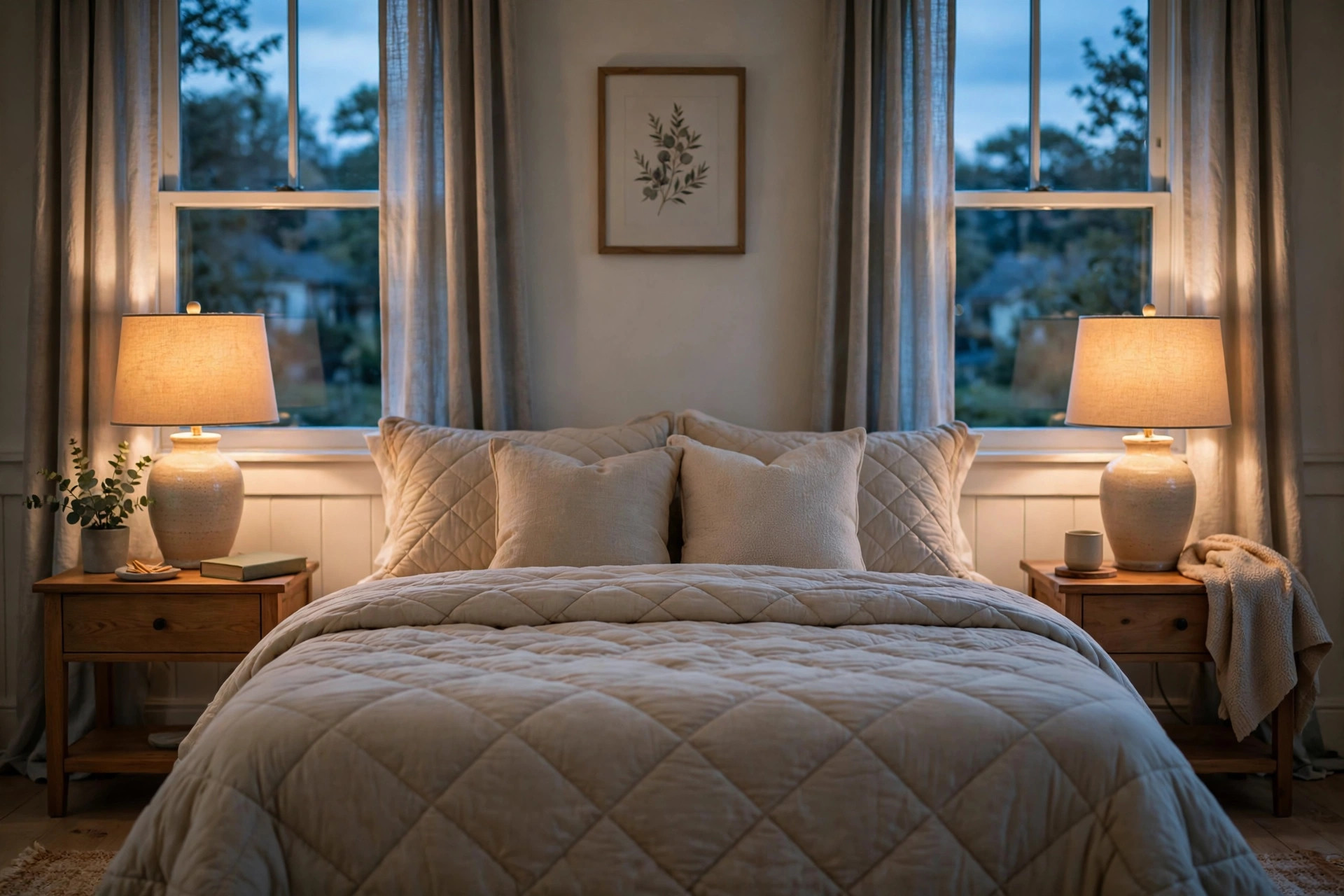
The bottom of the lampshade should sit at about eye level when you are sitting up in bed. For most beds and nightstands, that means the whole lamp should stand about 24 to 34 inches tall. Measure your nightstand first. A common nightstand is 24 to 28 inches high, and the top of a mattress sits 22 to 25 inches off the floor. Add the lamp height to the table height and aim for the shade bottom to land near your shoulder.
The shade should not be wider than the nightstand. A good rule is to keep the shade diameter at least two inches narrower than the table top on each side. A shade that hangs over the edge will be bumped in the dark.
Light Color and Brightness
Bulb color is given in Kelvins. For a bedroom, look for 2700K or lower — often sold as “warm white” or “soft white.” Higher numbers near 4000K and above read as daylight and suit a kitchen or a workshop, not a bedside. Major bulb makers such as Philips label their packaging clearly, which makes comparing colors easy in the store.
Brightness is measured in lumens. A reading lamp wants about 400 to 800 lumens at the bedside. Anything above 1000 lumens at close range tends to feel harsh. A three-way socket or an inline dimmer gives control for the hours between reading and sleep.
Shade Material and Shape
Fabric shades — linen, cotton, silk blends — soften light and spread it gently. Paper shades give a warm glow but stain and tear with age. Glass shades send light up and down and work well where a bright pool is wanted. Metal shades point light in one direction, which suits a reading spot but can leave the rest of the room dark.
Drum shades spread light wide. Empire shades, narrower at the top, push more light downward onto the table. Tapered shades suit tall, slim bases and give a classic look.
Socket, Switch, and Cord
Check the socket type. Most table lamps use a standard E26 medium base, which fits common LED bulbs. A few small lamps use E12 candelabra bases. Make sure replacement bulbs will be easy to find. The switch should be easy to reach in the dark: a turn knob on the socket, a pull chain, a touch sensor on the base, or a rocker on the cord. Touch lamps can switch on by accident when brushed in the night, so some buyers prefer a plain knob.
Look at the cord length and color. A six-foot cord reaches a wall outlet behind most beds. Flat plug heads fit behind headboards better than bulky plugs.
Types and Options on the Market
Bedroom table lamps for sale in the USA today fall into a few broad families. Knowing them helps narrow a crowded search.
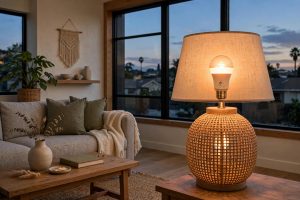
Classic fabric-shade lamps. A simple base — wood, ceramic, or metal — with a linen or cotton drum shade. These suit most bedrooms and spread soft light. They are the most common style in stores and online catalogs.
Touch and dimmable lamps. Many new lamps dim by touch: tap once for low, again for medium, again for high. Dimmable lamps are kind to tired eyes, but check that the dimmer works with the bulb you plan to use. Not all LED bulbs dim well.
USB and outlet lamps. Some nightstand lamps now carry a USB port or a small outlet in the base. They charge a phone overnight without a separate adapter. If you buy one, check the charging wattage — a low-output port may charge a modern phone slowly.
Banker and pharmacy styles. These have a metal shade that angles light down, a style borrowed from old library desks.
Small accent lamps. Short lamps of 12 to 18 inches work on dressers, shelves, and window seats rather than nightstands. They add glow without taking center stage.
Smart lamps. A growing number of bedside lamps connect to home systems and change color or brightness by voice or app. They cost more and need a setup step, but they can fade light slowly at bedtime, which some buyers prize.
If you are furnishing more than the bedroom, you may also browse related guides such as kitchen island pendants for California homes, which cover lighting for other rooms of the house.
Cost and Price: What to Expect
Prices for bedroom table lamps for sale USA span a wide range. A fair sense of the market helps you set a budget.
Budget lamps run about 20 to 40 dollars each. They are usually sold in pairs or as single lamps from big-box stores. The shades are simple fabric or paper, and the bases are painted metal or resin. They do the job well in a guest room or a first apartment. Large retailers such as Home Depot and Lowe’s carry wide budget lines, and their sites let you compare shades and heights side by side.
Mid-range lamps run about 40 to 120 dollars each. This is where most bedroom shoppers land. Bases are often real wood, ceramic, or brushed brass. Shades are thicker linen or cotton. Finish quality is better, and the hardware — sockets, harps, finials — feels sturdier. Specialty lighting shops such as Lamps Plus and Lumens focus on this range and carry styles that big-box stores do not.
Designer and premium lamps run 120 to 400 dollars and up. Here you pay for a known designer name, hand-made ceramic, solid brass, or a special finish. The light itself is rarely better than a mid-range lamp, but the object is finer.
Pairs save money. Many brands sell bedside lamps in sets of two at a lower per-lamp price than buying singles. Watch shipping costs on heavy ceramic lamps, and note return windows — a lamp that looks perfect online can feel wrong next to your bed, and stores with free returns remove that risk. Retailers like IKEA and Wayfair both list large selections with customer photos that show lamps in real rooms.
LED bulbs cost a few dollars each and last years, so the long-run cost of running a bedside lamp is small. A 9-watt LED gives the light of an old 60-watt bulb and uses far less power.
Care and Upkeep
A table lamp asks little, but a little care keeps it looking good for years.
Dust fabric shades with a soft brush or a lint roller every few weeks. Do not use water on fabric shades — it leaves rings. Glass shades can be wiped with a damp cloth and dried at once. Wipe bases with a dry or slightly damp cloth, and polish brass or wood as you would other furniture.
Check bulbs once or twice a year. LED bulbs fade slowly rather than burning out all at once, so a lamp that seems dim may only need a fresh bulb. Keep spare bulbs in a drawer so you are not left in the dark.
Tighten the harp — the wire frame that holds the shade — if the shade starts to lean. Most harps loosen with small wing nuts or clips. A leaning shade throws light sideways and can touch a hot bulb, so fix it promptly.
If the switch fails, unplug the lamp and replace the socket. Socket kits are cheap and need only a screwdriver. If the cord is frayed or the plug is cracked, stop using the lamp until the cord is replaced.
Safety Around Bedroom Lamps
The bedroom is where fires from lamps do the most harm, because people sleep nearby. A few plain rules cover nearly all of it.
Keep shades and bedding apart. A shade should never touch a pillow, a blanket, or the wall. Leave at least a few inches of air on every side. Use bulbs at or below the wattage printed on the socket — with LEDs this is rarely a problem, but an old high-heat bulb in a small shade can scorch fabric.
Run cords where they will not be pinched. Do not trap a cord under a bed leg or between a heavy headboard and the wall. Do not run cords under rugs. If the cord must cross a walking path, tape it flat or use a cord cover.
Buy lamps that carry a safety listing mark, such as UL or ETL. The Consumer Product Safety Commission tracks lamp recalls, and its site is worth a quick check before buying an unfamiliar brand. Home advice sites such as The Spruce also publish plain buying guides that note safety basics.
Keep lamps stable. A tall, top-heavy lamp on a small nightstand can be pulled down by its own cord. Set the lamp base fully on the table, and route the cord behind the table so a passing foot cannot snag it. In a child’s bedroom, a heavy base is better than a light one, and cords should be out of reach.
Frequently Asked Questions
How tall should a bedroom table lamp be? For a standard nightstand of 24 to 28 inches, a lamp of 24 to 34 inches puts the shade bottom near eye level in bed. Measure your table and mattress first, then choose. A lamp that is too tall blinds a person lying down; one that is too short leaves the bed in shadow.
What is the best bulb color for a bedroom lamp? Choose 2700K or lower, sold as warm white or soft white. This color relaxes the eye and suits the last hour before sleep. Cool white bulbs near 4000K and daylight bulbs near 5000K feel alert and belong in work areas.
Should bedside lamps match? Matching pairs give a calm, even look and are the common choice for master bedrooms. Mismatched lamps can work in a relaxed or collected style, but keep the heights and brightness close so one side of the bed is not much brighter than the other.
Can I use LED bulbs in an old lamp? Yes, in nearly every case. LED bulbs fit standard sockets and run cooler than old incandescent bulbs, which makes them safer in fabric shades. If the lamp has a dimmer, buy bulbs marked dimmable, and check that the dimmer is rated for LED loads.
Are expensive lamps worth it for a bedroom? The light quality depends on the bulb and the shade, not the price of the base. A 60-dollar lamp with a good linen shade and a warm LED can serve a bedroom well.
Where should the lamp sit on the nightstand? Place it toward the back corner, away from the edge, with the switch facing the bed. Leave the front half of the table for a book, a glass of water, or an alarm clock. If two people share the bed, each side gets its own lamp and its own switch.
Shoppers who also plan their yard lighting may find the guide to patio string lights for sale USA useful, and those weighing exterior fixtures can read the outdoor wall lanterns reviews buying guide for a sense of how outdoor buying guides are built.
A Final Word
The search for bedroom table lamps for sale USA is wide, but the decision is simple. Pick a lamp of the right height for your nightstand, a warm bulb of modest brightness, a shade that softens rather than blocks the light, and a switch you can find in the dark. Spend what the room deserves, keep cords and shades clear of bedding, and the small lamp by the bed will do its quiet work for years: light for the last page, then darkness for sleep.
References
ENERGY STAR. (n.d.). Energy efficient products. https://www.energystar.gov IKEA. (n.d.). Home furnishings. https://www.ikea.com Lamps Plus. (n.d.). Lighting and home decor. https://www.lampsplus.com Lowe’s. (n.d.). Home improvement products. https://www.lowes.com Lumens. (n.d.). Lighting and ceiling fans. https://www.lumens.com Philips. (n.d.). Lighting products. https://www.philips.com The Home Depot. (n.d.). Home improvement products. https://www.homedepot.com The Spruce. (n.d.). Home and garden advice. https://www.thespruce.com U.S. Consumer Product Safety Commission. (n.d.). Product safety information. https://www.cpsc.gov U.S. Department of Energy. (n.d.). Energy efficiency and renewable energy. https://www.energy.gov Wayfair. (n.d.). Furniture and home goods. https://www.wayfair.com
Was this guide helpful?

About Lisa Anderson
The My Garden US editorial team writes practical, in-depth home and garden guides for American homeowners — tested advice, no fluff.