Why a Warm Towel Matters
A cold bathroom can turn a morning routine into a chore. Many American homeowners feel the same chill. They step out of the shower and reach for a towel that feels like a damp rag from the night before. A towel warmer changes that moment. It keeps towels warm, dry, and fresh between uses. It also adds a small touch of comfort that guests notice right away.
This bathroom towel warmers reviews buying guide USA buyers rely on begins with a simple point. Reviews give useful signals. They show how a model performs in real homes. But reviews alone do not make a purchase decision. You also need to know the types, the wiring needs, the costs, and the upkeep. This guide walks through all of it in plain language.
A towel warmer is a heated rail or cabinet. You drape a towel over it. The heat gently warms the fabric. Many models also keep bathrobes warm. Most units in American homes plug into a standard outlet or hardwire into the wall circuit. Sizes range from compact rails for small baths to tall ladder racks that hold several towels.
What to Look for When You Shop: Bathroom Towel Warmers Reviews Buying Guide Usa
Start with the space you have. Measure the wall where the unit will hang. A ladder-style warmer needs a clear section of wall with room around it. A bucket-style warmer sits on the floor and needs a stable spot away from water. Measure twice. Warmers cannot be cut down after purchase.
Check the heat type. There are two main kinds. Electric warmers use a heating element inside the rails. Hydronic warmers connect to the home hot water system. Electric models suit most buyers. They install with less work and cost less up front.
Look at the heat rating. Makers list output in watts or BTUs. A small single-towel rail may use 60 to 100 watts. A large ladder model may use 150 to 250 watts. Higher wattage warms towels faster and dries thick bath sheets better. For a damp climate, pick the stronger unit.
Study the finish. Polished chrome is the classic look. It fits most bathrooms and resists rust. Brushed nickel hides water spots. Matte black suits modern rooms. Oil-rubbed bronze fits traditional styles. The finish does not change the heat, but it changes how the bath looks. Pick one that matches your faucet and hardware.
Read the timer and controls. Basic models have a simple on and off switch. Better models have a timer. A timer lets the warmer run for one or two hours and then shut off. This saves power and adds safety. Some models offer a thermostat or several heat levels. These cost more but give more control.
Check the cord length and plug type. Plug-in models come with a cord that runs to an outlet. The outlet should sit close to the warmer. Long cords across a wet floor are a bad idea. Hardwired models hide the wiring inside the wall. They need an electrician to install. Plan for that cost.
Look for safety marks. A good warmer carries a UL or ETL listing for the United States. This mark means an independent lab tested the unit. Do not buy a heater without one of these marks. Reviews sometimes mention build quality. The listing mark matters more.
Consider the warranty. Most makers offer one to five years. A longer warranty hints at better parts. Keep the receipt and register the product after purchase.
Types of Towel Warmers
Ladder Racks
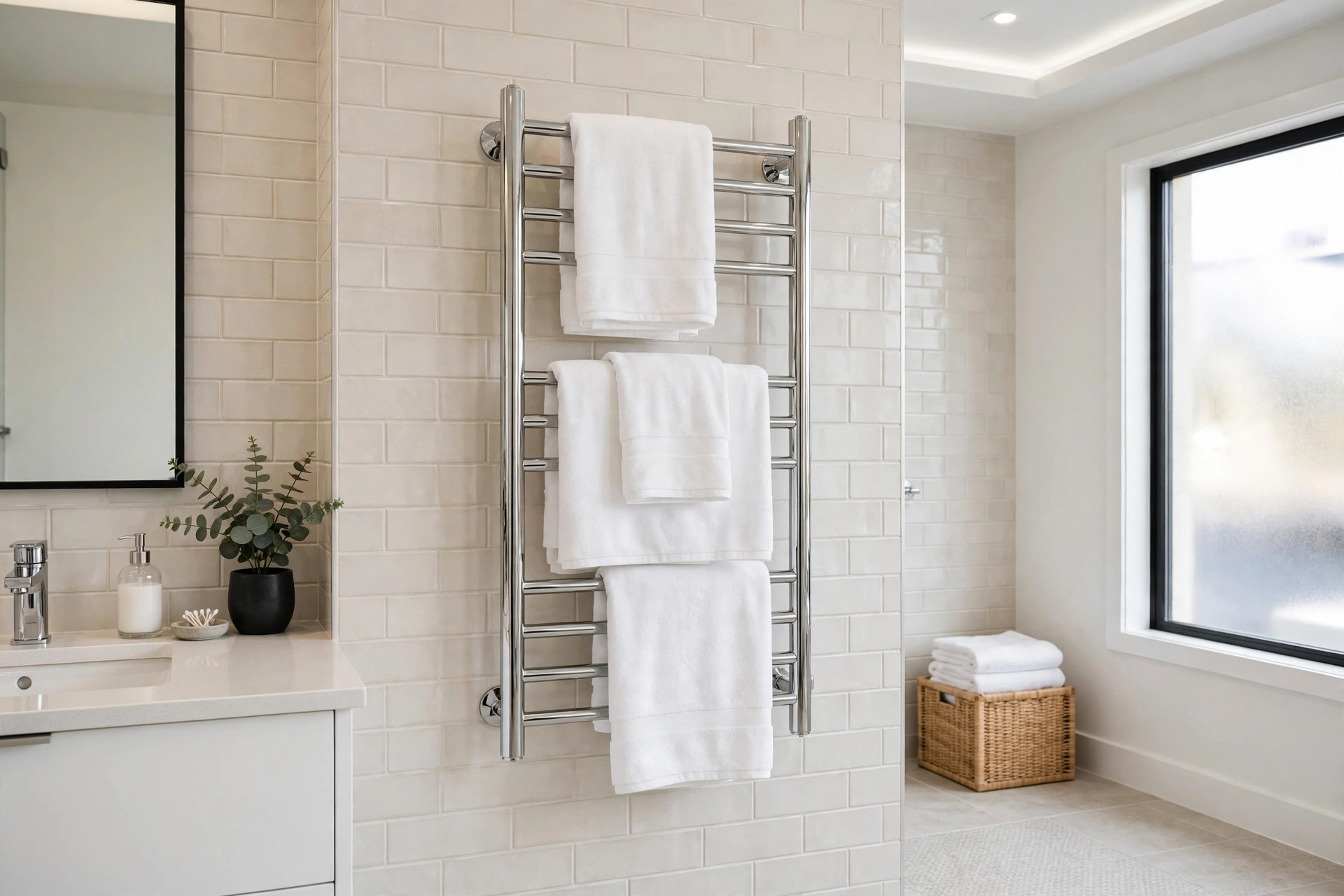
The ladder rack is the most common type in American homes. It mounts on the wall. Horizontal bars hold towels across several levels. A four-bar model holds one bath towel. A ten-bar model holds three or four towels. Ladder racks warm towels evenly and dry them between uses. They also serve as the main towel bar, which saves wall space.
Bucket Warmers
A bucket warmer looks like a tall laundry hamper. You drop towels inside. A heating element warms the inner wall. Towels come out warm and soft. Buckets sit on the floor and move from room to room. They warm towels fast but hold fewer at once. They suit renters who cannot mount hardware on the wall.
Wall-Mounted Bars and Hooks
Some warmers are simple heated bars. They look like a standard towel bar but get warm to the touch. Others are heated hooks for a single robe or hand towel. These suit small powder rooms. They cost less and install in minutes. They do not dry towels as well as a full rack.
Electric Versus Hydronic
Electric warmers run on household current. You plug them in or wire them to a circuit. They work in any home. Hydronic warmers tap into the home hot water lines. They run when the heating system runs. They cost more to install but cost less to run over time. Most American buyers choose electric for ease.
Hardwired Versus Plug-In
Plug-in models use a standard cord and outlet. You can install them yourself with basic tools. Hardwired models connect behind the wall. They look cleaner with no visible cord. They need an electrician. If you rent your home, choose plug-in.
What Reviews Tell You, and What They Miss
Reviews help in clear ways. They show whether a model gets truly warm or only lukewarm. They show whether the rails heat evenly or leave cold spots. They mention noise, since a few models hum softly. They report how long a unit lasts before parts fail.
But reviews have blind spots. A reviewer may live in a warm, dry climate. Their report of fast drying may not match your damp coastal bath. Reviewers rarely measure power use. They also review new units. Long-term wear shows up only in older comments. Read both new and old reviews when you can.
Review sites at large retailers show many models side by side. The Home Depot and Lowe’s sites list warmers with buyer ratings and answered questions. These pages help you compare sizes and finishes in one place. Product roundups at The Spruce and Bob Vila explain features in plain terms. These sources help, but your own needs come first. Match the unit to your wall, your towels, and your budget.
Also check maker pages. Kohler, Moen, Delta Faucet, and American Standard publish specs, care guides, and warranty terms for their bath lines. These pages are the best source for exact sizes and finishes.
Cost and Price
Towel warmers span a wide price range. A simple plug-in bucket model may cost forty to one hundred dollars. A mid-size electric ladder rack often costs one hundred fifty to four hundred dollars. Large designer models with timers can cost five hundred dollars or more. Hydronic units plus installation can pass one thousand dollars.
Installation adds to the total. A plug-in model costs little beyond the price tag if you mount it yourself. A hardwired model needs an electrician. That visit may add one hundred to three hundred dollars. Wall repair and paint after wiring add more. Ask for a firm quote before you buy the unit.
Running cost stays low. A 150-watt warmer running two hours a day uses about 0.3 kilowatt-hours daily. At typical American electric rates, that adds a few dollars a month to the bill. A timer cuts this cost. It shuts the unit off after the towels dry. Hydronic models cost less to run but cost far more to install.
Watch for hidden costs. Some warmers need a GFCI outlet nearby. If your bath lacks one, an electrician must add it. Some finishes need special cleaners. Budget ten to twenty dollars a year for care supplies.
Care and Upkeep
A towel warmer needs little care. Wipe the rails with a soft damp cloth each week. Dry the rails right after. Water spots build up if you skip this step. Use a mild soap for sticky spots. Avoid steel wool and harsh powders. They scratch the finish.
Do not use bleach near a chrome warmer. Bleach pits the surface over time. Vinegar works well on mineral spots. Mix one part white vinegar with three parts water. Wipe the rails, then rinse with a damp cloth.
Check the power cord twice a year. Look for cracks or frayed spots. A damaged cord is a fire risk. Unplug the unit and replace the cord or the warmer if you see damage. For hardwired models, listen for odd sounds and watch for breakers that trip. Call an electrician at the first sign of trouble.
Keep towels clean. A warmer does not clean towels. It only warms and dries them. Wash towels every three to four uses. A damp towel left on the rails for days will sour. Change it out and wash it well.
In winter, run the warmer a bit longer. Cold rooms slow drying. A timer set for two hours keeps towels fresh without wasting power.
Safety Rules
Heat and water need respect. Follow these rules every time.
Use a GFCI outlet or circuit. American code requires GFCI protection near water. A GFCI shuts off power fast if current leaks. Never plug a warmer into a standard outlet in a damp bath.
Keep the unit away from the tub and shower. Mount ladder racks at least a few feet from open water. Buckets should sit on dry floor away from splashes. Read the maker manual for the exact clearance.
Do not drape wet clothes over a warmer for hours. Towels are fine. Heavy soaked jeans or coats can block heat and overheat the unit. If you must dry a wet item, stay in the room and use a short time.
Do not let children play with the controls. The rails get hot enough to sting small hands. Mount wall models out of reach of small children when you can. Turn the unit off when young guests use the bath alone.
Never cover a warmer with a plastic bag or sheet. Heat needs air flow. Blocking the rails traps heat and can damage the unit or scorch fabric.
Unplug plug-in models during long trips. This removes a needless risk. Hardwired models can stay, but switch them off at the control.
Watch for recalls. The This Old House site and HGTV publish home safety notes that remind owners to register products and watch recall lists. Registration helps the maker reach you if a part is recalled.
Frequently Asked Questions
Do towel warmers use much electricity?
No. Most models use 60 to 250 watts. That is far less than a space heater. With a timer running the unit two hours a day, the monthly cost stays under a few dollars for most American homes.
Can a towel warmer heat a whole bathroom?
No. It warms towels and dries them. It will not replace a bath heater. For real room heat, pair it with heated floor kits or a proper bath heater.
Is it safe to leave a towel warmer on all day?
It is safer to use a timer. Most makers suggest one to four hours per use. All-day use wastes power and adds wear. A timer gives warm towels without the waste.
Can I install a plug-in towel warmer myself?
Yes, in most cases. You need a drill, a level, wall anchors, and a screwdriver. Follow the manual. If the model is hardwired, hire an electrician. Do not guess with wall wiring.
Will a warmer work with thick bath sheets?
Yes, if you buy the right size. Thick towels need a larger rack with good wattage. Leave space between towels so air moves. A crowded rack dries slowly.
Do I need a special outlet?
The outlet should have GFCI protection. Many baths already have GFCI outlets. If yours does not, have an electrician add one before you plug in the warmer.
Matching a Warmer to Your Bathroom Style
A warmer should fit the room, not fight it. In a bright white bath, polished chrome keeps the look clean. In a farmhouse bath, matte black or oil-rubbed bronze adds warmth. In a small bath, a slim two-bar rail warms hand towels without taking over the wall. In a master bath, a tall ladder rack becomes a focal point.
Think about the rest of your fixtures. If you plan to update the bath soon, pick the warmer finish first. Then match the faucet, bathroom vanity light bars, and LED bathroom mirrors to it. A matched set looks planned and raises the feel of the whole room.
Final Word
A towel warmer is a small upgrade with a big daily payoff. Warm dry towels greet you after every shower. The bath smells fresher. Guests notice the touch. Pick the right type for your space, buy from a listed maker, use a timer, and follow the safety rules. This bathroom towel warmers reviews buying guide USA shoppers can trust ends with one last tip. Read the reviews, but trust the specs. The right warmer on paper becomes the right warmer in your bath.
References
American Standard. (n.d.). Bathroom and kitchen products. https://www.americanstandard.com Bob Vila. (n.d.). Home improvement advice. https://www.bobvila.com Delta Faucet. (n.d.). Kitchen and bathroom faucets. https://www.deltafaucet.com HGTV. (n.d.). Home and garden ideas. https://www.hgtv.com Kohler. (n.d.). Bathroom and kitchen fixtures. https://www.kohler.com Lowe’s. (n.d.). Home improvement products. https://www.lowes.com Moen. (n.d.). Faucets and plumbing fixtures. https://www.moen.com The Home Depot. (n.d.). Home improvement products. https://www.homedepot.com The Spruce. (n.d.). Home and garden advice. https://www.thespruce.com This Old House. (n.d.). Home renovation guidance. https://www.thisoldhouse.com
Was this guide helpful?

About Sarah Mitchell
The My Garden US editorial team writes practical, in-depth home and garden guides for American homeowners — tested advice, no fluff.