Introduction
Learning how to smoke pork shoulder on grill is one of the best ways to make pulled pork at home. The pork shoulder is a tough cut of meat. It comes from the front leg of the pig. With low heat and slow smoke, it turns soft and tender. The fat melts into the meat. The outside forms a dark crust called bark.
You do not need a large smoker to do this. A common gas grill or a charcoal grill works well. This guide will show you the steps. We will cover the setup, the rub, the wood chips, the cooking time, and the resting time. By the end, you will know how to smoke pork shoulder on grill without fear.
Why Smoking Pork Shoulder Matters: How to Smoke Pork Shoulder on Grill
Pork shoulder is cheap. It is sold in most grocery stores. A bone-in pork shoulder, also called pork butt, weighs six to ten pounds. It feeds many people. This makes it a good choice for a party or a family meal.
The shoulder has much fat and tough tissue. High heat would make it dry and hard. Low heat over a long time solves this problem. The tough tissue turns to soft jelly. The meat falls apart with a fork. Smoke adds a deep flavor that an oven cannot give.
Smoking also lets you cook outside. Your house stays cool. Your kitchen stays clean. The smell of wood smoke in the yard is part of the fun. If you are new to slow cooking, pork shoulder is a kind start. It is hard to ruin. It stays juicy even if your heat moves up and down a little.
What to Look for When You Choose Your Meat
Buy a bone-in pork shoulder when you can. The bone adds flavor. It also helps you know when the meat is done. When the bone slides out clean, the pork is ready.
Look for a shoulder with a thick layer of fat on one side. This fat cap should be white and firm. It should not smell sour. A fresh shoulder feels firm, not soft. The color should be pink or light red. Gray spots are a bad sign.
Plan for one half pound of raw meat per person. Raw meat loses weight as it cooks. Ten pounds of raw shoulder will give you about five pounds of cooked meat. Buy a little more than you think you need. Leftovers taste good the next day.
If you want more simple smoker guides, see our guide on how to smoke brisket on a pellet grill for another long cook done right.
How to Set Up Your Grill for Smoking
Gas Grill Setup
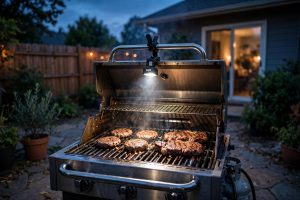
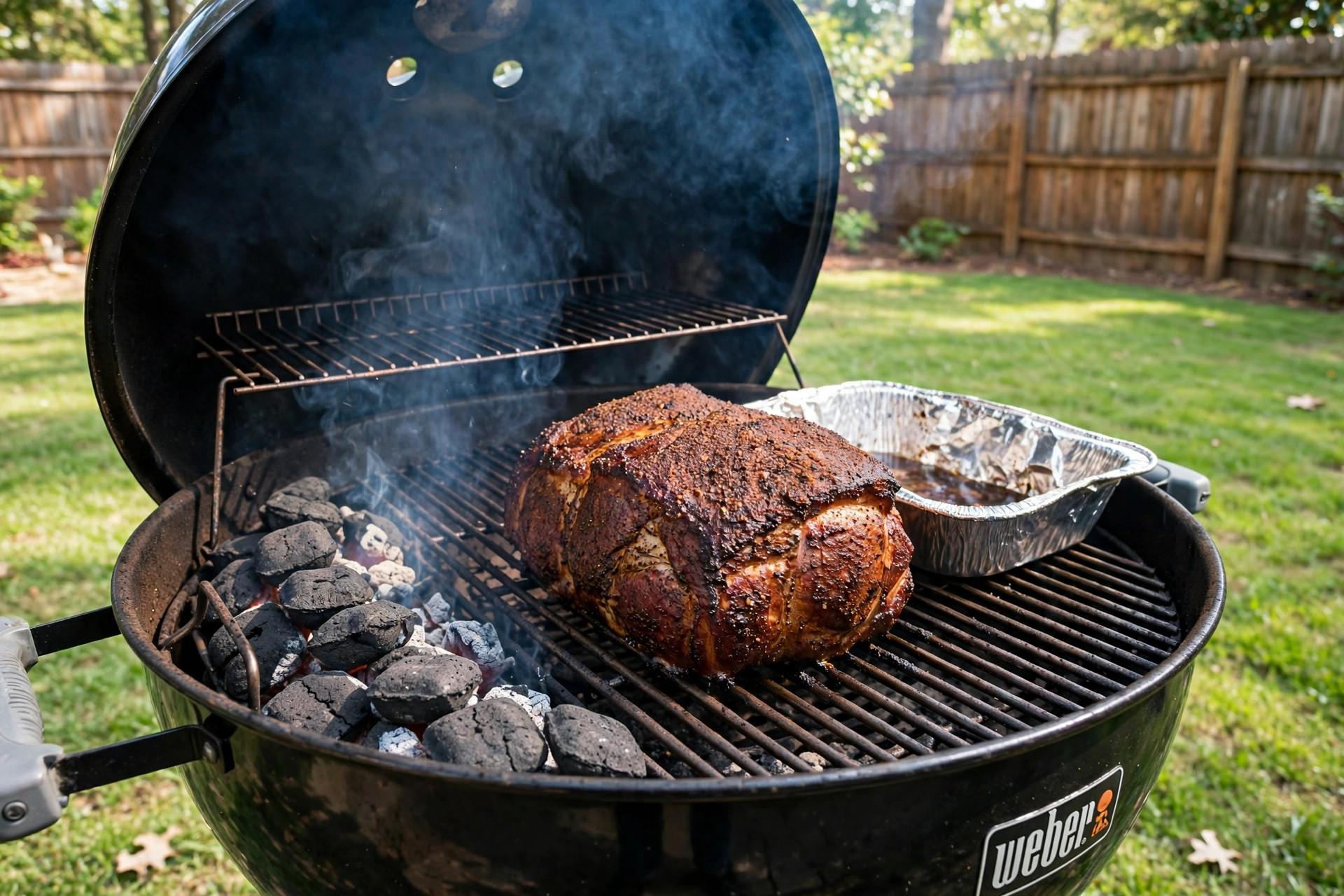
A gas grill can make good smoke. Turn on only one or two burners on one side. Leave the other burners off. This gives you two zones. One zone is hot. One zone is cool. Place the pork shoulder on the cool side. This is called indirect heat.
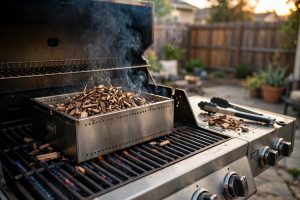
Put a foil pan of water on the hot side under the grates. The water adds moisture to the air. It also catches dripping fat. A smoker box filled with wood chips sits right on the burner that is lit. The heat makes the chips smoke.
Charcoal Grill Setup
Push all the lit charcoal to one side of the grill. Put the pork on the far side. This is the same two-zone plan. Add a pan of water next to the coals. Add small pieces of wood to the coals when the smoke fades.
Control the heat with the air vents. The bottom vent feeds air to the coals. The top vent lets heat escape. Open both a little for low heat. Close them more to cool the grill down. Your goal is a steady heat of 225 to 250 degrees.
Temperature Control
Use a grill thermometer at grate level. The lid thermometer reads hotter air above the meat. It lies. A clip-on probe tells the truth. Keep the grate near 250 degrees. Small swings are fine. Do not chase a perfect number.
If you are not sure what kind of cooker fits your yard, our review of the best smoker for beginners under 300 covers low-cost options that hold steady heat.
Types of Wood and How They Change Flavor
Wood choice matters. Different woods give different smoke flavors.
– Hickory: Strong and bold. The classic smoke for pork. A safe choice. – Oak: Medium strength. Clean and steady. Good for long cooks. – Apple: Mild and sweet. Light smoke that does not cover the pork taste. – Cherry: Mild and sweet with a red color on the meat. – Pecan: Rich and nutty. Between hickory and fruit woods.
Mix woods if you like. Half hickory and half apple is a common mix. Avoid soft woods like pine. They make bad smoke and can make you sick. Use only wood sold for cooking. You can find good smoking wood through retailers such as The Home Depot, which carries chips, chunks, and pellets for backyard cooks.
Do not soak wood chips. Many old books say to soak them. Tests show dry wood makes cleaner smoke. Soaked wood just makes steam until it dries out.
The Rub: Flavor Before the Smoke
A rub is a mix of salt and spices patted onto the meat. The simplest rub is equal parts salt and coarse black pepper. This alone makes great pork. But most cooks add more.
A classic pork rub has:
– Salt – Black pepper – Paprika – Garlic powder – Onion powder – Brown sugar
Use about one quarter cup of rub for an eight-pound shoulder. Pat the meat dry first with paper towels. Coat the whole shoulder in a thin layer of yellow mustard. The mustard helps the rub stick. It also adds no taste after cooking.
Put the rub on the night before if you can. Wrap the meat in plastic wrap and keep it in the cold box. This rest lets the salt sink into the meat. If you are short on time, rub the meat one hour before it goes on the grill. For more on how rubs are judged by grill brands, check the recipe ideas from Weber.
The Cook: Step by Step
Step 1: Heat the Grill
Light your grill and set it up for indirect heat. Aim for 225 to 250 degrees at the grate. Add your water pan. Get your wood ready.
Step 2: Place the Meat
Put the pork shoulder on the cool side. Place it with the fat cap up. As the fat melts, it runs down over the meat. Put a meat probe in the thickest part. Do not touch the bone. The bone reads hotter than the meat.
Step 3: Add Smoke
Set your smoker box or wood chunks on the heat. Close the lid. You should see thin blue smoke. Thick white smoke is too much. It can make the meat taste bitter. If you see thick smoke, open the lid for a moment and let it clear.
Add new wood every 45 to 60 minutes for the first three to four hours. The meat takes most of its smoke flavor early. After that, plain heat does the work.
Step 4: Wait Through the Stall
Around 150 to 165 degrees inside, the meat stops rising. This is called the stall. It can last two to four hours. Water leaving the meat cools it. This is normal. Do not raise the heat to fight it.
When the stall starts, you have a choice. You can wrap the shoulder in foil or butcher paper. Wrapping speeds the cook and keeps moisture in. It softens the bark. If you love a firm dark bark, do not wrap. For tips on managing long cooks, the pitmasters at AmazingRibs explain the stall and wrapping in detail.
Step 5: Watch for the Finish
The pork is done when the inside reads 195 to 205 degrees. More important than the number is the feel. Push the probe into the meat. It should slide in like soft butter. Check in three or four spots.
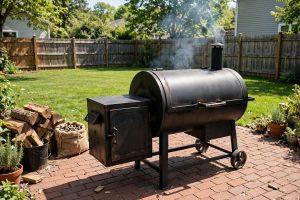
This is the same low-and-slow method used on dedicated smokers. If you ever move up to a real smoker, the guides at Traeger show how pellet smokers hold these low heats on their own.
Step 6: Rest the Meat
Take the shoulder off the grill. Wrap it in foil. Set it in a dry cooler with old towels around it. Rest for at least one hour. Two hours is better. The meat will still be hot. Resting lets the juices spread back through the meat. Skip this step and the juices run out on the board.
How Long to Smoke Pork Shoulder
Plan for about one and a half hours per pound at 225 degrees. An eight-pound shoulder takes about 12 hours. A ten-pound shoulder can take 15 hours. Start early in the morning. Start even earlier if you want to eat at dinner time.
Wind, cold air, and rain make the cook longer. Hot sun makes it shorter. Keep a log of each cook. Write down the weight, the start time, and the finish time. After two or three cooks, you will know your own grill.
The shoulder can rest in a cooler for up to four hours and stay hot. This gives you a safe margin. If the pork finishes early, wrap it and hold it. It will be fine.
Cost and Price
A pork shoulder is one of the cheapest cuts in the meat case. Prices move with the market, but it often costs far less per pound than ribs or brisket. An eight to ten pound shoulder can feed ten to fifteen people.
Wood chips cost little. A bag lasts for many cooks. A foil pan of water costs almost nothing. The main cost is your time. A long cook uses gas or charcoal all day. Even so, the cost per meal is low. Few dishes feed a crowd this well for this little money.
If you are shopping for your first setup, independent testers at Consumer Reports rate grills and smokers for value and build quality.
Care and Upkeep of Your Grill
A clean grill works better and lasts longer. After each cook, brush the grates while they are hot. Burned food comes off easy when the metal is warm.
Empty ash from a charcoal grill after it is cold. Wet ash can rust the metal. Wipe the inside of a gas grill lid with a paper towel now and then. Fat builds up there.
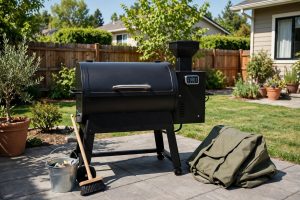
Check gas lines once a year for cracks. Brush them with soapy water and look for bubbles. Bubbles mean a leak. Fix it before you cook. Cover your grill when it is not in use. A cover keeps rain off and adds years to its life.
Season cast iron grates with a thin coat of oil after cleaning. This keeps them from rusting. For full care guides by grill type, Char-Broil publishes step-by-step maintenance pages.
Safety
Fire safety comes first. Never leave a lit grill alone for long. Keep it at least ten feet from your house, fence, and trees. Place it on flat ground. Do not use a grill inside a garage or under a low roof. Smoke builds up fast in closed spaces.
Food safety matters too. Do not let raw pork sit out more than two hours. Keep the meat cold until it goes on the grill. Wash your hands after touching raw meat. Use clean tools for cooked meat.
Cook to the right inside temperature. A probe thermometer is your best friend. Measure the meat; do not guess. For general grilling safety tips from a trusted cooking site, see The Spruce Eats.
Wear heat-proof gloves when you lift the lid or move hot pans. Steam from the water pan can burn. Open the lid away from your face.
FAQ
What is the best inside temperature for smoked pork shoulder?
The pork is ready between 195 and 205 degrees. At this point the tough tissue has melted. The meat pulls apart easy. Always check with a probe. It should slide in with no push.
How long does it take to smoke a pork shoulder on a gas grill?
Plan for one and a half hours per pound at 225 to 250 degrees. An eight-pound shoulder takes about 12 hours. Add a rest of one to two hours after. Start early in the day.
Do I need to wrap the pork shoulder?
No. Wrapping is a choice. Foil or butcher paper speeds the cook and keeps the meat moist. It makes the bark softer. If you want a firm dark bark, skip the wrap and let the grill do the work.
What wood is best for smoking pork shoulder?
Hickory and oak are the most common choices. They give a strong, classic smoke. Apple and cherry give a milder, sweeter smoke. Many cooks mix hickory with a fruit wood. For grill and fuel guides from a major brand, Napoleon offers useful cook tips.
Can I smoke pork shoulder on a regular charcoal grill?
Yes. Set the coals to one side and the meat to the other. This gives indirect heat. Add wood chunks to the coals. Control the heat with the air vents. It works just as well as a gas grill.
Why is my pork shoulder dry?
Dry pork is almost always undercooked, not overcooked. If you pull it before 195 degrees, the tough tissue has not melted. The meat feels dry and hard. Cook to 195 to 205 degrees and rest it well. For ceramic cooker methods, Big Green Egg shows how steady low heat keeps meat juicy.
A Final Word
Knowing how to smoke pork shoulder on grill turns a cheap cut into a great meal. The steps are simple. Set up two zones. Hold low heat. Add wood smoke. Wait through the stall. Cook to 195 degrees. Rest well.
Your first cook may not be perfect. That is fine. Each cook teaches you something about your grill. By your third shoulder, you will feel like a cook who has done it for years. For more recipe ideas and gear reviews, Broil King has a helpful outdoor cooking library.
References
AmazingRibs.com. (n.d.). Barbecue and grilling science. https://www.amazingribs.com Big Green Egg. (n.d.). Kamado grills and outdoor cooking. https://www.biggreenegg.com Broil King. (n.d.). Gas and charcoal grills. https://www.broilkingbbq.com Char-Broil. (n.d.). Gas and charcoal grills. https://www.charbroil.com Consumer Reports. (n.d.). Product reviews and ratings. https://www.consumerreports.org Napoleon. (n.d.). Fireplaces, grills, and heating products. https://www.napoleon.com The Home Depot. (n.d.). Home improvement products. https://www.homedepot.com The Spruce Eats. (n.d.). Recipes and cooking guides. https://www.thespruceeats.com Traeger. (n.d.). Wood pellet grills. https://www.traeger.com Weber. (n.d.). Grills and outdoor cooking. https://www.weber.com
Was this guide helpful?

About David Wilson
The My Garden US editorial team writes practical, in-depth home and garden guides for American homeowners — tested advice, no fluff.