
Introduction
Paper crafts look simple. They are not. A card that buckles, a scrapbook page that peels, or a paper flower that falls apart all point to one cause. The glue was wrong for the job. Finding the best craft glue for paper and cardstock makes the difference between work that lasts and work that fails in a week.
Paper and cardstock are light but touchy. They wrinkle when they get too wet. They tear when pulled too hard. Glue that works well on wood or fabric can ruin a thin sheet. So crafters who work with paper need adhesives made for the task.
This guide walks through the main types of craft glue for paper and cardstock. It explains what to look for, what each type does well, and what each type does poorly. It covers cost, storage, and safe use. By the end, you will know how to pick the best craft glue for paper and cardstock for your own projects.
Why the Right Glue Matters for Paper and Cardstock: Best Craft Glue for Paper and Cardstock
Paper is thin and absorbs water. Most liquid glues contain water. When too much water soaks into paper, the fibers swell and the sheet warps. This is why school projects glued with thick white paste often dry wrinkled. Cardstock is thicker, but it can still bend and buckle when soaked.
The best craft glue for paper and cardstock uses a formula that bonds with little moisture. It spreads thin. It dries fast enough that the paper does not have time to warp. It dries clear so no stains show on the front.
The right glue also holds for a long time. Many crafters keep cards, scrapbooks, and paper art for years. A glue that yellows or grows brittle will let the work fall apart. Acid-free glue protects the paper from breaking down. This matters for anything you plan to keep, such as wedding cards, baby books, or family albums.
Another point is control. Paper work is often fine and exact. Small tabs, thin borders, and layered pieces need a glue that goes exactly where you put it. A runny glue will bleed out from the edges and spoil the look. The best craft glue for paper and cardstock gives you a steady, thin line.
What to Look For When You Choose
Start with the label. A good paper glue says acid-free on the package. Acid-free means the glue will not harm the paper over time. It also says whether it dries clear. Cloudy or yellow glue will show on light paper.
Look at the tip. For paper work, a fine tip is a great help. It lets you draw a thin line of glue along a fold or an edge. Glue pens and bottles with small nozzles beat wide brush tops for exact work. For large sheets, such as backing a card, a wide glue stick or a roller works better.
Check the drying time. Fast-drying glue saves time on simple projects. It also lets you keep working without long waits. Slow-drying glue gives you time to move pieces into place. For layered work like paper quilling or decoupage, a longer open time is a plus.
Think about cleanup. Water-based glues wash off hands and tools with plain soap and water. Solvent-based glues need special cleaners and give off strong fumes. For home craft rooms, water-based glue is the safer and simpler choice.
Read the bond strength. Light paper needs only a light bond. Heavy cardstock, chipboard, and layered pieces need a stronger hold. Pick a glue rated for the heaviest material in your project. You can learn more about tools that pair well with glue in our guide to the best paper cutter for scrapbooking and cards.
Types of Craft Glue for Paper and Cardstock
White Glue and PVA Glue
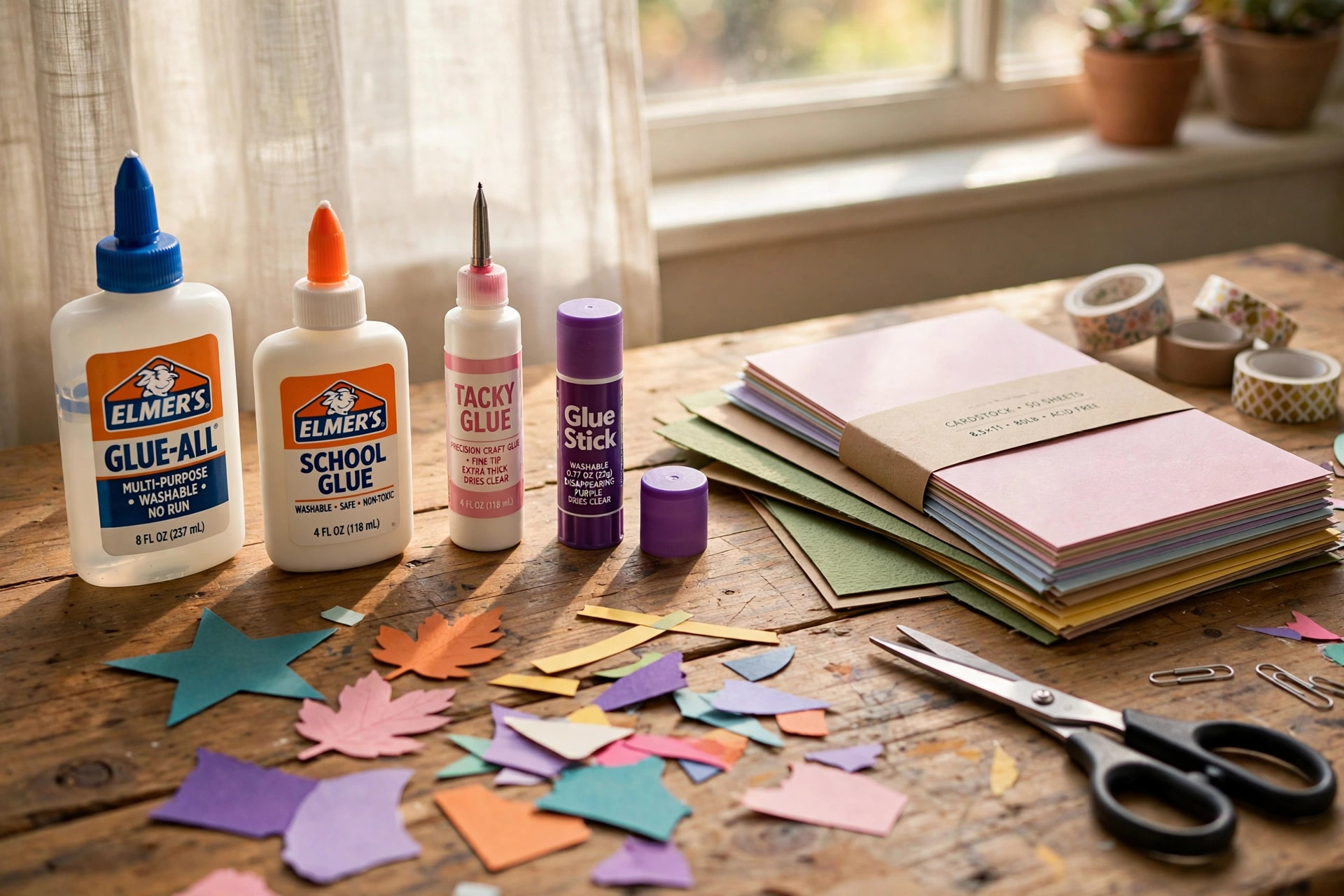
White glue is the classic craft adhesive. The active part is PVA, a plastic resin that dries clear and flexible. It works well on paper, cardstock, and light wood. It is cheap and easy to find.
The weakness of white glue is water content. Thick coats soak thin paper and cause warping. The fix is to use thin coats and to press the piece flat under a book while it dries. Thin coats also dry faster and bond better than thick ones.
Some white glues are marked washable. Washable glue washes out of clothes before it dries. It is a good pick for kids crafts. For keepsake work, choose a version marked permanent and acid-free.
Tacky Glue
Tacky glue is a thicker cousin of white glue. It grabs fast and holds pieces in place while it dries. Crafters like it for cardstock because the thick formula does not soak in as fast as thin white glue. It dries clear and stays flexible.
Tacky glue works well for three-dimensional paper crafts. It holds tabs, boxes, and layered cards while you set them down. The fine tip on most bottles suits exact work. Drying time is longer than glue sticks, so plan for it.
Glue Sticks
Glue sticks are solid glue in a twist tube. You rub the stick over the paper and press the pieces together. They are clean, fast, and easy for kids to use. They do not warp paper because they add almost no water.
The trade is strength. Glue sticks make a light bond. They suit flat work like cards, collages, and school projects. They do not hold heavy cardstock or layered pieces well over time. For flat paper work, a glue stick may be the best craft glue for paper and cardstock in your craft box. Keep one in your best craft scissors set for paper and fabric kit for quick fixes.
Spray Adhesive
Spray adhesive gives an even coat over a wide area. It is the best pick for mounting large sheets, backing posters, or covering boards with paper. It bonds fast and holds flat.
Spray glue needs care. Work in a well-aired room or outside. Cover nearby surfaces, because the mist settles on everything. Follow the can for open time. Most sprays allow a short window to place the paper before the bond sets.
Glue Pens and Precision Bottles
Glue pens hold liquid glue in a pen body with a fine tip. They are made for small, exact jobs such as paper quilling, card details, and book repair. Precision bottles with needle tips serve the same purpose for larger bottles of tacky glue.
These tools waste little glue and keep edges clean. They cost more per ounce than big bottles, but the control is worth it for fine work.
Hot Glue
Hot glue guns melt solid glue sticks and lay down a fast, strong bond. A best hot glue gun for craft projects home is useful for cardstock structures, wreaths, and mixed-media work. The bond sets in seconds.
Hot glue is not the first pick for flat paper. It is thick and leaves bumps under thin sheets. It can also burn fingers and scorch paper. Use it where bulk and speed matter more than a flat finish.
Tape Runners and Adhesive Dots
Tape runners lay down a strip of double-sided adhesive from a handheld tool. Adhesive dots are pre-cut glue spots on a sheet. Both bond at once with no drying time and no mess.
They suit scrapbooks and card making. They cost more per use than liquid glue. They also struggle on textured or heavy cardstock. For quick, clean bonds on smooth paper, they are hard to beat.
How to Choose for Your Project
Match the glue to the job. For flat cards and collages, use a glue stick or tape runner. For layered cardstock, use tacky glue. For large backing sheets, use spray adhesive. For fine detail, use a glue pen.
Think about who will use it. Kids do well with washable glue sticks and white glue. Adults doing keepsake work should pick acid-free, permanent glue.
Think about the setting. If you craft at the kitchen table, pick low-odor, water-based glue. If you work in a studio with good air flow, spray adhesive is fine.
Test first. Glue two scrap pieces, let them dry a full day, then try to pull them apart. Check for warping, yellowing, and stiffness. A quick test saves a ruined project.
Buy small at first. Glue does go bad. A large bottle that dries out in the tip is money lost. Once you find a brand you like, buy the size you will use within a year.
Cost and Price
Paper craft glue is one of the cheapest craft supplies. Glue sticks often cost a dollar or two each in multi-packs. White glue in squeeze bottles runs a few dollars. Tacky glue costs a little more, usually in the three to six dollar range for a medium bottle.
Glue pens and precision bottles cost more per ounce, often five to ten dollars. Tape runners and refill cartridges run in the same range. Spray adhesive is the dearest common option, often eight to fifteen dollars a can.
Price does not always track quality. Store brands of white glue work as well as name brands for basic paper crafts. What you pay for in dearer products is the tip design, the acid-free formula, and the brand testing. For keepsake projects, the extra cost is worth it.
Care and Upkeep
Store glue upright with the cap on tight. Air is the enemy. It dries out tips and thickens the glue inside. Keep bottles in a cool, dry spot away from heat and sun.
Clean tips after each use. Wipe a fine tip with a damp cloth before you cap it. If a tip clogs, soak it in warm water. Do not poke it with a pin if the maker warns against it, since pins can widen fine tips.
Glue sticks last a long time if kept capped. If a stick dries out, the top layer can be cut away to reach fresh glue. Tape runners should be stored away from dust, which ruins the adhesive.
Check old glue before a big project. Dried, lumpy, or foul-smelling glue should be thrown away. Most glues keep for one to two years after opening. Mark the open date on the bottle with a pen.
Safety
Craft glue for paper is among the safest craft supplies, but a few rules still apply. Keep all glue away from small children who may eat it. Even non-toxic glue is not food. Watch that kids do not put glue near eyes or mouth.
Use spray adhesive only in open air or a room with strong ventilation. Wear a dust mask if the label asks for one. Keep sprays away from flames and heat, since the propellants can catch fire.
Hot glue guns burn skin at once. Rest the gun on its stand, never on its side. Keep fingers clear of the tip and the fresh glue. Let children use low-heat guns only with adult help.
Read the label for first aid steps. Wash skin contact with soap and water. If glue gets in eyes, rinse with clean water and seek care if pain lasts. Keep the package so you can read the maker helpline if needed.
Frequently Asked Questions
What is the best craft glue for paper and cardstock for beginners?
A glue stick is the easiest start. It is clean, cheap, and does not warp paper. Pair it with a small bottle of tacky glue for cardstock pieces that need a stronger hold. This two-glue setup covers most beginner projects.
Is hot glue good for paper and cardstock?
Hot glue works for thick cardstock structures and mixed-media pieces, but it is a poor pick for flat paper. It leaves lumps and can scorch thin sheets. Use tacky glue or a glue stick for flat work, and save hot glue for three-dimensional builds.
How do I stop paper from wrinkling when I glue it?
Use the thinnest coat that still bonds. Spread glue evenly instead of in blobs. Press the piece flat under a heavy book while it dries. Glue sticks and tape runners add almost no water and wrinkle paper the least.
What does acid-free mean on a glue label?
Acid-free means the glue will not release acids that break down paper over time. Regular glue can yellow and weaken paper after a few years. For scrapbooks, wedding cards, and anything you want to keep, acid-free glue is the right pick.
Can I use super glue on paper and cardstock?
It is not a good idea. Super glue bonds skin at once, gives off strong fumes, and can stain paper yellow. It also turns brittle with age. Paper craft glues are cheaper, safer, and made for the job.
How long does craft glue last once opened?
Most paper glues keep for one to two years after opening if stored capped in a cool, dry place. Glue sticks last longer. Throw away glue that has thickened, separated, or dried into lumps, since it will not bond well.
A Short Final Word
The best craft glue for paper and cardstock is the one that fits your project, your skill level, and your budget. Start simple with a glue stick and a bottle of tacky glue. Add a glue pen for detail work and a tape runner for fast scrapbook pages. Test on scraps, store your glue with care, and keep safety in mind. With the right adhesive on the shelf, your paper work will stay flat, clean, and strong for years to come.
For more background, see The Home Depot, JOANN, and Blick Art Materials. For more background, see Family Handyman, This Old House, and Bob Vila. See Michaels for more detail. See also Target for further detail.
References
Blick Art Materials. (n.d.). Art and craft supplies. https://www.dickblick.com Bob Vila. (n.d.). Home improvement advice. https://www.bobvila.com Family Handyman. (n.d.). DIY home repair and maintenance. https://www.familyhandyman.com JOANN. (n.d.). Fabric and craft supplies. https://www.joann.com Michaels. (n.d.). Arts and crafts supplies. https://www.michaels.com Target. (n.d.). Retail store. https://www.target.com The Home Depot. (n.d.). Home improvement products. https://www.homedepot.com This Old House. (n.d.). Home renovation guidance. https://www.thisoldhouse.com
Was this guide helpful?

About James Carter
The My Garden US editorial team writes practical, in-depth home and garden guides for American homeowners — tested advice, no fluff.
You May Also Like
A Candle Wick Kit for Soy Candle Making Home Candle Makers
September 25, 2026 1 views
DIY Bath Bomb Kit for Gifts and Crafts: A Complete Guide
June 5, 2026 0 views
How to Choose a Paint Palette for Acrylics Mixing at Home
July 27, 2026 0 views