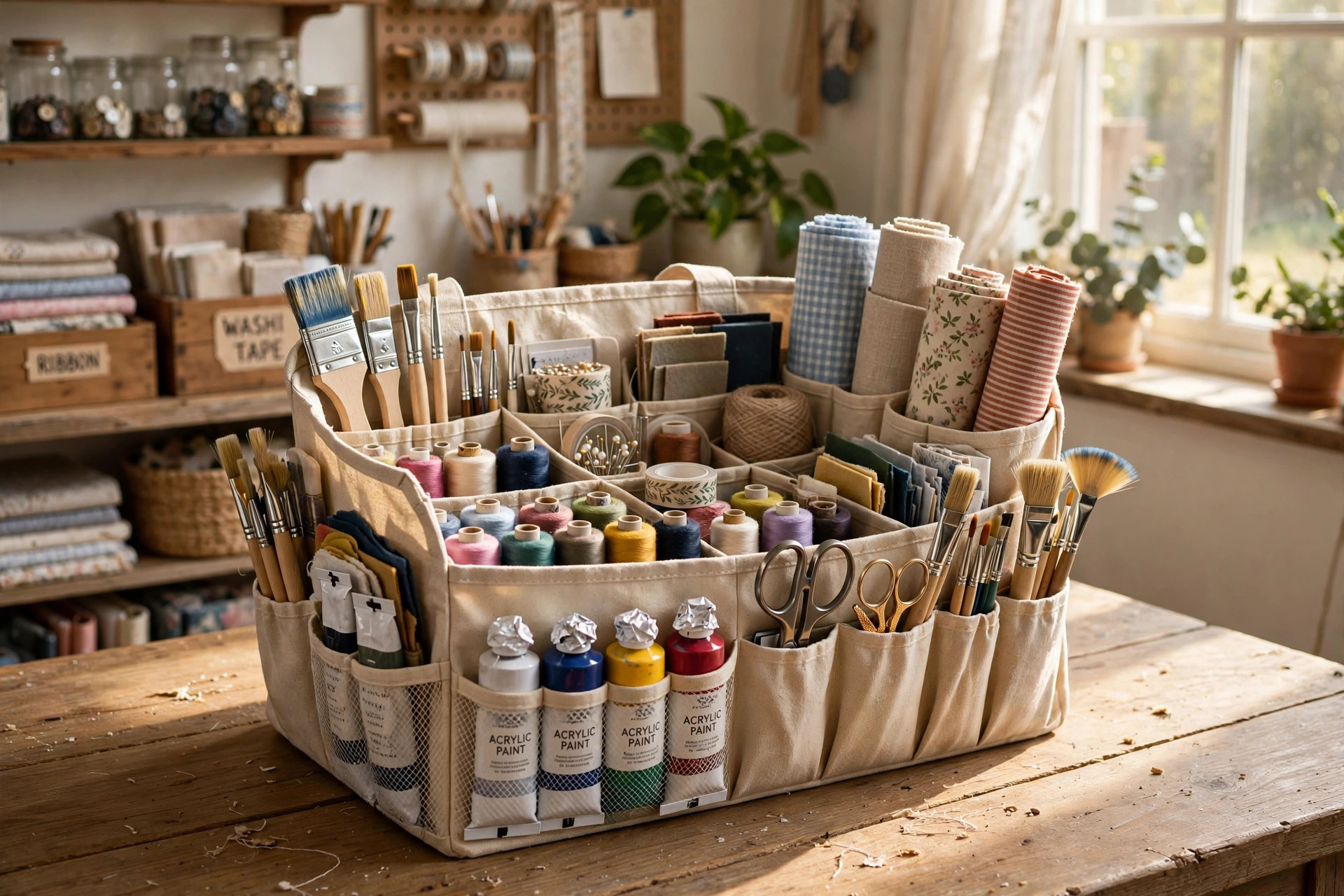

A good tote changes how you craft. The best craft organizer tote for on the go lets you carry your scissors, paints, beads, thread, and small tools in neat order. You can take it to a friend’s house, a class, or the park. Nothing gets lost. Nothing spills. When you arrive, you open the tote and you are ready to work.
A craft organizer tote is different from a normal tote bag. A normal tote is one big empty space. Things sink to the bottom. Small items hide under large ones. Sharp tools poke through thin fabric. An organizer tote is different. It has many pockets inside and outside. It has loops for scissors and pens. It has clear pouches for small parts. Some have padded walls. Some have a firm base so the tote stands up on its own. The best craft organizer tote for on the go keeps each item in its own slot. You can see everything at a glance.
In this guide we will walk through what matters when you shop. We will look at size, fabric, pockets, weight, and price. We will look at the main types of totes you will find in stores. We will talk about cost, care, and safety. At the end you will find answers to common questions. The goal is simple. Help you pick a tote that fits your craft and your life.
Why a Craft Organizer Tote Matters
Crafting on the go is more common than it used to be. People join craft groups at libraries and community centers. They take classes at craft stores. They visit family and bring a project along. A well-made tote makes these trips easy. You pack once. You carry once. You unpack nothing until you sit down to work.
The best craft organizer tote for on the go also protects your supplies. Paint tubes cost money. Good scissors cost money. Beads and findings are easy to lose. When these things rattle around loose in a bag, they break, leak, or vanish. A tote with padded pockets and zippered sections keeps them safe. Your supplies last longer. You spend less on replacements.
There is also the matter of time. Think of a card maker who cannot find her bone folder. Every minute spent searching is a minute not spent making. An organizer tote saves time. Each tool has a home. Your hands learn where things live. You reach, you grab, you work.
Finally, a tote protects your car and your home. Glue bottles stay upright. Ink pads stay closed. Fabric stays clean. A tote with a firm bottom and strong zippers holds everything in place during the drive.
What to Look For When You Choose: Best Craft Organizer Tote for on the Go
Shopping for a tote is easier when you know what to check. Here are the points that matter most.
Size and Shape
First, think about your craft. A knitter needs room for yarn skeins and a sweater in progress. That calls for a tall, roomy tote. A jewelry maker needs many small pockets for beads and pliers. That calls for a smaller tote with fine detail. A scrapbooker needs a tote that holds 12-inch paper flat. That calls for a wide, flat tote.
Measure your largest item. Then check the tote’s inside measurements. Leave an inch or two of space around it. The tote should close without force. Overstuffing strains the zippers and seams.
Pockets and Compartments
Pockets are the heart of an organizer tote. Look for a mix. Deep pockets hold tall bottles and rolls of tape. Shallow pockets hold pens and brushes. Zippered pockets hold money, keys, and small valuables. Clear vinyl pockets let you see small parts like buttons and clasps without opening them.
Outside pockets are handy for items you need fast, like your phone or your pattern sheet. Inside pockets keep tools from sliding around. Removable pouches are a fine bonus. You can pull out just the pouch you need and leave the rest packed.
Fabric and Build
The fabric must be strong. Canvas, heavy nylon, and polyester are common choices. They resist tears and wipe clean. Check the stitching. Seams should be straight and tight, with no loose threads. Handles should be sewn on with extra stitching, not just glued.
A firm bottom helps the tote stand upright on a table. Some totes have a plastic or wood insert in the base. Others have metal feet that keep the fabric off wet ground. Water-resistant fabric is worth the price if you craft outdoors or carry paint and glue.
Weight and Comfort
An empty tote should feel light. Once you fill it with supplies, it will be heavy enough. Wide padded handles spread the load across your hand or shoulder. A detachable shoulder strap lets you carry the tote hands-free. If you walk far, look for a strap with a soft pad.
Try lifting a tote that is close to your filled weight before you buy. Your shoulder will tell you the truth. The best craft organizer tote for on the go feels balanced, not tippy. It should not pull to one side.
Closures
Zippers keep items in and dust out. Look for smooth, strong zippers that do not catch on fabric. A wide top zipper that opens the full length of the tote makes packing easy. If you carry the tote in a car trunk, a full closure matters more than an open top.
Style and Color
A tote that looks good gets used more. Dark colors hide stains from paint and glue. Light colors make it easier to find small dark items inside. Some crafters like bright prints that are easy to spot in a crowded classroom. Pick what suits you. Function comes first, but there is no harm in a tote you enjoy carrying.
Types of Craft Organizer Totes
Stores carry several main types. Each suits a different kind of crafter.
Open-top caddy totes. These look like a sturdy basket with handles. They have open compartments around the edges and a big space in the middle. They are easy to reach into. They work well for painting and card making, where you grab tools often. They do not close, so they suit short trips by car.
Zippered deluxe totes. These close fully with a zipper. They often have the most pockets. They suit travelers who fly or ride the bus. Everything stays inside, even if the tote tips over. Many jewelry makers and scrapbookers prefer this type.
Rolling craft totes. These have wheels and a pull handle, like small luggage. They suit heavy loads, such as a full scrapbook kit or a sewing machine. They save your back. They cost more and need smooth floors, so think about where you will roll them.
Convertible backpack totes. These can be carried by hand straps or worn as a backpack. They suit walkers and bikers. They keep your hands free. They tend to be smaller, so they fit crafters with compact kits.
Specialty totes. Some totes are made for one craft. Yarn totes have holes in the lid for feeding yarn while you knit. Die-cut machine totes are sized to fit a Cricut or similar machine. If you do one craft most of the time, a specialty tote may serve you best.
Shoppers comparing storage at home may also like our guide to the best craft storage organizer for small rooms, which covers shelves and bins for tight spaces. If you want wheels for heavier kits, see the best craft storage cart with drawers rolling. And jewelry makers can pair a tote with ideas from the best jewelry making kit for beginners adults.
Cost and Price Ranges
Craft organizer totes come in a wide price range. Knowing the range helps you set a budget.
Budget totes, about 15 to 30 dollars. These are simple canvas or polyester totes with a few pockets. They work for light crafts and short trips. The zippers and handles may wear faster, but they are fine for a beginner or a child.
Mid-range totes, about 30 to 70 dollars. This is the sweet spot for most crafters. You get strong fabric, good zippers, many pockets, and padded handles. The Michaels and JOANN stores carry many choices here, and you can often find seasonal sales.
Premium totes, about 70 to 150 dollars. These use top-grade fabric, metal hardware, and careful stitching. Rolling totes and machine-specific totes often land in this range.
Price is not the only cost to weigh. A cheap tote that breaks in a year costs more over time than a mid-range tote that lasts five years. Big retailers like Amazon, Target, and Etsy show buyer reviews that help you judge real quality.
Care and Upkeep
A tote lasts longer when you care for it. The steps are simple.
Empty the tote once a month. Shake out crumbs, thread ends, and dried glue bits. A small brush or a dry cloth picks up dust from corners.
Spot-clean stains right away. Most craft totes can be wiped with a damp cloth and a drop of mild soap. Paint and ink stains are easier to lift when fresh. Do not soak a tote with a firm base insert unless the label says you can. Water can warp the insert.
Check the zippers now and then. A stuck zipper often just needs a bit of dry soap or wax rubbed along the teeth. Do not force it.
Store the tote in a dry place. Damp basements can grow mildew on canvas. If the tote gets wet in the rain, open it up and let it air dry fully before you pack it again.
Once a year, look over the handles and seams. If a stitch is coming loose, a few hand stitches now will stop a big tear later. Crafters who sew can fix most small problems in ten minutes.
For general advice on keeping craft gear in good shape, the how-to libraries at Family Handyman and Bob Vila offer plain, useful guides.
Safety Tips for Crafters on the Go
Craft tools need care when they travel. Keep these safety points in mind.
Sharp tools first. Scissors, craft knives, and rotary cutters must ride in sheaths or guarded slots. Never toss a bare blade into a pocket. When children are near, keep sharp tools in a zippered section they cannot open by accident.
Liquids upright. Glue, paint, and ink should stand upright in deep pockets. Make sure caps are tight. A small zippered bag inside the tote adds a second layer of defense against leaks.
Weight limits. Do not overload the tote. A tote that is too heavy can hurt your back and shoulder. If your kit weighs more than you can lift with ease, move to a rolling tote. Take breaks on long walks.
Heat and cold. Do not leave a tote full of supplies in a hot car. Heat can melt glue sticks, warp plastic tools, and ruin paint. Cold can crack some plastics. Bring the tote inside with you when you can.
Small parts and children. Beads, pins, and buttons are choking hazards for small children and pets. Keep them in latched or zippered pouches. Pack and unpack where little hands cannot reach.
Visibility at night. If you walk to evening classes, pick a tote with a light-colored panel or add a reflective strip. Drivers see you sooner.
Art supply experts at Blick note that proper storage extends the life of tools.
Frequently Asked Questions
What size tote do I need for scrapbooking on the go?
Most scrapbookers need a tote that holds 12-by-12-inch paper flat. Look for a tote at least 13 inches wide inside. Pockets for adhesive, trimmer, and pens should sit around the main space. A rolling tote helps if you carry heavy albums and tools.
Can I use a craft organizer tote as a diaper bag or work bag?
You can, but it is not ideal. Craft totes have many small pockets sized for tools, not bottles or files. They work in a pinch. For daily use, a bag made for the job will serve you better.
How do I keep yarn from tangling in a tote?
Use a tote with yarn feed holes in the lid, or place each skein in its own zippered pouch. Pull the working yarn through a small gap in the zipper. This keeps skeins apart and stops tangles. It also keeps pet hair off the yarn.
Are rolling craft totes allowed on airplanes?
It depends on size. Most rolling craft totes fit as carry-on bags if they meet the airline’s size limits. Check the airline’s rules before you fly. Sharp tools like craft knives and large scissors must go in checked bags. Small scissors under four inches are often allowed, but rules change, so check first.
What is the best way to clean a canvas craft tote?
Shake it out, then wipe it with a damp cloth and mild soap. Work on one stain at a time. Rinse the cloth and wipe again to remove soap. Let the tote air dry fully. Do not put it in a hot dryer unless the care label allows it. Heat can shrink canvas and melt glue on handles.
How long should a good craft tote last?
A mid-range tote used weekly should last three to five years. A premium tote can last longer. The first things to wear out are usually zippers and handle stitching.
A Short Final Word
The best craft organizer tote for on the go is the one that fits your craft, your hands, and your habits. Start with your largest item. Count your tools. Be honest about how far you carry them. Then pick a tote with the right size, strong fabric, and pockets that match your kit.
You do not need the most costly tote on the shelf. You need a tote that keeps your supplies safe, your tools at hand, and your back unhurt. Pack it with care. Clean it now and then. It will repay you with years of easy trips and more time spent making.
Whether you are off to a quilting circle, a card class, or a quiet bench by the lake, a good tote makes the journey part of the pleasure. Happy crafting.
References
Amazon. (n.d.). Online shopping. https://www.amazon.com Blick Art Materials. (n.d.). Art and craft supplies. https://www.dickblick.com Bob Vila. (n.d.). Home improvement advice. https://www.bobvila.com Etsy. (n.d.). Handmade and craft marketplace. https://www.etsy.com Family Handyman. (n.d.). DIY home repair and maintenance. https://www.familyhandyman.com JOANN. (n.d.). Fabric and craft supplies. https://www.joann.com Michaels. (n.d.). Arts and crafts supplies. https://www.michaels.com Target. (n.d.). Retail store. https://www.target.com
Was this guide helpful?

About James Carter
The My Garden US editorial team writes practical, in-depth home and garden guides for American homeowners — tested advice, no fluff.
You May Also Like
Weaving Loom Kit for Beginners Wall Art: A Complete Guide
March 7, 2026 0 views
How to Use a DIY Candle Holder Kit for Table Decor Crafts
March 19, 2026 0 views
Best Craft Knife for Vinyl Weeding Cricut: A Plain Buyer’s Guide
August 18, 2026 0 views