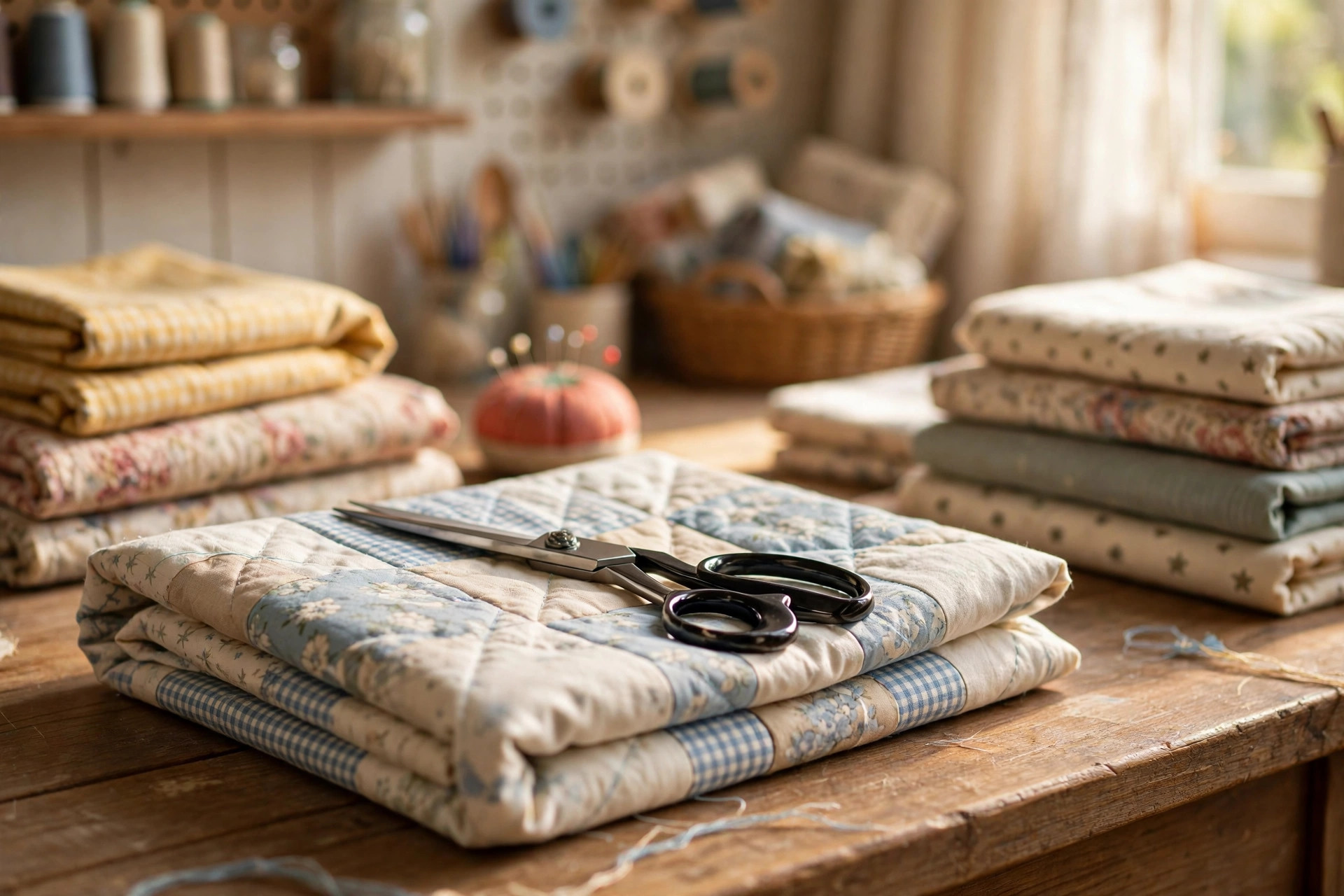

A good pair of scissors can change the way a sewing project feels. When you look for the best fabric scissors for sewing and quilting, you want a tool that cuts cleanly, fits your hand, and lasts for years. A dull or poor pair will fray edges and tire your fingers. This guide will help you choose well.
Sewing and quilting put heavy demands on scissors. You cut cotton, flannel, denim, batting, and fusible interfacing. Each layer tests the edge of the blade. That is why quilters and sewers alike invest in a proper pair. The right scissors make seams sit flat and pieces match up true.
Why Good Fabric Scissors Matter
Fabric scissors are not the same as paper scissors. They have longer blades, a stronger pivot, and a sharper edge ground for cloth. When you use a craft store shelf brand meant for paper, the edge folds the fibers instead of cutting them. The result is a ragged cut that stretches out of shape.
Clean cuts matter most in quilting. A quilt block must line up within a quarter of an inch. A jagged cut can shift a whole block by an eighth of an inch, and small errors multiply across a quilt top. For sewing garments, a clean edge feeds under the presser foot with less puckering. Many sewing teachers at local craft classes, such as the ones listed through Michaels, tell beginners that sharp scissors are the cheapest way to improve their work.
A comfortable handle matters just as much. Long quilting sessions ask for dozens of cuts. A handle that pinches or rubs will make your hand ache. Look for handles shaped to your grip, whether you cut right-handed or left-handed.
What to Look for When You Choose: Best Fabric Scissors for Sewing and Quilting
Blade Length and Shape
Dressmaker shears usually run eight to ten inches from tip to handle. The long blade lets you cut long straight lines without closing the blades many times. Shorter embroidery scissors, about four inches, are better for snipping threads and cutting small applique pieces.
The blade tip also matters. Sharp pointed tips reach into corners and cut curves. Rounded safety tips are better for households with small children, though they cannot cut as finely. For most quilting work, a knife edge on one side and a serrated edge on the other is a good middle ground.
Blade Material
High carbon steel holds an edge longer than stainless steel, but it can rust if you leave it damp. Stainless steel resists rust and is easy to wipe clean. Many modern shears use hardened stainless steel that gives you both sharpness and rust resistance. Brands with long histories in cutting tools, like Fiskars, build their sewing shears from such steels.
Handle Comfort
Handles come in hard plastic, soft rubber grips, and molded ergonomic shapes. Try before you buy if you can. Your fingers should rest in the loops without stretching. Bent handles lift the fabric off the table so you cut in one smooth pass. This design helps quilters cut layered fabric flat on a cutting mat.
Left-Handed Models
About one in ten people cuts left-handed. True left-handed shears reverse the blades so the cut line stays visible. Do not settle for right-handed shears with a soft grip. You can find left-handed models in many craft aisles and on large craft sites such as JOANN.
Types of Fabric Scissors for Sewing and Quilting
Dressmaker Shears
These are the workhorse. They have long blades and a bent handle. You will use them for most cutting in a sewing room. A quality pair of dressmaker shears is the first tool to buy if you are building a sewing kit for beginners.
Pinking Shears
Pinking shears cut a zigzag edge. The zigzag slows fraying on raw fabric edges. They are useful for seam allowances on woven fabrics that fray fast. They do not replace regular shears, but many sewers keep a pair nearby.
Embroidery Scissors
These are small and sharp. You use them to snip thread tails, clip curves, and trim applique. Keep a pair at the sewing machine so you are not reaching for your big shears for tiny cuts.
Quilting Scissors with Serrated Blades
Some quilting scissors have a fine serrated edge on one blade. The serration grips slippery fabrics like satin and chiffon. If you quilt with silks or batiks, a serrated pair can save you from shifting layers.
Spring-Action Shears
Spring-action shears open on their own after each cut. They reduce hand strain and are a help for anyone with arthritis or weak hands. They come in dressmaker and applique sizes.
Many quilters pair their shears with a rotary cutter for quilting for long straight cuts, saving the scissors for curves and detail work. If you cut both cloth and paper in your craft room, keep a separate craft scissors set for paper so your fabric blades stay sharp.
How to Test a Pair Before You Buy
If you shop in a store, test the scissors before you pay. Bring a scrap of cotton from your stash. Make one long cut through a single layer. The blades should move smooth and the cut edge should look clean, with no snags or hanging threads.
Next, fold the scrap into four layers and cut again. This is the real test. Weak shears chew the folded edge. Good shears glide through with steady pressure. Listen as you cut. A smooth pair is quiet. A grinding or clicking sound at the pivot means the screw is loose or the blades are out of line.
Open and close the shears a dozen times. Your fingers should not feel pinched or tired. Hold them as you would in real work, with your thumb and fingers in the loops. Some shoppers hold scissors flat in the air, but you will cut with fabric on a table, so bend your wrist the same way.
Check the screw at the pivot. A good pair has an adjustable screw you can tighten with a small screwdriver. Cheap rivets cannot be adjusted, and once they loosen, the pair is done. Squeeze the handles together at the tips. The blades should meet along their whole length with no gap in the middle.
If you buy online, read the return policy first. Cut fabric as soon as the package arrives, within the return window. A quick test at home tells you more than any product photo. Keep the receipt and the box until you are sure the pair suits you.
Cost and Price Ranges
Fabric scissors for sewing and quilting sell from about ten dollars to over one hundred dollars. Here is what each price band usually gives you.
Budget pairs, ten to twenty dollars, work well for beginners. They cut cleanly at first but may dull within a year of steady use. Check home store craft aisles, including The Home Depot, for affordable options.
Mid-range shears, twenty-five to sixty dollars, suit most sewers and quilters. The steel is better, the pivot is stronger, and the handles fit more hands. This is the band where the best value sits for a serious hobbyist.
Premium shears, sixty dollars and up, serve professionals and lifelong quilters. Brands such as SINGER and heritage cutlery makers build these for decades of use. They hold an edge through thick layers and can be resharpened many times.
Remember that price is not the only guide. Read user reviews from trusted testing groups such as the buying guides at Bob Vila. A twenty-five dollar pair with a strong warranty can beat a fifty dollar pair with no support.
Care and Upkeep
Good scissors last longer with simple care.
First, never cut paper with fabric scissors. Paper dulls blades fast. Keep your paper scissors in a different spot, or mark your fabric shears with a ribbon so no one borrows them for cardboard.
Second, wipe the blades after use. Lint and oil from fabric build up along the edge. A soft dry cloth is enough. Once in a while, add a drop of sewing machine oil at the pivot screw and work the blades open and closed.
Third, store them safely. Use the sheath that comes with the shears, or hang them on a magnetic strip. Do not toss them loose in a drawer where the blades nick each other. Art supply retailers like Blick sell blade guards and storage cases if yours did not come with one.
Fourth, have them sharpened by a professional. Home sharpening kits can change the angle of the edge and ruin the shears. Many local sewing shops offer sharpening for a few dollars. Home repair experts at This Old House note that a good tool kept sharp is cheaper than a cheap tool replaced often.
Safety Tips
Sharp blades demand respect. Always cut away from your body. Keep fingers clear of the blade path, especially when cutting through many layers of batting.
Store scissors out of the reach of small children. If children sew, give them blunt-tipped craft scissors and watch them work. Family Handyman publishes useful guides on keeping sharp tools safe around the home workshop.
Close the shears after each use. An open pair on a table is an accident waiting to happen. When you carry them to a quilting group, use a hard case or sheath.
Frequently Asked Questions
How often should I replace fabric scissors?
With care, a good pair lasts ten years or more. You will know it is time when professional sharpening no longer restores the edge, or when the pivot screw loosens and cannot be tightened. Most quilters sharpen every one to two years and replace only when the blades are pitted or bent.
Can I use fabric scissors to cut paper?
You can, but you should not. Paper is rough on blade edges. Even a few cuts on cardstock will dull a fine edge. Keep a cheap pair of paper scissors nearby so your fabric shears stay sharp for cloth.
What size scissors are best for quilting?
Eight-inch dressmaker shears are the most useful all-around size for quilting. They are long enough for straight cuts through layered fabric and short enough to steer around curves. Add a small pair of applique or embroidery scissors for fine work.
Are expensive fabric scissors worth it?
For a beginner who sews a few times a year, a budget pair is fine. For someone who quilts weekly, a mid-range or premium pair pays for itself. Better steel stays sharp longer, better handles cause less pain, and a strong warranty protects your purchase.
How do I tell left-handed scissors from right-handed ones?
Hold them in your left hand and cut paper. If the blades separate and the cut line is hidden, they are right-handed shears. True left-handed shears have the top blade reversed so you can see your line. Check the product listing before you buy.
Can I sharpen fabric scissors at home?
You can touch up a slightly dull edge with a fine whetstone if you keep the factory angle. Most home sharpeners meant for knives grind too steep and will spoil sewing shears. For a full sharpening, take them to a professional or mail them to the maker’s service.
A Final Word
The best fabric scissors for sewing and quilting are the ones that fit your hand, hold their edge, and earn your trust cut after cut. Start with a solid pair of dressmaker shears, add small snips for detail work, and keep paper far from your fabric blades. With simple care, your scissors will serve you through quilt after quilt and garment after garment.
References
Blick Art Materials. (n.d.). Art and craft supplies. https://www.dickblick.com Bob Vila. (n.d.). Home improvement advice. https://www.bobvila.com Family Handyman. (n.d.). DIY home repair and maintenance. https://www.familyhandyman.com Fiskars. (n.d.). Garden and cutting tools. https://www.fiskars.com JOANN. (n.d.). Fabric and craft supplies. https://www.joann.com Michaels. (n.d.). Arts and crafts supplies. https://www.michaels.com Singer. (n.d.). Sewing machines and accessories. https://www.singer.com The Home Depot. (n.d.). Home improvement products. https://www.homedepot.com This Old House. (n.d.). Home renovation guidance. https://www.thisoldhouse.com
Was this guide helpful?

About Emily Rodriguez
The My Garden US editorial team writes practical, in-depth home and garden guides for American homeowners — tested advice, no fluff.
You May Also Like
Paper Mache Kit for Kids Art Projects Home: A Parent’s Buying and Project Guide
March 28, 2026 0 views
Best Sewing Patterns for Beginners Dresses USA
June 25, 2026 0 views
Best Yarn for Crochet Blankets: Soft Picks for USA Crafters
May 14, 2026 0 views