
Introduction
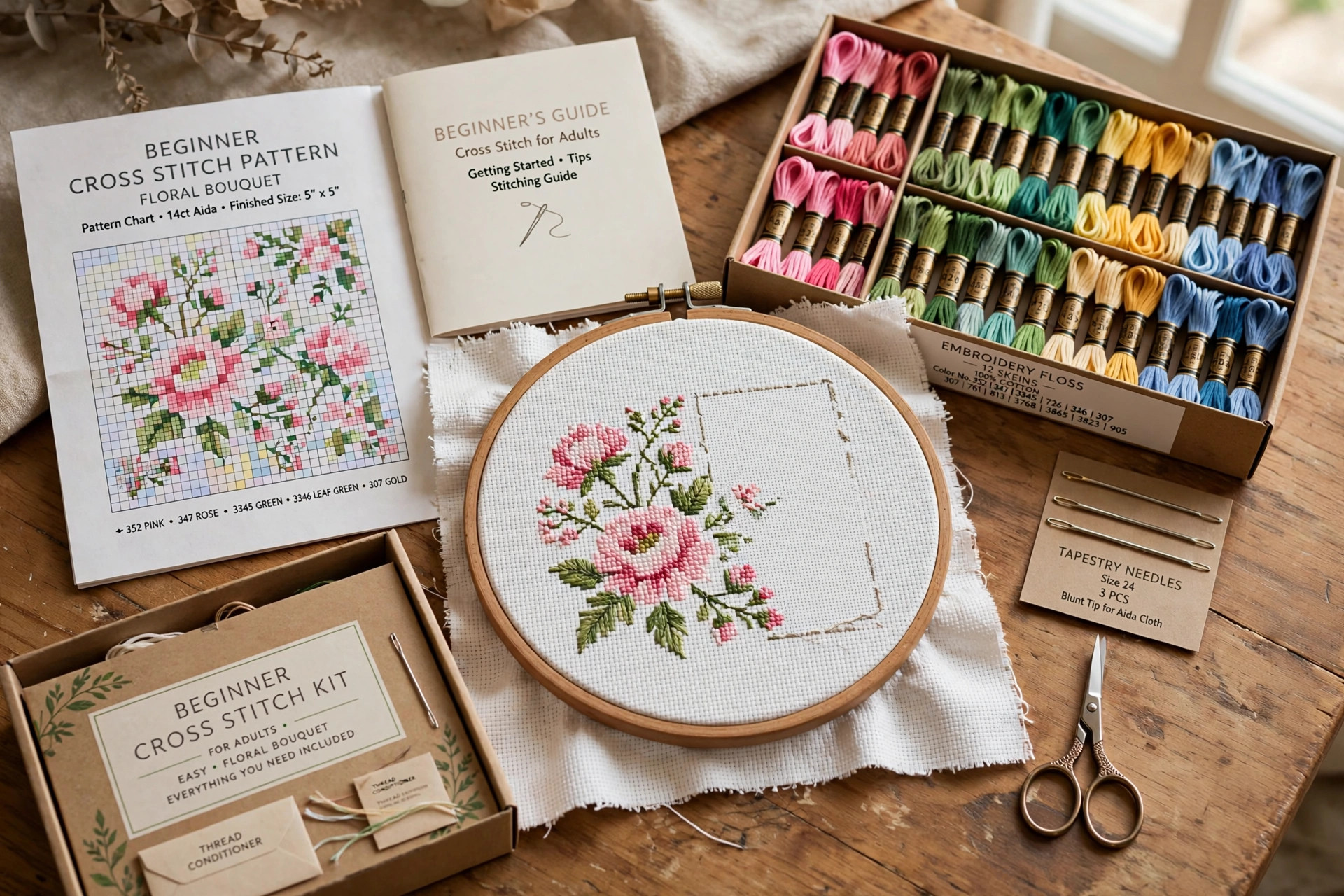
A cross stitch kit for beginners adults patterns is the simplest way to start this old and quiet craft. Cross stitch goes back hundreds of years, yet it has found a new home in modern living rooms. Many adults who have never held a needle are picking it up as a calm evening hobby. A good starter kit takes away the guesswork. It gives you the cloth, the threads, the needle, the hoop, and the pattern all in one box. You open the box and begin.
Cross stitch is slow by nature. Each stitch is a small X made with two diagonal lines. You follow a chart, count the squares, and build the picture one row at a time. For a beginner, that counting rhythm is part of the appeal. The mind settles. The hands stay busy. The pattern grows. This guide explains why the craft matters, what to look for in a kit, which types exist, what they cost, how to care for your finished work, and how to stay safe while you stitch.
Why It Matters: Cross Stitch Kit for Beginners Adults Patterns
A Craft That Slows the Mind
Cross stitch offers the opposite of modern noise. It asks you to look at one small square at a time. Many stitchers say it lowers stress. The work is simple enough that the hands can take over while the mind rests. Adults who sit at a desk all day often welcome a hobby that uses no screen at all. The projects are small. They finish in days or weeks, not months.
Real Handmade Gifts
A finished cross stitch piece makes a gift that feels personal. Store-bought gifts are fine, but a framed picture that took twenty hours of your time carries more weight. Beginner kits often include simple designs: a house, a tree, a short saying, a set of flowers. These are the kinds of images people like to hang in kitchens and bedrooms. Adults who start with a kit often move on to birthday gifts, wedding samplers, and nursery pieces within a year.
A Skill That Grows
Cross stitch is easy to learn, which makes it a good long-term hobby. A starter kit teaches the plain cross stitch, the half stitch, and the backstitch. Those three stitches cover most of what you will ever need. Once you finish a beginner kit, you can read almost any chart sold in a craft store.
What to Look For in a Kit
The Cloth
The cloth in a beginner kit is almost always Aida cloth. Aida has a clear grid of holes that you can see and count without strain. Most beginner kits use 14-count Aida, which means fourteen holes per inch. That size is large enough to work by lamplight. Some kits use 11-count, which is even larger and faster to finish. Avoid kits with 18-count cloth when you are starting out. The holes are small and the work is slow. A good kit states the cloth count right on the box. For more detail on cloth types, see our guide to cross stitch fabric aida cloth for beginners.
The Pattern Chart
A pattern chart is a map of symbols. Each symbol stands for one color of thread. In a beginner kit, the chart should be printed large and clear. Symbols should be easy to tell apart. Some kits print the pattern directly on the cloth. This is called a stamped kit. Stamped kits are the easiest of all because there is no counting at all. You simply stitch over the printed colors. Other kits give you blank cloth and a paper chart. These are called counted kits. They teach you the real skill of the craft. Either type is fine for a start, but know which one you are buying.
The Thread
Cross stitch uses embroidery floss, usually cotton. A beginner kit should include full skeins, sorted by color, with plenty of thread to finish the design. Cheap kits sometimes short you on thread, and you are left with half a tree and no green floss. Check reviews for this complaint before you buy.
The Needle and Hoop
A tapestry needle has a blunt tip and a large eye. It should slide through the cloth holes without force. A beginner kit should include at least two needles, since needles bend and get lost. The hoop holds the cloth tight while you work. Wooden and plastic hoops both work. The hoop should grip the cloth firmly without leaving deep marks. Some kits include a stand instead of a hoop, which frees both hands. For wall art style projects, you may also like a best embroidery hoop set for wall art diy.
Clear Instructions
The best beginner kits include a small booklet with pictures. It should show how to thread the needle, how to make the basic X stitch, how to start and end a thread, and how to wash and press the finished piece. Good instructions also explain how to read the chart. If the booklet is only a few lines of text with no pictures, the kit was not really made for beginners.
Types and Options
Stamped Kits
Stamped kits print the design right on the Aida cloth. You match your thread to the printed colors. There is no counting and no chart reading. These kits finish fastest and cause the least frustration. The printed ink usually washes out. They are a good choice for anyone who wants a finished picture with the least learning curve.
Counted Kits
Counted kits give you blank cloth and a printed chart of symbols. You count the squares and place each stitch in the right spot. This is the traditional method. It takes more focus but teaches the true skill. Most stitchers say counted work is more satisfying. Many beginner kits are counted but use simple charts with large symbols and only eight to twelve colors.
Samplers and Sayings
Samplers are old-style designs with letters, numbers, borders, and small pictures. Saying kits stitch short quotes like “Home Sweet Home.” These are among the most popular beginner kits because the designs are simple and the finished piece fits a standard frame. Quality thread brands are available at stores like Michaels and JOANN, which carry full lines of embroidery floss and beginner supplies.
Mini Kits
Mini kits are small projects, often two to four inches wide. They might be a single flower, a bird, or a holiday ornament. A mini kit can be finished in a few evenings. They are a smart first buy if you are not sure you will like the craft. Handmade and vintage-inspired designs are also popular on Etsy, where you can study how others frame and present their finished work.
Full-Coverage Kits
Full-coverage kits stitch every square of the cloth. Even beginner full-coverage kits are slow because there are thousands of stitches. Save these for your third or fourth project.
Related Crafts
If you enjoy hand stitching, you may want to try a punch needle kit for beginners rug making later on. Punch needle work is faster and makes textured rugs and wall hangings. The hand skills carry over well.
Cost and Price
A cross stitch kit for beginners adults patterns is one of the cheapest crafts to start. Prices run from about five dollars to about thirty dollars. Most good beginner kits cost between eight and twenty dollars. The price reflects the size of the design, the quality of the cloth and floss, and the brand name.
At the low end, five to eight dollars buys a mini kit with a small hoop and simple design. These are fine for a first try. In the middle range, ten to eighteen dollars buys a full-size kit with quality Aida cloth, sorted floss, a wooden hoop, and a real instruction booklet. This is the best value for most beginners. At the high end, twenty to thirty dollars buys a larger design from a known brand with premium floss and printed charts on heavy paper.
You do not need to buy anything else to start. The kit is complete. Later, if you continue, you might buy a larger hoop, a pair of small scissors, extra floss colors, and a needle minder. Those extras are cheap. A basic pair of craft scissors and a storage pouch can be found at general stores like The Home Depot and Walmart, though craft shops like Blick Art Materials offer finer tools. A good rule: buy one middle-priced kit first. If you finish it and want more, then spend on extras.
Watch for kits that look too cheap for their size. A large design sold for six dollars often has thin cloth, rough floss, and a chart printed too small to read. Spending a few dollars more on your first kit will make the whole experience better.
Care and Upkeep
Storing Your Supplies
Keep floss away from sunlight, which fades the colors over time. A small plastic box with dividers works well for sorting colors. Keep needles in a pin cushion or a magnetic needle minder so they do not end up in the carpet. Store Aida cloth rolled or flat, not folded tight, to avoid hard crease lines.
Washing the Finished Piece
Most beginner kits use colorfast floss, but it is wise to test first. Wash your hands before you start a project so oils do not stain the cloth. When the piece is done, wash it gently in cool water with a drop of mild soap. Rinse well and roll it in a clean towel to press out water. Never wring the cloth. Lay it flat to dry.
Pressing and Framing
Press the finished piece from the back side with a warm iron. Place a clean white towel under it and another over it to protect the stitches. Then frame it behind glass or mount it in the hoop for a rustic look. Many stitchers leave finished pieces in the wooden hoop and hang them as-is.
Fixing Mistakes
Every beginner makes counting errors. If you catch a mistake early, pull out the wrong stitches and redo them. If you catch it late, leave it in place. From a normal viewing distance, no one will see a few wrong stitches.
Safety
Cross stitch is a safe hobby, but a few habits keep it that way. Needles are sharp enough to prick. Always put needles back in their holder when you set the work down. Never hold a needle in your mouth. Keep needles and small scissors away from young children and pets. Sit near a window by day or use a bright lamp by night. Good light keeps your eyes from tiring. Take breaks for your hands and neck. Sit with your back supported and your work at a comfortable height. Stretch your fingers and roll your shoulders every half hour or so. If you feel pain in your hands or wrists, stop and rest. The craft will wait.
Keep your work area tidy. A small tray or basket holds the hoop, floss, and chart in one place. This keeps thread from tangling and needles from rolling away. If you stitch while watching television, keep the needle in the cloth or in its holder during commercials so it does not slip into the couch cushions.
For general craft safety guidance and project ideas, home improvement resources like Bob Vila, Family Handyman, and This Old House publish useful DIY articles and tips that apply to home crafters as well.
Frequently Asked Questions
How long does a beginner kit take to finish?
A small mini kit can take three to six evenings of relaxed stitching. A medium beginner kit, about six by eight inches, usually takes two to four weeks of evening work. Everyone stitches at a different pace. Do not rush. The steady rhythm is the point of the craft.
Do I need to know how to sew first?
No. Cross stitch uses only one simple stitch, and the kit teaches it. If you can thread a needle and make a small X, you can cross stitch. Many adults start with no sewing background at all and do fine.
What is the difference between 11-count and 14-count cloth?
The count is the number of holes per inch. Lower numbers mean bigger holes and a faster project. Eleven-count cloth has large holes that are easy to see. Fourteen-count is the standard for beginner kits and gives a neater look. Both are fine for a first project. Higher counts like eighteen are best left until you have some practice.
Can I wash my finished cross stitch?
Yes, in most cases. Wash gently in cool water with mild soap, rinse well, and dry flat. Test a scrap of floss in water first if you are unsure about colorfastness. Avoid hot water and harsh cleaners, which can fade colors or shrink the cloth.
What do I do with the pattern after I finish?
Keep it. Charts can be used more than once if you buy fresh cloth and floss. Many stitchers keep a binder of favorite charts and restitch them as gifts. Some also trade or sell old charts. Just remember that a chart you bought is for your own use.
Is cross stitch expensive as a hobby?
No. The kit itself costs less than most movie tickets. Once you own a hoop and scissors, each new project costs only the price of cloth and floss, often under ten dollars. It is one of the most affordable crafts you can take up.
Final Word
A cross stitch kit for beginners adults patterns is a small box that holds a quiet pleasure. It asks little of you: a needle, some thread, a bit of patience. In return it gives you slow evenings, a growing picture, and a finished piece you made with your own hands. Pick a kit with clear cloth, good floss, and simple patterns. Work a little each day.
References
Blick Art Materials. (n.d.). Art and craft supplies. https://www.dickblick.com Bob Vila. (n.d.). Home improvement advice. https://www.bobvila.com Etsy. (n.d.). Handmade and craft marketplace. https://www.etsy.com Family Handyman. (n.d.). DIY home repair and maintenance. https://www.familyhandyman.com JOANN. (n.d.). Fabric and craft supplies. https://www.joann.com Michaels. (n.d.). Arts and crafts supplies. https://www.michaels.com The Home Depot. (n.d.). Home improvement products. https://www.homedepot.com This Old House. (n.d.). Home renovation guidance. https://www.thisoldhouse.com Walmart. (n.d.). Everyday low prices. https://www.walmart.com
Was this guide helpful?

About Jennifer Lee
The My Garden US editorial team writes practical, in-depth home and garden guides for American homeowners — tested advice, no fluff.
You May Also Like
The Best Craft Table With Storage for a Sewing Room
February 21, 2026 0 views
Knitting Machine for Home Sweater Making: A Complete Guide
July 7, 2026 0 views
Watercolor Paint Set Professional for Artists Home: A Complete Buyer’s Guide
July 20, 2026 0 views