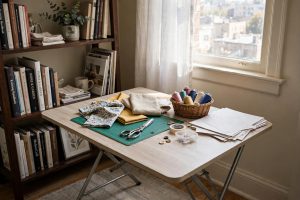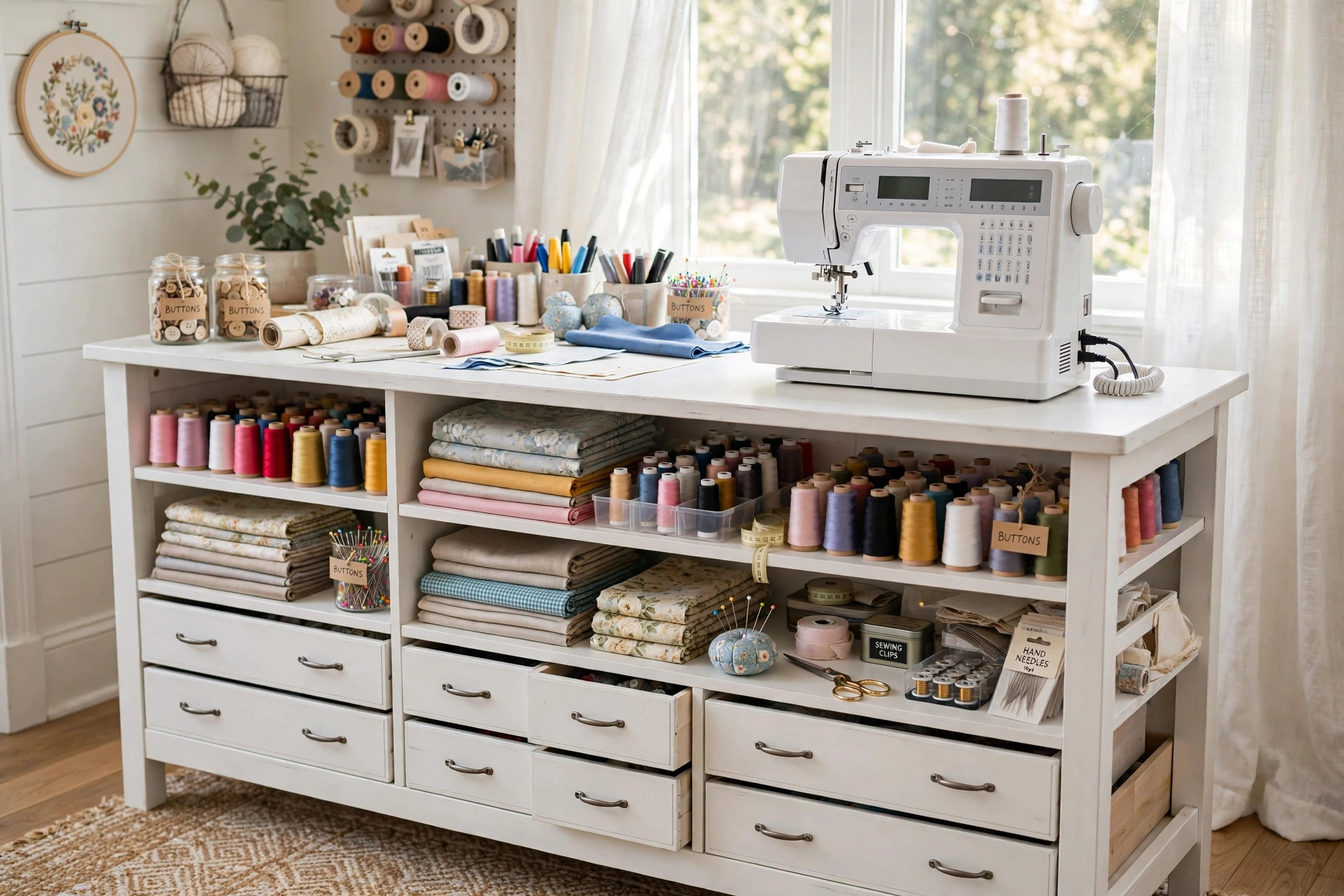

A sewing room works best when every tool has a place. The best craft table with storage for sewing room use gives you a wide work surface and drawers, shelves, or bins right under it. You can sew, cut, and fold without walking across the room for each item. This guide explains what to look for, what types exist, what they cost, and how to keep one in good shape for years.
Why a Good Craft Table Matters in a Sewing Room
Sewing creates clutter fast. Fabric pieces, pattern sheets, scissors, thread spools, pins, and rulers spread out in every direction. A plain table leaves all of it in piles. A craft table with storage changes that. Drawers hold small tools. Shelves hold fabric stacks. A bin keeps scraps out of the way.
Good storage also saves your body. When supplies sit in a drawer at your side, you stop bending and reaching. Your back and shoulders stay relaxed through long sewing sessions. Many sewers spend hours at their machines, so comfort matters as much as looks.
A well-planned table also grows with you. New sewers start with basic tools, but collections expand over time. Extra drawers and shelves give you room to grow without buying new furniture each year. A table that fits your needs today and next year is money well spent.
A tidy room also helps your work. You can see each fabric and find the right thread color fast. You waste less time and make fewer mistakes. If your room is small, a table with storage replaces a desk and a dresser in one piece of furniture. For more ideas on small-room storage, see our guide on the best craft storage organizer for small rooms.
Types of Craft Tables With Storage: Best Craft Table with Storage for Sewing Room
Craft tables come in several shapes. Each one fits a different kind of room and a different way of working.
Drop-Leaf Craft Tables
A drop-leaf table has side panels that fold down when you do not need them. Open them for a wide cutting surface. Fold them to save floor space. Many drop-leaf tables hide drawers or cubbies under the top. They suit small rooms and shared spaces well.
Rolling Craft Tables
Rolling tables stand on caster wheels. You can move them to a window for good light or push them to a wall when guests come. Most have shelves, drawers, or pegboards on the sides. Lock the wheels before you sew so the table stays still.
L-Shaped Craft Tables
An L-shaped table wraps around you. One side holds the sewing machine. The other side holds cutting mats and fabric. The corner space underneath often holds a cabinet or drawer unit. This shape fits well in a corner of a spare bedroom.
Sewing Machine Cabinets
A sewing machine cabinet is built for one job. The machine sits in a cutout, level with the top. A door or panel covers it when closed, so the table looks like plain furniture. Drawers hold bobbins, feet, and notions. These tables cost more but give the neatest look.
Counter-Height Tables
Counter-height tables stand taller than a desk. They are good for cutting and pressing, which are easier done standing. Some have deep drawers for fabric bolts. Pair one with an adjustable stool if you want to sit and stand through the day.
What to Look for When You Choose One
Buy with care. A craft table lasts many years, so check the details before you pay.
Size and Height
Measure your room first. Write down the length and width of the space where the table will stand. Leave at least 30 inches of walking space on each side. A table that is 48 to 60 inches wide suits most sewers. It gives room for a machine plus a small cutting area.
Height matters too. Standard desk height is about 29 to 30 inches, which suits most chairs. If you are tall or short, look for adjustable legs. Your elbows should rest at a right angle when you sew. Test this before you buy if you can.
Storage Style
Think about what you own. Thread spools fit well in shallow drawers. Fabric stacks need deep drawers or open shelves. Small notions like pins and buttons do best in divided trays. Some tables mix all three. Open shelves look nice but gather dust. Closed drawers keep things clean. You can find helpful supply ideas from craft stores with wide selections and compare shelf styles at home improvement retailers.
Weight Capacity
A sewing machine can weigh 20 to 40 pounds. Add fabric, an iron, and a cutting mat, and the load grows. Check the weight rating of the table top. Solid wood and steel frames hold more than light particleboard. If the table wobbles when you press on it, it is too weak for a machine.
Top Surface
The top should be smooth, flat, and easy to clean. A matte finish cuts glare from lamps. Avoid rough or textured tops that catch fabric. Some tops have a slight lip to stop tools from rolling off. Others have built-in rulers along the edge, which help with quick measuring.
Drawers and Hardware
Pull each drawer out fully. It should glide smooth and hold its weight. Metal drawer slides last longer than wood grooves. Knobs and pulls should feel solid, not loose. Soft-close slides are a nice extra that keeps the room quiet.
Material and Build
Solid wood costs the most and lasts the longest. Plywood with veneer is a good middle choice. Particleboard is cheap but swells if it gets wet and chips at the edges. Steel legs add strength to any top. Check the joints for screws and brackets, not just glue.
Cost and Price Ranges
Prices vary widely. A simple rolling cart with shelves may cost 80 to 150 dollars. A mid-range drop-leaf or L-shaped table with drawers runs 150 to 350 dollars. A full sewing machine cabinet from a known maker can cost 400 to 900 dollars or more.
Price tracks with material and storage. Solid wood and soft-close drawers push the price up. Particleboard with open shelves sits at the low end. Set a budget before you shop. A good rule is to buy the best build you can afford in your price range, because a weak table costs more when it fails early.
Watch for sales at large craft chains and furniture stores. Floor models often sell at a discount. If you buy used, check the drawers, legs, and top for damage first. Sit at the table in the store when possible. Your comfort there is the best test of all. For current fabric and supply pricing, fabric and craft retailers post regular deals, and general furniture sellers list many table options with reviews.
Setting Up Your Table for Sewing
Once the table arrives, place it with care. Put it near an outlet so the machine cord does not stretch across the floor. Good light matters more than most people think. A table near a window helps in the day. Add a bright task lamp for night work. Advice on room lighting can be found through home lighting guides.
Arrange storage by habit. Keep the items you use most in the closest drawer. Put thread and bobbins near the machine. Store fabric by color or by project on the shelves. Leave the center of the top clear for the project at hand.
If you are new to sewing, you may also want to read our guide to the best beginner sewing machine for home crafts to pair the right machine with your new table.
A small rolling cart can serve as a side table for your iron and pressing tools. Our guide to the best craft storage cart with drawers rolling shows options that move where you need them.
Care and Upkeep
A little care keeps the table strong for years. Wipe the top with a damp cloth after each project. Thread snips and pins can scratch the surface, so use a cutting mat for all blade work. Keep drinks away from the table or use a sealed cup with a lid.
Check screws and bolts twice a year. Tighten any that feel loose. Oil metal drawer slides once a year with a drop of machine oil. If a drawer sticks, rub a white candle along the wooden runners. The wax acts as a gentle lubricant. Replace felt pads under the legs when they wear flat so the table does not scratch your floor.
Keep the room at normal indoor humidity. Very dry air can crack wood. Very damp air can swell particleboard. A stable room keeps the table flat and the drawers sliding true. Basic workshop care tips from woodworking and DIY experts apply to craft tables as well.
Safety Tips
Safety is simple but worth stating. Lock the wheels of a rolling table before you sew. A table that rolls mid-stitch can ruin a seam or pull the machine cord. Keep the cord behind the table so no one trips on it.
Do not overload the top or the drawers beyond the rated weight. A table that tips can injure you and break your machine. Anchor tall or narrow tables to a wall stud if they feel unsteady. Keep sharp tools like rotary cutters in a closed drawer or a blade guard. Unplug the iron and the machine when you leave the room.
Frequently Asked Questions
What size craft table do I need for a sewing room?
Most sewers do well with a table 48 to 60 inches wide and 24 to 30 inches deep. This gives space for a machine plus a small work area. Measure your room first and leave walking space on all sides.
Are craft tables with storage better than a regular desk?
For sewing, yes. A desk gives you a flat top but no place for supplies. A craft table adds drawers, shelves, and cubbies that keep thread, fabric, and tools at hand. That saves time and keeps the room tidy.
Can a craft table hold a heavy sewing machine?
Most mid-range tables can. Check the weight rating before you buy. Solid wood or steel-frame tables hold 100 pounds or more with ease. Light particleboard tables may sag under a heavy machine.
Should I get a drop-leaf or a fixed table?
Choose a drop-leaf table if your room is small or shared. Fold the leaves down when you need floor space. Choose a fixed table if you sew often and want a stable, always-ready surface.
How much should I spend on a craft table with storage?
Expect 80 to 150 dollars for a basic rolling unit, 150 to 350 dollars for a good drop-leaf or L-shaped table, and 400 to 900 dollars or more for a full sewing machine cabinet. Buy the best build your budget allows.
How do I keep my craft table organized?
Give every supply a home. Use shallow drawers for notions, deep drawers for fabric, and trays for pins and buttons. Label drawers if it helps. Put away tools after each session so the top stays clear.
A Final Word
The best craft table with storage for sewing room work is the one that fits your space, your machine, and your habits. Measure your room, list what you own, and set a budget. Then choose a table with strong build, smooth drawers, and a flat top. With the right table, your sewing room becomes a place where you start projects instead of hunting for supplies. For step-by-step project guidance, home project tutorials and DIY how-to articles offer solid advice, while art supply retailers and big-box hardware stores carry many of the materials crafters use.
References
Blick Art Materials. (n.d.). Art and craft supplies. https://www.dickblick.com Bob Vila. (n.d.). Home improvement advice. https://www.bobvila.com Family Handyman. (n.d.). DIY home repair and maintenance. https://www.familyhandyman.com IKEA. (n.d.). Home furnishings. https://www.ikea.com JOANN. (n.d.). Fabric and craft supplies. https://www.joann.com Lowe’s. (n.d.). Home improvement products. https://www.lowes.com Michaels. (n.d.). Arts and crafts supplies. https://www.michaels.com The Home Depot. (n.d.). Home improvement products. https://www.homedepot.com This Old House. (n.d.). Home renovation guidance. https://www.thisoldhouse.com Wayfair. (n.d.). Furniture and home goods. https://www.wayfair.com
Was this guide helpful?

About James Carter
The My Garden US editorial team writes practical, in-depth home and garden guides for American homeowners — tested advice, no fluff.
You May Also Like
Best Paper Cutter for Scrapbooking and Cards: A Practical Guide
August 1, 2026 0 views
Best Craft Knife for Vinyl Weeding Cricut: A Plain Buyer’s Guide
August 18, 2026 0 views
DIY Soap Mold Kit for Handmade Gifts: A Complete Guide
August 1, 2026 0 views