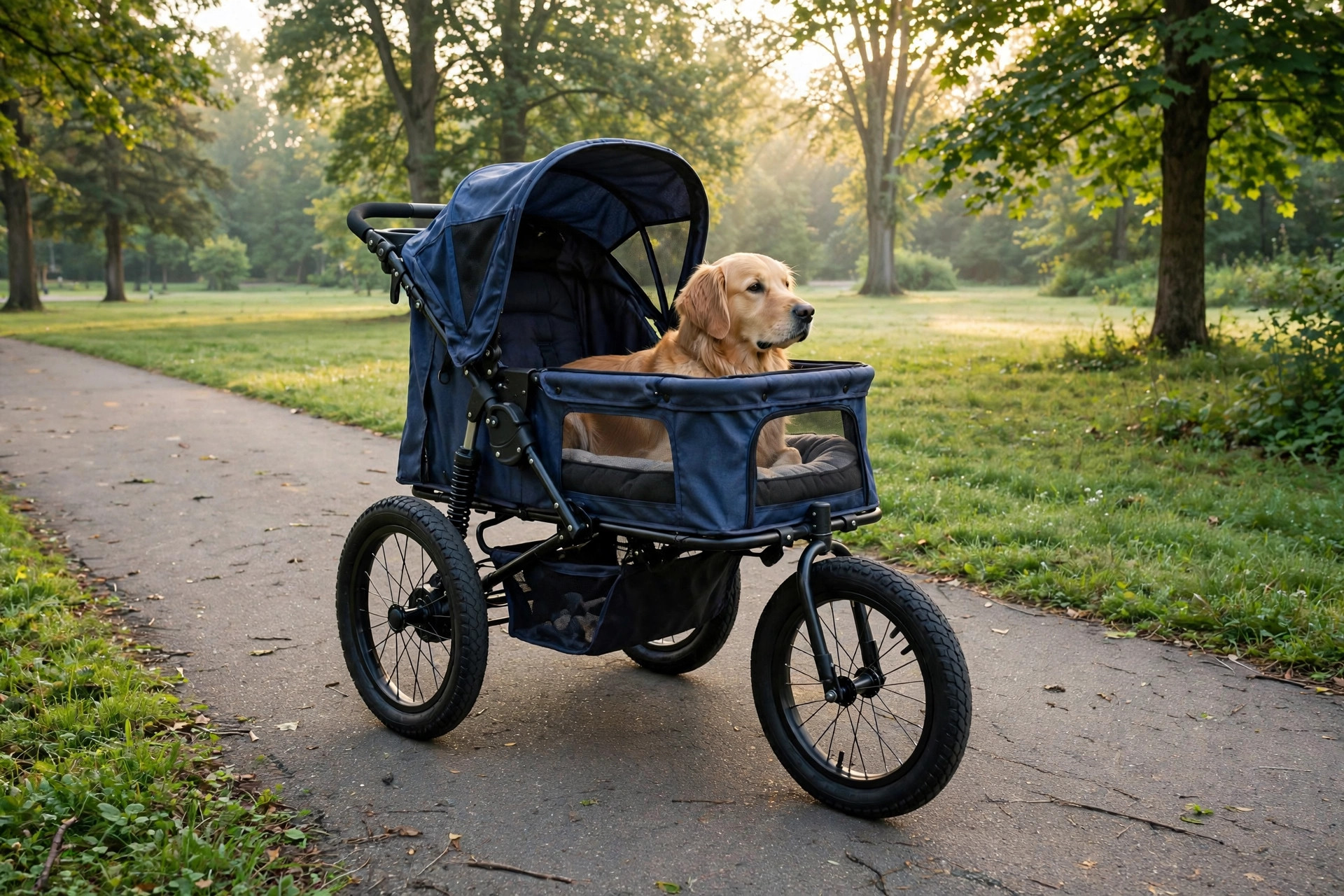

Many large dogs love to run beside their owners, but some cannot keep up. Senior dogs, puppies with growing bones, dogs with sore joints, and dogs after surgery all need a slower pace. The best pet stroller for large dogs jogging solves this problem. It lets your big dog come along on your run while riding safe and calm in a sturdy carriage. You get your exercise. Your dog gets fresh air and time with you. Nobody is left at home.
This guide walks through everything a buyer should know. It covers why jogging strollers matter for big dogs, what features to look for, the types on the market, real price ranges, care tips, and safety rules. It also answers common questions from owners of large breeds.
Why It Matters
A large dog is not a small dog. A stroller made for a toy breed will fold like paper under seventy pounds of Labrador. Jogging adds speed and bumps. A weak frame will shake, tip, or break. That is why a proper jogging model built for large dogs is worth the cost.
Dogs age fast. A large dog with sore joints may still love the outdoors even when the legs fail. A stroller keeps the routine alive. The dog rides while you run. The wind, the smells, and the sounds stay part of daily life. For owners, this matters too. A daily run keeps both dog and owner in shape.
Recovery is another common reason. Vets often order rest after knee surgery or hip treatment. But total rest can bring stress. Short rides in a stroller give mental relief without strain on healing legs. Many vets approve of the idea for recovery cases. You can read more about pet health and recovery on trusted pet health sites such as PetMD.
Heat is a third factor. Big dark-coated dogs overheat on summer runs. A stroller with a sun canopy lets them ride in the shade while you jog. Water stays in the cup holder. Stops are easy. Both of you stay cool. The American Society for the Prevention of Cruelty to Animals shares warm-weather care tips at ASPCA.
What to Look For: How to Choose: Best Pet Stroller for Large Dogs Jogging
Shopping for the best pet stroller for large dogs jogging means checking a few key points. Do not rush. Compare models side by side.
Weight limit. This is the first number to check. A large dog often weighs 60 to 110 pounds. Pick a stroller rated at least 20 percent above your dog’s weight. A 100-pound-rated stroller is safer for an 80-pound dog than an 80-pound-rated one. Ratings are printed on the box and on retailer pages such as Chewy.
Wheels. Jogging strollers need big air-filled tires. Three wheels are the standard layout for joggers. The front wheel should lock straight for running and swivel for walking. Small plastic wheels belong on mall strollers, not jogging models. Tire size of 12 inches or more handles park trails and rough paths.
Frame. Steel frames hold heavy dogs. Aluminum frames weigh less but cost more. Check the weld points and the folding joints. The frame should feel stiff when you push it. A wobbly frame is a warning sign.
Brakes. A hand brake on the handlebar is a must for jogging. It controls speed on hills. Parking brakes on the rear wheels stop the stroller when you pause. Test both before you buy.
Cabin size. Your dog must sit, lie down, and turn around inside. Measure your dog from nose to tail and from floor to head. Add three inches each way. A cabin that is too small makes dogs anxious. A cabin that is too big lets them slide around.
Canopy. A full canopy blocks sun and light rain. Mesh windows give air flow. A clear rain cover is a nice extra for wet days.
Safety tethers. Look for at least two tether clips inside the cabin. They hook to the dog’s harness and stop jumps. Never use a collar with a tether. A collar can choke.
Handlebar. An adjustable handlebar fits tall and short runners. Padded grips help on long runs. A wrist strap stops the stroller from rolling away if you let go.
Storage. A basket under the cabin holds water, bags, and treats. A small parent tray holds keys and a phone. These extras matter on long jogs.
Types and Options
Jogging pet strollers for large dogs fall into three main groups.
Three-wheel joggers. These are the true running machines. They have large tires, a locked front wheel option, and hand brakes. They track straight at speed. They cost the most. If you run more than twice a week, this is the group to buy from. Outdoor gear stores such as REI stock jogging gear with this sport design.
Four-wheel all-terrain models. These have four medium wheels and a sturdier base. They tip less than three-wheelers. They work well on grass, gravel, and beach sand. They are heavier to push at running speed. They suit walkers and slow joggers.
Convertible travel strollers. These fold small and fit in car trunks. They work for travel and light walks. Most are built for small dogs. Only a few models in this group hold large breeds. Check the weight rating with care. For travel with small pets, a pet stroller for small dogs and cats travel may suit better.
Some owners also use strollers for trips to the vet or the pet store. A large dog that cannot walk far still needs care visits. A dog ramp for suv and high bed access pairs well with a stroller for loading heavy dogs into cars.
For hikers with smaller dogs, a pet carrier backpack for small dogs hiking is another way to bring pets along. The idea is the same. The pet rides while the owner moves.
Cost and Price
Prices for the best pet stroller for large dogs jogging range from about 150 dollars to over 500 dollars. The spread is wide. Here is what each price band buys.
Budget range: 150 to 250 dollars. Basic jogging frames with smaller wheels. Weight limits near 60 to 75 pounds. Fine for medium dogs and light jogging. The ride is rougher. Parts wear faster.
Mid range: 250 to 400 dollars. This is the sweet spot for most large-dog owners. Stronger frames. Real air tires. Hand brakes. Weight limits near 100 pounds. Brands in this band sell through big pet stores such as Petco and PetSmart.
High range: 400 to 550 dollars and up. Premium builds with aluminum frames, shock absorbers, and large cabins. Weight limits above 100 pounds. Smoother rides on rough ground. Built to last for years of daily runs.
Do not forget the add-ons. A rain cover may cost 20 to 40 dollars. A cup holder or extra basket adds 10 to 25 dollars. Replacement tires run 15 to 30 dollars each. Set the full budget before you shop.
Sales happen in spring and fall. Many retailers discount outdoor gear at those times. Home stores that carry pet gear, such as Home Depot, run seasonal sales too.
Care and Upkeep
A jogging stroller lasts longer with simple care. Treat it like a bike.
Wipe the frame after each run. Sweat and mud cause rust on steel joints. A damp cloth works fine. Dry the stroller before folding it.
Check tire pressure once a week. Soft tires make pushing harder and wear out fast. The right pressure is printed on the tire sidewall. A small bike pump is enough.
Oil the wheel axles each month. A drop of light oil on each bearing keeps the wheels smooth. Wipe off extra oil so it does not stain.
Wash the cabin fabric every few weeks. Most fabric liners unzip and go in the washing machine. Air dry them. Dogs shed hair and track dirt. Clean fabric smells better and lasts longer.
Inspect tethers, zippers, and mesh before each run. Look for frayed straps and torn mesh. Replace worn parts right away. A broken tether during a run is dangerous.
Store the stroller in a dry place. Garages are fine if they stay dry. Fold it to save space. Keep it off wet concrete.
Safety
Safety is the heart of this purchase. A stroller is a vehicle for your dog. Follow these rules every time.
Train first. Let the dog sniff the stroller at home. Put treats inside. Do short practice walks before the first jog. Some dogs take to it in minutes. Some need a week. Never force a scared dog inside.
Use a harness, not a collar. Clip the cabin tether to a body harness. A collar can injure the neck if the dog lunges. The harness spreads force across the chest.
Lock the front wheel for running. A swiveling front wheel can twist at speed and flip the stroller. Lock it straight before you jog. Use swivel mode only for slow walking.
Start slow. Jog at a slow pace for the first week. Watch how the stroller handles turns and bumps. Speed up only when both you and the dog feel calm.
Watch the heat. Dogs overheat faster than people. Run in the morning or evening in summer. Bring water for the dog. Use the canopy. If the dog pants hard with the tongue hanging flat, stop and cool down. Pet health guides at The Spruce Pets explain heat signs in detail.
Stay visible. Run where cars can see you. A safety flag and reflective strips help at dawn and dusk. Bright colors beat black at night.
Never leave the dog alone in the stroller. Treat it like a car seat. Stay with the dog at all times. Heat builds fast in a closed cabin.
The American Kennel Club posts breed-specific exercise advice at AKC. Check their notes for your breed before you set a jogging plan.
If you hire help for your dog while you train, pet care sites such as Rover list local sitters and walkers who can keep the routine going.
Frequently Asked Questions
Can large dogs really fit in a pet stroller? Yes. Jogging models for large dogs have long, wide cabins. Dogs up to 110 pounds fit in the biggest models. Measure your dog and match the cabin size. A snug cabin is fine. A tight cabin is not.
Will my dog actually stay in the stroller? Most dogs learn fast with treats and calm training. Use the inside tethers. Close the mesh fully. Start with short walks. Dogs that love car rides often love strollers too.
Is jogging with a stroller safe for puppies? Vets often advise against long runs for young large-breed puppies. Their bones and joints are still growing. A stroller ride is gentler than a run, but ask your vet first. Short rides at walking speed are usually fine.
Can I use the stroller for walking too? Yes. Unlock the front wheel for walking mode. The stroller becomes a normal pet pram. This is handy for vet visits and shopping trips.
How fast can I jog with a large dog stroller? Most owners jog at 5 to 7 miles per hour. That is a normal easy run. Do not sprint. Sharp speed changes can tip the stroller. Keep a steady pace.
Do I need a special license or permit? No. Pet strollers need no license. But some parks have rules about wheeled gear on trails. Check local park signs before you go.
A Final Word
The best pet stroller for large dogs jogging is the one that fits your dog, fits your budget, and feels safe at speed. Take time to compare weight limits, wheels, and brakes. Read owner reviews. Measure your dog twice. A good jogging stroller gives years of shared miles. Your dog gets the world rolling past the mesh window. You get your run. That is a fair trade.
References
American Kennel Club. (n.d.). Dog care and training resources. https://www.akc.org ASPCA. (n.d.). Pet care and animal welfare resources. https://www.aspca.org Chewy. (n.d.). Pet supplies. https://www.chewy.com Petco. (n.d.). Pet supplies and services. https://www.petco.com PetMD. (n.d.). Pet health information. https://www.petmd.com PetSmart. (n.d.). Pet supplies and services. https://www.petsmart.com REI. (n.d.). Outdoor gear. https://www.rei.com Rover. (n.d.). Pet sitting and dog walking services. https://www.rover.com The Home Depot. (n.d.). Home improvement products. https://www.homedepot.com The Spruce Pets. (n.d.). Pet care guides and product reviews. https://www.thesprucepets.com
Was this guide helpful?

About James Carter
The My Garden US editorial team writes practical, in-depth home and garden guides for American homeowners — tested advice, no fluff.
You May Also Like
A Practical Guide to a Heated Dog Bed for Garage and Outdoor Use
August 4, 2026 0 views
A Cat Litter Box with Top Entry for Dogs: What to Know Before You Buy
April 22, 2026 0 views
Pet Stairs for High Bed Small Dogs Seniors: A Simple Guide to Safe Climbing
August 3, 2026 0 views