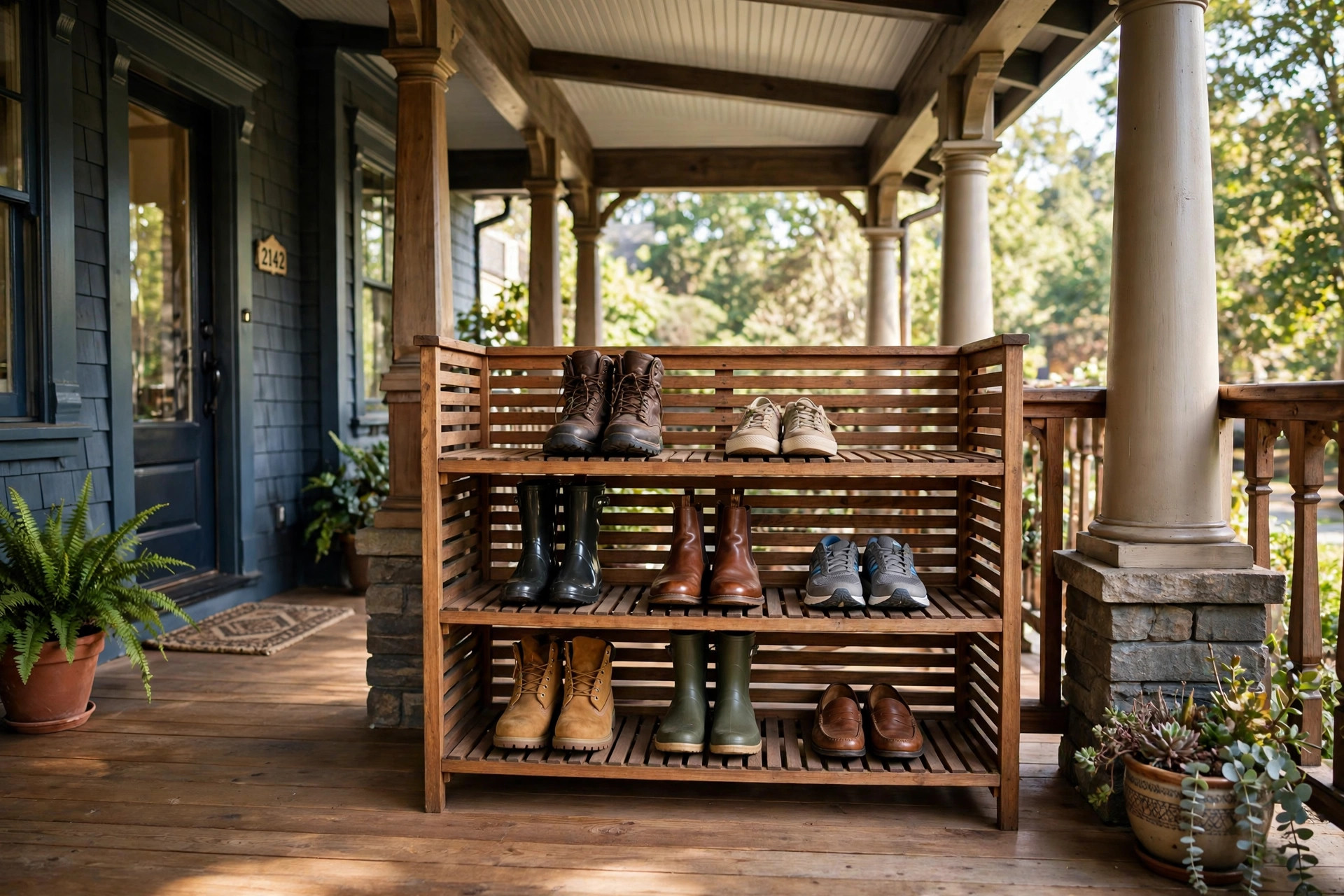

An outdoor shoe storage bench for porch is a simple piece of furniture that solves a common problem. Shoes pile up by the front door. They get wet. They look messy. A bench made for outdoor use gives every pair a home. It also gives you a seat. You sit down. You pull off your shoes. You set them on the shelf. The porch stays neat.
Many American homes have a covered porch or a small entry deck. That space works as a halfway point between the yard and the living room. A shoe bench fits there well. It keeps dirt and mud out of the house. It keeps shoes dry under the roof. This guide explains how to pick one, what materials last, what they cost, and how to care for them.
Why an Outdoor Shoe Storage Bench for Porch Matters
A porch without storage fills up fast. Each family member comes home and drops shoes by the door. Guests do the same. In bad weather the pile grows wet and dirty. It becomes a tripping risk. It also wears out the shoes. Damp pairs left on the ground grow stiff or smelly.
A bench changes the habit. When there is a clear spot for shoes, people use it. The open shelves under the seat hold work boots, sneakers, and sandals. The flat top holds bags or keys. Some families use the seat to change shoes before walking in the garden. The whole porch feels more orderly.
There is also the matter of the house itself. Mud tracked inside wears down rugs and floors. Stopping that dirt at the door saves cleaning time. A bench with roomy storage shelves is one of the easiest upgrades for an entry porch.
How to Choose the Right One: Outdoor Shoe Storage Bench for Porch
Buying is simple if you think through three things: size, material, and air flow.
Size and space
Measure your porch first. A bench that is too wide will block the walkway. A bench that is too small will not hold enough pairs. Most porch shoe benches are between 32 and 48 inches wide. A standard pair of shoes needs about 10 inches of shelf depth.
Count how many pairs your family leaves by the door each day. Then pick a bench with enough slots. Two-shelf models hold four to eight pairs. Three-shelf models hold more. Leave a little room to grow. It is better to have one empty slot than shoes on the ground.
Height matters too. The seat should be high enough to sit on with ease. Standard seat height is about 17 to 19 inches. If small children will use it, a lower seat near 14 inches is friendlier. Homeowners looking for bench reviews and measurements can compare seat heights across models before ordering.
Material
The material sets how long the bench lasts. Wood looks warm and classic. It fits most porch styles. Acacia, eucalyptus, and teak hold up well outdoors. Soft pine works if the bench sits under a roof and gets treated now and then.
Resin and plastic benches are lighter. They never rot. They are easy to wash with a hose. Wicker-look resin has the charm of rattan without the weak spots. Metal frames last long but can feel cold in winter. Powder-coated steel resists rust well.
No material lasts if it stands in water. Put the bench under the porch roof. Place small pads under the legs if the floor is concrete. A guide to outdoor furniture materials can help you weigh the trade-offs.
Air flow and drainage
Shoes are often damp. Boots come in wet from rain or snow. If the shelf traps water, the shoes will smell and the wood will stain. Good benches have slatted shelves. The gaps let air move and water drip through. A small gap between the back of the bench and the wall also helps air flow.
Avoid models with solid sealed bottoms unless you plan to line them with a tray. A porch furniture care primer explains why drainage matters for every piece that stores wet gear.
Types of Porch Shoe Benches
Most benches fall into three broad types. Each suits a different porch.
Wooden slatted benches
These are the classic choice. Open slats run across the seat and the shelves. Water falls through. Air moves freely. Teak and acacia versions can stay outside for years with little care. They age to a soft gray if left untreated. Many owners like that look. A coat of oil once a year keeps the warm color.
Resin and wicker benches
Resin benches are made to fight weather. They look like woven wicker but shrug off rain. They are light enough to move for sweeping. Prices are often lower than wood. The weak point is weight: very heavy adults may test the seat limit. Check the listed capacity before you buy.
Metal and combination benches
Steel or aluminum frames with wood or resin slats give strength with style. Powder-coated metal resists chips and rust. These benches suit modern porches. They cost more up front but need almost no upkeep. Pair one with an outdoor storage cabinet nearby if you need room for more than shoes.
Some families also add cushions on top for comfort. Use outdoor-rated fabric only. Indoor cushions soak up water and fade fast.
Cost and Price
Prices vary with material and size. A simple resin bench with two shelves can cost around 60 to 120 dollars. Wooden benches in acacia or eucalyptus often run 120 to 250 dollars. Teak and premium hardwood models can reach 300 dollars or more.
Combination benches sit in the middle range. Custom or oversized models cost the most. Watch for seasonal sales in spring and late summer. Big retailers such as Home Depot often cut prices on outdoor furniture when the season turns.
Long-tail buying advice helps here. Think of your bench the way you would think about a best outdoor storage shed for cushions: pay for the material and the build, not just the look. A cheap bench that warps in one season costs more than a sturdy one that lasts ten.
Delivery fees can add up. Many stores ship free above a set amount. Measure your doorway and porch stairs too, so the bench actually fits when it arrives.
Placing and Styling the Bench
Where you set the bench matters as much as which one you buy. Put it close to the door you use most. The shorter the walk, the more likely everyone is to use it. Leave at least two feet of clear floor in front so shoes can be slipped on without crowding.
Set the bench against a wall or railing for stability. Keep it under the roof overhang so rain stays off the shoes. On open decks, a small canopy or awning helps. Point the open shelves toward the walkway. People should see the slots at a glance.
Style is simple to get right. Match the bench to the porch. A stained wood bench suits a craftsman-style porch. A gray resin bench suits a modern one. Add a small outdoor rug under the bench to catch the last bits of mud. Hang a hook above for dog leashes or garden hats. A potted plant at one end softens the look. The result feels like a planned entry, not a shoe dump.
Care and Upkeep
A porch bench needs little work. A few small habits keep it in good shape.
Brush off dirt once a month. Wipe the shelves with a damp cloth. In spring, wash wood benches with mild soap and a soft brush. Let them dry in the air before oiling. One thin coat of teak or linseed oil is enough each year.
Resin benches need only a hose-down and a wipe. Avoid harsh cleaners that scratch the surface. Check screws and bolts twice a year. Outdoor wood shrinks and swells with the seasons. A quick turn of the wrench keeps the bench solid.
In winter, heavy snow can weigh down a bench. Brush it off. If your porch is open to the wind, anchor a light bench to the wall so it does not tip. A piece on porch furniture storage ideas offers more winter tips.
For extra storage needs, consider pairing the bench with patio storage solutions for cushions or garden tools. A bench plus a small cabinet handles most porch clutter.
Safety
A safe bench is a steady bench. Place it on a flat spot. It should not rock. If the porch floor slopes, add rubber pads under the short leg.
Mind the weight limit. Seats that hold two adults are fine for daily use. Do not let children stand on the top shelf. Slatted shelves are strong for shoes, not for climbing.
Keep the area in front of the bench clear. A cluttered path is a fall risk at night. A small porch light above the door helps everyone find their shoes in the dark. For households with kids and pets, an outdoor bar cabinet for patio reviews is a reminder that heavier porch furniture should always sit level and stable.
Frequently Asked Questions
Can a shoe bench stay on the porch all year?
Yes, if it is made for outdoor use and sits under a roof. Teak, acacia, resin, and powder-coated metal all handle year-round weather. Soft unfinished pine does better if you bring it inside during hard winters. When in doubt, check the maker’s weather rating.
How many pairs of shoes fit on one bench?
A 36-inch bench with two shelves holds six to eight adult pairs. A 48-inch bench with three shelves can hold twelve or more. Measure your own shoes first. Boots take twice the space of flat shoes. Children outgrow sizes fast, so plan for growth.
Will the wood rot from wet shoes?
Not if the bench has slats and good air flow. Water drains through the gaps. The wood dries between uses. Solid shelves trap water and can stain or rot. If your bench has solid shelves, line them with a washable tray and empty it often.
What is the best wood for an outdoor shoe bench?
Teak lasts the longest and needs the least care. Acacia and eucalyptus are strong and cost less. Cedar resists insects well. Any outdoor wood does better with a yearly coat of oil. Recycled plastic lumber, used by makers like Polywood, is another strong option that never rots.
Should the bench have a back or a lid?
Most porch shoe benches work best without either. A backrest gets in the way when you sit to change shoes. A lid traps damp air and slows drying. Open shelves keep things simple. If you need hidden storage, choose a model with a ventilated front panel, or pair an open bench with a small lidded box beside it.
Can I use it as a seat for putting on boots?
Yes. That is one of its best uses. Sit down, set the boots on the shelf, and pull them on with ease. Check that the bench supports your weight. Most models hold 200 to 300 pounds. A best outdoor bean bag chair waterproof can also serve as spare porch seating for kids.
A Final Word
An outdoor shoe storage bench for porch is a small buy with a big daily payoff. It keeps the porch tidy. It protects shoes from weather. It cuts the dirt tracked into the house. Pick the right size, choose a weather-tough material, and keep up with simple care. Your porch will look better, and your mornings will run smoother.
References
Article. (n.d.). Modern furniture. https://www.article.com Bob Vila. (n.d.). Home improvement advice. https://www.bobvila.com Consumer Reports. (n.d.). Product reviews and ratings. https://www.consumerreports.org Frontgate. (n.d.). Outdoor furniture and decor. https://www.frontgate.com HGTV. (n.d.). Home and garden ideas. https://www.hgtv.com Lowe’s. (n.d.). Home improvement products. https://www.lowes.com Polywood. (n.d.). Outdoor furniture. https://www.polywood.com The Home Depot. (n.d.). Home improvement products. https://www.homedepot.com The Spruce. (n.d.). Home and garden advice. https://www.thespruce.com
Was this guide helpful?

About Lisa Anderson
The My Garden US editorial team writes practical, in-depth home and garden guides for American homeowners — tested advice, no fluff.
You May Also Like
Best Outdoor Mirror for Patio Wall: A Plain Guide to Choosing One That Lasts
September 28, 2026 0 views
The Best Patio Lights for Evening Entertaining
June 25, 2026 0 views
Outdoor Deck Lighting Ideas for Entertaining
March 13, 2026 0 views