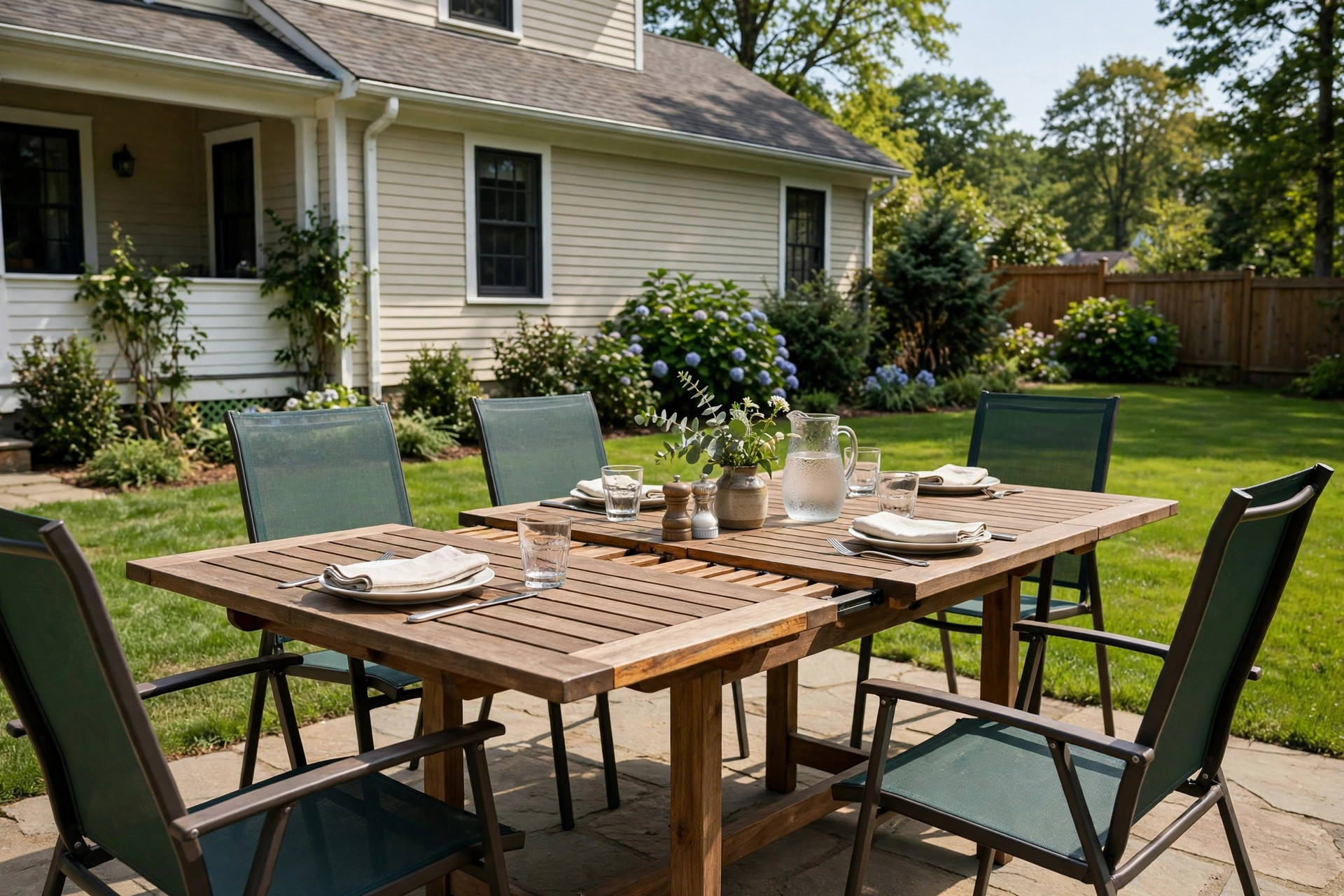

An outdoor dining table extendable for parties is one of the most useful pieces of patio furniture a family can own. On most days it seats six. On holidays and birthdays it opens up to seat ten, twelve, or more. The table grows when the guest list grows. Then it shrinks back to a neat size for daily meals. This guide explains how these tables work, what materials last the longest, how much to spend, and how to keep the table in good shape for many years.
Why an Extendable Table Matters for Outdoor Gatherings
Most patios are not large. A table that seats twelve people all year would take up too much room. It would crowd the patio in the months when no guests are expected. A table that seats only six would be fine in spring but too small at Thanksgiving. The extendable design solves both problems at once.
The table stays compact through the week. When guests arrive, the leaves slide in or fold out. In one minute the table nearly doubles in size. No one has to carry a folding table from the garage. No one sits at a card table by the grill. Everyone sits together at one table.
This single-table setting changes the mood of a party. Conversation flows better when all guests share one surface. Serving is simpler too. The host can pass dishes along the table instead of running between two tables. For families who host often, this feature earns its keep many times over.
How to Choose the Right Extendable Table: Outdoor Dining Table Extendable for Parties
Measure the Space First
Start with a tape measure. Measure the patio, deck, or lawn area where the table will stand. Write down the length and width. The table, in its largest size, should leave at least three feet of clear space on all sides. Guests need room to pull out chairs and walk behind them.
A table that extends to ten feet needs a patio at least sixteen feet long. Do not forget the space for serving carts and walkways. If the space is tight, look for a table with leaves that add only two feet per end instead of four.
Pick the Extension Style
There are three common extension styles. Each has strengths.
The butterfly leaf table hides the extension leaves inside the tabletop. To open it, you pull the two halves apart. The leaves fold up from the center. This style is popular because nothing extra needs storage. Read how to care for patio surfaces with tips on outdoor rug care for your deck.
The drop-leaf table has leaves that hang down at each end. Lift and lock them when guests come. This style costs less and opens in seconds.
The separate-leaf table uses loose panels that store in a bag or shed. The panels give the most added length. But you must find a dry place to store them. Some buyers keep the panels behind a bench or in a storage box.
Check the Weight and Build
A party table takes hard use. Twelve people lean on it. Hot dishes set down on it. Children climb under it. Look for thick legs, strong corner brackets, and a frame that does not wobble when pushed from the side. A heavier table is steadier in wind. If your patio faces strong gusts, weight matters as much as looks. Consumer Reports has published patio furniture tests that measure stability and weather resistance, and their ratings are a good starting point for comparison. (https://www.consumerreports.org)
Materials That Last Outdoors
Teak
Teak is the classic choice. It resists rain, insects, and sun better than most woods. A teak table can last twenty years or more with light care. It turns silver gray with age if left alone. Some owners oil it once a year to keep the warm brown color. Teak costs more up front. But its long life often makes it the cheaper choice over time. Garden guides at The Spruce describe simple seasonal routines for teak and other woods. (https://www.thespruce.com)
Aluminum
Aluminum tables are light, rustproof, and easy to move. A powder-coated aluminum frame holds up well in rain. The metal stays cool enough to touch even in summer sun. Aluminum tables cost less than teak. The weakness is weight: a light table can slide in wind. Pair it with heavier chairs, or anchor it on calm days. Lowe’s stocks a wide range of aluminum sets in most store locations. (https://www.lowes.com)
Recycled Plastic Lumber
Tables made from recycled plastic lumber look like painted wood. They never rot, crack, or need paint. Bird droppings and food stains wash off with soap and water. Polywood is one well-known maker of this material, and their site shows the full range of colors. (https://www.polywood.com) These tables are heavy and steady. The price sits between aluminum and teak.
Wrought Iron and Steel
Iron and steel tables feel solid and look traditional. They suit formal patios. But bare metal rusts. Buy only powder-coated steel with sealed joints. Check the welds every spring. Touch up chips with matching paint before rust starts.
Types and Seating Options
Rectangular Tables
The rectangle is the standard shape. It seats guests along both long sides. A six-foot table seats six. Opened to nine or ten feet, it seats ten or twelve. Rectangular tables fit well on long patios and decks. Most extension styles come in this shape.
Round and Oval Tables
Round tables give every guest a good view of the table. No one sits at the head. Some round tables have a center leaf that turns them oval for parties. This shape works well in square corners of a patio. It leaves the corners free for planters or a drink cart. Frontgate sells several round-to-oval designs built for outdoor use. (https://www.frontgate.com)
Pairing With Chairs
The chairs matter as much as the table. Guests sit for hours at a party. Look for chairs with armrests and a slight tilt to the back. Stackable chairs save space when the party ends; a set of stackable dining chairs stores neatly against a wall. Plan two feet of table width per chair. Twelve guests need at least twelve feet of seating edge, split across both sides and the ends.
Benches are another option. A bench seats three children or two adults. Benches slide under the table for storage. They suit casual cookouts better than formal dinners.
Cost and Price Ranges
Prices vary by material and size. A small aluminum drop-leaf table starts near one hundred fifty dollars. Mid-range aluminum or steel tables with a center leaf run from four hundred to eight hundred dollars. Recycled plastic lumber tables of party size cost from nine hundred to two thousand dollars. Teak tables start near one thousand five hundred dollars and climb past three thousand for large models.
Watch for sales at the end of summer. Stores clear patio stock in August and September. Floor models often sell at a discount. IKEA refreshes its outdoor line each spring, and last season pieces often drop in price. (https://www.ikea.com) Budget for extras too: an umbrella, chair cushions, a table cover, and a storage bag for loose leaves can add two hundred dollars.
A higher price does not always mean a better table. Read the weight rating. Check the warranty length. A five-year frame warranty tells you the maker trusts the product. Ask the store about replacement parts. Leaves, hinges, and locks should be replaceable without buying a new table.
Care and Upkeep Through the Seasons
Weekly Care
Wipe the top with a damp cloth after meals. Clear crumbs and sticky spills the same day. Standing food stains wood and dulls finishes. Sweep under the table so grit does not scratch the legs.
Seasonal Care
In spring, wash the whole table with mild soap and water. Check every bolt and hinge. Tighten what is loose. Oil teak if you want the brown color. Touch up paint chips on steel. This Old House style spring checklists, like those from Bob Vila’s guides, cover the full patio in one afternoon. (https://www.bobvila.com)
In fall, clean the table once more. Remove the leaves. Store loose panels flat in a dry place. Cover the table or move it to a shed. A breathable cover works best. Plastic tarps trap moisture and cause mildew. Home Depot sells fitted covers for most table sizes. (https://www.homedepot.com)
Long-Term Storage
If winters bring snow, store the table indoors. A garage corner is enough. Stack chairs upside down on the table to save space. Keep the cover on even indoors to block dust. In mild climates, the table can stay out all year under a cover. Check under the cover once a month for trapped water.
Safety Tips for Party Use
Open the extension mechanism fully and lock it before guests sit down. A half-locked leaf can drop under weight. Test it yourself first. Push down on the center of the open leaf. It should not move.
Keep the table level. A table that rocks spills drinks and tips plates. Use adjustable feet or wood shims on uneven pavers. Place the table away from the grill. Heat and grease drift onto the finish. Keep at least six feet between the table edge and the grill.
Watch children around folding leaves. The hinge points can pinch small fingers. Open and close the table when children are clear of it. Lock the leaves open during the party. Lock them closed after.
Choose an umbrella base that fits the table’s center hole. A loose umbrella sways and can snap the table’s center ring. In wind above twenty miles per hour, close the umbrella. No party is worth a broken table or a hurt guest.
FAQ: Outdoor Dining Tables Extendable for Parties
How many people can a typical extendable patio table seat?
A six-foot table seats six. With leaves added, most models reach eight to ten feet and seat ten to twelve. A few large models reach twelve feet and seat fourteen. Count two feet of edge per guest for comfort.
Do the leaves store inside the table?
Butterfly-leaf models store the leaves inside. Drop-leaf models fold the leaves down at the ends. Separate-leaf models use loose panels that you store elsewhere. Check the product page before you buy if storage matters to you.
Which material is best for a rainy climate?
Teak and recycled plastic lumber handle constant rain best. Aluminum is close behind because it never rusts. Powder-coated steel needs chip repair to stop rust. Untreated wood fails fastest in wet climates.
Can I leave the table outside all winter?
In mild climates, yes, under a breathable cover. Where snow falls, move the table indoors. Freeze and thaw cycles crack wood joints and loosen bolts. At minimum, remove the leaves and store them flat in a dry spot.
How do I keep the extension mechanism working smoothly?
Keep the tracks and hinges clean. Brush out sand and grit. Spray a silicone lubricant on moving parts once a season. Never use oil-based sprays that attract dust. If a leaf sticks, check for swollen wood or a bent pin before forcing it.
Are extendable tables as strong as fixed tables?
A good one is. The strength comes from the frame, not the leaves. Buy a table with a rigid frame, thick legs, and a positive lock on each leaf. Cheap tables with thin frames will wobble when open. Test the open table in the store before you buy.
A Short Final Word
An outdoor dining table extendable for parties is a sound buy for anyone who hosts. Measure the space. Choose a material that suits your climate. Pick the extension style that fits your habits. Spend what the budget allows, and care for the table each season. For the rest of your patio, a deep seating set rounds out the lounge area, and Article‘s outdoor collections show how dining and lounge pieces can share one style. (https://www.article.com) The table will serve family dinners all year and open wide for the days that matter most.
References
Article. (n.d.). Modern furniture. https://www.article.com Consumer Reports. (n.d.). Product reviews and ratings. https://www.consumerreports.org Frontgate. (n.d.). Outdoor furniture and decor. https://www.frontgate.com IKEA. (n.d.). Home furnishings. https://www.ikea.com Lowe’s. (n.d.). Home improvement products. https://www.lowes.com Polywood. (n.d.). Outdoor furniture. https://www.polywood.com The Home Depot. (n.d.). Home improvement products. https://www.homedepot.com The Spruce. (n.d.). Home and garden advice. https://www.thespruce.com
Was this guide helpful?

About Sarah Mitchell
The My Garden US editorial team writes practical, in-depth home and garden guides for American homeowners — tested advice, no fluff.
You May Also Like
Outdoor Towel Storage for Pool Area: A Plain Guide
July 27, 2026 0 views
Outdoor Console Table for Patio Reviews: A Plain Guide to Buying Well
July 29, 2026 0 views
Outdoor Patio Heater Cover Waterproof Reviews: A Plain Buying Guide
February 2, 2026 0 views