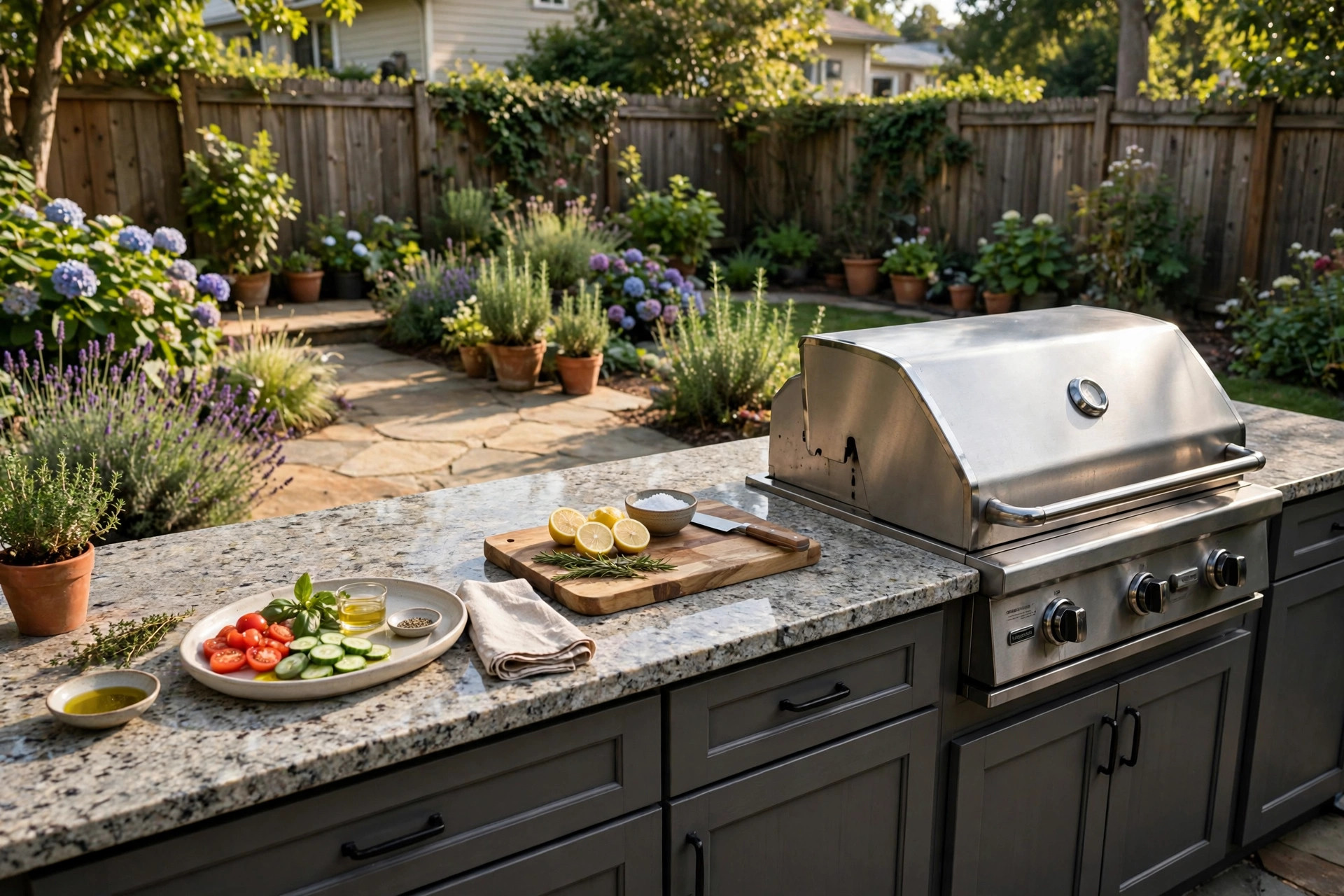
The cook who builds an outdoor kitchen wants a counter that can take heat, rain, and heavy use. The choice of outdoor kitchen countertop material options is not small. A counter sits in the sun all day and in the rain all night. It holds hot trays, wet dishes, and sharp knives. The right material makes the kitchen a pleasure. The wrong one cracks, stains, or warps within a year. This guide walks through the main choices in plain terms, so a homeowner can pick with care and keep the counter in good shape for many seasons.
Why It Matters
An outdoor kitchen is not an indoor kitchen. Inside the house, the air stays dry and the temperature stays mild. Outside, the counter faces the full force of the weather. Rain soaks it. Sun bakes it. Cold nights freeze it, and hot days expand it. Grease from the grill lands on it week after week. A material that works well indoors can fail fast outside.
The counter is also the working heart of the kitchen. It holds the cutting board, the serving platters, and the drinks for guests. A best flat top grill for outdoor kitchen sits heavy on the base, and the counter around it takes splatter and heat. If the surface stains, the whole kitchen looks tired. If it chips, the chips grow. A sound choice saves money over time, because a good counter lasts for decades while a cheap one must be replaced again and again.
How to Choose: What to Look For: Outdoor Kitchen Countertop Material Options
Before looking at names of materials, it helps to know what a counter must do. Every good choice passes the same simple tests.
Weather resistance. The material must stand up to rain, sun, and frost. It should not absorb water, and it should not fade in strong light. Freeze and thaw cycles crack porous stone that soaks up water.
Heat resistance. Hot pans, grill lids, and trays fresh from the fire touch the counter. A good surface takes the heat without marks. Some materials need a hot pad; others do not.
Strength. An outdoor counter carries heavy items: a loaded cooler, a stack of plates, the grill itself. It must not bend or crack under weight.
Ease of care. A counter that needs sealing every month or scrubbing with special cleaners becomes a burden. Look for a surface that washes clean with soap and water.
Looks. The counter sets the tone of the kitchen. Stone looks solid and classic. Steel looks clean and modern. Tile brings color and pattern. Pick a look that suits the house and the yard.
Guides on outdoor kitchen planning and grilling gear give a useful picture of how cooks use these spaces through the season.
The Main Outdoor Kitchen Countertop Material Options
Seven materials cover almost every outdoor kitchen. Each has strong points and weak points. A plain look at each one follows.
Granite
Granite is the favorite of many builders. It is a natural stone, cut thick, and it takes heat without fear. A hot tray from the grill can rest on granite with no mark. It shrugs off rain and sun. It resists scratches well. With a sealer applied once a year, it also resists stains.
The cost is high. Slabs are heavy, so the base must be strong, and the work of cutting and setting it needs a skilled hand. Dark granites hide stains better than pale ones. For a kitchen that will see hard use for many years, granite is often worth the price.
Concrete
Poured concrete gives a custom look. It can be shaped to any size, tinted any color, and finished smooth or rough. It is strong and takes heat well. A concrete counter with a good sealer stands up to rain and sun.
The weak point is care. Concrete is porous, so it must be sealed, and the sealer must be renewed from time to time. Oil and wine stain it fast if the sealer wears thin. Hairline cracks can appear with age, though they rarely hurt the strength. Concrete suits a homeowner who likes the hand-made look and does not mind upkeep.
Tile
Tile counters use ceramic or porcelain tile set on a cement board base. They offer the widest range of colors and patterns at the lowest price. A homeowner can build one with common tools. Individual tiles are easy to replace if one breaks.
The grout lines are the trouble. Grout stains, holds grease, and can crack with freeze and thaw. The counter needs care: grout sealed each year, spills wiped up fast. In a mild climate with a covered kitchen, tile serves well. In harsh weather, it ages faster. Porcelain tile handles frost better than common ceramic, so it is the better pick for open-air kitchens.
Stainless Steel
Stainless steel is the workhorse of outdoor cooking. It takes heat, rain, and grease without complaint. It wipes clean in seconds. It never needs sealing. It will not crack or stain. Commercial kitchens use it for good reason.
The look is plain and industrial, which suits some yards and clashes with others. It shows fingerprints and can dent if struck hard. It gets hot in direct sun, and it can be loud when dishes clatter on it. For a cook who values function over form, steel is hard to beat. Pairing it with a good pellet grill or kamado-style cooker makes a tidy, all-business station.
Natural Stone (Slate, Soapstone, Bluestone)
Beyond granite, other natural stones serve well outdoors. Soapstone is soft to the touch, takes heat, and darkens with oil in a pleasing way. Slate is dense and strong, with a dark, quiet look. Bluestone has a rough, rustic face that suits stone patios.
Each stone has its own care needs. Soapstone likes an occasional rub with mineral oil. Slate and bluestone need a sealer to fight stains. Prices sit below granite for some types and above it for others. A local stone yard can show samples and tell which types hold up in the local climate.
Quartz (Engineered Stone)
Quartz counters are common indoors, but they are a poor pick outdoors. The resin that binds the stone yellows and weakens in strong sun. Heat from a grill can damage the surface. Most makers warn against outdoor use, and warranties do not cover it. Leave quartz inside the house.
Butcher Block and Wood
Wood brings warmth that no stone can match. A thick hardwood top feels good to work on and looks fine beside a garden. But wood and weather are old enemies. Rain swells it, sun cracks it, and food stains soak in deep. It needs oiling often and a cover in bad weather. Wood suits a covered porch kitchen where the cook accepts the upkeep. In the open rain, it will not last.
For more on outdoor cooking setups and the gear that goes with them, see the guides at AmazingRibs and The Spruce Eats.
Cost and Price
Prices move with the region, the size of the counter, and the skill of the installer. These rough ranges give a sense of scale for a typical outdoor run of counter, installed.
– Tile: the lowest cost, often a few hundred dollars for materials on a small run, more with a hired setter. – Concrete: mid-range; a poured and finished top costs more than tile but less than stone. – Stainless steel: mid to high; custom fabrication raises the price. – Granite: high; the slab, cutting, and setting add up, but the life is long. – Soapstone, slate, bluestone: mid to high, much like granite. – Wood: low to mid for materials, but the upkeep has its own cost in time.
A thick slab of granite may cost twice what a tile top costs. Yet the granite may last thirty years while the tile needs grout repair every few years. The true cost is the price divided by the years of service. Buyers should get two or three written quotes and ask each builder how long the counter should last.
Independent reviews of outdoor kitchen products can help a buyer compare quality before spending.
Care and Upkeep
Every outdoor counter asks for some care. A short routine keeps it sound.
– Wash often. Warm water and mild dish soap clean most surfaces. Rinse well so soap does not dry on the stone. – Wipe spills fast. Grease, wine, and citrus stain porous stone. A quick wipe beats a long scrub. – Seal stone and concrete. Granite, slate, bluestone, and concrete need a sealer. Follow the maker or the sealer label for timing, often once a year. – Cover in harsh months. A fitted cover or a roof over the kitchen cuts sun damage and frost harm. It is the cheapest way to add years of life. – Mind the grill. Keep a hot pad or a trivet under very hot items, even on granite, as a habit. Keep grill grease off the stone where you can. – Check grout and joints. On tile tops, look at grout lines each spring. Re-seal or re-grout where the old work has failed.
Retail guides at Home Depot list sealers, covers, and care products made for outdoor stone and steel.
Safety
A counter is a work surface, but safety still matters.
– Heat. Some counters, such as steel, grow hot in the sun. Test the surface with a hand before setting food on it or letting children near. – Weight. Stone slabs are very heavy. Let trained installers lift and set them. A slab that tips can crush a foot or a hand. – Sharp edges. Ask the fabricator to ease or round the edges. A sharp stone edge cuts skin on a careless brush. – Slippery when wet. A polished stone top gets slick in the rain. A honed or rough finish grips better. – Gas and fire. Keep the counter clear around burners and the grill body. Do not store fuel, paper, or cloth on the counter near an open flame. – Sealers and cleaners. Read the labels. Some sealers need fresh air while they cure. Keep children and pets away until the surface is dry.
Frequently Asked Questions
What is the best outdoor kitchen countertop material? Granite wins the most votes. It takes heat, rain, and sun with little care beyond a yearly sealer. Stainless steel runs a close second for cooks who prize easy cleaning above looks.
Can I use indoor quartz outside? No. The resin in engineered quartz breaks down in strong sun and can fail near high heat. Makers do not warrant it for outdoor use.
How thick should an outdoor counter be? Two inches is a good rule for stone slabs, which gives strength against cracking. Tile tops need a solid cement board base of at least half an inch, well screwed to the frame.
Does granite stain outdoors? It can, if left unsealed. Grease and wine soak into the pores of bare stone. A good sealer, renewed each year, stops most stains. Dark granite hides what little gets through.
How do I clean a concrete counter? Wash with mild soap and water and a soft brush. Skip harsh acids and bleach, which eat the sealer. Re-seal when water stops beading on the surface.
What counter pairs well with a pizza oven or smoker? Heat-proof tops like granite, concrete, or steel suit a hot outdoor pizza oven and a heavy backyard smoker. The Broil King line of grills and similar cookers sit well on a strong stone base with a sealed top.
A Final Word
The best of the outdoor kitchen countertop material options is the one that fits the climate, the cook, and the budget. Granite and steel ask the least and give the most years. Concrete and tile ask more care but cost less and offer more style. Wood asks the most and gives warmth in return. Weigh the weather first, the work of upkeep second, and the price third. A counter chosen with a clear head will serve the family through many long summers of good food.
References
AmazingRibs.com. (n.d.). Barbecue and grilling science. https://www.amazingribs.com Big Green Egg. (n.d.). Kamado grills and outdoor cooking. https://www.biggreenegg.com Broil King. (n.d.). Gas and charcoal grills. https://www.broilkingbbq.com Char-Broil. (n.d.). Gas and charcoal grills. https://www.charbroil.com Consumer Reports. (n.d.). Product reviews and ratings. https://www.consumerreports.org Napoleon. (n.d.). Fireplaces, grills, and heating products. https://www.napoleon.com The Home Depot. (n.d.). Home improvement products. https://www.homedepot.com The Spruce Eats. (n.d.). Recipes and cooking guides. https://www.thespruceeats.com Traeger. (n.d.). Wood pellet grills. https://www.traeger.com Weber. (n.d.). Grills and outdoor cooking. https://www.weber.com
Was this guide helpful?

About Sarah Mitchell
The My Garden US editorial team writes practical, in-depth home and garden guides for American homeowners — tested advice, no fluff.