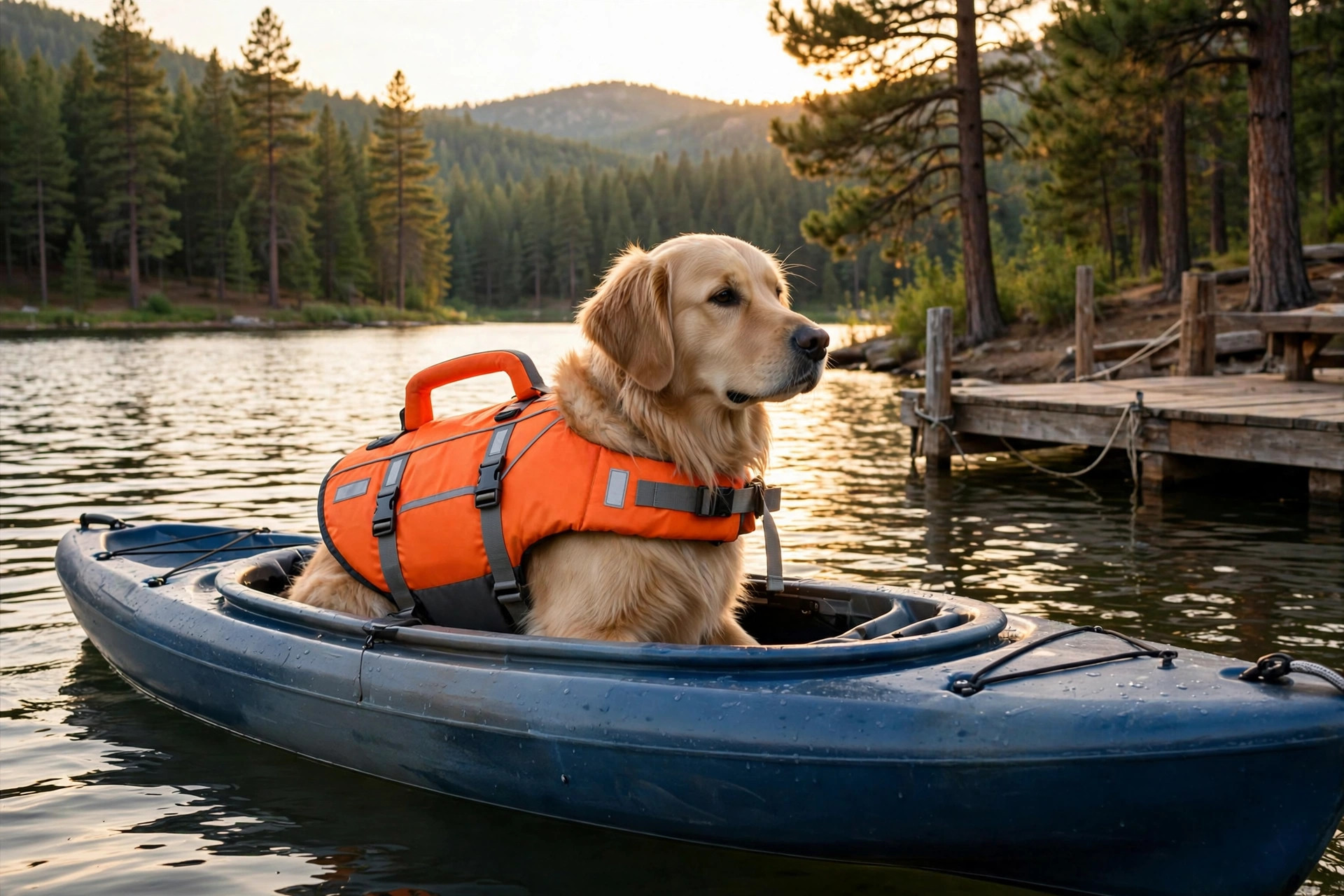

Many dog owners love to bring their pets along on water trips. Kayaks, canoes, rowboats, and motorboats can all be safe places for a dog. But open water can be hard to read. Currents shift. Waves grow. A tired dog can panic. That is why so many owners look for the best dog life vest for kayaking and boating. A good vest gives your dog extra float. It gives you a handle to grab. And it gives you peace of mind on every outing.
Why It Matters
Not every dog is a strong swimmer. Some breeds, such as bulldogs and pugs, tire fast in water. Older dogs may have weak joints. Young puppies may not know how to pace themselves. Even a strong swimmer can run into trouble. Cold water can cause cramps. A sudden wake from a passing boat can push a dog under. Undertow near a dam or inlet can pull harder than it looks from shore.
A life vest does not replace watching your dog. But it buys time. It keeps the dog’s head above water when the dog tires. It makes the dog easier to spot from the kayak or the shore. Many rescue groups say that most pet drownings happen close to land, where owners least expect danger. A vest is a simple step that lowers that risk a great deal. Pet safety groups like the American Society for the Prevention of Cruelty to Animals remind owners that water safety starts with good gear and close watch.
What to Look For When You Choose: Best Dog Life Vest for Kayaking and Boating
Fit and Sizing
Fit is the first thing to get right. A vest that is too loose will slide off in the water. A vest that is too tight will rub the skin and make the dog hate wearing it. Measure three spots on your dog: the neck, the widest part of the chest, and the length from neck to tail base. Then check the maker’s size chart. Each brand sizes a little differently, so do not guess from weight alone. Two dogs of the same weight can have very different chest shapes.
Try the vest on dry land first. Slide two fingers under each strap. If you can fit more, the vest is too loose. Watch your dog walk in it. The vest should not twist to one side. The belly panel should stay put. Let the dog wear it around the house for a few days before the first trip.
Buoyancy and Foam
Good vests use closed-cell foam panels. These panels hold the dog up without filling with water. Look for foam that runs along the sides and under the belly, not just on the back. Side panels keep the dog level in the water. Belly foam lifts the chest and keeps the head high.
Some vests claim to work for every dog size. In practice, small dogs need thinner, softer foam so they can still move. Large, heavy dogs need thicker foam and a wider cut. Read reviews from owners with dogs close to your dog’s size. The American Kennel Club offers plain guidance on matching gear to breed size and build.
Straps, Buckles, and the Rescue Handle
Straps keep the vest on the dog. Look for at least two straps: one at the neck and one around the belly. Three straps give a more secure hold on deep-chested dogs. Buckles should snap shut with a clear click and stay shut when wet. Cheap buckles pop open under strain.
The rescue handle on the back is one of the most useful parts of the vest. It lets you lift the dog back into the kayak in one smooth motion. Test the handle on land. Lift the dog a few inches and check that the stitching holds. The handle should sit over the dog’s shoulders, not near the tail, so the dog lifts level.
Color and Visibility
Bright colors save lives on the water. Orange, yellow, and red show up well against blue and green water. Many vests add reflective trim. This trim catches light at dawn, dusk, and in fog. Some owners add a small bell or a light clip to the D-ring for night trips. Visibility matters as much as float. A dog that slips out of sight for even a minute can drift far.
Types and Options
Sport Vests
Sport vests are the most common choice for kayaking. They are slim and light. They let the dog move freely and climb back onto the boat. They work well for short trips on calm lakes and slow rivers. Most have the standard two or three straps and a top handle.
Full-Coverage Vests
Full-coverage vests wrap more of the dog’s body in foam. They give more lift and more warmth. They suit cold water, choppy bays, and dogs that are weak swimmers. The trade-off is bulk. The dog may move a little slower. For long days on open water, the extra float is worth it.
Lightweight Vests for Small Dogs
Small dogs lose body heat fast and tire quickly. A light vest with soft foam works best for them. Avoid heavy buckles that weigh more than the foam. Some makers sell vests in extra-small sizes with a snug neck cut made for toy breeds. As with any pet product, it helps to shop from a trusted pet retailer such as Petco or Chewy where size charts and return policies are clear.
Vests With Extra Features
Some vests add a D-ring for a leash. This is handy at the dock or on a crowded beach. Others add a small pocket for a tag or a light. A few high-end models use ripstop fabric that stands up to claws and rocks. These extras add cost. For most weekend kayakers, a simple vest with strong straps and a good handle is enough. Outdoor gear makers such as Ruffwear and Outward Hound publish detailed guides on matching features to how you travel.
Cost and Price
Prices vary with size and build. A basic vest for a small dog often costs between fifteen and thirty dollars. Mid-range vests with better foam and reflective trim run from thirty to sixty dollars. Heavy-duty vests for large dogs on open water can cost sixty to one hundred dollars or more.
Price is not the whole story. A cheap vest with weak buckles can fail when you need it most. A very costly vest may add features you will never use. Set your budget by how you travel. Calm lake trips call for a mid-range vest. Ocean, white water, and cold lakes call for the best build you can afford. Big-box stores like Home Depot and outdoor retailers like REI often stock several price tiers side by side, which makes it easy to compare.
Care and Upkeep
Rinse the vest with fresh water after every trip. Salt, sand, and lake mud wear down fabric and foam. Let it drip dry in the shade. Strong sun breaks down foam and fades bright colors. Do not put the vest in a dryer. Heat can warp the foam panels.
Check the straps and buckles once a month during boating season. Look for frayed edges, cracked buckles, and loose stitching at the handle. If the foam feels flat or crumbly, replace the vest. Most vests last two to four seasons with steady use. Store the vest flat or hung up, not crushed under other gear. Pet health resources such as PetMD note that worn-out gear is a common cause of preventable injuries.
Safety on the Water
A vest is only part of safe boating with a dog. Train your dog to enter and exit the kayak on command. Practice near shore first. Teach the dog to sit low in the boat and stay centered. A dog that jumps from side to side can tip a narrow kayak.
Bring fresh water for the dog. Dogs will drink lake or sea water if they are thirsty, and salt water can make them sick. Take breaks on shore so the dog can rest and cool down. Watch for signs of fatigue: heavy panting, slow swimming, or a drooping head. Lift the dog out at once if you see these signs.
Never tie the dog’s leash to the boat. If the boat tips, a tied dog can be dragged under. Let the dog wear the vest with the leash clipped to the D-ring only when you are on land or at the dock. On the water, keep the dog close and keep your hands free. The Spruce Pets site offers checklists for pet water safety that many owners print and keep in their dry bag.
Cold water deserves extra care. Water below sixty degrees can chill a dog fast, even in summer air. Full-coverage vests help, but short trips are still wise. If the dog shivers, get the dog out and dry the dog off right away.
Frequently Asked Questions
Does my dog really need a life vest if it can swim?
Yes. Even strong swimmers tire. Waves, currents, cold, and panic can overpower any dog. A vest keeps the head up when the dog tires and makes rescue much faster. Think of it the way you think of your own life jacket.
How should the vest fit?
Snug but not tight. You should be able to slide two fingers under each strap. The vest should not twist or ride up when the dog moves. Always check the fit again after the dog’s coat is wet, since wet fur compresses and straps can loosen.
Can a dog wear a life vest all day?
For a full day on the water, yes, with breaks. Take the vest off during long rests on shore so the skin can breathe. Check for rub marks under the straps at each break. If you see red spots, adjust the straps or add a thin shirt under the vest.
What size vest does my puppy need?
Measure the puppy now and buy for the current size, not the adult size. A loose vest is unsafe. Puppies grow fast, so expect to size up at least once in the first year. Many makers sell affordable starter vests for this reason.
Are dog life vests approved by the Coast Guard?
No. The Coast Guard approves life jackets for people, not for pets. There is no official pet standard. Buy from known makers with a record of good reviews, strong stitching, and real foam panels. Owner feedback is your best guide.
Can I use a child’s life jacket on my dog?
No. Child jackets are cut for human bodies. They do not fit a dog’s chest and legs, and they can slip off or choke the dog. A vest made for dogs has the right strap layout and a rescue handle placed for a dog’s center of gravity.
A Final Word
The best dog life vest for kayaking and boating is the one that fits your dog well and that you will use every time. Pick a bright color. Check the straps. Test the handle. Rinse it after each trip. Then get out on the water with a clear mind.
Good gear goes hand in hand with good habits at home. Owners who plan ahead for their pets often also pick up other helpful gear, such as dog ramps for SUVs and high beds that spare aging joints, dog agility sets for backyard training fun that keep active dogs sharp, and even simple home items like a cat litter mat to trap litter tracking that keeps the house clean after muddy outdoor days. A little planning before each season makes every trip safer and more fun for both you and your dog.
References
American Kennel Club. (n.d.). Dog care and training resources. https://www.akc.org ASPCA. (n.d.). Pet care and animal welfare resources. https://www.aspca.org Chewy. (n.d.). Pet supplies. https://www.chewy.com Outward Hound. (n.d.). Dog toys, gear, and travel products. https://www.outwardhound.com Petco. (n.d.). Pet supplies and services. https://www.petco.com PetMD. (n.d.). Pet health information. https://www.petmd.com REI. (n.d.). Outdoor gear. https://www.rei.com Ruffwear. (n.d.). Performance dog gear for outdoor adventures. https://www.ruffwear.com The Home Depot. (n.d.). Home improvement products. https://www.homedepot.com The Spruce Pets. (n.d.). Pet care guides and product reviews. https://www.thesprucepets.com
Was this guide helpful?

About Sarah Mitchell
The My Garden US editorial team writes practical, in-depth home and garden guides for American homeowners — tested advice, no fluff.
You May Also Like

Best Pet Safe Lawn Fertilizer for Dog Owners
January 27, 2026 0 views
Best Pet Food Mat for Messy Eaters Floor
July 11, 2026 0 views
Pet Stroller for Small Dogs and Cats Travel: A Complete Buyer’s Guide
September 18, 2026 0 views