
Introduction
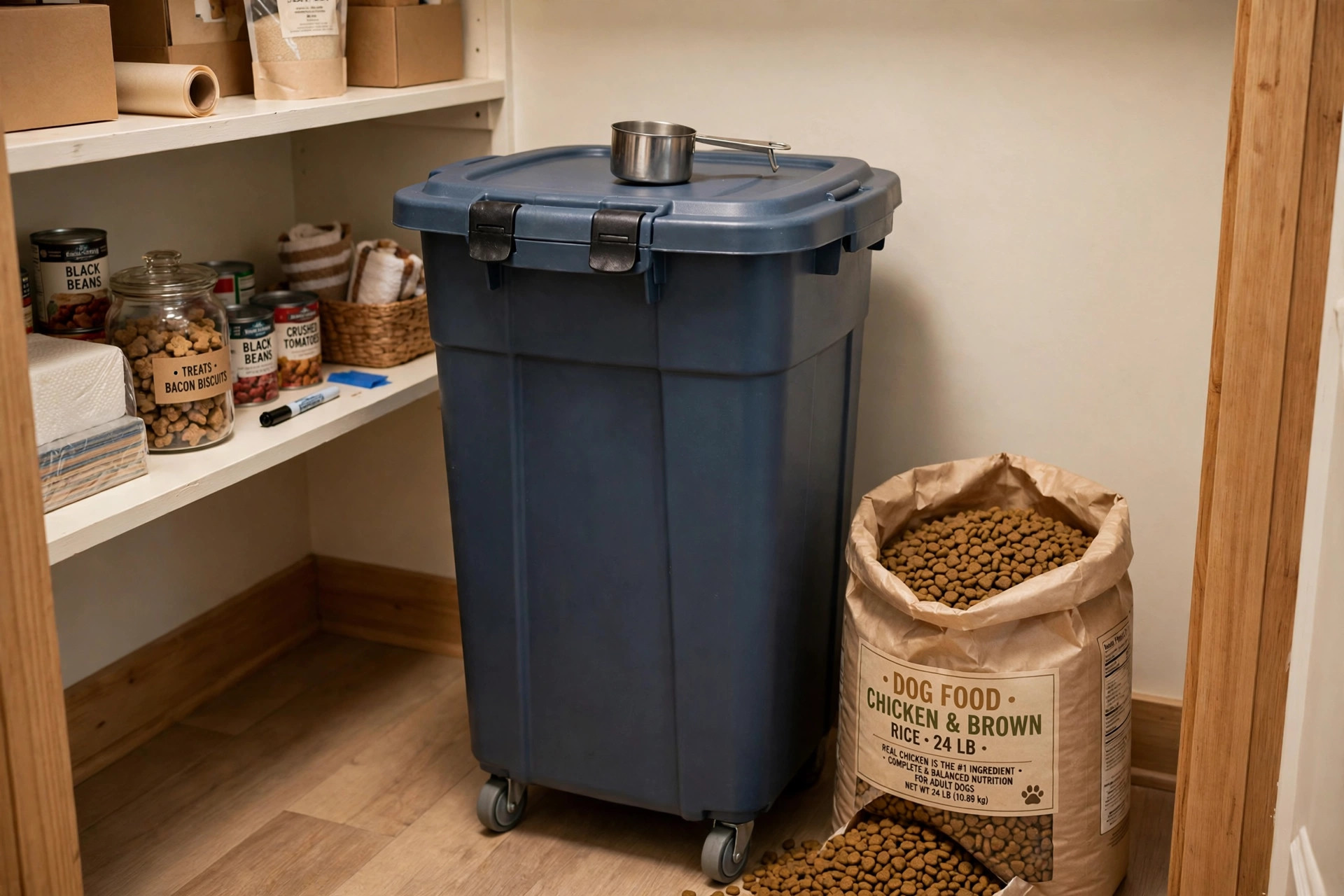
A dog that eats a large amount of food each day needs a large amount of dry kibble stored at home. A paper bag tears. A bag left open grows stale and draws pests. The best dog food container with wheels large enough to hold a full bag solves all of these problems at once. It holds the kibble, it seals in freshness, and its wheels let you roll it from the pantry to the feeding bowl without lifting.
This guide explains what makes a large wheeled dog food container worth buying. It covers size, materials, seals, wheels, price, cleaning, and safety. It also answers common questions from dog owners. Whether you own one large breed dog or a pack of hungry pets, the advice below will help you pick a container that lasts.
Why a Large Wheeled Container Matters: Best Dog Food Container with Wheels Large
Large dogs eat a great deal. A Labrador or a German Shepherd may eat four to six cups of dry food each day. A 40-pound bag can last two to three weeks in such a home. Once that bag is open, air and moisture start to ruin the food. Stale kibble loses taste and some of its food value. Open bags also attract ants, mice, and pantry moths.
A large container with an airtight lid keeps the kibble fresh for weeks. The lid blocks air and moisture. It also blocks the smell that draws pests. Wheels add a second benefit. A full container can weigh 40 pounds or more. Rolling it across the floor is far easier than lifting it. Older owners, owners with back trouble, and anyone with a large kitchen will feel the difference at once.
Many owners store pet food near the pet food storage container airtight large they already use for smaller animals. A dedicated large wheeled bin gives the main dog food its own clean home. The result is a tidier pantry and a healthier dog.
What to Look for When You Choose
Size and Capacity
Start with the size of the bag you buy. Bags come in 20, 30, 40, and 50-pound sizes. The best dog food container with wheels large enough for your needs should hold at least one full bag with a little room to spare. Room at the top makes scooping easy and keeps kibble from spilling over the rim.
Check the capacity in quarts or gallons, not just in pounds. Different kibbles have different density. A dense food packs more weight into the same space. Manufacturers often print both figures on the label. When in doubt, choose the larger size. A bin that is too small is a daily annoyance. A bin that is too large is never a problem.
Material
Most large wheeled containers are made of thick plastic. Food-grade plastic is the right choice. It does not leach bad chemicals into the kibble. It also resists the oils that coat dry dog food. Over time, cheap plastic can absorb those oils and turn rancid. Look for containers labeled food-safe or BPA-free.
Some bins use metal, such as stainless steel. Metal lasts longer and resists chewing. It costs more and is heavier. For most homes, a sturdy plastic bin is enough. Avoid thin, flimsy bins. They crack at the corners under the weight of 40 pounds of kibble.
Seal and Lid
The seal is the most important part of the container. A snap-lock lid with a rubber gasket keeps air out. Some lids spin shut with a twist lock. Both work well if the gasket is thick and seats evenly. A bad seal lets humidity in. In damp climates, kibble can grow mold within weeks.
Test the lid before you buy if you can. Press it shut and try to pull it open without using the latch. A good lid resists. Also check that the lid opens with one hand. You will often hold a scoop or a leash in the other. Sites such as Chewy and Petco list lid type in their product details, which helps you compare models.
Wheels and Mobility
Wheels are the reason you are reading this guide. Look for four wheels that turn freely. Casters that swivel make steering easy around kitchen corners. Some containers have two wheels and two fixed feet. That design is fine on flat floors but harder to turn.
Wheel size matters. Small wheels catch on tile grout and carpet edges. Larger wheels roll over these bumps with ease. Check whether the wheels lock. Locking casters keep the bin still while you scoop. Without locks, the bin may drift across a smooth floor. Replacement wheels are a plus. If a wheel breaks after a year, you want to swap it, not buy a new bin.
Shape and Footprint
A tall, narrow bin fits beside a refrigerator. A short, wide bin slides under a counter or into a closet. Measure your storage spot before you shop. Leave two inches of clearance so you can roll the bin out with ease. Remember that the wheels add an inch or two of height. A bin that fits your pantry today should still fit when full and heavy.
Types of Large Wheeled Dog Food Containers
Stackable Bins
Some bins are shaped to stack. The bottom bin holds the main food. The top bin holds treats or a second food. This design saves floor space. Make sure the lower bin can bear the weight. A 40-pound bin with another 20 pounds on top needs thick walls.
Tilt-Out Bins
Tilt-out bins look like kitchen trash cans. You pull the handle and the inner bucket tilts forward. The wheels sit under the bucket. These are easy to use and keep the kibble hidden. They cost more than simple bins. Check the hinge. It carries the full weight each time you open it.
Multi-Compartment Bins
A multi-compartment bin splits the space into two or three sections. You can store two kinds of kibble, or kibble plus treats. The dividers must seal well. If air passes between sections, the whole point is lost. These bins suit homes with more than one dog on different diets.
Simple Rolling Totes
The simplest design is a large tote with wheels and a snap lid. It costs the least and holds the most. It looks plain, but it does the job. Many owners pair it with a matching best slow feeder dog bowl for fast eaters at mealtime. Simple totes are also the easiest to clean because they have few corners and no hinges.
Cost and Price
A large wheeled dog food container costs between 25 and 80 dollars. Simple plastic totes sit at the low end. Stainless steel models and designer bins sit at the high end. The middle range, 40 to 60 dollars, buys a strong plastic bin with a good gasket seal and locking wheels.
Price is not the only cost. A cheap bin that cracks in a year costs more than a good bin that lasts five years. Read reviews from owners of large breeds. They test bins under real weight. Retailers such as Walmart and PetSmart carry many models, so you can compare prices and ratings in one place. Watch for sales around holidays. Pet supply stores often cut prices on storage items in January.
Remember the hidden saving. Fresh kibble means less waste. If a good seal saves even one bag of spoiled food a year, the bin has paid for itself. Owners of large dogs also save on vet visits when food stays clean and dry, a point the American Kennel Club makes in its feeding guides.
Care and Upkeep
Clean the container each time you finish a bag. Old crumbs at the bottom turn rancid and spoil the fresh food you pour on top. Wash the bin with warm water and mild dish soap. Rinse well. Let it dry fully before you add new kibble. Trapped moisture is the enemy of dry food.
Clean the gasket with care. Pull it out if it removes. Wash it, dry it, and seat it back evenly. A twisted gasket breaks the seal. Check the wheels once a month. Hair and dust wrap around the axles. Pull the hair free and add a drop of oil if the wheels squeak. Tighten any loose screws on handles and latches.
Store the bin in a cool, dry place. Heat speeds up the decay of fats in kibble. A garage that bakes in summer is a poor spot. A pantry or laundry room is better. Keep the bin off damp floors. The wheels help here. They lift the base a little and let air pass under it. The ASPCA offers general pet food storage tips that echo this advice.
Many owners rest the bin near the dog’s feeding station. A comfy best orthopedic dog bed for senior large dogs nearby makes the corner a calm place for an older dog to eat and rest. Keep the bin lid closed between meals. An open bin invites curious noses and spilled kibble.
Safety
Safety starts with the material. Use only food-grade plastic or stainless steel. Some cheap bins use recycled plastic that was never meant for food. If the label does not say food-safe, do not use it for kibble. This rule matters most in warm homes, where heat can push chemicals out of low-grade plastic.
Check for sharp edges. A cracked bin can cut your hand or your dog’s tongue. Replace a bin that has cracked. Check the lid latch. A latch that snaps shut with force can pinch fingers. Teach children to close the lid with care.
Keep the bin out of reach of clever dogs. Some dogs learn to nose a lid open. A locking lid or a latch that needs a thumb press stops most dogs. If your dog still breaks in, store the bin in a closet or pantry with a closed door. Overeating from a raided bin can cause bloat, a grave danger for deep-chested breeds. The PetMD library has clear articles on bloat signs every large-breed owner should know.
Wheels add one more safety note. A heavy bin rolling on a hard floor can run into small pets or children. Use the wheel locks. Park the bin against a wall. On stairs or ramps, never let a full bin roll free.
Frequently Asked Questions
How large a container do I need for a 40-pound bag?
Choose a bin rated for at least 40 pounds of dry food, with a little extra room. Look for 55 to 65 quarts of capacity. Kibble density varies by brand, so extra space is wise. A bin that holds 50 pounds gives you room to scoop without spilling.
Can I pour kibble straight into the bin, or should I keep the bag?
Both methods work. Pouring straight in is easy. Keeping the food in its original bag inside the bin is cleaner. The bag gives a second barrier against air. It also keeps the lot number and best-by date at hand in case of a recall. Many owners drop the whole bag into the bin and roll the top of the bag closed. The U.S. Consumer Product Safety Commission and pet sites alike stress keeping lot numbers for recalls.
How long does kibble stay fresh in a sealed wheeled container?
Dry kibble stays fresh for four to six weeks after the bag is opened if the seal is good. Heat and humidity shorten that time. Buy bag sizes your dog can finish within a month. A 40-pound bag suits a large dog well. For a small dog, buy smaller bags even if the large bag costs less per pound.
Are wheeled containers good for outdoor use?
Some are. Look for bins rated for outdoor or garage use. They have thicker walls and seals that block dust. Plain indoor bins can crack in freezing cold or warp in hot sun. If you feed dogs on a porch or in a barn, choose a model made for those conditions. The Home Depot stocks several outdoor-rated pet storage bins.
What should I do if the wheels break?
First, check if the maker sells spare wheels. Many do. A replacement caster costs a few dollars and takes minutes to fit. If no spares exist, you can buy generic casters at a hardware store. Match the stem size and weight rating. A caster rated for 50 pounds or more per wheel is right for a full bin.
Is a more costly stainless steel bin worth it?
It depends on your dog. A strong chewer or a large dog that paws at the bin may crack plastic over time. Stainless steel resists teeth and claws. It also resists odor. For a calm dog and a careful owner, a good plastic bin lasts for years at half the price. Guides at The Spruce Pets and Consumer Reports compare both materials in depth.
A Final Word
The best dog food container with wheels large enough for your dog’s appetite is a simple buy that pays off every day. It keeps kibble fresh. It keeps pests out. It saves your back. Choose a food-grade bin with a true gasket seal, strong locking wheels, and room for a full bag. Clean it between bags and store it in a cool spot. Your dog will eat fresher food, and your kitchen will stay tidy. That is a good deal for any dog owner.
References
American Kennel Club. (n.d.). Dog care and training resources. https://www.akc.org ASPCA. (n.d.). Pet care and animal welfare resources. https://www.aspca.org Chewy. (n.d.). Pet supplies. https://www.chewy.com Consumer Reports. (n.d.). Product reviews and ratings. https://www.consumerreports.org Petco. (n.d.). Pet supplies and services. https://www.petco.com PetMD. (n.d.). Pet health information. https://www.petmd.com PetSmart. (n.d.). Pet supplies and services. https://www.petsmart.com The Home Depot. (n.d.). Home improvement products. https://www.homedepot.com The Spruce Pets. (n.d.). Pet care guides and product reviews. https://www.thesprucepets.com U.S. Consumer Product Safety Commission. (n.d.). Product safety information. https://www.cpsc.gov Walmart. (n.d.). Everyday low prices. https://www.walmart.com
Was this guide helpful?

About Jennifer Lee
The My Garden US editorial team writes practical, in-depth home and garden guides for American homeowners — tested advice, no fluff.
You May Also Like

The Best Dog Shampoo for Sensitive Itchy Skin
April 18, 2026 1 views
Dog Anxiety Vest for Thunderstorms and Fireworks: A Complete Guide
April 16, 2026 0 views
Best Dog Toothbrush Kit for Dental Health
June 4, 2026 0 views