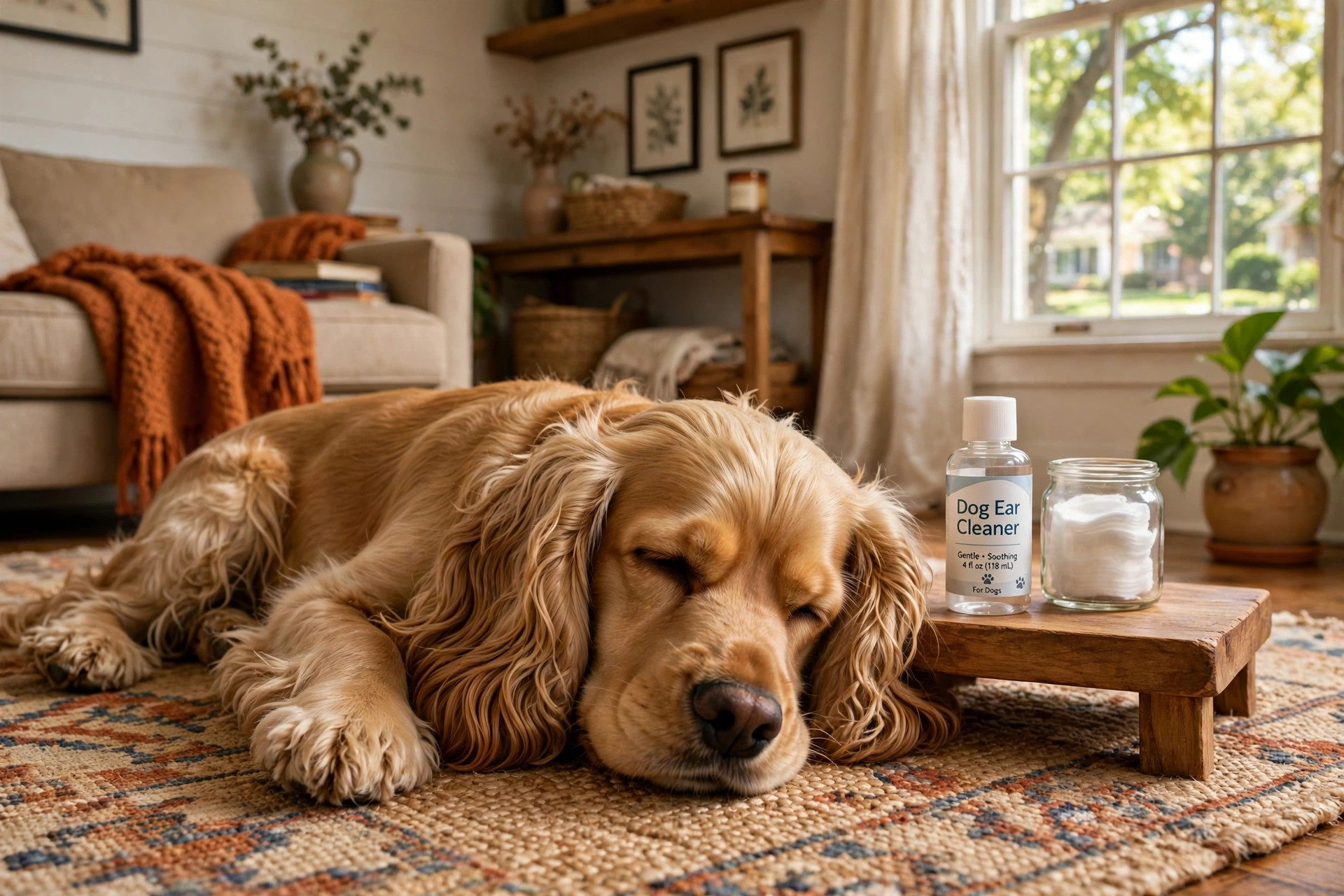

Dogs with long, hanging ears are some of the most loved pets in America. Breeds like the basset hound, the cocker spaniel, the bloodhound, and the beagle fill homes with warmth. But those same soft, floppy ears need more care than most owners expect. Finding the best dog ear cleaner for floppy eared breeds is one of the simplest ways to keep your pet happy and healthy. This guide walks you through why ear care matters, what to look for in a cleaner, and how to use it safely.
Why Floppy Ears Need Special Care
A dog with upright ears gets good air flow around the ear canal. A dog with floppy ears does not. The hanging ear flap traps heat and moisture inside the ear. That warm, damp space is an ideal place for bacteria and yeast to grow. Studies by veterinary groups show that dogs with floppy ears suffer ear infections at much higher rates than dogs with pricked ears.
Ear infections are painful. A dog with a sore ear may shake its head, scratch at its ears, or hold its head at an angle. Some dogs rub their ears on the floor. Others lose their appetite. A mild infection can turn into a deep one if left alone. Deep infections can damage the ear drum and, in rare cases, affect hearing.
Regular cleaning prevents most of these problems. A good cleaner removes wax, dirt, and moisture before they cause trouble. It keeps the ear canal dry and at a healthy pH. Many veterinarians recommend weekly ear checks for floppy eared dogs. A quick look and smell can catch early signs of infection long before pain sets in.
What to Look For in an Ear Cleaner: Best Dog Ear Cleaner for Floppy Eared Breeds
Not all ear cleaners are made the same. The best dog ear cleaner for floppy eared breeds will share a few key traits. Use this checklist when you shop.
Gentle, Dog-Safe Ingredients
Look for a cleaner made for dogs, not for people. Human ear drops often contain alcohol or hydrogen peroxide. These can sting and dry out a dog’s ear canal. A good dog ear cleaner uses mild cleansing agents. Many top products contain salicylic acid or lactic acid. These help break down wax without harsh chemicals. Some include soothing aloe vera or witch hazel. Products with a drying agent are helpful for dogs that swim often.
Drying Power
Moisture is the main enemy of floppy ears. A cleaner that helps the ear dry after cleaning is worth its price. This matters most for dogs that swim, bathe often, or live in humid states. Drying formulas cut the chance of yeast overgrowth. Many owners of spaniels and retrievers keep a drying cleaner on hand for bath day.
Easy Application
Most ear cleaners come in squeeze bottles with a soft nozzle. The nozzle tip should fit just inside the ear opening. You do not need to push it deep. A bottle that lets you control the flow with a gentle squeeze makes the job easier. Some cleaners come in single-dose wipes or pads. These are handy for travel. They cost more per use, but they are simple and clean.
Scent and Sensitivity
Dogs have keen noses. A strong perfume in a cleaner can bother them. Choose a product with a mild scent or no scent at all. If your dog has sensitive skin, look for a hypoallergenic label. Dogs with allergies often get more ear infections. A gentle formula keeps their ears calm.
Vet Approval
A product your vet stocks or recommends is a safe bet. Many well-known brands appear in vet clinics across the country. You can read reviews from other owners on Chewy to see how a product works in real homes. The American Kennel Club also publishes ear care guides worth reading before you buy.
Types of Dog Ear Cleaners
Ear cleaners for dogs fall into a few broad types. Each type suits a different need. Knowing the types helps you pick the best dog ear cleaner for floppy eared breeds in your home.
Liquid Rinse Solutions
Liquid rinses are the most common type. You fill the ear canal with the liquid, massage the base of the ear, and let the dog shake out the excess. Then you wipe the outer ear with cotton. Rinses clean deep in the canal. They are the best choice for dogs with heavy wax or frequent infections. Most vet clinics sell or recommend a liquid rinse.
Ear Wipes and Pads
Pre-soaked wipes clean the outer ear and the parts you can see. They are easy to use and good for quick touch-ups between deep cleanings. Wipes cannot reach deep wax. Use them as a helper, not as your only tool. They are perfect for trips and for dogs that hate liquid in their ears.
Drying Drops
Drying drops are used after swimming or bathing. They help water evaporate from the ear canal. Some owners use them on their own. Others use them after a rinse. If your dog loves the lake or the pool, drying drops are a smart addition to your kit. The ASPCA notes that dogs that swim often need extra ear care.
Medicated Cleaners
Some cleaners contain mild antifungal or antibacterial agents. These are made for dogs prone to repeat infections. A vet should guide the use of medicated products. Do not use them without asking your vet first. The wrong product can irritate an already sore ear.
How to Clean Floppy Ears Safely
Good technique matters as much as a good product. Follow these steps for a calm, safe cleaning.
First, gather your supplies. You need the ear cleaner, cotton balls or gauze, and a treat for your dog. Wash your hands. Ask your dog to sit. Keep your tone calm and warm.
Lift the ear flap gently. Hold it up and back so you can see into the ear. Look for redness, swelling, dark discharge, or a bad smell. If you see these signs, stop. Do not clean an ear that looks infected. Call your vet instead.
If the ear looks normal, fill the ear canal with cleaner. Do not push the nozzle deep. Just rest the tip at the opening. Squeeze in enough liquid to fill the canal. This usually takes a few seconds.
Massage the base of the ear with your thumb and finger. You should hear a soft squishing sound. This sound means the liquid is working deep in the canal. Massage for about twenty seconds. Most dogs enjoy this part.
Step back and let your dog shake its head. Shaking brings loosened wax and dirt to the surface. Have a towel ready if your dog shakes hard. Then wipe the outer ear and the parts you can reach with a cotton ball. Never push cotton into the canal. Clean only what you can see.
Give your dog a treat and praise. A calm routine makes future cleanings easy. Pet health experts at PetMD advise making ear care a positive habit from puppyhood.
Cost and Price
Dog ear cleaners are not costly. Most bottles cost between eight and twenty dollars. A standard bottle lasts one dog about two to three months with weekly use. Wipes cost more per use. A pack of one hundred wipes often costs ten to fifteen dollars.
Vet-brand cleaners may cost a bit more. They are often worth it. Store brands work well for basic cleaning. The price difference is small, so many owners choose a trusted brand. You can compare prices at big pet stores like Petco or online shops before you buy.
Factor in vet visits too. A dog with clean ears needs fewer ear infection visits. Each vet visit can cost one hundred dollars or more. A ten-dollar bottle of cleaner pays for itself fast. Regular home care is one of the cheapest forms of pet health care there is.
Care and Upkeep for Floppy Ears
Cleaning is only part of ear care. A few simple habits keep floppy ears in top shape all year.
Check ears weekly. Lift each flap and look inside. Sniff the ear. A healthy ear smells mild. A sour or yeasty smell means trouble may be near. Catching problems early makes them easy to fix.
Keep ears dry. After baths, swimming, or rainy walks, dry the ears with a soft towel. Some owners use a drying cleaner after water play. Moisture left in a floppy ear can start an infection in a day or two.
Trim hair around the ear opening if your dog’s breed grows hair there. Heavy hair traps moisture. Ask your groomer or vet to show you how to trim it safely. Do not pull hair from the canal unless your vet tells you to.
Watch for allergies. Dogs with food or skin allergies get more ear infections. If your dog’s ears stay red no matter how often you clean them, talk to your vet. An allergy plan may solve the ear problem for good. The Whole Dog Journal offers helpful articles on linking allergies to ear health.
Keep supplies fresh. Check the date on your cleaner bottle. Old products can lose strength. Store the bottle at room temperature. Rinse the nozzle after use so it stays clean.
Safety Tips
Ear cleaning is safe when done right. Keep these rules in mind.
Never use cotton swabs deep in the ear. They can pack wax deeper or hurt the ear drum. Use cotton balls or gauze on the outer ear only.
Never use alcohol, vinegar, or hydrogen peroxide unless your vet tells you to. These can burn and irritate. Use a product made for dog ears.
Do not clean an ear that looks painful, swollen, or bloody. Do not clean if your dog cries when you touch the ear. These are signs of infection or injury. See your vet first.
Start slow with a new puppy or a nervous dog. Clean one ear, give a treat, and stop. Build up to a full routine over a few days. Forcing the process can make your dog fear ear care for life.
Ask your vet to show you the technique at your next visit. Most vets are glad to give a quick lesson. A five-minute demo beats any written guide. General pet safety guidance from The Spruce Pets also covers ear care basics for new owners.
FAQ
How often should I clean my floppy eared dog’s ears?
Most vets say once a week for floppy eared breeds. Dogs that swim or have repeat infections may need cleaning twice a week. Dogs with no ear problems may do well with cleaning every two weeks. Ask your vet for a plan that fits your dog.
Can I use baby wipes instead of dog ear wipes?
Baby wipes are not made for dog ears. They may contain scents or chemicals that irritate the ear canal. Use wipes made for dogs. They are pH balanced for pet skin and safer for regular use.
What does an ear infection smell like?
An infected ear often smells sour, musty, or yeasty. Some owners describe it as smelling like old bread or corn chips. A healthy ear has only a mild scent. If you notice a strong smell, check for discharge and redness, and call your vet.
Why does my dog keep getting ear infections?
Floppy ears trap moisture, which feeds yeast and bacteria. Allergies are another common cause. Dogs with food allergies often get repeat ear infections. Your vet can test for allergies and suggest a care plan. Regular cleaning with the best dog ear cleaner for floppy eared breeds cuts the risk a great deal.
Is it safe to clean ears at home?
Yes, cleaning normal, healthy ears at home is safe and easy. The key word is healthy. If the ear is red, swollen, painful, or has discharge, skip home cleaning and see your vet. Home care is for prevention, not for treating infections.
Can ear cleaner hurt my dog’s hearing?
A proper cleaner used the right way will not hurt hearing. Never pour cleaner into an ear with a burst or damaged ear drum. If your dog had a recent deep infection, ask your vet before cleaning at home. When in doubt, let the vet check first.
A Final Word
Choosing the best dog ear cleaner for floppy eared breeds is a small act with a big payoff. A few minutes each week keeps ears clean, dry, and free of pain. Your dog will thank you with fewer vet visits and more happy days. Start with a gentle, dog-safe cleaner, learn the right technique, and make ear care part of your weekly routine. Your floppy eared friend deserves ears that feel as good as they look.
For more ways to care for your pet at home, see our guides on the best cat tree for large cats sturdy tall, the best outdoor cat tree weatherproof for patio, and a dog crate mat waterproof for messy puppies.
See The Home Depot for more detail.
References
American Kennel Club. (n.d.). Dog care and training resources. https://www.akc.org ASPCA. (n.d.). Pet care and animal welfare resources. https://www.aspca.org Chewy. (n.d.). Pet supplies. https://www.chewy.com Petco. (n.d.). Pet supplies and services. https://www.petco.com PetMD. (n.d.). Pet health information. https://www.petmd.com The Home Depot. (n.d.). Home improvement products. https://www.homedepot.com The Spruce Pets. (n.d.). Pet care guides and product reviews. https://www.thesprucepets.com Whole Dog Journal. (n.d.). Dog training and care magazine. https://www.whole-dog-journal.com
Was this guide helpful?

About James Carter
The My Garden US editorial team writes practical, in-depth home and garden guides for American homeowners — tested advice, no fluff.
You May Also Like
Best Dog Crate for Car Travel Crash Tested: A Plain Guide to Safe Road Trips
September 2, 2026 0 views
The Best Cat Brush for Long Haired Shedding Control: A Complete Grooming Guide
August 11, 2026 0 views
Pet Grooming Vacuum Kit for Shedding Dogs: A Plain Guide for Tired Owners
August 8, 2026 0 views