
Keeping a house with more than one cat is a joy and a chore. The joy comes from the cats. The chore comes from the litter box. When two or three cats share a home, smells build up fast. One box can turn sour by evening. Two boxes can test the patience of any owner. This is why the best cat litter for odor control multi cat households is worth careful study. The right litter does more than please the nose. It keeps cats willing to use the box. It keeps guests from noticing anything amiss. It saves the owner time and money.
A single cat can do with a basic clay litter. Three cats cannot. Waste doubles and triples. Ammonia rises from urine and settles into the air. A weak litter turns to dust or paste under this load. A strong litter keeps its shape and locks smells away.
Why Odor Control Matters in Multi Cat Homes
Smell is the first sign of a litter box that is falling behind. In a multi cat home, the box sees heavy traffic from morning to night. Each cat adds its share. If the litter cannot hold back odor, the whole room suffers. Visitors notice. Bedding and clothes pick up the faint sour tang of ammonia. The owner grows used to it and stops noticing, which is worse.
The health of the cats is at stake too. Cats have a keen sense of smell. A box that reeks tells a cat to go elsewhere. Many house soiling problems begin with a dirty box, not a bad cat. When cats avoid the box, they use rugs, corners, and laundry baskets. That costs the owner far more than good litter ever will. Pet care guides from the American Veterinary Medical Association note that proper litter box care is one of the basics of cat ownership.
Air quality matters as well. Ammonia from old urine irritates eyes and throats. In homes with children or older people, heavy ammonia is a real concern. Dust from cheap litter adds to the problem. A low dust litter with strong odor control protects both people and pets. PetMD offers veterinary health information that underlines how litter choice affects the whole household.
What to Look For When You Choose: Best Cat Litter for Odor Control Multi Cat
Shopping for litter is simpler when you know what to check. The best cat litter for odor control multi cat homes shares a few clear traits. Look for them on the label and in honest reviews.
Clumping power. Litter that clumps well turns urine into tight balls. The owner lifts them out each day. What stays behind is clean and dry. Weak clumping breaks apart and leaves wet crumbs. Those crumbs smell.
Odor lock. Some litters use baking soda or charcoal to trap smells. Others use plant based granules that absorb on contact. The best products hold odor for hours, not minutes. Be wary of heavy perfume. Cats dislike strong scents, and perfume only masks smell for a while.
Low dust. Dust settles on floors and floats in the air. It coats the cat’s paws and coat. In a multi cat home, low dust litter keeps the room cleaner and the air easier to breathe. Check for “low dust” or “99 percent dust free” on the bag.
Safe ingredients. Cats walk on litter and lick their paws. Kittens may taste it. Choose litter with safe, non toxic materials. Avoid products with harsh chemicals or strong dyes. Cat welfare groups like the ASPCA publish care standards that owners can trust.
Cat acceptance. The finest odor control means nothing if cats refuse the box. Most cats like fine grain litter that feels soft underfoot. Sharp or rough granules turn them away. When switching litters, mix the new with the old for a week so the change is gradual.
Value in bulk. Multi cat homes go through litter fast. A bag that lasts a single cat a month may last three cats only ten days. Compare the price per pound and the real life of the product. Big boxes from pet supply stores often cost less per pound. Chewy and Petco sell many litters in bulk sizes for multi pet homes.
Types of Cat Litter and How They Compare
Every litter type has strengths and weak points. The right pick depends on the number of cats, the home, and the budget.
Clumping clay litter. This is the most common type. Sodium bentonite clay forms firm clumps around urine. Scooping is easy. Odor control is fair to good, and better brands add charcoal or baking soda for extra power. The downside is weight and dust. Bags are heavy. Cheap brands throw off clouds of dust when poured. Still, for many multi cat homes, a high quality clumping clay is the workhorse choice.
Non clumping clay litter. This older style absorbs liquid but does not clump. The owner must change the whole box more often. Odor control fades as the clay fills up. For one quiet cat it can work. For three active cats it falls behind quickly. It costs less per bag, but frequent changes erase the saving.
Silica crystal litter. Tiny crystals absorb urine and dry out solid waste. Odor control is strong, and one fill can last weeks for a single cat. In multi cat homes the crystals fill up faster and need more changes. The grains can feel sharp to some cats, and the price per bag is higher. Many owners of two cats love it. Owners of four cats often find it too costly.
Plant based litter. Corn, wheat, walnut shell, and pine litters are made from renewable crops. They clump well and control odor by natural absorption. Many are flushable in small amounts and safe for homes with kittens. The scent is mild and earthy, which cats accept. Cost runs higher than plain clay. For owners who want an eco friendly pick, this is the leading group.
Paper based litter. Recycled paper pellets are soft and low in dust. They suit kittens after surgery and cats with breathing trouble. Odor control is modest. In a busy multi cat home they saturate fast. Paper litter works best as a short term or medical choice, not as the daily driver for many cats.
Walnut shell litter. Ground walnut shells absorb well and trap odor with a natural dark color that hides staining. It clumps firmly and tracks less than fine clay. The main limit is nut allergy in the household. If no one in the home is allergic, it is a strong mid price pick.
Across all types, the rule is the same. Match the litter to the load. Two cats and one box need a stronger product than one cat and two boxes. When in doubt, buy the best clumping power you can afford and scoop twice a day.
Cost and Price: What to Expect
Litter is a running cost, like food. Owners should budget for it by the month, not the bag. A typical multi cat home with three cats uses about 20 to 30 pounds of litter a month, depending on type and box count.
Plain clumping clay in bulk runs the lowest monthly cost. A 40 pound box from a warehouse store can cover three cats for five to six weeks. Silica crystals cost more per fill but need fewer full changes, so the gap is smaller than the price tag suggests. Plant based litters sit in the middle to upper range. Paper litter is cheap per bag but needs the most changes, which pushes the real cost up.
Watch for hidden costs. Heavy perfume litters need fresheners added on top. Weak clumping litters need full box dumps every few days. A premium litter that clumps hard and locks odor can be cheaper in real use than a bargain bag that fails under load. Pet supply retailers such as PetSmart often list cost per pound online, which makes comparison easy.
Buying in bulk saves money but needs dry storage. Keep spare bags in a cool dry closet. A garage works if it stays dry. Damp litter loses clumping power before the bag is even opened. Some owners split a bulk box with a neighbor who also keeps cats. That cuts the cost and the storage burden at once.
Care and Upkeep of the Litter Area
Even the best cat litter for odor control multi cat homes fails without steady care. The litter is only half the answer. The routine is the other half.
The box rule. The old guide says one box per cat, plus one extra. For three cats, that is four boxes. Most owners manage with fewer, but two boxes for three cats is a fair minimum. Crowded boxes fill up too fast for any litter to handle.
Scoop daily, twice if you can. Morning and evening scooping takes five minutes. It removes the source of most odor before it spreads. Solid waste should never sit overnight. Urine clumps harden and are easy to lift when fresh.
Top up, then replace. Add fresh litter as the level drops. Once a month, empty the box fully, wash it with mild soap and warm water, dry it, and refill. Avoid strong cleaners with bleach or ammonia scent. They leave a smell that cats dislike. The Humane Society advises gentle cleaning so cats keep using the box.
Mind the placement. Put boxes in quiet, open spots with good air flow. A box wedged in a damp closet will smell worse than the same box in a breezy laundry room. Keep boxes away from food and water bowls. Cats dislike eating near the toilet. If the home has a best pet water fountain for multiple cats, place it well away from the litter area.
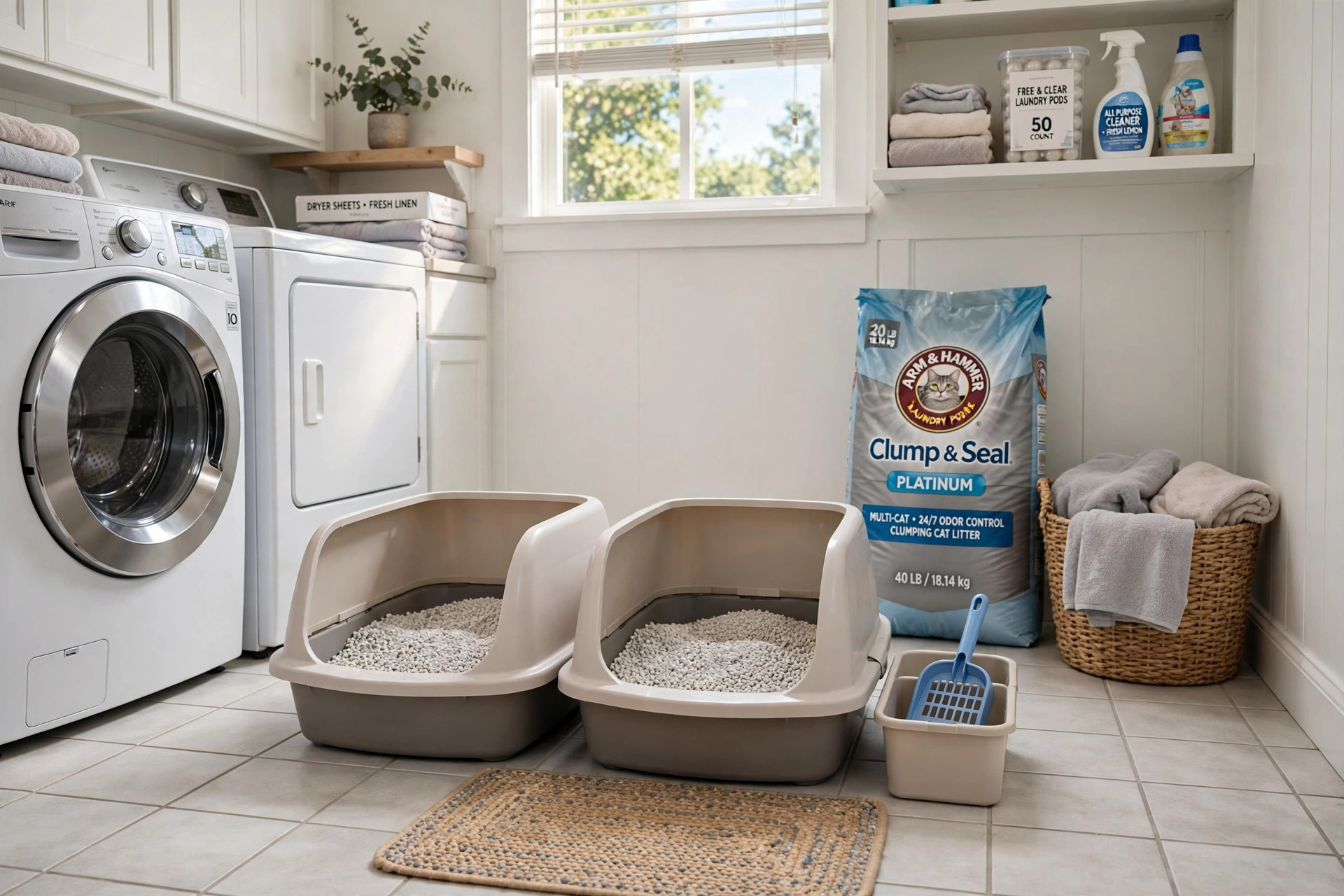
Use mats and lids with care. A mat under the box catches tracked grains. Covered boxes hold in smell but also hold in dust and heat, and some cats refuse them. In multi cat homes, open boxes with high sides often work best. They give cats room and let air move.
Watch the nose test. If the room smells of litter right after scooping, the litter is spent or the box needs washing. Do not wait for the smell to grow. Fresh litter is always cheaper than a ruined rug.
Safety for Cats and People
Litter safety gets little thought until something goes wrong. A few simple rules protect the whole home.
Keep litter away from toddlers and crawling babies. Litter is not food. Store bags closed and out of reach. Pregnant women should let someone else handle the box, or wear gloves and wash hands well after. Cat waste can carry a parasite that is a risk in pregnancy. This is standard medical advice, and animal welfare sources like Best Friends Animal Society repeat it in their care guides.
Choose dust free or low dust litter if anyone in the home has asthma or allergies. Pour litter slowly and close to the box to cut the dust cloud. Some owners wear a simple mask when refilling boxes. That small step keeps lungs clear.
Watch kittens with clumping clay. Very young kittens may eat litter, and clumping clay can cause blockage if swallowed in amount. Paper or plant based litter is safer for kittens under eight weeks. Once they pass that stage, clumping litter is fine.
Check paws and boxes for trouble. Litter stuck between toes can irritate. A cat that cries in the box or goes outside it may have a urinary problem, not a litter problem. See a vet promptly. Health guides from The Spruce Pets list the warning signs every owner should know.
Keep the laundry of litter duty simple. Wash the scoop weekly. Replace cracked boxes, since scratches in old plastic hold odor no washing can lift. A fresh box with fresh litter is the cleanest start a multi cat home can have.
FAQ
How many litter boxes do three cats need? Three cats do best with three or four boxes. Two boxes is the bare minimum. More boxes mean less load on each one, and that means less odor. Spread the boxes across the home so no single cat can guard them all.
How often should I scoop in a multi cat home? Scoop at least once a day, and twice a day is better. Solid waste should come out the same day it appears. A full change and box wash once a month keeps the plastic fresh. Heavy use homes may need a full change every three weeks.
Is clumping or non clumping litter better for odor control? Clumping litter is better for most multi cat homes. It lets the owner lift out urine daily, which removes the main source of smell. Non clumping litter traps odor only until it is full, and with several cats that happens fast.
Can I mix two types of litter? Yes, many owners mix a clumping clay with a plant based litter or add a thin layer of baking soda. Mix slowly over a week so cats accept the change. Test the mix in one box first before changing them all.
Why does the box still smell right after scooping? Old litter loses power as granules break down. If fresh scooping does not help, the litter is spent. Empty the box, wash it with mild soap, and refill with fresh litter. Also check whether the box itself is scratched and holding odor.
Should I buy a self cleaning litter box? Automatic boxes can help busy owners, and a self cleaning litter box for busy cat owners is worth a look. They rake waste into a sealed bin on a timer. They still need the bin emptied and the litter topped up. Some cats fear the noise, so introduce it with care.
A Final Word
The best cat litter for odor control multi cat homes is the one that clumps hard, holds smell, stays low in dust, and pleases the cats who use it. No single brand fits every home. Start with a quality clumping litter, scoop twice a day, keep enough boxes, and wash them monthly. Add a sturdy best cat tree for large cats sturdy tall nearby so the cats have their own space away from the litter corner. A fresh home with happy cats is worth the small daily effort.
References
American Veterinary Medical Association. (n.d.). Pet care resources. https://www.avma.org ASPCA. (n.d.). Pet care and animal welfare resources. https://www.aspca.org Best Friends Animal Society. (n.d.). Pet care and adoption resources. https://www.bestfriends.org Chewy. (n.d.). Pet supplies. https://www.chewy.com Petco. (n.d.). Pet supplies and services. https://www.petco.com PetMD. (n.d.). Pet health information. https://www.petmd.com PetSmart. (n.d.). Pet supplies and services. https://www.petsmart.com The Humane Society of the United States. (n.d.). Animal protection and care. https://www.humanesociety.org The Spruce Pets. (n.d.). Pet care guides and product reviews. https://www.thesprucepets.com
Was this guide helpful?

About Lisa Anderson
The My Garden US editorial team writes practical, in-depth home and garden guides for American homeowners — tested advice, no fluff.
You May Also Like

Best Orthopedic Dog Bed for Senior Large Dogs: A Complete Buyer’s Guide
May 30, 2026 0 views
Dog Food Puzzle Toys for Boredom Relief in the USA: A Full Guide
April 23, 2026 0 views
Dog Car Barrier for SUV Cargo Area Safety
July 26, 2026 0 views