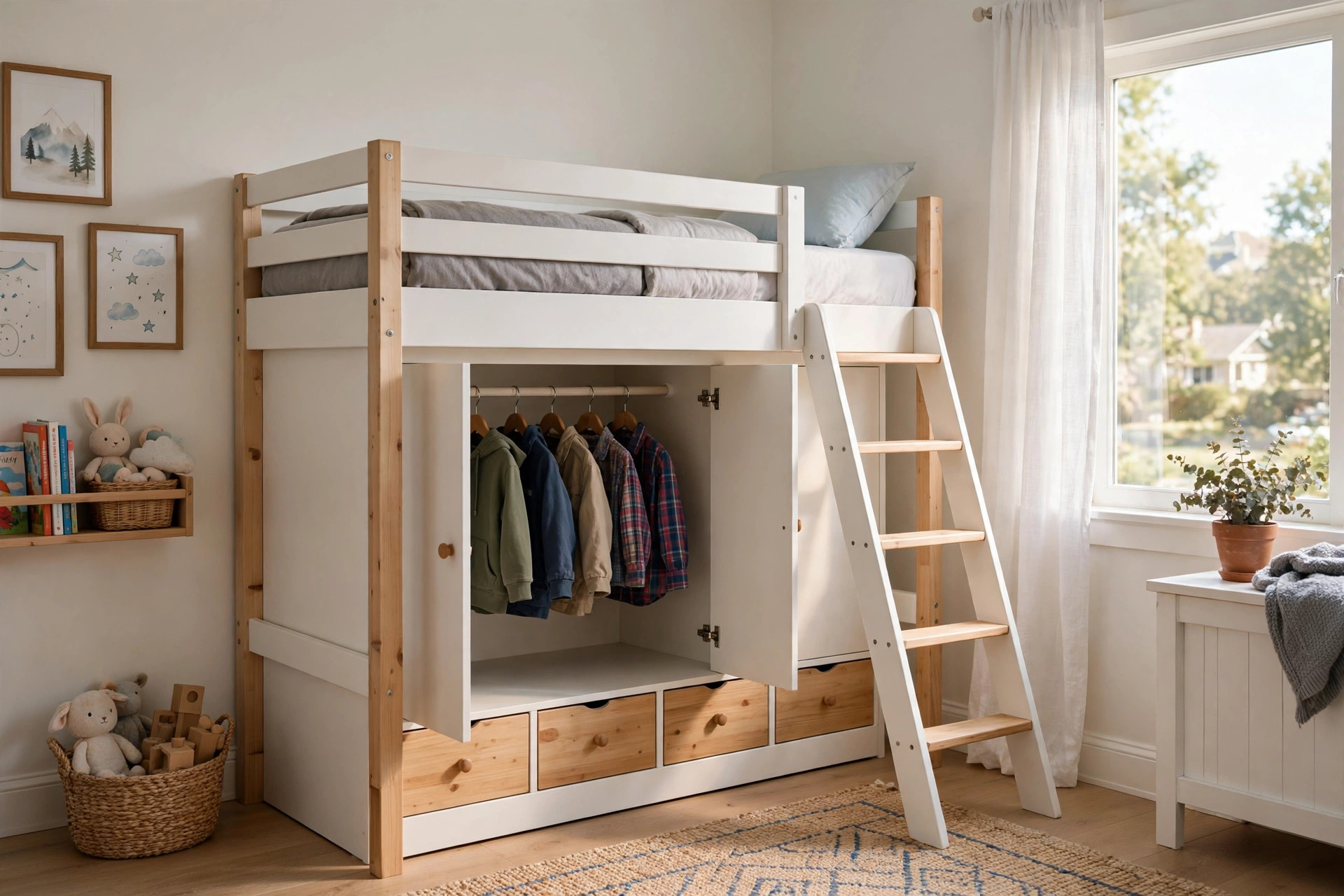

A kids loft bed with wardrobe for small room is one of the smartest answers to a common problem. Many families live with less space than they would like. A child needs a bed, a place for clothes, and room to play. In a small room, fitting all three can feel hard. A loft bed with a wardrobe built under it puts the sleep space up high and uses the floor below for storage. One piece of furniture does the work of two.
This guide walks you through everything you need to know before you buy. You will learn why these beds matter, how to choose the right one, the main types, the cost, how to keep it in good shape, and the safety rules to follow. You will also find answers to the questions parents ask most.
Why a Loft Bed with a Wardrobe Matters
A small room forces hard choices. Put a regular twin bed in the middle, add a dresser, and there may be no space left for a play area or a desk. A loft bed changes that. The mattress sits on a raised frame, often five or six feet off the floor. The space under the bed, which is usually wasted, becomes a full wardrobe with hanging rods, shelves, and drawers.
The gains are real. You free up several square feet of floor. The room feels larger. Your child gets a proper place to hang clothes instead of piling them on a chair. The bed can make a small room feel like a larger one, which matters when a child shares a room or the house is short on bedrooms.
Children often love the idea as well. Climbing up to sleep feels like a small adventure. The area under the bed can feel like a private nook. When the wardrobe has doors or curtains, it also teaches a child to keep clothes put away, since the storage is right there and easy to reach.
There is also a money angle. Buying one combined piece can cost less than buying a bed and a separate wardrobe. It also saves you from buying a larger home, which is no small thing. For apartment dwellers and owners of older homes with small bedrooms, it is a practical fix.
How to Choose the Right One: Kids Loft Bed with Wardrobe for Small Room
Measure First
Start with the tape measure, not the catalog. Measure the floor space where the bed will go. Measure the ceiling height. Most loft beds need at least eight feet of ceiling so a child can sit up on the mattress without hitting the head. The CPSC, the federal safety agency, has guidance on safe bunk and loft bed use that you should read before you buy (https://www.cpsc.gov).
Also measure doorways and stairwells. These frames ship in flat boxes, but some parts are long. Make sure you can carry them to the room.
Check the Size of the Wardrobe
Not all built-in wardrobes are equal. Some have a single hanging rod and one shelf. Others have double rods, several drawers, and open cubbies. Open the product specs and read the inside measurements. Will a full-size school uniform or winter coat fit? Can your child reach the rod? A wardrobe is only useful if the child can use it alone.
Look at the Frame Material
Solid wood frames are the strongest and last the longest. They cost more but hold up to years of climbing. Metal frames are lighter and cheaper. They can be strong too, but check the weight limit. A good loft bed should hold at least 200 pounds, mattress and sleeper included. Cheaper models with thin posts may wobble, so read reviews about sturdiness.
Think About the Ladder
The ladder is the most-used part of the bed. Wide, flat rungs are kinder to bare feet than thin round bars. Some beds place the ladder at the end; others put it on the long side. End ladders take up less room. Angled ladders are easier to climb. Built-in stairs are the safest option for younger children, though they need more floor space. If you compare, also look at a best bunk bed with stairs for kids room to see how stair designs work.
Types of Loft Beds with Wardrobes
The Classic Single Loft
The classic design is a twin bed up top with a wardrobe under one end or along the whole long side. The other space under the bed may hold a small desk or open shelves. This is the most common style and the easiest to find in stores like IKEA (https://www.ikea.com).
L-Shaped Corner Units
Some models turn the corner. The bed runs along one wall and the wardrobe along the other. This uses a corner well and can fit rooms with odd shapes. It also creates a cozy alcove under the bed.
Wardrobe and Desk Combos
These add a small desk beside the wardrobe under the bed. They suit school-age children who need a homework spot. If the desk matters more to you than the wardrobe, a kids loft bed with desk underneath for teens may be a better match.
Low Lofts for Younger Children
A low loft sits about four feet high instead of five or six. The fall risk is lower, which suits children aged six to eight. The wardrobe under a low loft is shorter, so it works best for folded clothes and small drawers rather than long hanging items.
Full-Size Lofts
Some lines offer full-size mattresses on top. These suit older children and teens who want more sleeping room. They need more floor space, so check that your small room can still fit one.
Cost and Price
Prices vary widely. A basic metal-frame twin loft with a simple wardrobe starts around 250 to 400 dollars. Mid-range solid pine models with drawers and double rods run 500 to 900 dollars. High-end hardwood units with full closet systems can pass 1,200 dollars. Retailers such as Wayfair carry a wide range (https://www.wayfair.com), and Target often stocks budget-friendly options (https://www.target.com).
A few things drive the price up. Solid hardwood costs more than pine or engineered wood. More drawers and better hardware cost more. Built-in lighting and curtains add to the bill. Shipping for heavy flat-pack boxes can add 50 to 150 dollars, though many stores offer free delivery.
Do not forget the mattress. A loft bed needs a mattress no thicker than about six inches, or the guardrails sit too low. Budget 150 to 300 dollars for a good bunk mattress. Also count bedding, since you will want sheets that fit.
Used beds can save money. Check local listings and resale shops. Inspect used frames for cracked wood, bent metal, and missing hardware before you pay. A bed that wobbles is not a bargain.
Setting It Up
Assembly takes time. Set aside two to three hours and ask another adult to help. Most frames need two people to hold the long rails while the bolts go in. Read the whole manual first. Lay out the parts and count the screws before you start.
Put the bed in its final spot before you finish building. A full loft frame is hard to move through a doorway. If the room has a ceiling fan, make sure the top of the bed sits well clear of the blades.
Anchor the frame to the wall. Most makers include anti-tip straps or brackets. Use them. A tall frame can tip if a child climbs the wrong way, and anchoring takes ten minutes. This is one of the simplest safety steps you can take.
Once built, check every bolt again after the first week. New wood and new metal settle, and bolts loosen. Then check them once a season.
Care and Upkeep
A kids loft bed with wardrobe for small room sees heavy daily use. A little care keeps it safe and looking good for years.
Dust the wardrobe weekly and wipe spills right away. Wood swells when it stays wet. For painted frames, a damp cloth is enough. Avoid harsh cleaners that strip the finish.
Tighten all bolts every three months. Children climb, jump, and lean on rails, and hardware loosens over time. Keep the hex key that came with the bed in a drawer nearby so the job takes five minutes.
Check the ladder rungs for wear. Wooden rungs can develop cracks. Metal rungs can loosen at the welds. Replace or repair any part that moves or creaks before it fails.
Keep the wardrobe organized. A stuffed closet strains rods and hinges. Teach your child the one-in-one-out rule: when new clothes come in, old ones go out. If you need more ideas for small-space storage, a nursery dresser changing table combo for small space shows how one piece can do two jobs.
Safety Rules
Loft beds are safe when used right. Most injuries come from falls and from children using the bed in ways it was not built for.
The top bunk is for children aged six and up. This is the standard advice from pediatric health experts (https://www.healthychildren.org). Children under six should not sleep up top, even with guardrails.
Guardrails must run along both sides of the bed, with gaps no wider than three and a half inches. The top of the rail should sit at least five inches above the mattress. If the mattress is too thick, the rails are too short. Stick to the mattress thickness the maker lists.
One sleeper at a time on top. No jumping, no rough play on the bed. No hanging belts, scarves, or jump ropes from the rails. Anything that loops around a neck is a strangling hazard. The Spruce has a clear guide to safe kids furniture choices (https://www.thespruce.com), and Pottery Barn Kids designs many models with these rules in mind (https://www.potterybarnkids.com).
Keep the area around the bed clear. Do not place the loft near a window a child could fall from, or under a ceiling fan. Make sure the ladder is the only way up. If your child keeps climbing the wardrobe doors, move the bed or change the habit. What to Expect covers common nursery and kids room safety questions for new parents (https://www.whattoexpect.com).
Nightlights help. A small light near the ladder makes night trips to the bathroom safer. Battery lights are cheap and easy to mount.
Frequently Asked Questions
What age is right for a loft bed?
Most makers and safety groups say six years and older for the top. Maturity matters as much as age. A calm eight-year-old is safer up top than a restless ten-year-old who jumps on furniture. For children under six, use a low bed instead.
How much weight can these beds hold?
Most twin loft frames hold 200 to 250 pounds, including the mattress and the sleeper. Solid wood models often hold more. Always check the maker specs and stay under the limit. An adult should not sleep up top on a child-rated frame.
Will it fit under an eight-foot ceiling?
Usually yes. A standard loft is about 72 inches tall. With an eight-foot ceiling (96 inches), a child on a six-inch mattress has about 18 inches of sitting room. That is tight for a tall teen but fine for most children. Measure your exact ceiling first.
Can I move the wardrobe to the other side?
Some models let you build the wardrobe on the left or the right. Others are fixed. Check the manual before you buy. If you move mid-build, you may need to take the whole frame apart.
Do I need a special mattress?
You need a bunk or loft mattress, usually no thicker than six inches. Thicker mattresses raise the sleeper above the guardrails, which breaks the safety rules. Foam and innerspring both work as long as the size matches the frame.
How do I keep the wardrobe from getting messy?
Give every item a set spot. Use bins for small clothes and dividers for drawers. Do a five-minute tidy each night. Children keep order better when the system is simple. Fewer items means less mess, so keep the wardrobe lean.
A Short Final Word
A kids loft bed with wardrobe for small room is a practical answer to a small-space problem. It lifts the bed, frees the floor, and gives clothes a real home. Choose solid construction, measure your room with care, and follow the safety rules. The Family Handyman site offers solid assembly tips for flat-pack furniture (https://www.familyhandyman.com), and HGTV has plenty of small-room layout ideas (https://www.hgtv.com). With the right pick and a little upkeep, this one piece of furniture can serve your child well for many years.
For more background, see Target.
References
American Academy of Pediatrics. (n.d.). HealthyChildren.org. https://www.healthychildren.org IKEA. (n.d.). Home furnishings. https://www.ikea.com Pottery Barn Kids. (n.d.). Kids furniture and decor. https://www.potterybarnkids.com Target. (n.d.). Retail store. https://www.target.com The Spruce. (n.d.). Home and garden advice. https://www.thespruce.com U.S. Consumer Product Safety Commission. (n.d.). Product safety information. https://www.cpsc.gov Wayfair. (n.d.). Furniture and home goods. https://www.wayfair.com What to Expect. (n.d.). Pregnancy and parenting guidance. https://www.whattoexpect.com
Was this guide helpful?

About Emily Rodriguez
The My Garden US editorial team writes practical, in-depth home and garden guides for American homeowners — tested advice, no fluff.
You May Also Like
Best Kids Storage Bench for Entryway Mudroom: A Practical Buying Guide
August 21, 2026 0 views
Nursery Glider with Nursing Pillow Set: Comfort for New Parents
June 20, 2026 0 views
Nursery Wall Art for Twin Babies Room: A Complete Guide for Parents
February 17, 2026 0 views