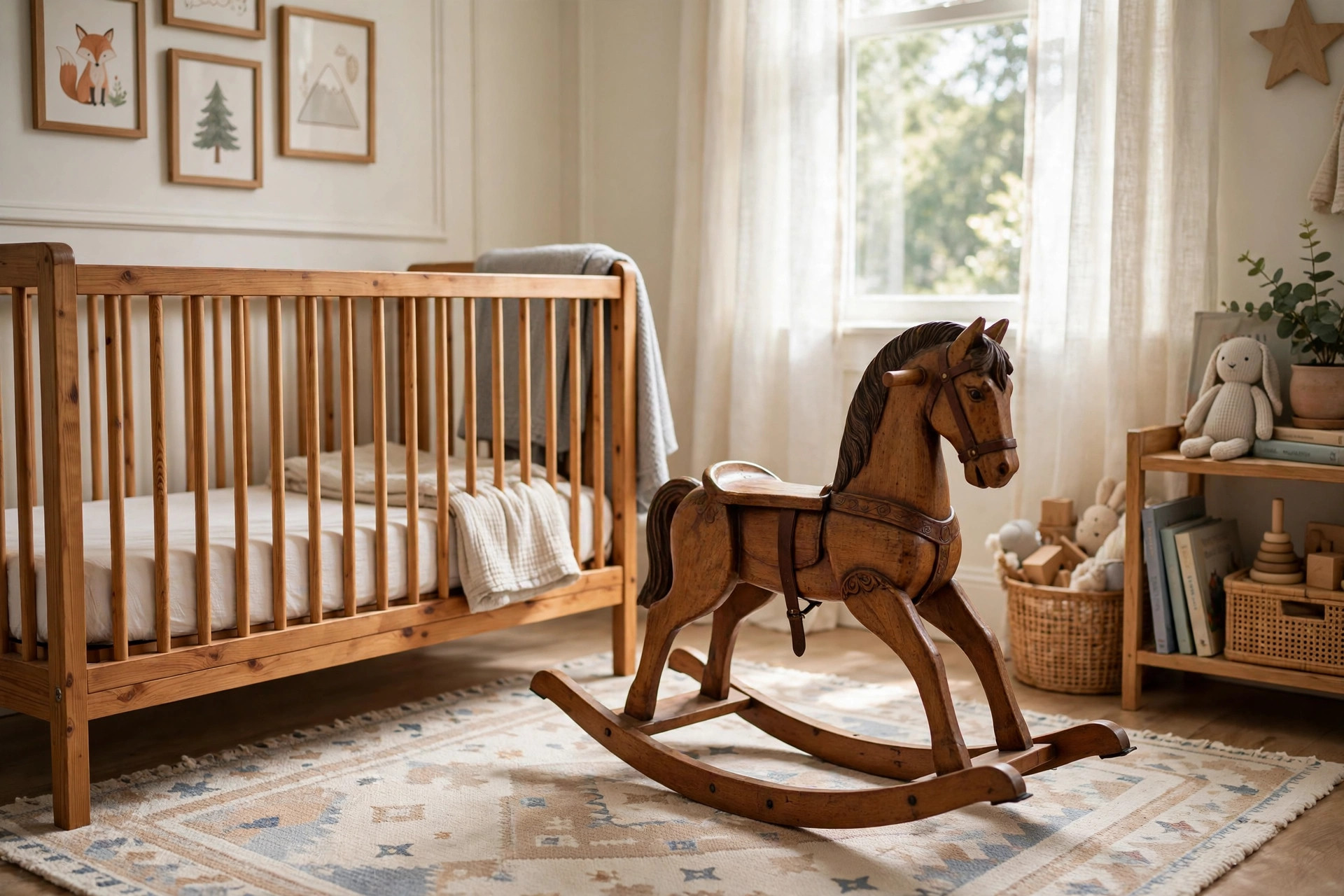

A nursery rocking horse for toddler playroom use is one of those rare toys that feels both timeless and useful. Grandparents remember rocking horses from their own childhood. Parents buy them for birthday parties and first Christmases. Toddlers, once they learn to climb on, rock back and forth with a joy that is hard to miss. A good one can last for years, move from the nursery to the playroom, and then serve a younger brother or sister. A poor one, by contrast, tips over, squeaks, peels, or ends up ignored in a corner. This guide walks through what matters when you shop, so the horse you bring home is the one your child will love.
Why a Rocking Horse Matters in the Playroom
A nursery rocking horse for toddler playroom corners does more than fill a space. It gives a small child a first taste of independent play. At an age when most toys need an adult to turn them on or explain the rules, a rocking horse needs nothing. The child climbs on, pushes with the feet, and the horse rocks. The motion is gentle and steady. It builds balance and leg strength without any lesson or lecture.
Child development experts have long noted that rocking motion calms young children. Pediatric sources such as HealthChildren.org describe the soothing effect of rhythmic motion on infants and toddlers. A rocking horse extends that comfort into the play years. Many parents report that their toddlers reach for the rocking horse when they are restless or need a quiet moment.
It also sparks pretend play. A horse is an animal with a clear story. The child rides off to places only she can see. This kind of open-ended play, where the toy does not dictate what happens, is the kind child psychologists recommend most. A rocking horse has no batteries, no sounds, and no screens. It asks only for imagination.
Finally, a well-made rocking horse is furniture as much as a toy. In a nursery or a playroom, it adds warmth. Many parents choose a style that matches the room, much as they would a toddler table and chair set for playroom or a kids teepee tent for indoor playroom decor.
How to Choose the Right One: Nursery Rocking Horse for Toddler Playroom
Start with the age and size of your child. Most rocking horses are made for toddlers between one and three years old. Some larger models suit children up to five. Check the weight limit on the box or the listing. A small horse will be outgrown quickly. A large horse will be hard for a young toddler to climb onto.
Look at the seat height. Your child should be able to get on and off with ease, or with just a small step. Feet should reach the footrests or the floor when seated. If the child must stretch or jump to mount the horse, the ride will feel unsafe, and the child will stop using it.
Handlebars matter too. A good nursery rocking horse for toddler playroom use has grips that are easy to hold and fixed firmly in place. Handles that turn or slide out are a sign of weak construction. The same goes for the tail and the mane. Everything attached to the horse should be fixed so it cannot pull off in small pieces.
Check the base. Traditional bow rockers have curved wooden rails. These rock smoothly but can tip if the child leans far back or forward. Modern spring rockers sit on a frame with springs. They are steadier but give a different ride. Some models have a wide base with stoppers that limit how far the horse can rock. For a young toddler, a wider base is safer.
Finish and materials deserve a close look. Wood is the classic choice. Hardwood models last longer and look better with age. Softwood and plywood cost less. Some horses are made of plastic or padded fabric over a frame. Whatever you choose, the finish should be smooth, with no splinters, sharp edges, or peeling paint. If you plan to place the horse in a decorated room, retailers such as Pottery Barn Kids and IKEA offer styles that blend with nursery furniture.
Types and Options
Classic Wooden Bow Rockers
The wooden bow rocker is the oldest design. Two curved rails sit on the floor, and the horse body mounts on top. These are simple, strong, and quiet. Many are handmade or styled to look handmade. They suit parents who want a keepsake piece. The main drawback is that the rocking arc is limited only by the rails, so active children can rock hard enough to tip.
Spring Rockers
Spring-mounted horses sit on a metal or wooden frame, with springs between the frame and the body. The ride is bouncy rather than smooth. Children often find spring horses more exciting. The frame keeps the horse from tipping, which parents like. The springs are covered on good models. Open springs can pinch small fingers, so check for guards.
Plush and Upholstered Rockers
These horses have soft bodies, often with a furry coat, over a rocking base. They look like stuffed animals and appeal to younger toddlers. Many come with sound boxes that play hoofbeats or whinnies. The soft body is gentle if the child falls against it. The drawback is that plush coats collect dust and are hard to clean. Some parents remove the sound box if it becomes annoying.
Ride-On Rockers With Wheels or Handles
A few designs combine rocking with other features. Some have wheels so the horse can roll across the room as well as rock. Others have push handles on the back so a parent can push the child along. These are versatile but tend to be heavier and bulkier.
Size Ranges
Small horses suit rooms with limited space and children under two. Standard horses fit most toddlers. Large horses serve older preschoolers. If you are decorating a small nursery, a best rocking chair for nursery small spaces may be a better adult seating choice, while a compact horse serves the child.
For ideas on how rocking horses fit into a full room design, parenting sites such as What to Expect and The Spruce publish nursery and playroom tours with product lists.
Cost and Price
Prices vary widely. A basic plastic or small wooden rocker can cost as little as thirty dollars. Mid-range wooden models, the kind sold at large retailers such as Wayfair, Target, and Walmart, usually run between sixty and one hundred fifty dollars. Handmade hardwood horses, or designer models from specialty shops, can cost two hundred dollars or more.
What do you get for the higher price? Usually better wood, safer finishes, stronger joints, and nicer detail. A cheap horse may wobble or lose paint within months. An expensive one may last through several children and still look fine.
Secondhand horses are common and can be a good value. Many parents sell rocking horses once their children outgrow them. If you buy used, inspect the horse carefully. Check the joints, the rockers, and the finish. Make sure no parts are missing or broken. Sand down rough spots and touch up paint if needed. A used hardwood horse is often better than a new cheap one.
Budget for extras too. A small rug under the horse protects the floor from the rockers and softens falls. A step stool helps younger toddlers mount a taller horse.
Care and Upkeep
Wooden rocking horses are easy to care for. Wipe the wood with a damp cloth to remove dust. Dry it at once so water does not soak in. Once a year, check all screws and bolts. Tighten anything that has loosened. If the finish is worn, a light sanding and a coat of child-safe varnish will renew it.
Plush horses need more attention. Vacuum the coat with a brush attachment to remove dust. Spot clean stains with a damp cloth and mild soap. Do not soak a plush horse unless the label says it is safe. Keep it away from pets if possible, since fur attracts pet hair quickly.
Whatever the material, keep the horse out of direct sun for long periods. Sun fades paint and dries out wood. If the horse lives in a bright playroom, turn it now and then so one side does not fade more than the other.
Store the horse indoors. Wood warps and plastic cracks in heat and damp. If you must store it in a garage or shed, wrap it in a sheet and keep it off the floor.
Safety
Safety is the most important part of choosing a nursery rocking horse for toddler playroom use. The United States Consumer Product Safety Commission, at CPSC.gov, tracks toy recalls and publishes safety standards. Before you buy, check whether the model has been recalled.
Follow these safety rules:
– Choose a horse rated for your child’s age and weight. – Place the horse on a soft surface, such as a rug or foam mat, away from hard floors and sharp corners. – Make sure the horse cannot rock into walls, furniture, or stairs. – Teach your child to sit facing forward, holding the handles. – Do not let children stand on the seat or rock sideways. – Inspect the horse often for loose parts, cracks, and peeling paint.
Young toddlers should be watched while they ride. Even a sturdy horse can tip if a child leans far to one side. As children grow and learn balance, they need less watching, but the play area should stay clear.
Toy maker Fisher-Price and similar brands publish age guidelines on their packaging. Follow them. A horse made for ages three to five may be too tall or too stiff for a one-year-old.
Paint safety matters too. Older or handmade horses may carry lead paint. If you buy a vintage rocker, test the paint for lead before letting a child use it. New horses sold in the United States must meet current paint standards, but imported or secondhand items may not.
Frequently Asked Questions
What age is right for a rocking horse?
Most children enjoy a rocking horse between the ages of one and three. Some are ready as early as nine months if they can sit up well, though they will need help and watching. Larger models suit children up to age five. Check the maker’s age and weight limits before you buy.
Is a rocking horse safe for a one-year-old?
A small, stable rocking horse can be safe for a one-year-old with an adult nearby. Choose a model with a wide base and low seat. Place it on a soft rug. Watch the child at all times. Do not buy a tall or fast-rocking model for a very young toddler.
Wooden or plush: which is better?
Wooden horses last longer and are easier to clean. Plush horses are softer and may appeal more to younger toddlers. Many families start with a plush horse for a baby and move to a wooden one as the child grows. There is no single right answer. Choose what fits your child’s age and your home.
How much space does a rocking horse need?
Allow about three feet by four feet of clear floor space around the horse. The child needs room to mount, rock, and fall safely. A rug under the horse should extend at least a foot beyond the rockers on all sides.
Can a rocking horse go outside?
Most rocking horses are made for indoor use. Rain, sun, and damp ground will damage wood and fabric quickly. If you want an outdoor rocker, look for models made of treated materials, and bring them inside when not in use.
How do I clean a wooden rocking horse?
Wipe it with a slightly damp cloth and dry it at once. For sticky spots, use a cloth with a little mild soap, then wipe clean with water. Do not soak the wood. Touch up worn finish with child-safe paint or varnish.
A Short Final Word
A nursery rocking horse for toddler playroom is a simple toy with a long life. It teaches balance, calms restless afternoons, and feeds the imagination. Choose one that fits your child’s size, check it for safety, and place it where it will be used. A good rocking horse will rock through the toddler years and still stand ready for the next child. That is a rare thing in a world of toys that break or bore within weeks.
References
American Academy of Pediatrics. (n.d.). HealthyChildren.org. https://www.healthychildren.org Fisher-Price. (n.d.). Toys for babies and children. https://www.fisher-price.com IKEA. (n.d.). Home furnishings. https://www.ikea.com Pottery Barn Kids. (n.d.). Kids furniture and decor. https://www.potterybarnkids.com Target. (n.d.). Retail store. https://www.target.com The Spruce. (n.d.). Home and garden advice. https://www.thespruce.com U.S. Consumer Product Safety Commission. (n.d.). Product safety information. https://www.cpsc.gov Walmart. (n.d.). Everyday low prices. https://www.walmart.com Wayfair. (n.d.). Furniture and home goods. https://www.wayfair.com What to Expect. (n.d.). Pregnancy and parenting guidance. https://www.whattoexpect.com
Was this guide helpful?

About Emily Rodriguez
The My Garden US editorial team writes practical, in-depth home and garden guides for American homeowners — tested advice, no fluff.
You May Also Like

The Best Rocking Chair for Nursery Small Spaces: A Parent’s Guide
June 17, 2026 0 views
Best Nursery Rug for Tummy Time Play: A Complete Guide
September 17, 2026 0 views
Kids Play Tent with Tunnel for Indoor Fun
April 16, 2026 0 views