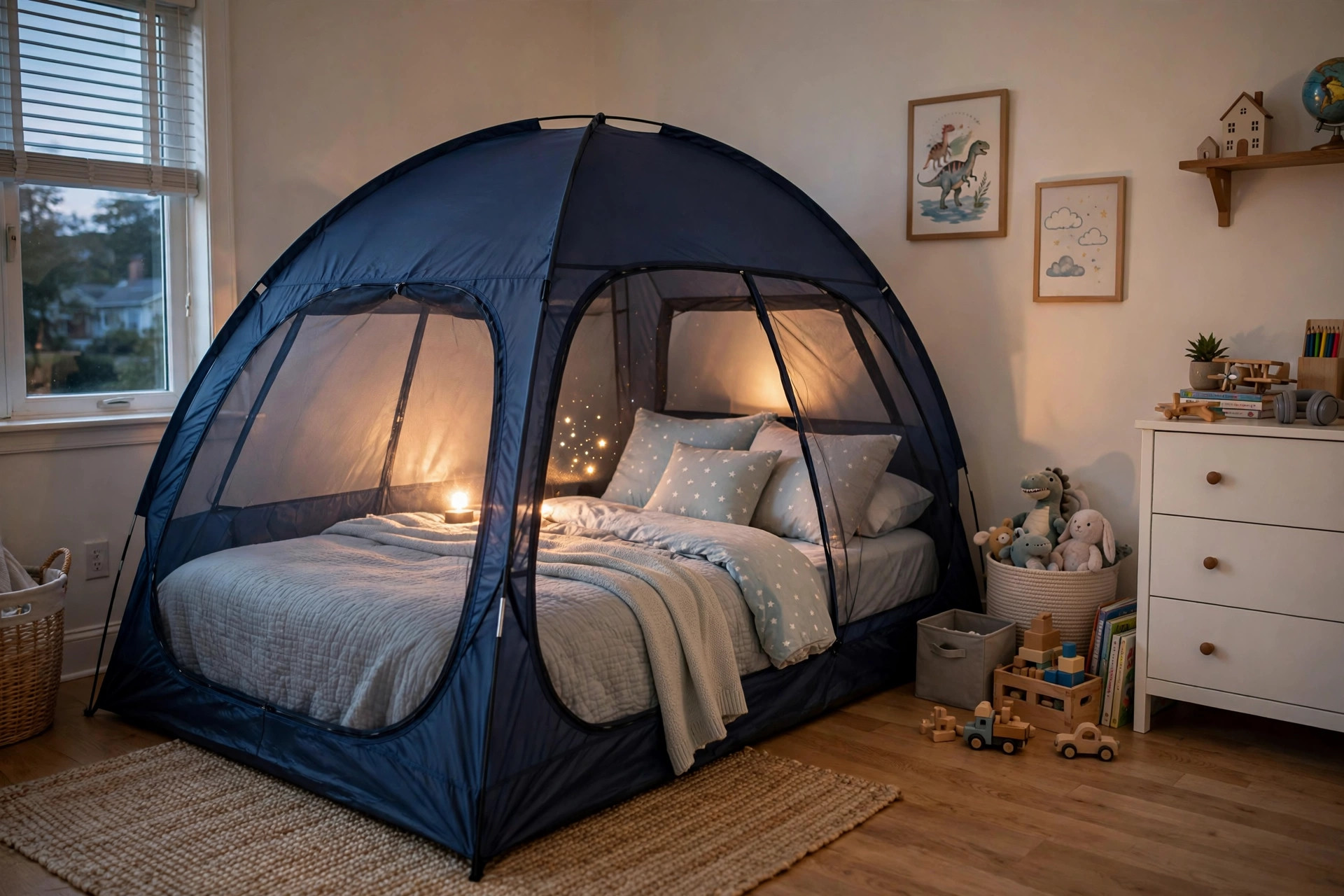

Many parents search for the best kids bed tent for a cozy sleep space when their child struggles to fall asleep. A bed tent is a small tent that fits over a bed. It creates a little room inside the bedroom. For a child, this small space feels safe. It feels like a fort. It feels like a place that belongs to them alone.
A bed tent is not a camping tent. It is made for indoor use. It usually fits a twin bed. Most have mesh windows and a zipper door. Many come in fun shapes, like a castle or a rocket.
Parents buy them for one main reason. Children often sleep better in a small, dark, quiet space. A bed tent gives the child a sense of shelter. That sense can calm a restless mind. It can turn bedtime from a fight into a habit. This guide explains what to look for, what types exist, what they cost, and how to keep one safe and clean.
Why a Bed Tent Matters
Sleep is one of the most important parts of a child’s health. Yet many children do not get enough. The room is too bright. The house is too loud. The bed feels too big and open.
A bed tent changes the feel of the bed. It blocks light. It softens noise. It makes the sleep area smaller and easier to rest in. Some children who fear the dark feel calmer inside a tent. The walls are close. The space is their own. This can lower the worry that keeps them awake.
A bed tent can also help with routine. A child who has a tent often looks forward to bedtime. The tent becomes part of the ritual. The steps repeat each night. The body learns the pattern. Sleep comes faster.
There is another benefit. A bed tent can make a shared room feel private. In homes where two children share a room, each child can have a tent.
What to Look for When You Choose: Best Kids Bed Tent for Cozy Sleep Space
Choosing the best kids bed tent for a cozy sleep space means looking at several details. Size comes first. Measure the bed before you buy. Most tents fit a standard twin mattress. A tent that is too small will not close. A tent that is too large will sag and fold.
Air flow comes next. A tent that traps heat will make a child sweat. Look for mesh panels on at least two sides. Mesh lets air move. It also lets a parent see inside. If your home runs warm, air flow matters more than any other feature.
The door design matters too. Most tents have a door that zips open. Some have a door on each side. Two doors are better for a bed against a wall. Some doors roll up and tie back. This keeps the tent open during the day for play.
Check how the tent attaches to the bed. Some tents slide over the mattress like a fitted sheet. These are simple and stay in place. Others use straps that hook under the frame. Straps work on bunk beds and loft beds.
Fabric weight affects both feel and cleaning. Light polyester is common. It is easy to wipe clean. It dries fast. Heavier canvas feels sturdier but is harder to wash.
Darkness is a key feature for sleep. Some tents are made to block light. These are called blackout or sleep tents. They help in rooms with street lights or early sun. A tent meant for sleep should be dark inside.
Types of Kids Bed Tents
Pop-Up Dome Tents
The pop-up dome is the most common type. It springs open on its own. It fits over a twin mattress. It usually has one or two doors and mesh windows. Pop-up tents are light and easy to move. They are often the cheapest option. The frame is a thin wire that folds flat for storage.
Blackout Sleep Tents
A blackout sleep tent is built for one job: dark, calm sleep. The fabric blocks most light. The inside stays dim even in a bright room. These tents often cost more. The trade-off is air flow. Dark fabric can run warm. Look for models with good mesh vents.
Themed Tents
Themed tents look like a castle, a pirate ship, or a rocket. Children love them. They turn the bed into a stage for play. The downside is that bright colors and pictures may not help sleep. For pure sleep, a plain tent is often better.
Bunk and Loft Bed Tents
These tents are made for bunk beds and loft beds. They hang from the frame or strap to the rails. They turn the top bunk into a private cabin. Measure the bunk carefully. Bunk rails and ladders vary. A tent that fits one bunk may not fit another.
Canopy-Style Tents
A canopy tent drapes from above. It often hangs from the ceiling or a frame. It does not enclose the bed fully. It gives a soft, airy feel. Canopies look lovely in a nursery or a young child’s room. They do not block light or sound. They are more about style than about deep sleep.
Cost and Price
Bed tents cover a wide price range. A simple pop-up tent for a twin bed often costs between twenty and forty dollars. These basic models work well for many families. They last a year or two with daily use.
Mid-range tents cost between forty and eighty dollars. These often have better zippers, stronger poles, and nicer fabric. Some include blackout panels or two doors. The stitching tends to hold up better.
Premium tents cost eighty dollars or more. At this level you find true blackout sleep tents with strong frames. A higher price does not always mean better sleep. Read the details before you pay more.
Think about how long the tent will be used. A tent for a three-year-old may be outgrown by age seven. Spending less on a tent that will be replaced soon can make sense. For a child who will use it for years, a sturdier tent is worth the cost.
Sales happen often. Late summer and the weeks after the winter holidays bring low prices on children’s room goods. Retailers such as IKEA and Wayfair run seasonal sales on kids room items.
Setting Up the Tent
Setup is usually simple. Most pop-up tents open in seconds. Lay the tent flat on the bed. Let the frame spring open. Pull the fabric down over the mattress corners. Fasten any straps under the bed. Zip the doors shut to check the fit.
For strap-style tents, hook the straps under the frame or around the rails. Pull each strap snug. The tent should not slide when the child climbs in.
Keep the tent away from windows with strong sun if the fabric is thin. Sun can heat the inside fast. Keep the tent away from heaters and radiators. Fabric and heat do not mix well.
Let the child help with setup. A child who helped build the tent feels ownership. That ownership can make bedtime smoother.
Air out a new tent before the first night. New fabric can have a strong smell. Open the doors and windows. Let it sit for a day.
Care and Upkeep
A bed tent gets dirty fast. Children bring snacks, drinks, and dusty toys inside. Plan to clean it often. Most tents can be wiped with a damp cloth. Use mild soap and warm water. Avoid harsh cleaners. They can break down the fabric coating.
For deeper cleaning, check the label. Some tents can be hand washed in a tub. Few can go in a washing machine. The wire frame can bend or break in a washer. Air dry only. Heat from a dryer can warp the frame.
Vacuum the inside once a week. Crumbs and dust collect in the corners. Shake out the tent outside once a month.
Check the zippers often. Zippers take the most wear. If a zipper sticks, rub a dry bar of soap along the teeth. Do not force a stuck zipper.
Look at the frame every few months. Pop-up frames are thin wire. They can bend if the tent is folded wrong.
Replace a tent when it wears out. Torn mesh, broken poles, and ripped seams mean it is time for a new one.
Safety First
Safety is the most important part of this guide. A bed tent is safe when it is used the right way. Follow these rules.
Age matters. Most makers say bed tents are for children aged three and up. They are not for babies or toddlers in cribs. Small children can get tangled in fabric. They can struggle with zippers. Wait until the child is old enough to get in and out alone.
Air flow is a safety issue, not just a comfort issue. Never use a tent with all vents closed. The child needs fresh air all night. If the tent feels hot inside, open a window panel.
Keep the tent away from cords. Window blind cords, lamp cords, and charger cables do not belong near a child’s sleep space. The CPSC warns that cords near beds are a strangulation risk. Move lamps and chargers away from the tent.
Check for small parts. Buttons, clips, and decorative pieces can come loose. A young child may put them in the mouth. Pick a tent with few extras. Remove any loose decoration before use.
Fire safety counts too. Keep the tent away from heaters, candles, and fireplaces. Most tent fabric is not fireproof.
Let the child practice during the day. Show them how to open the zipper from inside. Make sure they can get out fast. A child who panics in the dark needs an exit they know by touch. Practice until it is easy.
Making the Sleep Space Extra Cozy
The tent is the start. A few small touches can make the inside truly cozy. A soft night light helps a child who fears the dark. Choose one with a warm glow and a timer. A kids night light with remote control lets a parent dim the light without entering the tent.
Bedding matters inside a tent. A fitted sheet and a light blanket are enough. Heavy quilts can make the small space too warm.
Keep the inside simple. One or two stuffed animals are plenty. Too many toys turn the sleep space into a play space. The tent should signal sleep, not play.
A bedtime routine ties it all together. The same steps each night tell the body that sleep is near.
For the rest of the room, soft storage helps. A kids toy box with lid for the living room can hold daytime toys, while the bedroom stays calm.
Where to Shop and Learn More
Many stores sell kids bed tents. Large retailers carry a wide range. Target and Amazon stock many models with parent reviews.
Specialty kids stores offer more choice. Pottery Barn Kids sells themed tents that match their bedding lines.
For general kids room ideas, The Spruce publishes guides on children’s bedrooms and sleep. What to Expect covers sleep habits by age. Both can help you match the tent to your child’s stage.
If you are setting up a full nursery or big-kid room, related pieces matter too. A nursery glider with nursing pillow set supports the parent during late-night wake-ups in the early years.
Frequently Asked Questions
What age is best for a kids bed tent?
Most makers suggest age three and up. The child should be able to get in and out alone. They should be able to open the zipper from inside. For babies and young toddlers, a bare crib is still the safest sleep space.
Will a bed tent make my child too hot?
It can, if the tent has poor air flow. Choose a tent with mesh panels on at least two sides. Keep the room at a comfortable temperature. Use light bedding inside the tent. On warm nights, leave a door panel open.
Can a bed tent fit a bunk bed?
Some can. Look for tents made for bunk or loft beds. These strap to the frame instead of sliding over a mattress. Measure the bunk before you buy.
How do I wash a kids bed tent?
Start with a damp cloth and mild soap for spots. For a full wash, check the label. Most tents should be hand washed and air dried. Machine washing can bend the wire frame. Never put a tent in the dryer.
Do bed tents help children who fear the dark?
For many children, yes. The small space feels like a shelter. It feels private and safe. A soft night light inside the tent adds comfort. If the fear is strong, talk with the child’s doctor.
How long does a bed tent last?
A well-made tent used each night lasts one to three years. Zippers wear out first. Frames bend with rough folding. Many children stop using the tent around age seven or eight. Buying a mid-range tent often gives the best value for this span.
A Short Final Word
The best kids bed tent for a cozy sleep space is the one that fits your bed, breathes well, and feels safe to your child. You do not need the most costly model. You need the right size, good air flow, and a door your child can open alone. Keep it clean. Check it often. Pair it with a calm bedtime routine.
A tent cannot fix every sleep problem. But for many families, it turns bedtime into something the child wants. A small dark fort. A private world. A place where sleep comes easy.
References
Amazon. (n.d.). Online shopping. https://www.amazon.com IKEA. (n.d.). Home furnishings. https://www.ikea.com Pottery Barn Kids. (n.d.). Kids furniture and decor. https://www.potterybarnkids.com Target. (n.d.). Retail store. https://www.target.com The Spruce. (n.d.). Home and garden advice. https://www.thespruce.com U.S. Consumer Product Safety Commission. (n.d.). Product safety information. https://www.cpsc.gov Wayfair. (n.d.). Furniture and home goods. https://www.wayfair.com What to Expect. (n.d.). Pregnancy and parenting guidance. https://www.whattoexpect.com
Was this guide helpful?

About Jennifer Lee
The My Garden US editorial team writes practical, in-depth home and garden guides for American homeowners — tested advice, no fluff.
You May Also Like
The Best Rocking Chair for Nursery Small Spaces: A Parent’s Guide
June 17, 2026 0 views
Kids Room Area Rug for Hardwood Floors: A Complete Guide
August 7, 2026 0 views
Toddler Wardrobe Armoire for Small Bedroom: A Parent’s Buying Guide
March 31, 2026 0 views