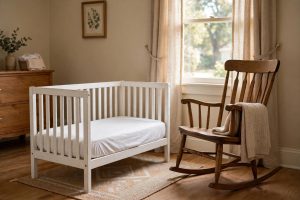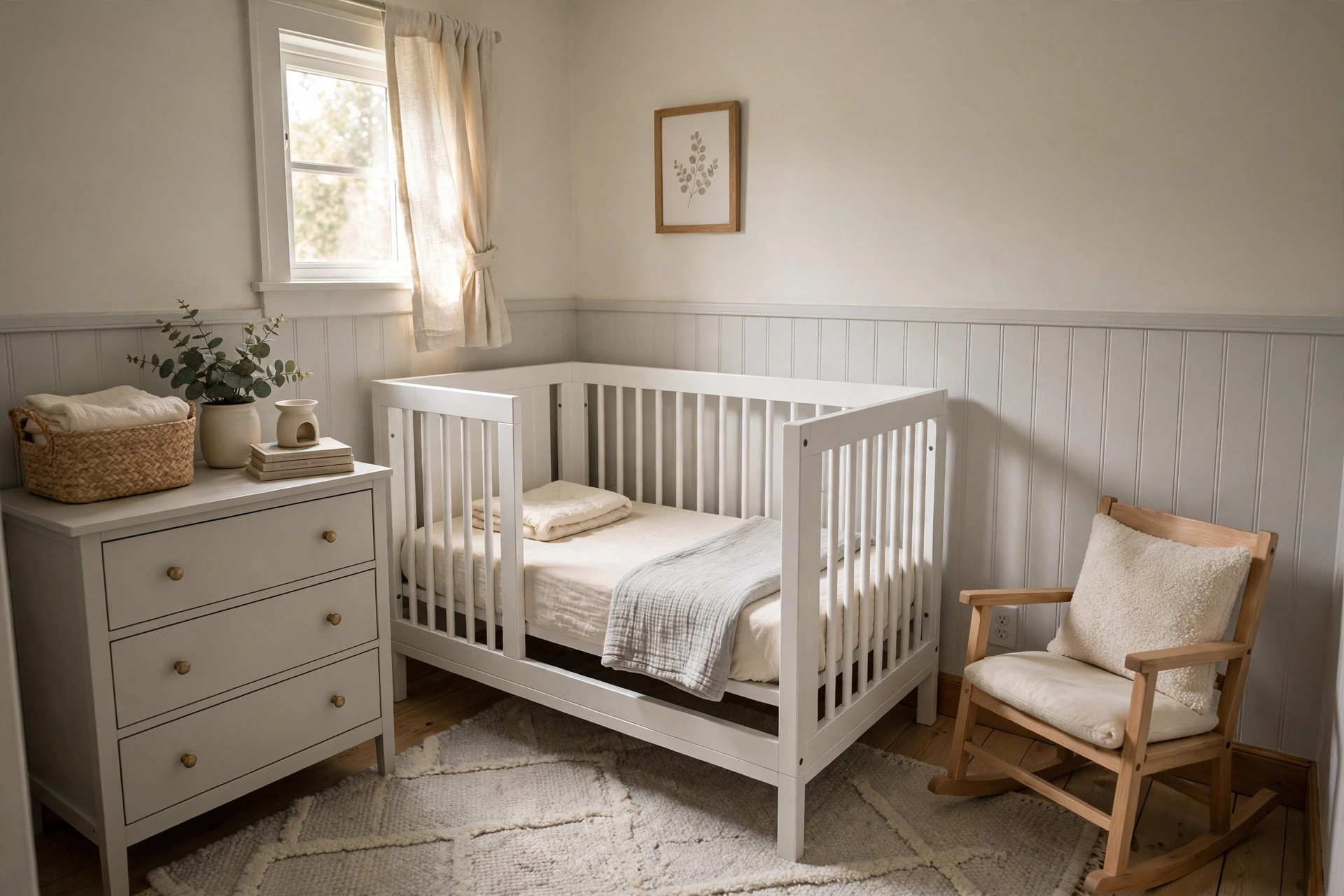

Finding the best convertible crib for small nursery room spaces takes care and planning. A nursery is often the smallest room in the house. It may be a spare bedroom, a large closet area, or a corner of a shared room. A full-size crib can take up much of that space. A convertible crib that also changes into a toddler bed or daybed can save money in the long run. The best choice fits the room, meets safety rules, and grows with the child.
Parents in the United States bought more than 300,000 cribs each year in recent years, and many of those sales went to compact models. Stores that sell baby furniture, such as those found on IKEA, now list mini and convertible cribs side by side. This guide explains what to look for so you can shop with confidence.
Why the Right Crib Matters in a Small Room
A small nursery leaves little room for error. A standard crib is about 52 inches long and 28 inches wide. In a room that is only eight feet by ten feet, that crib can block a closet door or a walking path. A convertible crib made for tight rooms is often narrower or shorter. It may measure 48 inches long or less.
The room also holds other items. A glider or rocking chair needs about four square feet. A dresser needs wall space. A nursery hamper for dirty baby clothes needs a spot near the changing area. When the crib is too large, daily tasks become hard. You may bump into the crib rail while carrying the baby. Night feedings become clumsy and slow.
A convertible crib also matters for the family budget. A basic crib lasts until the child is about two years old. A convertible crib can change into a toddler bed, a daybed, and sometimes a full-size bed. That means one purchase covers many years. For families in a small home, fewer large items also mean less clutter. The room feels calm and open, which helps both parent and child sleep better.
What to Look for in a Convertible Crib: Best Convertible Crib for Small Nursery Room
Size and Footprint
Measure the room before you shop. Write down the length and width of each wall. Mark where the door swings open. Mark where windows and vents sit. Then compare those notes to the crib size on the product page.
Look for words like “mini,” “compact,” or “space-saving” in the name. A mini convertible crib is often 38 to 48 inches long. It uses a mini crib mattress, which is smaller than a standard one. Make sure the mattress sold with it fits tight. Gaps between the mattress and the frame are not safe.
Also check the height of the rails. Low rails make it easy to lift the baby in and out. High rails keep a climbing toddler inside longer. A good crib lets you lower the mattress as the child grows. Three or four mattress height settings are common.
Conversion Stages
Most convertible cribs change in stages. A 3-in-1 crib becomes a crib, a toddler bed, and a daybed. A 4-in-1 crib adds a full-size bed with a headboard. Some kits come in the box. Others must be bought later as a separate conversion kit. Read the fine print. A crib that costs 250 dollars may need a 100-dollar kit to finish the job.
Think about how long you will keep each stage. A toddler bed stage may last two years. A full-size bed stage may last through grade school. If you plan to move or change rooms, the full-size stage may never be used. In that case, a 3-in-1 model is enough.
Materials and Build
Solid wood is the most common material for cribs. New Zealand pine and poplar are used in many mid-price models. They are light and strong. Hardwood models cost more but last longer. Metal cribs are less common but can suit a modern room.
Avoid cribs with drop-down sides. The federal government banned drop-side cribs in the United States in 2011 because they caused injuries. All new cribs sold today have fixed sides. Check for smooth edges and strong joints. Shake the floor model in the store if you can. It should feel solid and still.
Finishes should be non-toxic and lead-free. Water-based paints and stains are common now. If you buy a painted crib, look for a label that says it meets ASTM F1169. That is the voluntary safety standard for full-size cribs. For mini cribs, the standard is ASTM F1821. Reviews on sites like Consumer Reports often note which models pass extra testing.
Types of Convertible Cribs for Tight Spaces
Mini Convertible Cribs
Mini cribs are the best fit for the smallest rooms. They are about 10 to 15 inches shorter than standard cribs. Many change into a twin bed or a daybed later. The mattress is smaller, so sheet choices are fewer. Still, many brands now sell mini sheets in many colors.
A mini crib works well in a shared bedroom. It can sit beside the parents’ bed in the first months. It can also fit in a walk-in closet turned into a nursery. Parents who live in apartments often choose this type.
Standard-Size Convertible Cribs
A standard convertible crib uses a regular crib mattress. It takes more floor space. But it lasts longer in the crib stage. Tall babies may outgrow a mini crib by 18 months. A standard crib can hold a child until age two or three.
If the room is small but not tiny, this type can work. Place the long side against the wall. Leave one side open for access. Some models have a slim profile with thin rails. Those designs look light and take less visual space.
Cribs With Built-In Storage
Some convertible cribs add drawers under the mattress or a small shelf at the end. In a small nursery, storage matters. Baby clothes, diapers, and blankets need a home. A crib with drawers can replace a small dresser. That frees wall space for a glider or a kids dresser with mirror for teens later when the child grows.
Check that drawers slide well and close soft. Loud drawers can wake a sleeping baby. Also check that the drawer unit does not make the crib too heavy to move. You may need to shift the crib to clean under it.
Cost and Price Ranges
Convertible cribs for small rooms come in three broad price bands.
Budget models cost 150 to 250 dollars. They are often made of pine. They change into a toddler bed and a daybed. The finish may be simple. They meet safety standards. They are a good pick for a first child or a second nursery at a grandparent’s house.
Mid-range models cost 250 to 450 dollars. They use better wood and smoother finishes. They often include the toddler rail in the box. Colors range from white and gray to natural wood tones. Stores like Wayfair and Pottery Barn Kids carry many models in this band.
High-end models cost 450 to 800 dollars or more. They may use beech or ash wood. They often change into a full-size bed. The design may come from a known nursery brand. These cribs suit parents who want the crib to last ten years or more.
Do not forget extra costs. A mini crib mattress costs 60 to 120 dollars. Sheets cost 15 to 30 dollars each. A conversion kit costs 80 to 150 dollars. Add these to the crib price when you compare models.
Care and Upkeep
A crib needs little care, but small tasks keep it safe and clean. Wipe the rails each week with a damp cloth. Use mild soap and water. Dry the wood right away so it does not swell. Avoid harsh cleaners. They can harm the finish and the baby.
Check the bolts each month. Wood can shrink and swell with the seasons. Bolts can loosen over time. Tighten them with the tool that came in the box. Look for cracks in the rails and slats. Slats should be no more than two and three-eighths inches apart. That is about the width of a soda can. Wider gaps can trap a baby’s head.
When you change the crib to a toddler bed, read the manual again. Each stage has its own steps. Keep the manual in a drawer or a file. If you lose it, many makers post manuals on their websites. Parenting sites such as What to Expect also share step-by-step tips for crib conversion.
For the mattress, use a waterproof cover under the sheet. It guards against leaks and spills. Wash sheets often. Air the mattress in sunlight now and then. Sunlight helps keep it fresh.
Safety Rules Every Parent Should Know
Safety comes first with any crib. The U.S. Consumer Product Safety Commission sets the federal rules for cribs. Follow these points.
– The crib should be new or made after June 2011. That is when the current rules took effect. – Slats must be close together, no more than two and three-eighths inches apart. – The mattress must fit tight. You should not fit more than two fingers between the mattress and the frame. – Keep the crib bare. No pillows, blankets, bumpers, or soft toys. A fitted sheet is all the baby needs. – Place the crib away from windows, cords, and curtains. Cords are a strangling risk. – Lower the mattress before the baby can sit up. Lower it to the lowest setting before the baby can stand.
Health experts at HealthyChildren.org, the parent site of the American Academy of Pediatrics, stress that babies should sleep on their backs on a firm flat surface. This advice lowers the risk of sudden infant death syndrome. Share these rules with every caregiver, including grandparents and babysitters.
Register your crib with the maker. If a recall is issued, you will get a notice. You can also check recall lists on government sites before you buy a used crib. In general, buying new is safer than buying used. Old cribs may miss parts or break safety rules.
Frequently Asked Questions
What is the best convertible crib for small nursery room layouts under eight by ten feet?
A mini convertible crib is often the best pick. It leaves room for a chair and a small dresser. Measure your walls first. Then choose a crib that leaves at least 24 inches of walking space on one side.
How long can a baby use a mini convertible crib?
Most babies use a mini crib until 12 to 18 months. Tall babies may outgrow it sooner. Check the weight and height limits in the manual. Move to the toddler bed stage when the child can climb out or reaches the limit.
Do I need to buy the conversion kit at the same time as the crib?
Not always. Many kits stay in stock for years. But some are made for a short time. If you want the full-size bed stage later, buying the kit early is wise. Check the maker’s site to see how long parts will be sold.
Can a convertible crib go in a room with no closet?
Yes. Use under-crib drawers or a small shelf unit for clothes. A bed tent for a cozy sleep space is not for cribs, but once the child moves to the toddler bed stage, small sleep accessories can make the room feel special. Keep storage simple so the small room stays open.
Is a used convertible crib safe?
A used crib can be safe if it was made after June 2011, has all parts, and has no recalls. Check every bolt and slat. Buy a new mattress. Never use a crib with missing parts or a drop side.
Which mattress fits a mini convertible crib?
A mini crib mattress, often 38 by 24 inches. Standard crib sheets will not fit. Buy sheets made for mini cribs. The fit should be tight with no loose fabric.
A Short Final Word
The best convertible crib for small nursery room spaces is the one that fits your room, your budget, and your plans. Measure first. Pick a trusted brand. Check the safety labels. Think about which stages you will truly use. A well-chosen crib turns a small room into a calm, safe place for your baby to grow. Read more nursery advice on The Spruce and check parent reviews on Babylist before you place your order.
References
American Academy of Pediatrics. (n.d.). HealthyChildren.org. https://www.healthychildren.org Babylist. (n.d.). Baby registry and gear guides. https://www.babylist.com Consumer Reports. (n.d.). Product reviews and ratings. https://www.consumerreports.org IKEA. (n.d.). Home furnishings. https://www.ikea.com Pottery Barn Kids. (n.d.). Kids furniture and decor. https://www.potterybarnkids.com The Spruce. (n.d.). Home and garden advice. https://www.thespruce.com U.S. Consumer Product Safety Commission. (n.d.). Product safety information. https://www.cpsc.gov Wayfair. (n.d.). Furniture and home goods. https://www.wayfair.com What to Expect. (n.d.). Pregnancy and parenting guidance. https://www.whattoexpect.com
Was this guide helpful?

About Emily Rodriguez
The My Garden US editorial team writes practical, in-depth home and garden guides for American homeowners — tested advice, no fluff.
You May Also Like
Crib Mattress Topper for Extra Comfort Support: A Parent’s Guide
August 20, 2026 0 views
Nursery Theme Wall Decals for Baby Shower Parties
September 18, 2026 0 views
A Nursery Crib With Drawer Underneath Storage: A Practical Guide for New Parents
January 7, 2026 0 views