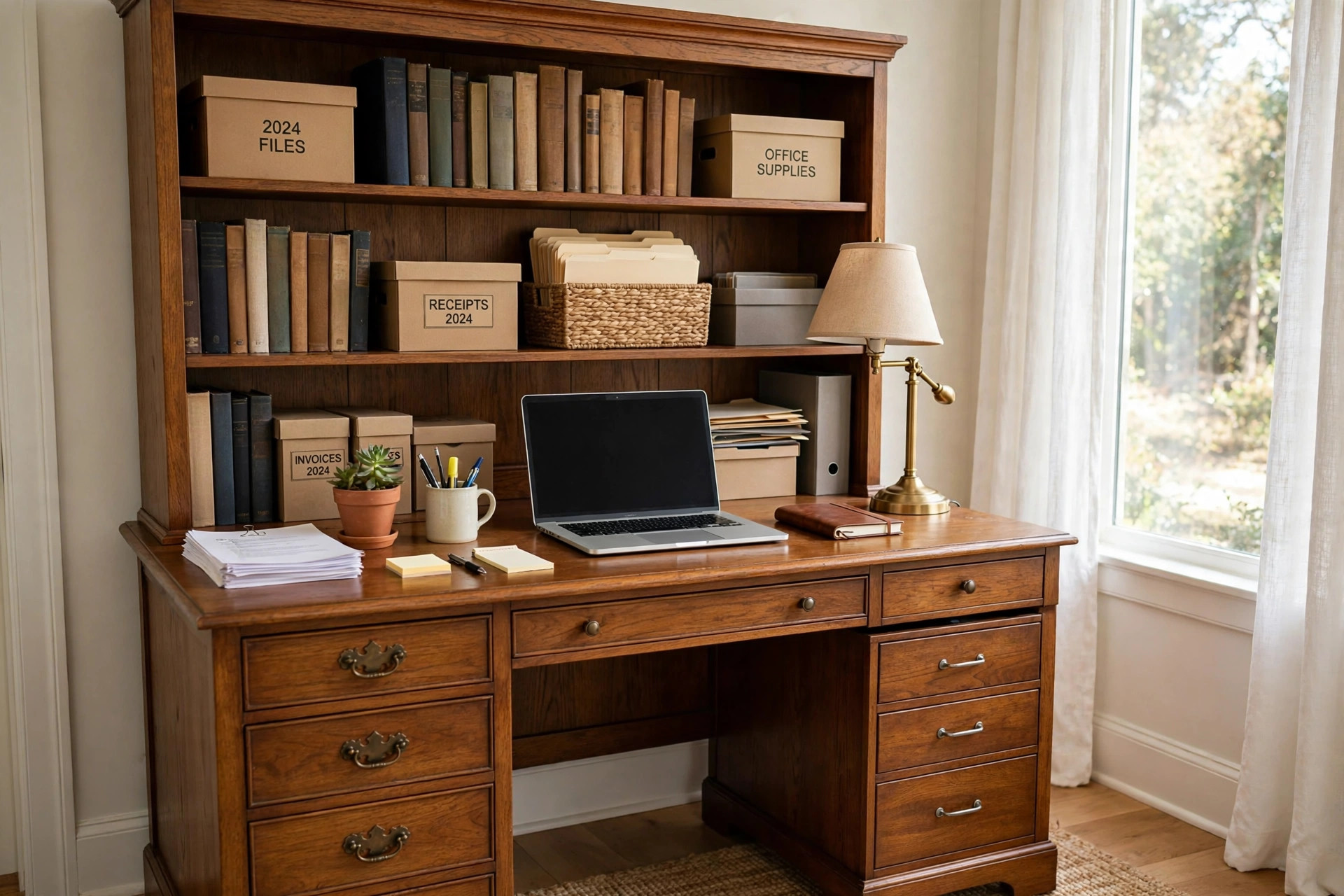

A home office desk with hutch and storage is one of the most useful pieces a worker can own. It gives you a flat surface for your computer and papers. It also gives you shelves above the desk for books and supplies. And it gives you drawers or cabinets below the desk for files. Many people who work from home find that this single piece keeps a whole room in order.
More Americans work from home than ever before. A spare bedroom or a corner of the living room has become the office. A plain table often does not serve this purpose well. It has no drawers. It has no shelves. Papers pile up. Books have no home. A home office desk with hutch and storage solves this problem in a small footprint. The hutch rises above the desk instead of spreading across the floor. The storage sits under the desk where your knees would have been. You gain a full office station in the space of one desk.
The design is not new. School desks and roll top desks served the same idea a century ago. But the modern hutch desk suits computers, printers, and chargers.
Why a Desk with Hutch and Storage Matters
Clutter steals attention. Studies of office workers show that a messy desk slows the start of work and makes papers hard to find. When every item has a place, you spend less time searching. A hutch gives the items a place. Books stand on the shelves. Bills and folders slide into drawers. The desk surface stays clear for the work in front of you.
Small rooms gain the most. A spare bedroom used as an office may also serve as a guest room. A desk with hutch and storage stands against one wall. It takes the space of a single desk, yet it holds what a whole bookcase and file cabinet would hold. Renters like this. People in small apartments like this. The piece looks like furniture, not like office equipment.
Finally, a good desk with hutch and storage lasts. Solid wood models have served families for decades. A well made piece bought today may serve a home office for twenty years. That is a fine return on the price.
How to Choose the Right Desk: Home Office Desk with Hutch and Storage
Buyers face many choices. Size, material, style, and storage type all matter. The steps below help you choose with care.
Measure Your Space First
Take a tape measure to the wall where the desk will stand. Note the width of the wall. Note the depth the desk may take from the wall. Note the height of the room. Most hutches rise between sixty and seventy inches from the floor. Check that the hutch will not block a window or a light switch.
Also measure the doorways and stairs. A full desk with hutch is a large piece. It must fit through the front door and up any stairs. Some models come in two boxes. Some come fully built. If you live in an upper floor apartment, check the box sizes before you order.
Leave room for the chair. You need at least thirty inches of floor space in front of the desk for a chair to move. A corner model can fit a small room well, as noted in guides to a corner desk with hutch for small home office.
Pick the Right Size
Desks with hutches come in three rough sizes. Small models are about forty to forty eight inches wide. They suit a laptop, a lamp, and a few books. Medium models run about fifty to sixty inches wide. They hold a desktop computer with two screens and a printer on the side. Large models run sixty four inches and up. They hold full setups for people who handle lots of paper.
Choose the size by your work, not by the room. A desk too small will frustrate you within months. When in doubt, choose the middle size. It fits most rooms and most work.
Choose a Sturdy Material
Most hutch desks are made of wood or wood products. Solid wood is the strongest choice. Oak, maple, and cherry last for decades and take refinishing well. They cost more. Medium density fiberboard and particle board cost less. They look fine with a wood veneer finish. But they chip at the edges and suffer if water reaches the core.
Check the drawer slides. Metal ball bearing slides run smooth and last long. Plastic slides wear out in a few years.
Metal frame desks with wood tops are also common.
Think About the Storage Layout
Storage comes in several forms. Some hutches have open shelves only. These suit books and pretty boxes. Some have closed cabinets with doors. These suit papers and supplies you wish to hide. Some have a mix of both.
Below the desk, look for file drawers if you keep paper records. Look for pencil drawers for pens and small tools. A keyboard tray can help if the desk surface sits high. If you keep a printer, check for a deep lower shelf or a side cabinet.
Match Your Style
Hutch desks come in many styles. Traditional models have raised panels and dark wood tones. Farmhouse models have simple lines and lighter finishes. Modern models have flat fronts and neutral colors like white, gray, or black.
The desk should suit the room. A dark traditional desk can look heavy in a small bright room. A white desk can look out of place in a room full of dark antiques. Look at the other furniture in the room. Choose a finish that sits well with it.
Types and Options
The market offers several main types of home office desk with hutch and storage. Each suits a different need.
Standard straight desk with hutch. This is the classic form. A rectangular desk sits against the wall. A hutch with shelves sits on top. Storage drawers or cabinets sit below on one or both sides. It suits most home offices. It comes in every style and price.
Corner desk with hutch. This model fits into a corner. It gives more desk surface without taking much more floor space. It suits people who use two monitors or who like to spread papers wide. Many buyers pair it with tips for a small corner desk with drawers for apartment office.
Credenza and hutch set. A credenza is a low, wide cabinet. With a hutch on top, it forms a tall storage wall. Some buyers use a credenza beside the main desk for extra files. This suits people who handle many papers.
Bookcase desk with hutch. Some models pair a desk with tall side bookcases. The bookcases flank the desk like towers. This suits heavy readers and students.
Standing height options. Most hutch desks sit at fixed height. A few makers offer desks with adjustable height and a separate storage unit. These suit people who wish to sit and stand through the day.
Child and student models. Smaller hutches suit school children. They have lower shelves and smaller drawers.
Cost and Price
Prices vary widely. A basic desk with hutch and storage from a big store costs about two hundred to four hundred dollars. These models use engineered wood and simple hardware. They work well for light use and for students.
Mid range models cost about four hundred to nine hundred dollars. They use better wood products, solid wood fronts, and smoother drawer slides. They hold up to daily work for years. Most home workers buy in this range.
High end models cost nine hundred dollars and up. Some reach two thousand dollars or more. These use solid wood through the piece. They have fine joinery and rich finishes. They last for decades. Makers of fine office furniture such as Steelcase and Herman Miller sit at this end of the market, though their focus is more on task seating and work systems.
When you compare prices, count the delivery and setup cost. Large pieces often need paid delivery. Some need paid assembly. A three hundred dollar desk with one hundred dollars of delivery costs the same as a four hundred dollar desk with free delivery. Retailers such as IKEA and Wayfair often show delivery costs clearly before you pay.
Also count the cost of extras. A desk lamp, a chair mat, and a surge protector add to the bill. Plan for them.
Care and Upkeep
A hutch desk needs little care, but the care it needs matters. Dust the shelves once a week. A soft cloth is enough. Wipe spills at once. Water left on wood leaves white rings. A coaster under a coffee cup costs little and saves much.
Oil solid wood once or twice a year. Use a plain furniture oil. Wipe it on thin. Let it sit. Wipe it off. This feeds the wood and keeps the finish warm.
Do not push the desk hard against the wall. Leave a small gap for air and for cables. Check the screws once a year. Tighten any that have worked loose. This keeps the hutch steady and the drawers true.
Keep the load balanced. Heavy books belong on the lowest shelves, not the highest. If the desk feels unsteady, anchor it to the wall with a furniture strap. This is simple and cheap.
Watch the drawers. If a drawer sticks, pull it out and clean the slides. A drop of dry lubricant on metal slides helps.
Sunlight fades wood over time. If the desk sits near a window, turn the shades during the brightest hours. Or move the desk a few feet away.
Safety
A desk with hutch is a tall piece of furniture. Anchor it to the wall. This is the single most important safety step. Unanchored tall furniture can tip if a child climbs it. Furniture straps and brackets cost only a few dollars.
Place heavy items low, as noted above. Keep the desk away from radiators and heaters. Heat dries wood and can crack finishes. Keep it away from open windows during storms. Rain ruins wood fast.
Check cable safety. Computers and lamps bring cords. A tangle of cords behind a desk can catch a foot and pull the desk or the machine. Use cable ties or a cable tray under the desk. Plug everything into one surge protector. Reviews of desk gear and workspace equipment on sites such as PCMag often discuss cable management in detail.
If you work with hot drinks, keep them at the side of the desk, not near the computer. A spill into a keyboard or a power strip can cause damage or shock.
When moving the desk, empty the hutch first. A loaded hutch shifts the center of gravity. Move the desk and the hutch as separate pieces if the design allows. Lift with the legs, not the back. Ask for help.
Frequently Asked Questions
How much room does a desk with hutch need? Most models need a wall at least forty eight inches wide. You also need about thirty inches of clear floor in front for your chair. Measure twice. A desk that blocks a door or a closet will annoy you every day.
Can a hutch desk fit a desktop computer with two monitors? Yes, if the desk is wide enough. Fifty five inches of width is a good minimum for two monitors and a keyboard. Check the hutch depth too. The hutch sits back from the desk edge. Make sure it does not push the monitors too close to your eyes.
Is a desk with hutch hard to assemble? It depends. Flat pack models from large stores take one to three hours with simple tools. Read the whole manual before you start. Sort the parts. Keep a clear floor. Many buyers find that assembly goes much faster with a second person.
What is the best finish for a busy family? Medium tone wood finishes hide dust and small scratches best. A satin finish hides wear better than a high gloss finish. Matte finishes hide fingerprints well.
Should I buy a matching chair with the desk? Not always. Buy the chair for your body and your back, not for the look. An ergonomic chair pays for itself in comfort. You can match the wood tone of the chair to the desk if the look matters to you.
Can I use the hutch for a printer? It depends on the shelf size. Small hutches have shelves too shallow for a printer. Measure the shelf depth and height. Compare with the printer size. Many people place the printer on a side cabinet instead, such as a home office storage cabinet with locking doors. A lower shelf or a side table often serves better and makes paper changes easier.
A Final Word
A home office desk with hutch and storage is a simple idea done well. It gives you a work surface, shelves, and drawers in one piece. It fits small rooms. It hides clutter. It lasts for years with light care.
Take your time when you buy. Measure your space. Know your storage needs. Choose a sturdy build. Read reviews on trusted sites like The Spruce and Wirecutter before you decide. Compare a few models in person if you can. Look inside the drawers. Pull them open. Stand the piece in your mind against your own wall.
For sit stand options and ergonomic desk ideas, the guides at UPLIFT Desk offer useful background on healthy desk habits. For general desk reviews and buying advice, PCMag covers the category with care.
The right desk will serve you quietly every day. Your papers will have a home. Your books will stand in order. And your work surface will be clear when you sit down each morning. That is worth a careful choice.
References
Herman Miller. (n.d.). Office furniture and ergonomic seating. https://www.hermanmiller.com IKEA. (n.d.). Home furnishings. https://www.ikea.com PCMag. (n.d.). Technology product reviews. https://www.pcmag.com Steelcase. (n.d.). Office furniture and workplace research. https://www.steelcase.com The Spruce. (n.d.). Home and garden advice. https://www.thespruce.com UPLIFT Desk. (n.d.). Standing desks and ergonomic office furniture. https://www.uplift-desk.com Wayfair. (n.d.). Furniture and home goods. https://www.wayfair.com Wirecutter. (n.d.). Product reviews from The New York Times. https://www.nytimes.com/wirecutter
Was this guide helpful?

About Michael Thompson
The My Garden US editorial team writes practical, in-depth home and garden guides for American homeowners — tested advice, no fluff.
You May Also Like

Home Office Label Maker for Filing Organization
May 21, 2026 0 views
An Ergonomic Chair for Pregnancy Home Office Use: A Practical Guide
January 19, 2026 0 views
Home Office Standing Desk With Drawers Attached: A Complete Guide
May 13, 2026 0 views