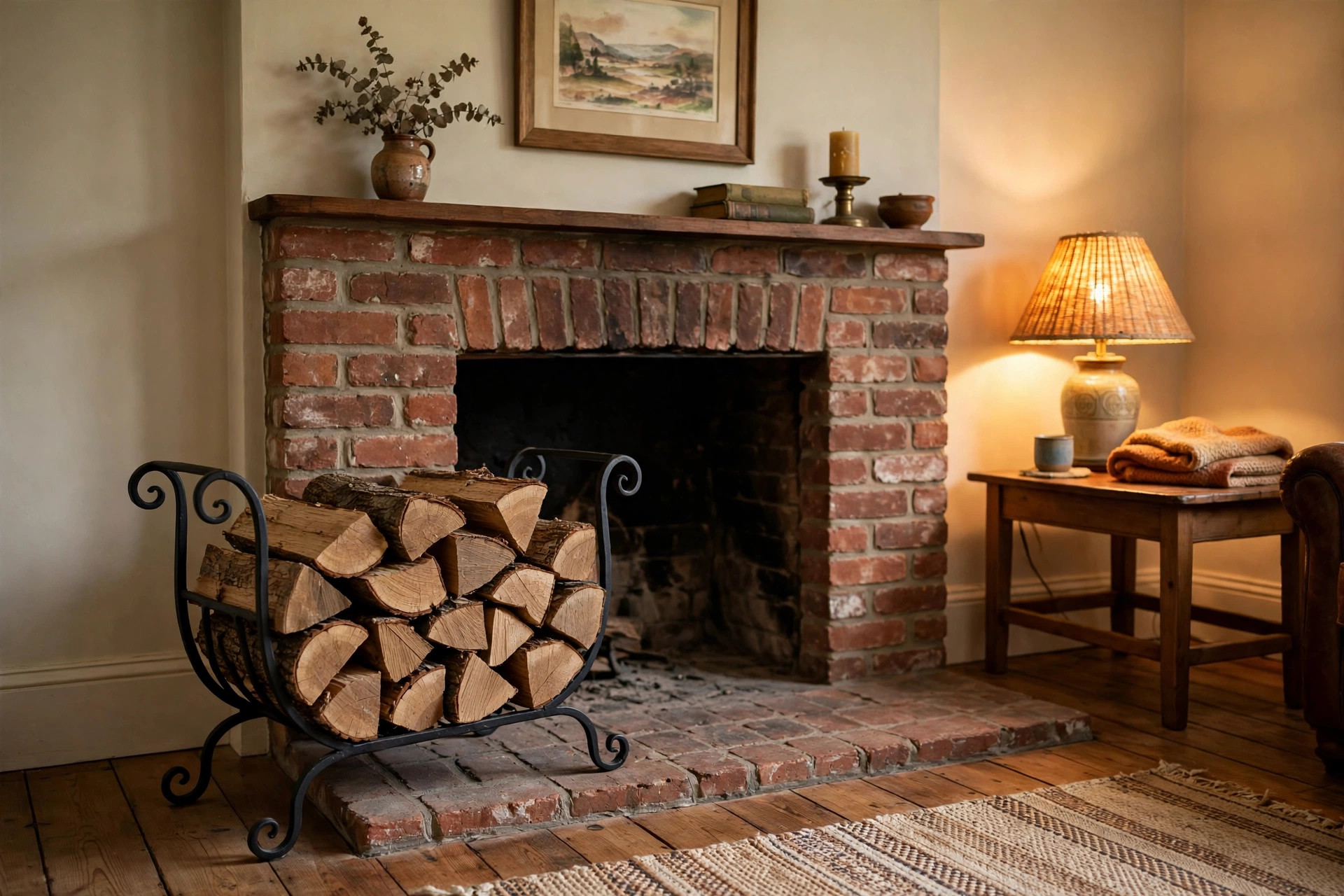

A wood fire gives a home a warm heart. It also gives a home a mess. Bark peels off. Dust drifts. Logs roll across the floor and stain the rug. This fireplace log holders reviews and buying guide will help you pick the right holder for your hearth. A good holder keeps the wood pile neat. It keeps the floor clean. It makes the trip to the woodpile shorter. And a handsome rack can be a fine piece of furniture in its own right.
This guide is written for the first-time buyer. We look at the main types on the market. We explain what to look for in size, material, and build quality. We compare prices. We cover care and safety. And we answer the questions buyers ask most. If you want a quick price scan first, our fireplace log holders price comparison usa page can help.
Why a Log Holder Matters
A log holder is not a luxury. It is a tool. Firewood left in a loose pile gets damp. Damp wood burns badly. It smokes. It puts out little heat. A raised holder lifts the logs off the floor. Air moves under and through the stack. The wood stays dry. Dry wood lights fast and burns clean.
Safety is the other reason. Loose logs roll. A rolling log can knock a screen or a tool set. It can fall against a chair. It can bring bark and embers onto carpet. A sturdy holder keeps every log in one place. This matters even more in a home with children or pets.
A holder also saves your back. Carry wood in the holder instead of in your arms. And a fireplace hearth rugs price comparison usa search will show you how many buyers add a rug under the hearth to catch bark and ash. A holder and a hearth rug work as a team. The holder keeps the wood off the rug. The rug keeps the floor safe.
Good wood matters too. Many buyers pair a new holder with a best wood burning stoves buying guide to make sure the fuel matches the appliance. Split hardwood like oak, maple, or hickory burns best.
What to Look for When You Buy: Fireplace Log Holders Reviews and Buying Guide
Buyers look at price first. Look at these points first instead. They decide whether a holder lasts one season or ten.
Size and Capacity
Measure your hearth before you shop. A holder that is too wide will not fit. A holder that is too tall may block the firebox door. Most indoor holders are 18 to 30 inches wide. That size holds one evening of wood. Larger racks, 36 to 48 inches, hold enough for a full weekend. Pick the size to match your fire habits. If you burn every night, buy bigger. If you burn on weekends only, a small rack is enough.
Check the load rating if the maker lists one. A rack of split oak logs is heavy. Forty pounds is common for a full indoor rack. The frame must carry that weight without bending.
Material and Build
Most holders are made of wrought iron, steel, or brass. Wrought iron is the old standby. It is strong. It stands up to heat. It ages well and suits most rooms. Powder-coated steel is lighter and cheaper. The coating resists rust. It comes in many colors, from black to bronze to oil-rubbed finishes.
Brass and copper look rich. They suit formal rooms. They cost more. They also need more care. Brass tarnishes and needs polish. Cast iron is the heaviest choice. It is nearly indestructible but hard to move.
Look at the joints. Welds should be smooth and even. Screwed joints should be tight, with all screws in place. Give the rack a gentle shake. It should not wobble. Wobble means weak joints. Weak joints fail under a full load of wood.
Design and Style
A log holder is on display all winter. Pick a style that fits your room. Traditional racks have curved legs and scrollwork. They suit classic rooms. Modern racks use straight lines and dark steel. They suit newer homes. Rustic racks use rough metal and chain. They suit cabins and country rooms.
Think about the handle. Many holders have a built-in handle or top rail. You can lift the whole rack from the porch to the hearth. That saves trips. Some racks have a canvas or leather sling. The sling holds the wood like a hammock. It looks soft and fine in a living room.
Consider the floor. Legs with rubber or felt feet will not scratch wood or tile. This is a small point. It saves the floor from marks that never come out.
Indoor or Outdoor Use
Many holders are sold for indoor use only. They will rust in rain. If you want one rack for the porch and the hearth, look for outdoor-rated steel with a weatherproof coating. Outdoor racks are often larger and built to hold a quarter cord or more. Cover outdoor wood with a tarp. Even the best holder cannot keep rain off the logs.
Types of Fireplace Log Holders
The market offers five main types. Each suits a different need.
Open Frame Racks
The open frame rack is the most common type. Four legs hold a rectangular base. A top rail runs around three sides. You drop the logs in from the open side. These racks are simple. They are cheap. They hold a good amount of wood. Sizes run from small hearth racks to large porch racks. Most are wrought iron or steel. They suit almost every home.
Ring or Hoop Holders
A ring holder is a large iron hoop on a stand. Logs stack inside the ring. The round shape suits modern rooms. It makes the wood pile look like art. Ring holders hold less wood than racks. They are best for a few logs, not a full supply.
Log Bins and Baskets
A bin is a deep box of metal, wood, or leather. It hides the wood from view. This is a good choice if you want a clean look. Baskets of woven willow or rattan look warm and soft. They suit cottage rooms. Use a basket for kindling and a few logs, not for a heavy supply.
Canvas Log Carriers
A carrier is a sling with two handles. You load it at the woodpile. You carry it inside. You set it beside the hearth. Some carriers have a stand. They are the cheapest option. They are easy to store in summer. They are a fine stopgap while you shop for a rack.
Wall-Mounted Racks
A wall-mounted rack bolts to the wall beside the fireplace. It keeps the floor clear. This suits small rooms. The mount must go into studs, not just drywall. A full rack of oak is heavy. Follow the maker’s instructions. When in doubt, ask a handyman.
How Reviewers Rate Log Holders
Reviewers judge holders on five points. You can use the same five points in the store.
1. Strength. Does it hold a full load without bending? 2. Stability. Does it stay put on the floor? 3. Finish. Is the paint or coating even? Does it chip? 4. Ease of loading. Can you drop logs in without a fight? 5. Looks. Does it suit the room?
Price matters less in reviews than you might think. The cheapest racks often score low on finish and stability. The most expensive do not always win. Mid-priced wrought iron racks win most often. They hit the sweet spot of strength, looks, and price. Current buyer guides appear at The Spruce.
Cost and Price
Prices run wide. A canvas carrier costs 20 to 35 dollars. A small indoor rack costs 40 to 80 dollars. A full-size wrought iron rack costs 80 to 150 dollars. Designer ring holders and leather bins cost 150 to 300 dollars. Large outdoor racks cost 100 to 250 dollars.
Material drives the price. Wrought iron costs more than thin steel. Brass costs more than iron. Size is the next driver. A rack that holds a quarter cord costs twice what a hearth-size rack costs. Finish is the third driver. Hand-forged details and bronze coatings add dollars.
Shop where prices are clear. Big stores like The Home Depot and Lowe’s list many models side by side. You can compare specs and read buyer reviews. Appliance makers such as Napoleon and Heatilator also sell hearth accessories and publish sizing guides. Watch for sales in late fall. Prices drop when the heating season starts. Buy in spring if you can wait. Clearance sales bring the best deals of the year.
Do not buy on price alone. A 30-dollar rack that bends in a month is dear at any price. A 100-dollar rack that lasts ten years costs ten dollars a year. Spend for quality in the frame. Save on style if you must. Strength is what you are buying.
Care and Upkeep
A log holder needs little care. Give it a little anyway. It will last longer and look better.
Wipe the rack with a dry cloth each month. This removes dust and bark bits. If the finish is powder-coated, wipe with a damp cloth and dry it right away. Simple hearth upkeep tips are covered at Family Handyman.
Check the welds and screws twice a year. Tighten any loose screws. Look for hairline cracks in welds. A cracked weld can fail under load. If you find one, stop using the rack.
Rust is the main enemy. Touch up paint chips with a metal paint of the same color. This keeps rust from spreading. Outdoor racks need this care most. Bring canvas carriers inside when rain comes. A wet carrier rots fast.
Keep the area around the holder clean. Sweep bark and dust each week. Ash holds damp. Damp ash eats finishes. A clean hearth is a safe hearth. The EPA publishes wood-burning best practices worth reading.
Store the holder in a dry place in summer. If it stays by the hearth all year, cover it with a cloth to keep dust off.
Safety Tips
Wood heat is safe heat when handled right. These rules keep it that way.
Keep the holder at least three feet from the firebox opening. Heat from the fire can dry the wood in the rack too much. Over-dry wood burns too fast. It can also catch from a stray spark. Three feet is a safe gap.
Never leave a fire hot and alone. This is the first rule of wood heat. A screen or glass door adds a layer of safety. It is not a substitute for watchfulness.
Let ash cool for two full days before you move it. Ash can hide live coals for a long time. Store cooled ash in a metal bin with a tight lid. Keep the bin away from the house.
Stack logs bark side down in the holder. This sheds bark bits into the rack, not onto the floor. Stack the largest logs at the bottom. This keeps the pile stable.
Keep a fire extinguisher near the hearth. Make sure every adult in the house knows how to use it. Test smoke alarms twice a year. These steps cost little. They save lives.
Watch the flue. Burn only dry, seasoned wood. Seasoned wood is cut and dried for at least six months. Green wood makes creosote. Creosote builds up in the chimney. It can catch fire. A chimney sweep once a year keeps the flue clear. Basic chimney care guides are easy to find at This Old House.
Frequently Asked Questions
How much wood should a log holder hold?
For most homes, enough for one to three evenings. That is 15 to 40 pounds of split wood. A hearth rack 24 to 30 inches wide holds about that much.
Can I use a log holder for a wood stove?
Yes. The same racks work beside wood stoves. In fact, stove owners use them more. A stove burns wood all day. Keep the rack three feet from the stove body. Stoves run hotter than open fireplaces. Give the rack a little more room.
What is the best material for a log holder?
Wrought iron wins for most buyers. It is strong, heat-safe, and good-looking. Powder-coated steel is the best budget pick. It is light and rust-proof indoors. Brass is the best look for formal rooms, but it needs polish.
How do I stop bark and dirt from spreading?
Line the bottom of the rack with a layer of newspaper. It catches the small bits. Change it weekly. Sweep the hearth area every few days. A hearth rug under the rack catches what the newspaper misses. Shake both out each month.
Should the holder match my fireplace tools?
It helps the room look right, but it is not a rule. Many buyers buy a matched set of rack, tools, and screen. Sets cost less than buying each piece alone. If you already own tools, match the finish. Black wrought iron goes with almost everything.
Is an outdoor log rack worth it?
Yes, if you burn more than a few logs a week. An outdoor rack holds a weekend of wood by the door. It keeps the wood dry and off the ground. It cuts the number of trips to the main woodpile. Buy one with a cover or add a tarp. The rack keeps wood off the ground. The cover keeps rain off the wood.
A Final Word
This fireplace log holders reviews and buying guide comes down to one rule. Buy strength first. A log holder carries heavy wood all winter long. Pick a rack with a strong frame, a stable base, and a finish that stands up to heat and ash. Measure your hearth. Match the style to your room. Keep it clean and three feet from the fire.
References
Family Handyman. (n.d.). DIY home repair and maintenance. https://www.familyhandyman.com Heatilator. (n.d.). Fireplaces and fireplace products. https://www.heatilator.com Lowe’s. (n.d.). Home improvement products. https://www.lowes.com Napoleon. (n.d.). Fireplaces, grills, and heating products. https://www.napoleon.com The Home Depot. (n.d.). Home improvement products. https://www.homedepot.com The Spruce. (n.d.). Home and garden advice. https://www.thespruce.com This Old House. (n.d.). Home renovation guidance. https://www.thisoldhouse.com U.S. Environmental Protection Agency. (n.d.). Protecting human health and the environment. https://www.epa.gov
Was this guide helpful?

About Michael Thompson
The My Garden US editorial team writes practical, in-depth home and garden guides for American homeowners — tested advice, no fluff.
You May Also Like
Best Wood Burning Fireplace Inserts for Texas Homes
August 22, 2026 0 views
Heat Powered Stove Fans Price Comparison USA: What to Pay and What to Know
September 10, 2026 0 views
Reclaimed Wood Mantels Price Comparison USA: What You Should Expect to Pay
September 16, 2026 0 views