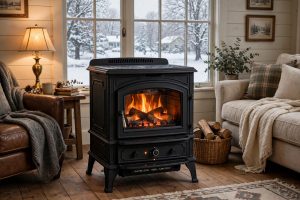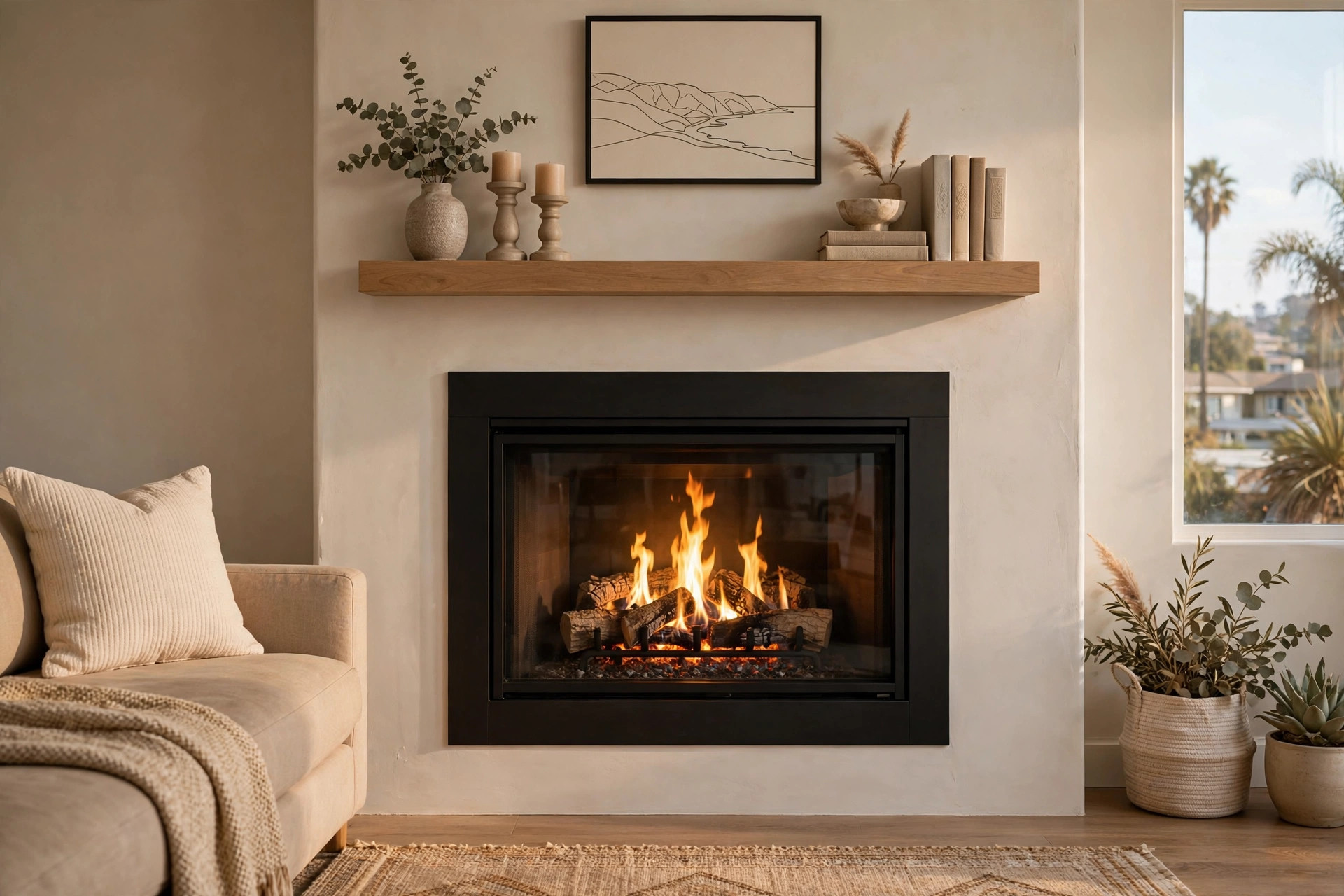

If you want to buy ventless gas fireplaces online in California, you need one fact first. California does not allow them. State law bans the sale and installation of vent-free, or ventless, gas fireplaces in homes. No online store can change that rule. Many shoppers find this out late in the process, after hours of browsing and comparing models.
That does not mean you are out of luck. This guide explains the law in plain words. It tells you what a ventless gas fireplace is, why California bans it, and which legal options give you the same warm look and easy heat. It also shows how to shop online with care, what prices to expect, and how to keep your unit safe for years.
What a Ventless Gas Fireplace Is
A ventless gas fireplace burns natural gas or propane without a chimney or flue. All of the heat stays in the room. The fire burns so clean, the makers say, that the exhaust is safe to breathe. A small oxygen sensor shuts the unit off if the air quality drops.
These units come in several forms. Some are wall-mounted boxes that hang like a picture frame. Others are freestanding stoves that look like old wood burners. Many are built into a mantel or cabinet for the living room. They run on a gas line or a small propane tank.
In most states, shoppers can buy these units online and install them with ease. The appeal is clear. There is no chimney to build. There is no wood to carry. The heat starts with the push of a button.
Why California Bans Ventless Gas Fireplaces: Buy Ventless Gas Fireplaces Online in California
California has some of the strictest air quality rules in the country. The state has never approved vent-free gas fireplaces for home use. State building codes simply do not include them. That means you cannot buy ventless gas fireplaces online in California and have them installed in a legal way.
The reasons are tied to health and safety. A ventless unit sends all of its combustion byproducts into the room. Even a clean flame gives off small amounts of carbon monoxide, nitrogen dioxide, and water vapor. Over time, the moisture can damage walls and windows. In a tight, well-sealed California home, these gases build up faster than in an old drafty house.
The Environmental Protection Agency warns about indoor air pollution from fuel-burning heaters. The U.S. Department of Energy notes that vent-free heaters are not recommended in many cases. The U.S. Consumer Product Safety Commission also tracks safety rules for home heating products.
Some online sellers will still ship a ventless unit to a California address. That does not make it legal. A local inspector can flag it. A home sale can stall over it. And if a fire or injury follows, insurance may not cover the claim. For more on what other gas options are legal for small homes, see our guide to best direct vent gas fireplaces for california apartments.
Legal Alternatives That Look and Feel the Same
The good news is that legal options are close cousins of the ventless unit. Most shoppers cannot tell the difference once the unit is in place.
Direct vent gas fireplaces. These are the top choice. A sealed glass front keeps the room air separate from the fire. Two small pipes pull in fresh air and push out exhaust through a wall or roof. They look like a real fire, heat well, and meet California codes. They cost more than ventless models, but they are the legal path for gas heat. Many buyers compare them with smart thermostat controlled gas fireplaces for sale to add easy temperature control.
Electric fireplaces. These need no gas line and no vent at all. They plug into a normal outlet. Modern models use LED flames that look real from across the room. Some even heat up to 400 square feet. They are legal everywhere in California. They are also the cheapest to install. If you live in a rental, an electric unit is often the only choice.
Ethanol and gel fireplaces. These burn clean liquid or gel fuel in a metal tray. They need no vent and no hookup. They give a real flame and a soft glow. They give less heat than gas, so they suit small rooms and mild climates. Coastal and Southern California homes work well with them.
Gas inserts for old fireplaces. If your home already has a masonry fireplace, a direct vent gas insert fits inside it. You keep the charm of the old firebox and gain the ease of gas. A chimney sweep should check the old flue first. A licensed installer handles the gas hookup.
How to Choose When You Shop Online
When you buy ventless gas fireplaces online in California, the first step is to change your search. Look for legal terms instead: direct vent, electric, or vented gas. You will find far more models that can actually ship and install in your state.
Check the product page for code language. A good listing states that the unit meets national standards and local codes. Look for marks from testing labs. Be wary of any listing that claims a ventless gas unit is “California approved.” There is no such approval for ventless gas fireplaces in this state.
Measure your room before you order. Heat output is listed in BTUs. A room of 200 to 300 square feet needs about 5,000 to 7,500 BTUs. Too much heat makes a small room stuffy. Too little leaves you cold. Retailers like The Home Depot and Lowe’s show BTU ratings and room sizes on each product page, which helps you compare.
Decide on fuel. Natural gas costs less per month if your home has a gas line. Propane works where there is no line, but tanks need refills. Electric models cost more to run per hour but need no fuel at all. The U.S. Department of Energy has tools that compare home heating costs by fuel type.
Read the return policy. Fireplaces are heavy and costly to ship back. Some stores charge restocking fees. Check whether the seller ships to your zip code in California and whether a liftgate truck is needed for delivery. These details sit at the bottom of most product pages.
What It Costs
Prices vary by type. An electric fireplace starts near $150 for a simple wall unit and climbs to $1,500 for a large mantel model. A direct vent gas fireplace usually runs from $1,200 to $4,000 for the unit alone. High-end brands with stone surrounds can pass $6,000.
Installation adds to the bill. A direct vent gas unit needs a licensed gas fitter. Plan on $800 to $2,500 for labor, venting, and permits. Electric units need far less work. Many owners install them in an afternoon with basic tools. Gel and ethanol units cost nothing to install, but fuel refills run about $3 to $5 per canister.
Do not forget the permit. Most California cities require a permit for gas fireplace work. The fee is often $100 to $300. Your installer usually handles the paperwork. Skipping the permit is a false saving. It can void your warranty and cause trouble when you sell the home.
Running costs are modest. A direct vent gas fireplace that burns one therm of gas per hour costs roughly $1 to $2 per hour at current California rates. An electric unit at 1,500 watts costs about 30 to 50 cents per hour. Run time matters more than the rate. Most families use the fireplace a few hours each evening in winter.
Care and Upkeep
A gas fireplace asks little of you, but it does ask for steady care. Clean the glass front each season with a fireplace glass cleaner. Household sprays can leave a film. Wipe the vents and the area around the unit to keep dust out of the burner.
Book a yearly check from a licensed technician. The tech will inspect the burner, test the ignition, and look at the vent pipes for damage or nests. This visit costs about $100 to $200. It is the best money you can spend on a gas unit. Small problems found early stay small.
Watch the flame. A healthy gas flame is mostly blue with small yellow tips. A flame that is all yellow, lazy, or sooty points to a problem. Turn the unit off and call a professional. Do not try to fix gas parts yourself.
For electric models, the care is simpler. Dust the vents, check the cord for wear, and replace LED bulbs when they dim. There is no fuel and no exhaust, so the upkeep is close to zero. If you are weighing electric against gas for another state, our roundup of buy ventless gas fireplaces online in arizona shows what buyers can choose where the rules differ.
Safety First
Every fuel-burning fireplace needs a carbon monoxide detector in the room. California law already requires detectors in most homes. Test yours each month and change the batteries each year. A detector costs under $30 and lasts for years.
Keep a clear zone around the unit. Rugs, curtains, and paper should sit at least three feet from the glass. The glass front of a gas fireplace gets very hot during use and stays hot after you turn it off. If you have small children, a safety screen is a smart buy. The U.S. Consumer Product Safety Commission offers plain guidance on keeping heaters safe around kids.
Never leave a gas fireplace running when you sleep or leave the house. Turn it off at the switch or remote. If you smell gas, leave the home at once and call the gas company from outside. Do not flip switches or light anything on the way out.
Use only trained installers for gas work. California requires a licensed contractor for gas line jobs. Ask for the license number and check it with the state board. A handy neighbor with good tools is not a substitute.
Where Online Shoppers Turn for Advice
The web is full of help if you know where to look. Napoleon and Heatilator are major fireplace makers with product guides and dealer locators. This Old House and Family Handyman run step-by-step articles on fireplace installation and care. The Spruce keeps buying guides that compare models side by side. These sites help you learn the terms before you talk to a dealer or installer.
Forums and review sections also help, but read them with care. One happy review does not beat a clear code rule. When a product page and the state code disagree, the state code wins.
Frequently Asked Questions
Can I buy ventless gas fireplaces online in California? You can find sellers that will ship one to you, but you cannot install it legally. California building codes do not permit vent-free gas fireplaces in homes. Choose a direct vent or electric model instead.
Why are ventless gas fireplaces banned in California? The state worries about indoor air quality. Ventless units release all combustion gases into the room, including small amounts of carbon monoxide and nitrogen dioxide. In tight modern homes, these can build to unhealthy levels.
What is the closest legal option to a ventless gas fireplace? A direct vent gas fireplace. It gives the same real flame and strong heat, but it vents exhaust outside through sealed pipes. It meets California codes and looks much like a ventless unit from the room.
Do I need a permit to install a gas fireplace in California? Yes, in most cities and counties. Gas work and venting need a permit and an inspection. Your licensed installer usually handles this step. Check with your local building office if you are unsure.
Are electric fireplaces a good choice for California homes? Yes. They are legal in every case, need no vent or gas line, and cost little to install. Modern LED flames look quite real. They suit apartments, rentals, and mild climates where deep heat is not needed.
How much does it cost to install a direct vent gas fireplace? The unit often costs $1,200 to $4,000. Licensed installation with venting and permits adds about $800 to $2,500. Total project costs usually land between $2,000 and $6,500.
A Final Word
The search to buy ventless gas fireplaces online in California ends with a clear answer. The state says no to ventless gas. That rule protects your air, your home, and your family. The legal options are strong. A direct vent gas fireplace gives real flame and real heat. An electric unit gives ease and low cost. Measure your room, set your budget, check the codes, and hire a licensed installer. You will get the warm glow you want, in a way that is safe and fully legal.
References
Family Handyman. (n.d.). DIY home repair and maintenance. https://www.familyhandyman.com Heatilator. (n.d.). Fireplaces and fireplace products. https://www.heatilator.com Lowe’s. (n.d.). Home improvement products. https://www.lowes.com Napoleon. (n.d.). Fireplaces, grills, and heating products. https://www.napoleon.com The Home Depot. (n.d.). Home improvement products. https://www.homedepot.com The Spruce. (n.d.). Home and garden advice. https://www.thespruce.com This Old House. (n.d.). Home renovation guidance. https://www.thisoldhouse.com U.S. Consumer Product Safety Commission. (n.d.). Product safety information. https://www.cpsc.gov U.S. Department of Energy. (n.d.). Energy efficiency and renewable energy. https://www.energy.gov U.S. Environmental Protection Agency. (n.d.). Protecting human health and the environment. https://www.epa.gov
Was this guide helpful?

About Lisa Anderson
The My Garden US editorial team writes practical, in-depth home and garden guides for American homeowners — tested advice, no fluff.
You May Also Like
Top Rated Chimney Inspection Services for Homeowners
January 31, 2026 0 views
High Efficiency Fireplace Blowers and Fans for Sale: A Buyer’s Guide
February 26, 2026 0 views
Thermostat Controlled Gas Fireplaces: Price Comparison Across the USA
January 27, 2026 0 views