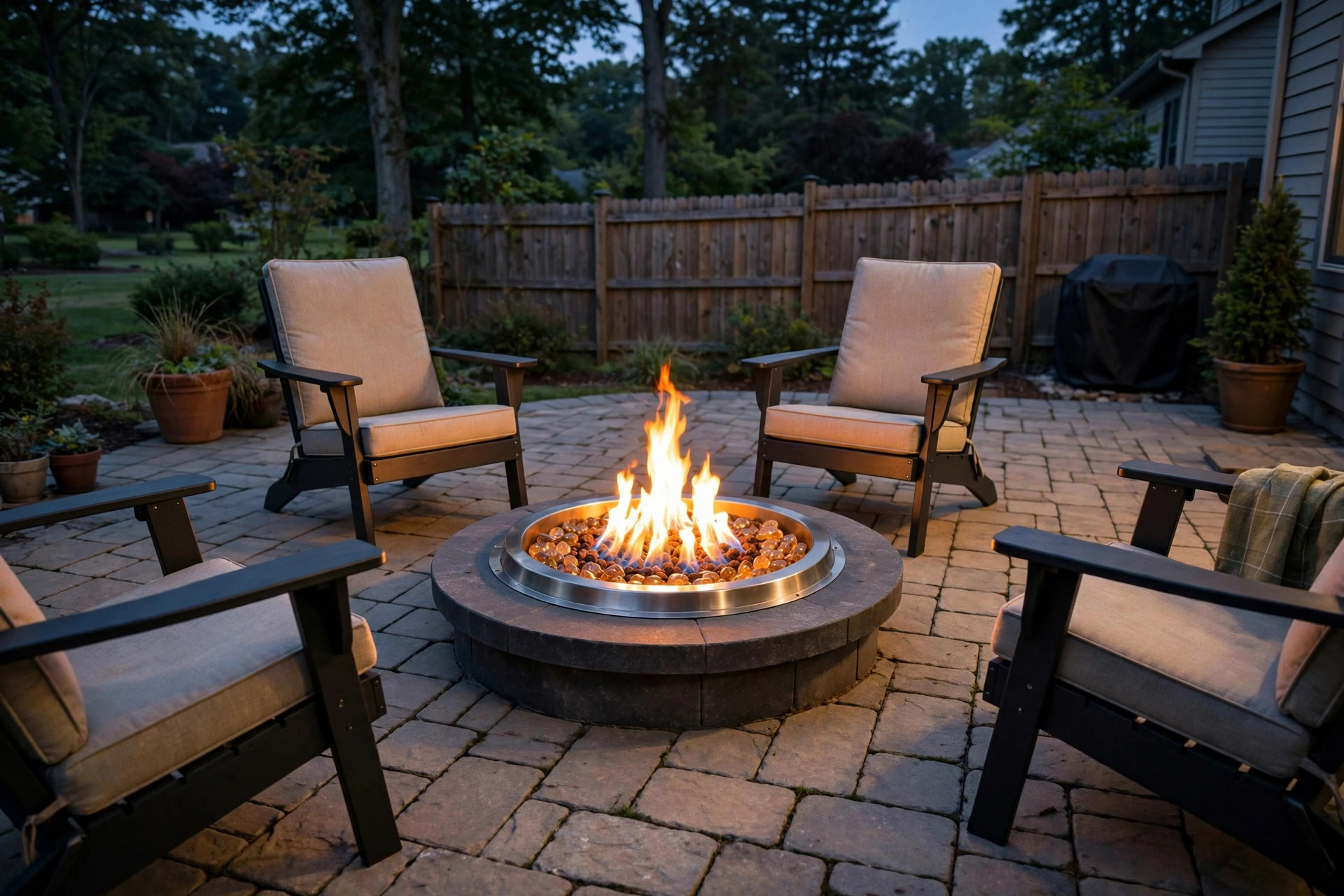

A backyard fire brings people together. It warms cool nights. It gives friends a place to sit and talk. A propane fire pit makes this easy. You push a button and the flame starts. There is no wood to haul. There is no ash to clean. This best propane fire pits buying guide will walk you through the main points. It covers sizes, heat output, types, cost, care, and safety.
Why a Propane Fire Pit Matters
Many families want an outdoor fire. Wood fires are nice, but they take work. You must buy or cut wood. You must store it in a dry place. You must clean out ash after each use. Smoke can bother neighbors. Some towns ban wood burning on bad air days. Propane solves these problems. A propane tank feeds gas to a burner. The flame lights in seconds. It burns clean. There is almost no smoke. You turn a knob to make the flame larger or smaller. When the night ends, you turn the knob off. The fire is done.
Propane fire pits also give steady heat. A wood fire rises and falls. A gas flame stays even. This makes it easier to plan a meal or a long talk outside. Many models hide the tank inside the base. The pit looks neat. The tank stays out of sight. Some models use a natural gas line instead. That removes the tank, but it needs a plumber to install. Most buyers start with propane because it is simple. You can move the pit if you change your mind about the layout.
What to Look for When You Buy: Best Propane Fire Pits Buying Guide
Shopping can feel hard. There are many models. Prices run from under two hundred dollars to over two thousand. The lists below will help you compare.
Heat Output and Size
Heat output is rated in BTU. It measures heat energy. Most home fire pits range from 30,000 to 60,000 BTU. A 40,000 BTU burner warms a circle of chairs on a mild night. A 60,000 BTU burner gives more warmth on cold nights. Bigger is not always better. A very large burner on a small patio can feel too hot. It also burns more fuel. Measure your seating area first. For a patio of ten to twelve feet across, 40,000 to 50,000 BTU is a common choice.
Size matters too. Round bowls run about 28 to 40 inches wide. Fire pit tables run 36 to 60 inches long. Leave at least three feet of clear space around the pit. Chairs need room. People need room to walk. Check the height as well. A low bowl puts heat near your feet. A taller table puts the flame near table height. Think about how you will use it. Low bowls suit lounging. Tables suit drinks and snacks.
Build Quality
The body of the pit takes heat and weather. Common materials are steel, aluminum, cast iron, and concrete. Steel is strong and low cost. Look for powder-coated steel. The coating resists rust. Aluminum is light and will not rust. It costs more. Cast iron holds heat well but is heavy. Concrete looks modern. It is very heavy and stays in place.
The burner should be stainless steel. Stainless steel resists rust and heat damage. Cheaper burners may warp after a season or two. Check the fire media. Many pits come with lava rock. Lava rock is cheap and works well. Glass beads look modern and spread heat. They cost more. Make sure the media is rated for gas fire pits. Regular rocks from the yard can crack or pop in heat. Never use them.
Ignition and Controls
There are three main ignition types. Match-light is the simplest. You hold a long lighter to the burner and turn the gas on. It is cheap and reliable. It needs you to lean close. Push-button ignition uses a spark module. You turn the knob and push a button. It is easy to use. You will replace a small battery now and then. Electronic ignition uses batteries or a plug. It lights with one switch. It costs the most. It can fail if the electronics get wet. Match-light and push-button models are the most common for homes.
Controls should be easy to reach but shielded from heat. Look for a knob that turns smoothly. Some models include a cover for the knob. A wind guard helps too. Wind guards are glass panels around the burner. They steady the flame on breezy nights.
Safety Features
Safety should come first. A good pit has a thermocouple. A thermocouple is a small sensor. It shuts off the gas if the flame goes out. This is very important. Without it, gas could keep flowing after the flame dies. Look for a stable base. The pit should not tip if someone bumps it. If the tank sits inside, check that the door vents well. Gas must not build up inside the base. A CSA or UL listing means the unit passed safety tests. Look for that mark on the label. Makers such as Heatilator stress these clearance and venting rules in their manuals. Retailer listings such as Home Depot often note these safety marks in the product details.
Types of Propane Fire Pits
Fire Pit Tables
Fire pit tables look like patio tables with a flame in the center. They come in round, square, and long shapes. The rim gives you a place to set drinks. Many models include a lid. The lid covers the burner when the pit is cold. Then the table works as a normal table. Fire pit tables are the most popular type. They fit many patio styles. Makers such as Napoleon sell several designs in this class. Tables need a flat, solid surface. Do not place them on a wood deck unless the maker allows it. Heat and sparks can mark wood.
Bowl Fire Pits
Bowl fire pits are round and low. They often stand on short legs. Some hang from a frame. Bowls are simple and low cost. They give a classic campfire look. They suit small patios and yards. Many come with lava rock and a basic cover. You will need side tables for drinks. Bowls are also easy to move. If you rent your home, a bowl may be the best pick.
Fire Columns and Towers
Fire columns are tall and narrow. They make a strong visual point. The flame rises from the top. They suit modern patios and pool areas. Some columns use glass beads for a clean look. They can cost more than bowls of the same BTU rating.
Portable models are small and light. Some weigh under twenty pounds. You can carry them to a campsite. Tabletop models sit on a patio table. They use small propane canisters. They give mood light and a little warmth. They do not heat a seating area. Check local rules before you travel with one. Some parks limit open flames.
If you are also fixing up an indoor fireplace, you may want to buy fireplace mantel shelves online in California for the inside hearth. Shoppers in the mountains often ask where to buy fireplace grates in Colorado. And a quick fireplace hearth rugs price comparison USA can help you finish the indoor setup on budget.
Cost and Price
Prices vary a lot. A small steel bowl may cost $150 to $300. A mid-range fire pit table may cost $400 to $900. A large concrete or high-end table may cost $1,000 to $2,500. Heat output, materials, and brand set the price. A stainless burner and a CSA listing add cost. They also add life and safety.
Fuel cost matters too. A standard 20-pound propane tank holds about 4.6 gallons. A 50,000 BTU burner burns about 2.3 pounds of propane per hour at full flame. That gives roughly eight hours of burn time per tank at full blast. Most people run the flame lower. A tank may last ten to fourteen hours in normal use. Refills cost $15 to $25 at many stores. Some buyers keep a spare tank. That way the night never ends early. Comparison shopping at Lowe’s can help you find fair prices on both pits and tanks.
Do not forget extras. A weather cover may cost $30 to $80. A wind guard may cost $60 to $150. A natural gas conversion kit, if offered, may cost $50 to $100 plus plumber fees. Project guides at This Old House show how owners budget for patio upgrades. Add these costs to your budget before you buy.
Care and Upkeep
Propane fire pits need little care. A few habits will keep yours safe and good looking.
Clean the burner each season. Turn off the gas first. Remove the fire media. Brush the burner ports with a soft brush. Clear out dust and spider webs. Spiders love gas fittings. A blocked port can cause an uneven flame. Check the hose for cracks. Check the fittings for wear. You can test for leaks with soapy water. Brush soapy water on the joints. Turn the gas on. If bubbles grow, there is a leak. Turn the gas off and fix the joint or replace the hose. Maintenance tips from Family Handyman cover this leak test in more detail.
Cover the pit when you are not using it. Rain and snow age the finish. A good cover sheds water. Make sure the pit is fully cool before you cover it. Store lava rock and glass beads dry. If the pit will sit all winter, some owners store the tank in a shed. Keep tanks upright and away from heat. Never store a tank indoors.
Check the ignition each spring. Replace weak batteries. Test the thermocouple. Light the pit and let it run for ten minutes. Watch the flame. It should be mostly blue with some yellow tips. A very yellow flame can mean dirty ports or low gas flow. Clean and retest. If the problem stays, call a service tech.
Safety Rules
Gas fire is safe when you follow the rules. It is risky when you do not. Keep these rules in mind.
Place the pit on a flat, non-burning surface. Stone, brick, and concrete are good. Keep the pit at least ten feet from the house. Keep it away from low branches and awnings. Never use a propane fire pit in a garage or under a low roof. Carbon monoxide can build up. The gas needs open air.
Keep children and pets at a safe distance. The metal rim gets hot. Teach children that the pit is not a toy. Keep a fire extinguisher or a bucket of sand nearby. Never leave the fire alone. Turn the gas fully off when you go inside. Do not try to move the pit while it is lit or hot.
Check local rules before you buy. Some cities require a permit for gas fire features. Some homeowner groups limit flame height or hours of use. A few areas ban open flames during dry season. The EPA offers guidance on clean burning and local air rules. Care guides from The Spruce also note common local limits. A quick call to your city office can save trouble later.
Frequently Asked Questions
How long does a propane tank last in a fire pit?
It depends on the burner size and the flame level. A 20-pound tank holds about 4.6 gallons of propane. A 50,000 BTU burner uses about 2.3 pounds per hour at full flame. That is about eight hours per tank at full blast. At a medium flame, expect ten to fourteen hours. A spare tank keeps the night going.
Are propane fire pits safe on a wood deck?
It depends on the model. Many makers say no. Heat can scorch wood. Some models allow deck use with a heat shield or a mat. Read the manual. When in doubt, place the pit on stone or concrete.
Do propane fire pits give off carbon monoxide?
Yes. All gas flames make some carbon monoxide. Outdoors, it spreads and is not a problem. In a closed space, it can kill. Never run a propane fire pit in a garage, tent, or under a low cover. Keep the area open to the air. If you feel dizzy or sick near the pit, move to fresh air at once.
Propane or natural gas: which is better?
Propane is portable. You can move the pit. You need no plumber. Natural gas costs less per hour to run. It never runs out mid-party. But it needs a fixed gas line. Installation can cost several hundred dollars. Renters should choose propane. Owners who want a fixed feature may prefer natural gas.
What is the best fire media: lava rock or glass?
Both work. Lava rock is cheap and natural looking. It hides the burner well. Glass beads look modern. They come in many colors. They can cost more. Both must be rated for gas fire pits. Garden rocks can trap water and crack in heat.
Can I convert my fire pit to natural gas?
Some models offer a conversion kit. The kit changes the orifice and the hose. Gas types burn at different pressures. Do not guess. Use only the kit made for your model. A licensed plumber should make the gas connection. Wrong parts can cause a dangerous flame.
A Short Final Word
The best propane fire pits buying guide ends with simple advice. Measure your space first. Pick a BTU rating that fits the seating area. Choose stainless parts and a listed safety mark. Keep the tank and hose in good shape. Follow the clearance rules. Do these things and your fire pit will give years of warm nights. Start with a mid-range table or bowl from a known brand, then upgrade if you wish. A good fire is worth the care you put into it.
References
Family Handyman. (n.d.). DIY home repair and maintenance. https://www.familyhandyman.com Heatilator. (n.d.). Fireplaces and fireplace products. https://www.heatilator.com Lowe’s. (n.d.). Home improvement products. https://www.lowes.com Napoleon. (n.d.). Fireplaces, grills, and heating products. https://www.napoleon.com The Home Depot. (n.d.). Home improvement products. https://www.homedepot.com The Spruce. (n.d.). Home and garden advice. https://www.thespruce.com This Old House. (n.d.). Home renovation guidance. https://www.thisoldhouse.com U.S. Environmental Protection Agency. (n.d.). Protecting human health and the environment. https://www.epa.gov
Was this guide helpful?

About Robert Taylor
The My Garden US editorial team writes practical, in-depth home and garden guides for American homeowners — tested advice, no fluff.
You May Also Like
Premium Gel Fuel Fireplaces With Free Shipping: A Buyer’s Guide
February 28, 2026 0 views
Top Rated Stone Fireplace Surrounds for Midwest Homes
September 9, 2026 0 views
Affordable Fireplace Hearth Rugs for Sale: What to Know Before You Buy
March 31, 2026 0 views