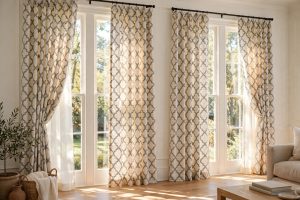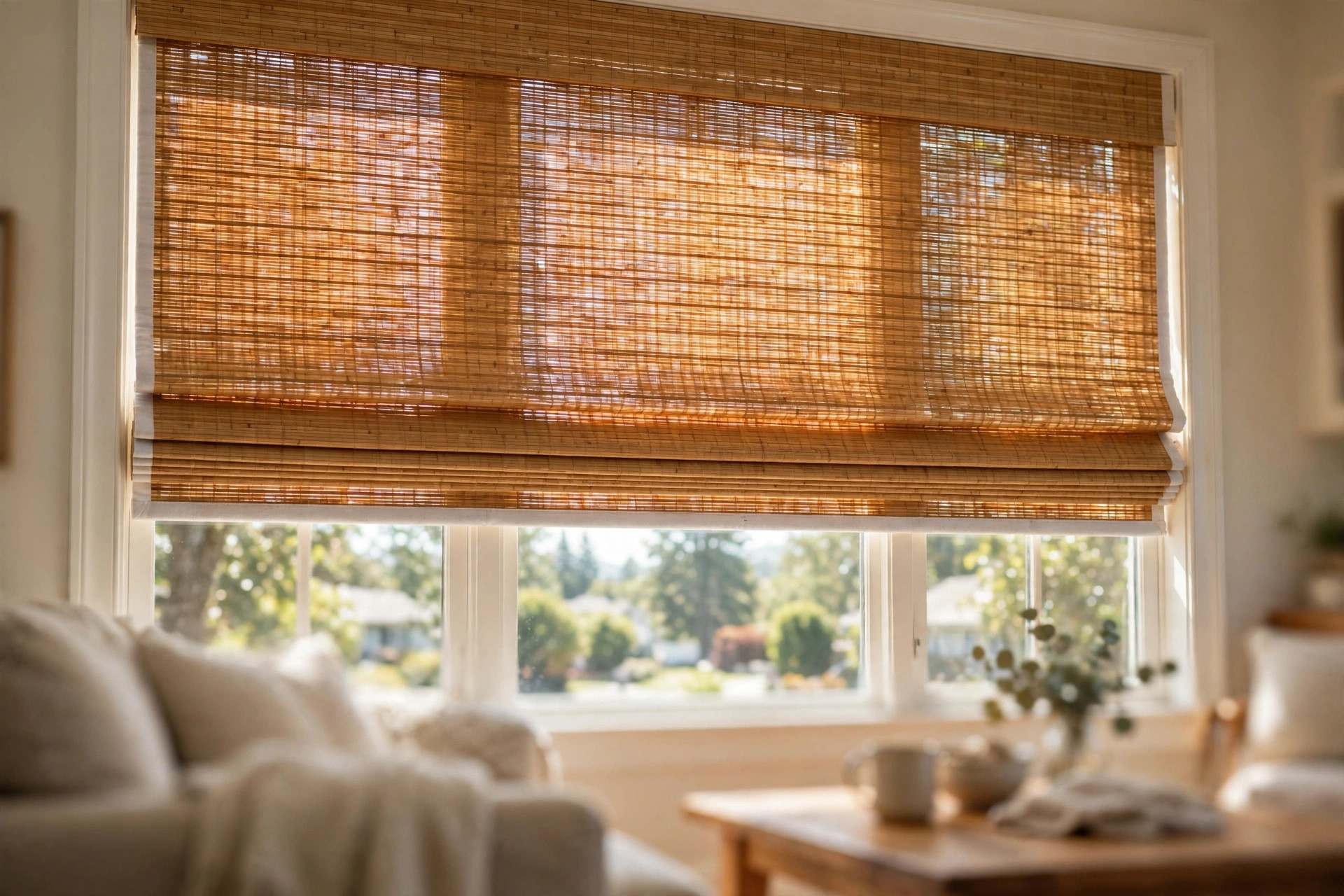

Many homes lose heat through bare windows. Cold air seeps in during winter. Warm air escapes. This waste raises heating bills and makes rooms feel cold. Thermal bamboo roman shades for sale offer a simple answer. They combine the soft folds of a roman shade with the natural warmth of bamboo and a lining that holds heat inside the room. This guide explains what they are, how to choose them, what they cost, and how to keep them in good shape for years.
Why Thermal Bamboo Roman Shades Matter
Windows are among the weakest points of a house. A single pane of glass lets heat pass with ease. Even double pane glass loses more heat than a solid wall. The United States Department of Energy notes that window coverings can cut heat loss by a large margin, as explained on ENERGY STAR. A thermal shade adds a layer of still air between the room and the glass. Still air slows the movement of heat. Bamboo adds another layer of natural fiber. Together they form a shield that is both pretty and practical.
Bamboo is a fast-growing grass. It needs little water and no pesticides to grow well. For buyers who care about the earth, bamboo is a kind choice. It gives a warm, woven look that fits many styles of decor, from farmhouse to modern. The roman shade style folds up in soft, even pleats when raised. It drops to a flat, smooth panel when lowered. This clean action makes it a favorite for living rooms, bedrooms, and dining rooms.
The thermal lining is the part that does the real work. It is often made of white foam-backed fabric or a soft insulating layer sewn to the back of the bamboo. This lining reflects heat back into the room in winter. In summer, it can help block the hot rays of the sun. Many owners report lower fuel bills after they install thermal shades on their coldest windows. Comfort improves as well. Drafts near windows grow less sharp. Rooms feel even and calm.
For people who want both beauty and savings, these shades make sense. They are not the cheapest option on the shelf. But they pay back value through energy savings and long life. Homeowners who plan to stay in their homes for many years often find them a wise purchase. The guides at Blinds.com show many mounting options for different window types.
How to Choose the Right Shade: Thermal Bamboo Roman Shades for Sale
Buying window shades is easier when you know what to check. Start with the size of your window. Measure the width and height with a steel tape measure. Measure in three places: top, middle, and bottom for width; left, center, and right for height. Use the smallest number for an inside mount. This method gives a snug fit. A poor fit lets air slip past the edges, which weakens the thermal effect.
Check the Lining
Not all thermal linings are equal. Look for a lining that covers the full back of the shade with no gaps. A foam-backed lining is common and works well. Some makers use a bonded interlining of soft fabric. Ask the seller what the lining is made of. A thick, even lining holds more heat than a thin one. If the listing gives an R-value or a heat-loss figure, compare it with other models. The product experts at This Old House often advise buyers to read the full product details before they order.
Look at the Weave
Bamboo shades come in open weaves and tight weaves. An open weave lets some light pass through. It gives a soft glow in the room. A tight weave blocks more light and gives more privacy. For bedrooms, a tight weave with a blackout lining is the best choice. For a sunroom or a kitchen, an open weave may be enough. Hold a sample up to the light if you can. Many sellers will mail free swatches.
Decide on the Lift System
A cord lift is the classic style. A cordless lift is safer for homes with children and pets. A top-down, bottom-up model lets you lower the shade from the top while keeping the bottom closed. This style gives light and privacy at the same time. Motorized lifts add comfort and cost. Think about who will use the shade each day. A cordless lift is worth the extra money in a nursery or a playroom. Cord safety advice from The Spruce explains why cordless models are the safer pick for families. You can also review affordable bamboo roman shades buying guides to compare lift types side by side.
Match Your Decor
Bamboo comes in many tones. Honey, walnut, espresso, and natural are common. Pick a tone that matches your floors or your furniture. The roman fold style is soft and classic. It suits both formal and casual rooms. If your room has many hard lines, the woven texture of bamboo adds needed warmth. The design ideas on HGTV show how natural shades fit into many room styles.
Types and Options
Thermal bamboo roman shades come in several forms. Each form suits a different need.
Standard Flat Fold
The flat fold is the most common style. When the shade is lowered, it hangs flat. When it is raised, it stacks into neat, even folds. This style suits living rooms and offices. It gives a clean look that does not draw too much notice.
Hobbled Fold
The hobbled fold keeps soft rolls even when the shade is fully down. It looks rich and full. It suits formal dining rooms and master bedrooms. The extra fabric adds a bit more insulation. It also costs more than the flat fold.
Woven Wood Roman
Some makers call these woven wood shades. They blend bamboo with reeds, grasses, or jute. The look is more rustic. A thermal lining turns them into a strong insulator. Shoppers who like the relaxed, coastal style often pick this type. You can read more about related styles in guides to thermal energy efficient window treatments for sale.
Top-Down Bottom-Up
This option is a lift style more than a fold style. It lets the shade open from the top down. You can let light in at the top while the bottom stays closed for privacy. It is a fine choice for street-facing windows and bathrooms. Not all makers offer it on bamboo models, so check before you order.
Motorized
Motorized shades run on a small battery or on house power. A remote or a phone app controls them. They are handy for tall windows that are hard to reach. They also help older adults who find cords hard to pull. The cost is higher, and the motor may need new batteries once a year. Smart home reviews on Bob Vila cover motorized shade options in more depth.
Custom vs. Ready Made
Ready-made shades come in set sizes. They cost less and ship fast. Custom shades are cut to your exact window size. They cost more but fit better. A better fit means better insulation. For odd-size windows, custom is the only real choice. Large home stores like The Home Depot and Lowe’s carry both ready-made and custom lines.
Cost and Price
Prices for thermal bamboo roman shades vary with size, lining, and lift type. A small ready-made shade for a standard window may cost between 40 and 90 dollars. A large shade with a blackout thermal lining may cost between 120 and 250 dollars. Custom shades for wide windows can run from 200 to 500 dollars each. Motorized models add 100 to 200 dollars per shade.
The lining is the main cost driver. A basic foam lining adds little to the price. A thick bonded interlining costs more. Cordless lifts add 20 to 50 dollars. Top-down bottom-up adds a similar amount. These extras are worth it for many buyers because they improve daily use.
When you compare prices, look at the full cost. Some sellers charge extra for shipping, while others offer free shipping over a set amount. Check the return policy too: custom shades are often final sale, while ready-made shades can be returned in most cases. The price guides on Wayfair and IKEA help shoppers see the full range of costs across many brands.
Think about long-term value. A well-made thermal shade can last 10 to 15 years. Over that time, lower heating and cooling bills add up. If a shade saves even 30 dollars a year in energy costs, it pays for itself well before it wears out. Buyers who want both insulation and a quieter room may also look at noise reducing bamboo roman shades for texas homes, since the same thick lining that holds heat also softens street noise.
Care and Upkeep
Bamboo shades need only light care. Dust them once a month with a soft cloth or a vacuum brush head. Work from top to bottom. This keeps dust from settling into the weave. For spots, wipe with a damp cloth and a drop of mild soap. Do not soak the shade. Too much water can warp the bamboo and stain the lining.
Keep the lining dry. In a bathroom, run the fan during and after showers. In a kitchen, keep the shade away from the stove, since grease in the air can dull the weave over time.
Check the cords or the lift once a year. Look for frayed cords or loose brackets. Tighten screws as needed. A small drop of silicone spray on the cord lock keeps it moving smooth. For cordless shades, wipe the bottom rail and check that the spring still holds the shade at any height. The cleaning guides at The Spruce give step-by-step care tips for woven shades.
Sun can fade bamboo over time. In rooms with strong afternoon sun, rotate is not possible, but a UV window film can slow fading. Fading is normal and does not harm the shade. Many owners like the soft, aged tone that old bamboo takes on. If a slat cracks, a dab of wood glue and a clamp can fix it. For large damage, contact the maker about repair parts before you buy a full new shade.
Safety
Window coverings must be safe for all who live in the home. Cords are the main risk. Loose cords can form loops that trap small children. Choose cordless lifts for any room where children play or sleep. If you already own corded shades, use cord cleats to wrap cords high on the wall, out of reach. Keep cribs, beds, and play areas away from windows with cords.
Mount brackets with care. A shade that falls can hurt a person below. Use the right anchors for your wall type. Drywall needs toggle bolts or wall anchors. Wood trim holds screws well. Brick and concrete need masonry anchors. Follow the maker’s guide step by step. If you are not sure, hire a handyman. The cost of one hour of labor is small next to the cost of an injury.
Fire safety matters too. Keep shades away from open flames, candles, and heaters. Bamboo is a plant fiber and can burn. Do not place a space heater right under a lowered shade. Leave at least three feet of space between a heater and any window covering. Check your smoke alarms twice a year and keep a clear path to each window that could serve as an exit.
For renters, check your lease before you drill. Many landlords allow small bracket holes if you fill them at move-out.
Frequently Asked Questions
Do thermal bamboo roman shades really save energy?
Yes, they can. A thermal lining adds an insulating layer that slows heat flow through glass. Tests show that well-fitted shades can cut heat loss at windows by a clear margin. Cold-climate homes see the largest gains.
Can I install them myself?
Most ready-made shades are simple to install. You need a drill, a level, a tape measure, and a pencil. The job takes 20 to 40 minutes per window. Custom shades come with exact brackets for your order. If your windows are very tall or hard to reach, a pro installer can help.
Will they block all light?
A tight weave with a blackout lining blocks most light. Some glow may show at the edges. An open weave lets filtered light through. If you need full dark for sleep, pick a blackout lining and an outside mount that covers the frame edges.
Are bamboo shades good for humid rooms?
Bamboo handles normal indoor air well. In very damp rooms like bathrooms, pick a model with a moisture-safe lining and run the exhaust fan. Wipe the shade dry if it gets wet. Long damp spells can cause mildew on any natural fiber.
How do I clean the thermal lining?
Vacuum the lining with a soft brush head. For marks, dab with a damp cloth. Do not machine wash the shade. Do not use bleach. Strong cleaners can break down the foam or the bond of the lining.
Where is the best place to buy them?
Thermal bamboo roman shades for sale can be found at large home stores, online shade shops, and big marketplaces. Compare lining type, weave, lift, and return policy before you buy. Free swatches help you judge color and weave at home.
A Final Word
Thermal bamboo roman shades for sale bring together natural beauty and real function. They soften a room with woven texture. They hold warmth in winter and block harsh sun in summer. Measure with care, pick a full thermal lining, and choose a safe lift for your home. With light upkeep, these shades will serve you well for many years. They are a quiet upgrade that you will feel each time you sit near a window on a cold night.
References
Blinds.com. (n.d.). Window blinds, shades, and shutters. https://www.blinds.com Bob Vila. (n.d.). Home improvement advice. https://www.bobvila.com ENERGY STAR. (n.d.). Energy efficient products. https://www.energystar.gov HGTV. (n.d.). Home and garden ideas. https://www.hgtv.com IKEA. (n.d.). Home furnishings. https://www.ikea.com Lowe’s. (n.d.). Home improvement products. https://www.lowes.com The Home Depot. (n.d.). Home improvement products. https://www.homedepot.com The Spruce. (n.d.). Home and garden advice. https://www.thespruce.com This Old House. (n.d.). Home renovation guidance. https://www.thisoldhouse.com Wayfair. (n.d.). Furniture and home goods. https://www.wayfair.com
Was this guide helpful?

About Jennifer Lee
The My Garden US editorial team writes practical, in-depth home and garden guides for American homeowners — tested advice, no fluff.
You May Also Like
Buy Skylight Blackout Blinds Online in Florida: A Complete Guide
January 14, 2026 0 views
Blackout Roller Shades Price Comparison USA: What You Pay and Why
January 13, 2026 0 views
Thermal Shutter Installation Services for Homeowners: A Plain Guide
September 20, 2026 0 views