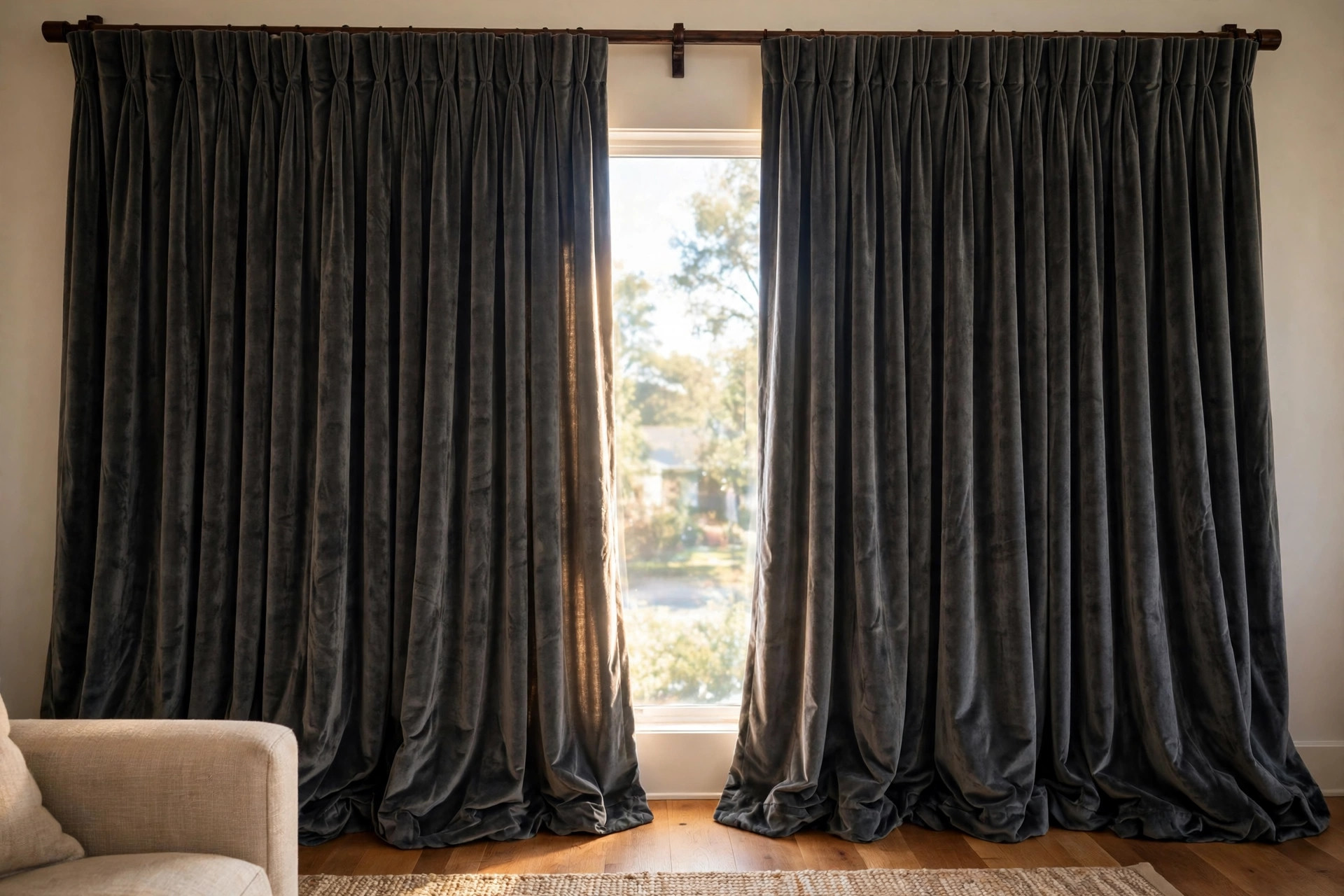
The street outside your window never sleeps. Trucks pass at dawn. Neighbors talk late at night. If you want a quieter home, this noise reducing pinch pleat drapes buying guide will help you choose well. Heavy drapes cannot make a room silent. No curtain can do that. But the right drapes can cut echoes inside a room and soften the noise that comes through the glass. A pinch pleat drape is a good choice for this job. Its even folds stack thick layers of cloth in front of the window. That thickness traps sound waves instead of letting them bounce around the room. In this guide you will learn how these drapes work, what features matter, and how to hang them for the best result. The advice is plain and practical. It fits any budget and any room in an American home.
Why Noise Reducing Drapes Matter
A quiet home is worth real money in your daily life. Noise raises stress. It breaks sleep. It makes it hard to read or talk on the phone. Many homes suffer from noise because of hard surfaces. Wood floors, bare walls, and bare windows all bounce sound. Drapes fix part of that problem. They add a soft layer where the room needs it most: at the window, which is the thinnest part of the wall.
Pinch pleats help more than flat panels do. The pleats are pinched at the top, so the cloth falls in deep, even folds. Those folds stack more cloth over each inch of the window. More cloth means more mass, and mass is what stops sound. That is why pinch pleats appear so often in bedrooms, nurseries, and home offices where quiet matters.
You should also know what drapes cannot do. They will not block low bass sounds well. They will not stop a train that runs near your wall. Drapes handle mid and high noise, and they kill echoes inside the room. That change alone makes most rooms feel much calmer.
How Sound Reduction Works: Noise Reducing Pinch Pleat Drapes Buying Guide
Sound travels in waves. Soft, heavy things absorb those waves. Hard, smooth things bounce them back. When sound hits a drape, part of it passes through and part is absorbed by the fibers. Thick fibers absorb more than thin ones. Layers of cloth with air between them absorb more than a single flat sheet.
Laboratories measure this with a number called the noise reduction coefficient, often written as NRC. A bare window scores near zero. A heavy lined drape can score between 0.15 and 0.40. That sounds small, but in a real room the difference is clear. Speech becomes softer. Street hiss drops. Echoes die faster.
Pinch pleats add a second effect. The folds break up flat surfaces. Sound that hits a folded surface scatters instead of bouncing straight back into the room. This lowers echo. A helpful rule is fullness. Look for drapes sold as 200 percent to 250 percent full. That means the flat width of the cloth is two to two and a half times the width of the window it covers.
What to Look For When You Buy
Start with the cloth. Heavy fabrics win. Velvet, thick cotton duck, and woven brocade all have real weight. Weigh the panel in your hand if you shop in a store. It should feel solid, not flimsy.
Next, look for a lining. A lined drape has a second layer sewn to the back of the face cloth. The best linings for noise are thick blackout or thermal linings. A separate interlining, a soft layer between the face and the back, is even better and is found on high-end drapes. Interlining is the single best upgrade for sound that you can buy in a drape.
Check the pleat style. Pinch pleats come in two finger, three finger, and five finger styles. For noise, three finger pleats are the standard pick. They hold full folds without costing as much as the wide five finger style.
Measure with care. Drapes that leave gaps at the sides and bottom let sound and light leak past them. Measure the window frame, then add six to eight inches of extra width on each side. Let the panels fall to the floor or puddle one or two inches on it. Floor-length coverage seals the bottom edge, which is where sound slips through. Hang the rod four to six inches above the frame so the pleats cover the top of the frame too.
Hardware matters more than most shoppers think. Use a strong rod that can hold heavy cloth without bending. A rod that sags lets the middle of the drape pull away from the wall. That gap kills the seal. Wrap-around rods are a smart buy. They curve back to the wall at each end, which closes the side gaps where sound enters. For very heavy drapes, add a center support bracket.
Types of Pinch Pleat Drapes
Ready-made pinch pleat drapes are sold in standard widths and lengths. They cost less and ship fast. Many ready-made lines now include a sound-reducing or blackout lining option. They are the best value for most buyers. Reviews often mention whether a panel feels heavy or thin, and that is useful data.
Custom drapes are cut to your exact window size. A workroom builds them to your fabric choice and adds the lining and interlining you pick. They cost two to five times more than ready-made panels. The gain is a perfect fit, which means better sound sealing. Custom is worth the money for large windows, odd sizes, and rooms where quiet is the top goal.
Double-hung setups pair a sheer with a heavy drape on one rod or two rods. The sheer gives privacy and soft light by day. The heavy drape closes at night for sound and darkness. It costs more than one pair of panels, but it solves two problems at once. A similar trick is to hang heavy pinch pleat drapes over noise reducing bamboo roman shades for texas homes.
Magnetic sealing drapes are a newer idea. Small magnets in the edges snap the two panels together in the middle. They also snap the panels to metal strips on the frame sides. This closes the leaks that normal drapes leave. They cost a bit more and need a metal-friendly frame, but the seal is the tightest you can get without custom work.
If you live in a warm, damp state, look at best pinch pleat drapes for humid climates before you pick a fabric. Some heavy fabrics hold moisture and grow mildew. In those climates, lined synthetic blends or mildew-treated cotton do better than pure natural fibers.
Cost and Price
Prices run wide. A ready-made lined pinch pleat panel at a big home store can cost 25 to 60 dollars. Mid-range panels from curtain specialists run 60 to 150 dollars per panel. They use heavier cloth and better linings. Most buyers get the best noise result for their money in this range.
High-end ready-made and custom drapes start near 150 dollars per panel and can pass 400 dollars per panel for silk or wool with interlining. A full custom job for one window with two panels often lands between 500 and 1,500 dollars, hardware included. Drapes last for decades when cared for, so the yearly cost is low.
Watch for hidden costs. Heavy drapes need strong rods, which cost 30 to 80 dollars. If you hire an installer, labor runs 50 to 150 dollars per window in most cities. Compare the full price, not just the panel price, when you shop across stores like IKEA, Wayfair, Home Depot, and Lowe’s.
Pairing drapes with other treatments can stretch your dollar. A blackout roller shade behind the drape costs far less than a second pair of panels and adds another sound layer. Check top rated blackout curtains for bedrooms for sale to see how blackout panels compare on price and weight.
Care and Upkeep
Heavy drapes gather dust. Vacuum the panels with a brush attachment every two to four weeks. Work from top to bottom so dust falls away from the pleats. A quick shake outdoors once a season also helps.
Most lined drapes should not go in a home washing machine. The lining can shrink at a different rate than the face cloth. That mismatch puckers the panel. Read the care tag. Many panels are dry clean only. Cotton and synthetic panels are often machine washable on a gentle cycle. If you wash them, take them out while still damp and rehang them at once. The weight of the damp cloth pulls wrinkles out as it dries.
Sun is the slow enemy of drapes. South and west windows can fade face cloth in two to five years. Lining helps because the lining takes the sun instead of the face cloth. When the lining wears out, a workroom can replace it for much less than new drapes cost. Rotate pairs between windows if one side of the house gets more sun.
Steam them once a year. A handheld steamer relaxes wrinkles and freshens the cloth. Keep the steamer a few inches from the fabric and work down the length of each pleat. This also kills dust mites, which like warm, heavy cloth. Fresh drapes absorb sound better than flat, packed-down ones, so this small job pays off in quiet too.
Safety
Heavy drapes need strong anchors. A rod that pulls out of the wall can hurt someone and damage the window trim. Mount rods into studs when you can. If you must use drywall anchors, pick ones rated for at least twice the weight of the panels and hardware. Test the rod with a firm pull before you hang the cloth.
Keep drapes clear of heat. Panels that touch a radiator, a baseboard heater, or a hot lamp shade are a fire risk. Leave at least a few inches of space. In a room with a fireplace, keep the drape well back from the opening. Fire safety guidance from the government is a good read before you hang any window treatment near heat, and the CPSC posts current rules on cord and blind safety.
Cord safety matters if your drape has pull cords. Long cords can strangle small children and pets. Choose cordless or wand-drawn drapes when children live in or visit the home. If you keep cords, cut the loop and mount a cord cleat high on the frame, out of a child’s reach.
Mold is the other quiet risk. Heavy lined drapes can trap damp air against cold glass in winter. Check behind the panels each month in the cold season. If you see spots or smell must, dry the area and leave the drapes open on sunny days. In very damp rooms, a dehumidifier does more good than any fabric choice.
Frequently Asked Questions
Do pinch pleat drapes really reduce noise? Yes, within limits. They absorb mid and high sounds and kill echoes inside the room. You will hear the difference most at night, when traffic and voices soften. They will not block deep bass or heavy vibration. For those sounds you need better windows and sealed frames.
How many panels do I need per window? Two panels are the norm, one for each side. Each panel should measure 1.5 to 2 times the half-width of the window to keep the pleats full when closed. A 48-inch window needs two panels of about 50 inches each in flat width, which is sold as a 100-inch pair. For very wide windows, use three or four panels. Fullness is what gives you the sound benefit, so do not skimp on width.
Should I choose blackout lining or thermal lining? Pick blackout if light control is your main goal and you want a bedroom dark for sleep. Pick thermal if you want insulation against heat and cold as well as sound. Many linings now do both. Either lining adds the mass that cuts noise.
Can I hang noise reducing drapes on a normal rod? You can, but the rod must be strong. Heavy lined drapes can weigh 10 to 20 pounds per pair. A thin tension rod will bend or fall. Use a rod rated for the weight, with brackets every 36 to 48 inches. A wrap-around rod or a ceiling mount seals the edges better than a basic straight rod, which helps both sound and light control.
Will drapes help with an echo in my room? Yes, and this is often the biggest change you will notice. Echo comes from sound bouncing between hard surfaces. A full wall of draped window removes one large hard surface. Add a rug and most rooms lose their ring.
How do I clean pinch pleat drapes without ruining the pleats? Vacuum with a brush head once a month. For deeper cleaning, follow the care tag. Most lined panels need dry cleaning. If machine washing is allowed, wash cold and gentle, then hang the panels damp right back on the rod. The pleats will fall back into shape as the cloth dries. Press or steam lightly if needed. Never wring a pleated panel, because wringing breaks the pinch stitching.
A Short Final Word
The right drapes change how a home feels. Measure well, buy heavy, line them, and hang them tight to the wall. Seal the edges and let the folds do their work. You will not get silence, but you will get a calmer room, softer voices, and better sleep. That is worth the price of good cloth. For design ideas beyond the window, browse The Spruce, HGTV, and Apartment Therapy. For lab-style product tests and ratings, see Consumer Reports and Energy.gov. For ready-made options and hardware, compare Blinds.com with the big stores named above. Start with one noisy room, test the result, and then outfit the rest of the house.
References
Apartment Therapy. (n.d.). Home design ideas and inspiration. https://www.apartmenttherapy.com Blinds.com. (n.d.). Window blinds, shades, and shutters. https://www.blinds.com Consumer Reports. (n.d.). Product reviews and ratings. https://www.consumerreports.org HGTV. (n.d.). Home and garden ideas. https://www.hgtv.com IKEA. (n.d.). Home furnishings. https://www.ikea.com Lowe’s. (n.d.). Home improvement products. https://www.lowes.com The Home Depot. (n.d.). Home improvement products. https://www.homedepot.com The Spruce. (n.d.). Home and garden advice. https://www.thespruce.com U.S. Consumer Product Safety Commission. (n.d.). Product safety information. https://www.cpsc.gov U.S. Department of Energy. (n.d.). Energy efficiency and renewable energy. https://www.energy.gov Wayfair. (n.d.). Furniture and home goods. https://www.wayfair.com
Was this guide helpful?

About David Wilson
The My Garden US editorial team writes practical, in-depth home and garden guides for American homeowners — tested advice, no fluff.