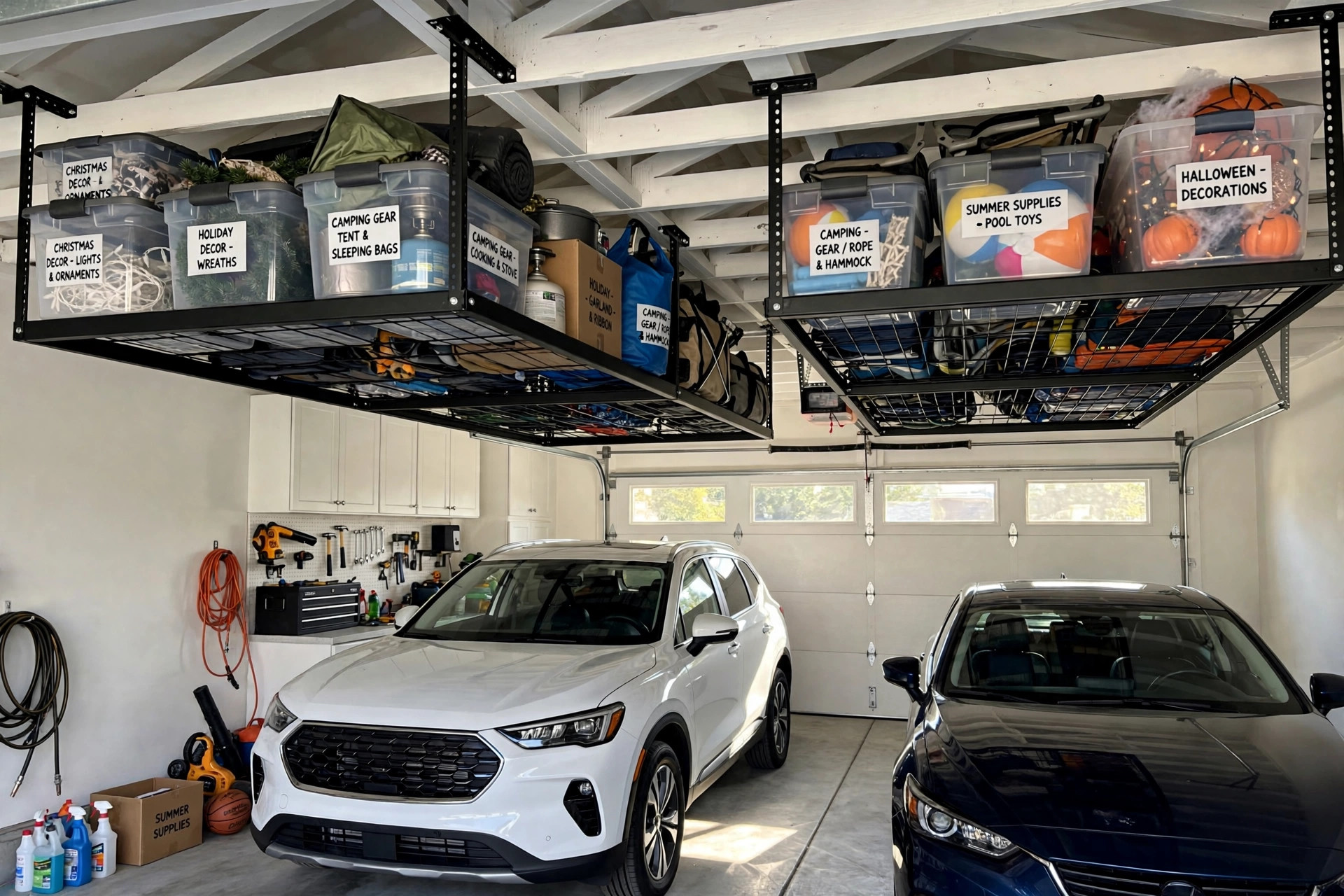

Most American garages have the same problem. The floor is full. Boxes sit in corners. Bikes lean against the wall. Tools crowd the workbench. The cars barely fit. Yet above all of it sits a wide stretch of empty space, the ceiling, doing nothing at all. This garage ceiling storage racks reviews and buying guide looks at how overhead racks can put that empty space to work. A good ceiling rack lifts bins and boxes off the floor and holds them high. The garage feels larger at once. The floor stays clear. Holiday lights, camping gear, and old records get a real home instead of a corner pile.
The idea is simple. Steel platforms hang from the joists overhead by posts or cables. They sit above the garage doors or over the cars. They hold plastic bins, seasonal gear, and things you use only a few times a year. Reviews from buyers show the same pattern. People wish they had bought them sooner. They also show where people go wrong. Wrong weight limits. Weak mounting. Racks that swing or sag. This guide sorts through those lessons so you buy once and buy right.
Why Overhead Storage Matters
Floor space is the most fought-over ground in any home. The garage doubles as a workshop, a gym, a garden shed, and a parking bay. When boxes eat the floor, everything else suffers. A ceiling rack gives that floor back. It uses the zone between the top of the garage door and the ceiling, a band of space that is empty in nearly every garage.
It also protects what you store. Bins on a cold concrete floor can soak up damp in spring. Cardboard boxes on the ground draw insects and mice. A rack keeps boxes up in drier air and away from feet, spills, and wheels.
What to Look for When You Buy: Garage Ceiling Storage Racks Reviews and Buying Guide
Not every rack suits every garage. The joists, the ceiling height, and the garage door all shape the choice. These are the points that matter most.
Weight Capacity
Every rack carries a rating, often from 200 to 600 pounds for a standard platform. Some heavy-duty units reach 750 pounds or more. Read the rating with care. It usually counts the whole platform, not each corner. A rack rated at 600 pounds should hold no more than that in total, spread evenly.
Think about what you will actually store. Holiday decorations are light but bulky. A box of old books is small but very heavy. Camping gear sits in the middle. Add up a fair guess before you shop. Many buyers at The Container Store and IKEA start with bins first, then match the rack to the load. Buy for the heaviest realistic load, then leave room to spare.
Steel Construction
Most good racks use powder-coated steel. The coating resists rust and chips. Check the thickness of the steel frame and the size of the hardware. Thin, flimsy frames bend under a full load. Thick square tubing holds its shape for years.
The deck matters too. Some racks come with wire grid decks that let air move through. Others have solid steel panels. Wire decks are lighter and cheaper. Solid decks catch small items and keep dust off the bins. Either works if the steel is sound.
Mounting System
Racks attach to the joists in two main ways. Fixed posts bolt straight into the joists and hold the platform firm. These are the sturdiest option. Cable or strap systems hang the platform lower and allow height adjustment. They are easier to install around garage door openers and lights.
For either type, the joists must be solid wood or engineered lumber in good shape. Racks do not belong on drywall alone or on old, cracked timbers. If you are unsure about your ceiling, ask a contractor to look before you buy. The Family Handyman guides on ceiling joist work explain what sound framing looks like.
Adjustable Height
Garages differ. Some ceilings sit eight feet high. Others reach twelve feet or more. An adjustable rack lets you set the platform where it fits best. High enough to clear the cars and the open garage door. Low enough to reach the bins with a step stool.
Most adjustable racks move in two-inch or three-inch steps. Set the height during install and leave it. Pick a height, tighten everything down, and treat it as fixed.
Size of the Platform
Common platforms run four feet by four feet, four feet by eight feet, or three feet by six feet. Measure your ceiling first. Mark where the garage door opener hangs. Mark where the door travels when it opens. Mark lights and vents. Then choose a platform that fits the clear space.
Many garages fit two smaller racks side by side better than one large rack. Two four-by-four units give the same area as one four-by-eight but leave room around obstacles. Plan with tape on the floor before you order.
Common Types of Ceiling Racks
The market holds several styles. Each suits a different garage and a different load.
Fixed-post steel platforms. These bolt to the joists with rigid steel posts. They hold the most weight and move the least. They are the standard choice for heavy loads like tools, books, and full bins of decor. Install takes two people and a drill.
Adjustable cable racks. These hang from cables or straps that attach to joist mounts. You set the platform height by adjusting the cables. They suit renters less, since they still bolt to joists, but they forgive uneven ceilings and work around garage door hardware. Shoppers compare styles at Lowe’s and The Home Depot, where both fixed and cable types sit side by side.
Retractable and pulley racks. A few models raise and lower on pulleys or winches. They cost more and hold less, but they solve the reach problem for very high ceilings. The moving parts need care and oil over the years.
For most buyers, a fixed-post platform or an adjustable cable rack covers every need. Specialty units fill gaps later.
Cost and Price Ranges
Prices follow size and weight rating. A basic four-by-four wire rack rated at 250 pounds often sells for under one hundred dollars. A four-by-eight heavy-duty platform rated at 600 pounds runs from two hundred to four hundred dollars. Premium brands with thick steel and solid decks reach five hundred dollars or more.
Watch for what the price leaves out: some racks ship without mounting hardware, and others need bins sold apart. A fair review of any rack lists the true total: rack, hardware, bins, and any tools you must buy.
Two racks cost less per square foot than one small rack in most cases. If you plan to add a second unit later, buying both at once often saves on shipping and on the install time. For more on steel gauges and coatings, the storage buying guides at Wayfair and The Spruce explain the materials in plain terms.
Compared with other storage options, ceiling racks sit in the middle. They cost more than simple wall shelves and less than built-in cabinets. Unlike rolling carts, which suit items you move daily, ceiling racks suit items you touch twice a year. A house with both has the best of each. Readers often pair this guide with our rolling storage carts reviews and buying guide for the floor-level side of the plan.
Installation Tips
Good install decides whether a rack is safe for a decade or a worry from day one. Most buyers can do it with basic tools, but the work needs care.
Start by finding the joists with a stud finder. Mark every joist across the whole install zone. The rack must bolt into the center of solid joists, never into drywall or into the gap between joists. If your garage has a finished ceiling, a strong magnet can find the drywall screws that mark each joist line.
Check for wires and pipes before you drill. Garages often hide electrical runs and water lines above the ceiling. A quick look from the attic settles the question.
Use the hardware that comes in the box, and use all of it. Lag bolts need pilot holes drilled to the right size. Do not swap in shorter screws or skip washers to save time. Torque each bolt firm but do not crack the wood. This Old House style guides and the project pages at Apartment Therapy both stress the same rule: the mount is only as strong as the weakest bolt.
After install, load the rack slowly. Add bins one at a time and watch the posts for any shift. Check every bolt again after the first week, since wood settles.
Care and Upkeep
A ceiling rack asks little once it is up. Twice a year, look at every bolt and bracket. Tighten what has worked loose. Look for rust on the steel, especially near the garage door where damp air enters. A wire brush and a dab of touch-up paint stop small rust spots before they spread.
Keep the load balanced. Heavy bins belong near the center of the platform, not piled on one corner. Rotate stored items when you swap seasons so no one corner carries weight all year.
Label every bin on two sides. From the floor, all bins look alike. Clear labels save you from pulling down five boxes to find the tree skirt. Clear plastic bins help too, since you can see the contents at a glance. Store light items up top and keep anything truly heavy, like paint cans or tool chests, on the floor or on wall shelving rated for the load.
Dust gathers on overhead platforms. A quick sweep with a long-handled broom each spring keeps it down. If the garage sees heavy damp, slip moisture-absorbing packets into the bins with fabric and paper goods.
Safety
Safety is the heart of this garage ceiling storage racks reviews and buying guide. A loaded rack hangs over heads, cars, and children. Treat it with respect.
Never exceed the weight rating. The number on the box is a limit, not a target. Stay ten to twenty percent below it. Never hang from the rack, let children swing on it, or use it as a step.
Keep the space below clear of anything that invites climbing. A rack over a workbench tempts people to stand on the bench and reach up. A rack over open floor is safer. If you must store over a bench, mark the bench as a no-step zone.
Check local rules. Some towns and homeowner groups limit overhead garage storage or require permits for ceiling-mounted loads. A quick call to the town office before you drill saves trouble later.
In earthquake zones, add extra care. Strap tall bins to the platform so they cannot walk off in a shake. Keep the heaviest items lowest and centered.
Fire safety counts too. Do not store gasoline, paint thinner, or propane on a ceiling rack. Fumes rise and gather near the ceiling. Flammable liquids belong in a locked ground-level cabinet, away from heat. Check that smoke detectors in the garage still work after install.
Frequently Asked Questions
How much weight can a garage ceiling storage rack hold? Most home racks hold 200 to 600 pounds per platform. Heavy-duty models reach 750 pounds or more. Always check the rating on the exact model you buy. The rating covers the full platform, so spread the load evenly and stay below the limit.
Will a ceiling rack work with a garage door opener? Often yes, with care. Measure where the opener hangs and where the door travels. Many buyers mount racks to one side of the opener or above the door’s high point. Adjustable racks help you set the platform just clear of the moving parts.
Can I install a ceiling rack by myself? Two people are safer, but one person can manage a small rack with sawhorses holding the platform. The drilling and bolting are simple. The lifting is the hard part. Do not rush the overhead work.
What should I store on a ceiling rack? Seasonal items are the classic load: holiday decorations, camping gear, sports equipment, luggage, and keepsake boxes. These are bulky, light to medium in weight, and needed only a few times a year. Keep daily-use items at floor level, where rolling storage carts and shelving serve better.
Are ceiling racks safe in homes with low ceilings? Low ceilings, under eight feet, make racks awkward. The platform eats headroom and the bins hang near head height. In that case, wall-mounted shelving or an attic solution may suit better. See our top rated attic storage solutions for cold climates for one alternative.
How do ceiling racks compare with wall shelving? Ceiling racks use space that nothing else claims. Wall shelves are easier to reach and cheaper per square foot, and our heavy duty laundry room shelving buying guide covers sturdy wall options for other rooms. Many garages use both: walls for tools and daily gear, ceiling for the seasonal bulk.
Final Word
A garage ceiling storage rack is one of the plainest upgrades a homeowner can make. It costs little. It installs in an afternoon. It gives back the floor. The reviews agree on the formula for success: buy a steel platform rated above your real load, bolt it into solid joists with the full hardware set, balance the bins, and check the bolts twice a year.
References
Apartment Therapy. (n.d.). Home design ideas and inspiration. https://www.apartmenttherapy.com Bob Vila. (n.d.). Home improvement advice. https://www.bobvila.com Consumer Reports. (n.d.). Product reviews and ratings. https://www.consumerreports.org Family Handyman. (n.d.). DIY home repair and maintenance. https://www.familyhandyman.com IKEA. (n.d.). Home furnishings. https://www.ikea.com Lowe’s. (n.d.). Home improvement products. https://www.lowes.com The Container Store. (n.d.). Storage and organization products. https://www.containerstore.com The Home Depot. (n.d.). Home improvement products. https://www.homedepot.com The Spruce. (n.d.). Home and garden advice. https://www.thespruce.com Wayfair. (n.d.). Furniture and home goods. https://www.wayfair.com
Was this guide helpful?

About Lisa Anderson
The My Garden US editorial team writes practical, in-depth home and garden guides for American homeowners — tested advice, no fluff.
You May Also Like

Waterproof Dresser Drawer Dividers With Free Shipping: A Simple Buying Guide
June 11, 2026 0 views
The Best Stackable Shoe Storage Boxes with Free Shipping: A Practical Guide
May 24, 2026 0 views
Best Pantry Shelving Units for Humid Climates
July 29, 2026 0 views