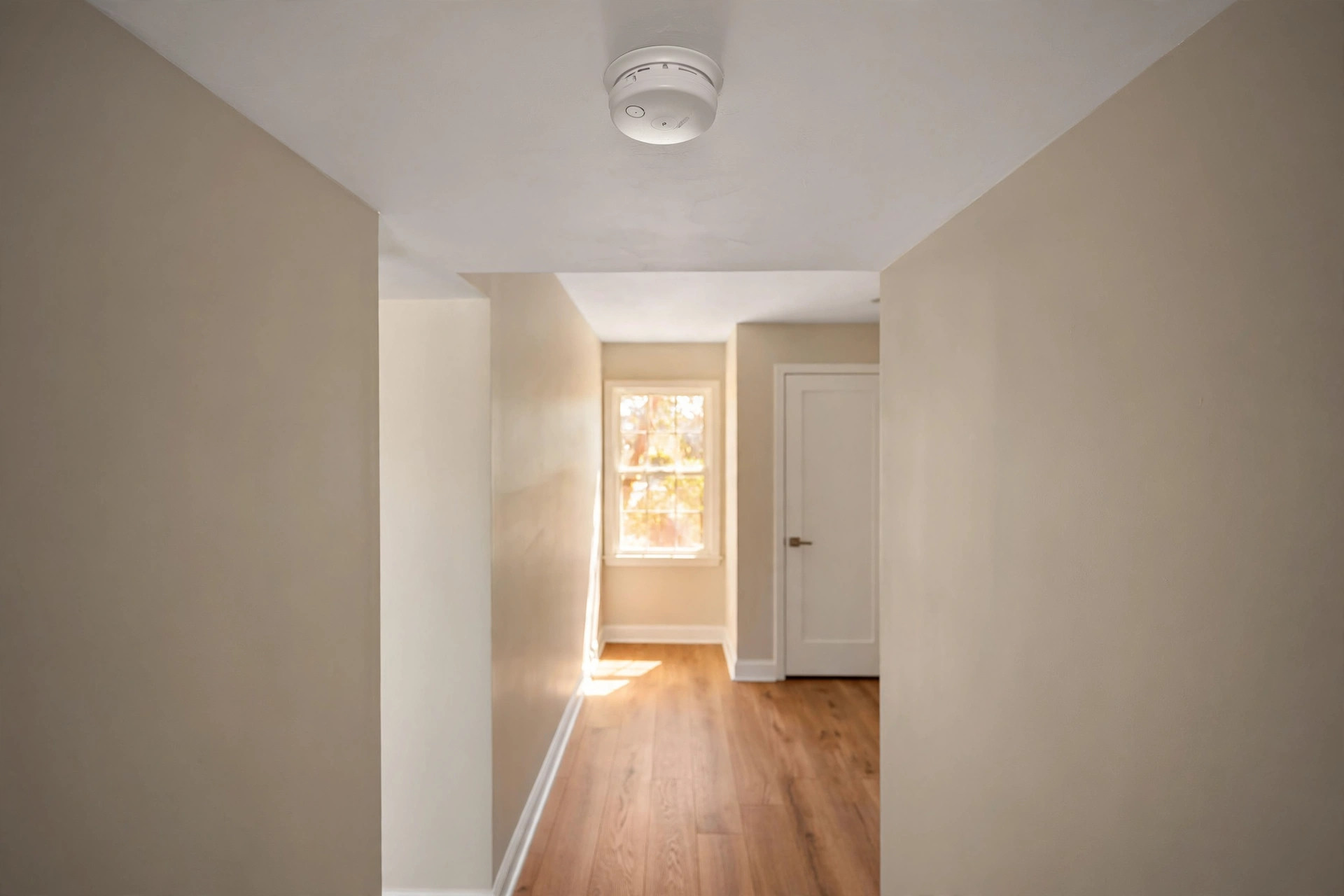

A fire can turn a peaceful home into a scene of loss in minutes. Most fatal house fires happen at night, while the family sleeps. A loud alarm that wakes everyone early is often the only thing that stands between life and death. That is why the best hardwired smoke detector reviews USA shoppers read matter so much. A hardwired detector draws its power from the wiring of the house itself. It does not go silent just because someone forgot to buy batteries. This article explains what these units are, how to judge them, what they cost, and how to keep them working for years.
Why Hardwired Smoke Detectors Matter
A smoke detector has one job: to scream when smoke is present. Hardwired models do this job with a steady supply of power. They connect to the 120-volt circuit of the home. Most also carry a backup battery that takes over during a power outage. This two-layer design gives them a strong record of reliability.
Battery-only units depend on one thing: a fresh battery. Studies of fire deaths have shown again and again that many homes had detectors, but the batteries were dead or missing. A hardwired unit removes that weak point. As long as the house has power, the detector is awake.
There is a second reason professionals favor these models. Hardwired detectors can be linked together. When one unit senses smoke, every linked unit sounds at once. A fire in the basement sets off the alarm by the upstairs bedrooms too. That early warning can add minutes to the time a family has to escape. Minutes save lives.
The Consumer Product Safety Commission keeps a public record of alarm recalls and safety notices. Checking that record before a purchase is a wise step for any buyer.
How to Read Reviews and What to Look For: Best Hardwired Smoke Detector Reviews Usa
The best hardwired smoke detector reviews USA sources share one trait: they test what matters, not just what looks good in a box. When you read a review, look for these points.
Sensor Type: Ionization or Photoelectric
Every smoke detector uses one of two sensing methods. Ionization sensors react fast to hot, flaming fires. Photoelectric sensors react fast to slow, smoldering fires, the kind that start in a couch cushion or a mattress. Smoldering fires cause most fire deaths in homes.
Fire safety groups now lean toward photoelectric units for homes, or dual-sensor units that carry both types. Many reviews praise models that use photoelectric sensors because they cause fewer false alarms from cooking steam. Fewer false alarms mean the family is less likely to rip the unit off the ceiling in anger. A detector on the counter protects no one.
Interconnection
Interconnection is the standout feature of hardwired systems. Older systems link with a wire. Newer systems add wireless links, so battery units and hardwired units can join the same network. When one sounds, all sound.
Reviews often test how loud the full network gets and how fast the signal travels. Look for models that meet the current UL 217 standard. That mark means the unit passed national safety testing. Check the interconnection rules that apply in your state before you buy, since codes vary.
Battery Backup
Every hardwired detector should have a backup battery. Fires sometimes start during storms that knock out power. Reviews note whether the backup is a standard 9-volt cell or a sealed 10-year lithium cell. The sealed cell wins on convenience. You never change it during the life of the unit.
If you rent or want a simpler setup, our look at 10-year battery smoke detector models covers the top sealed-battery choices.
Smart Features
A new class of detectors connects to the home Wi-Fi network. These smart models send alerts to a phone when smoke is found, even if no one is home. Some speak the location of the danger: “Smoke in the kitchen.” Others link to home security panels from companies like Ring, SimpliSafe, and ADT. Reviews from technology sites such as CNET, PCMag, and The Verge often rate how well the apps work and how often false alerts occur.
Smart features are a bonus, not a substitute. The core job is still the loud, local alarm. If you want the connected route, see our roundup of the best smart smoke detector picks for this year. For hands-on comparison tests, Consumer Reports publishes lab results that many shoppers trust.
Types and Options on the Market
The market breaks into a few clear groups.
Basic hardwired smoke-only units. These are the workhorses. They sense smoke, they sound, they interconnect. They cost the least and satisfy code in most areas. Good for rental units and tight budgets.
Hardwired smoke and carbon monoxide combos. Carbon monoxide is a silent killer. It has no color and no smell. A combo unit guards against both threats in one device. The National Fire Protection Association urges a carbon monoxide alarm outside each sleeping area. A combo unit answers that need without extra wiring.
Smart hardwired detectors. These add phone alerts, voice warnings, and self-tests. Google’s Nest Protect is the best-known example, sold through the Google Store. First Alert, a long-time alarm maker, sells smart models that link with popular home platforms.
Heat detectors for garages and kitchens. Smoke detectors do not belong in a garage, where car exhaust causes false alarms, or directly over a stove. A hardwired heat alarm, which sounds when the air gets dangerously hot, fits these rooms better.
Reviews consistently find that mid-priced photoelectric units from established brands give the best value. Premium smart models earn high marks for convenience but not for faster fire detection. The sensor, not the app, saves the family.
Cost and Price: What to Expect
Prices in the United States fall into clear bands.
A basic hardwired photoelectric smoke detector costs between 20 and 40 dollars. Combo smoke and carbon monoxide units run 40 to 80 dollars. Smart hardwired models run 80 to 130 dollars each.
Installation adds to the bill if the home has no existing wiring. An electrician typically charges 100 to 200 dollars per unit to run a new circuit and mount the box. A whole house of six units may cost 600 to 1,200 dollars in labor. Homes built after the mid-1970s often already have the wiring in place, which cuts the job to a simple swap.
Consider the cost against the value. A full set of six basic units costs less than one month of a typical home insurance bill. Some insurers offer a discount for homes with hardwired, interconnected alarms. Ask your agent. The discount rarely covers the whole cost, but it softens it.
Installation and Code Requirements
The National Electrical Code requires hardwired smoke alarms with battery backup in new construction in most states. Local codes set the details: how many units, and where they must go.
The standard layout places one detector in each bedroom, one outside each sleeping area, and one on every level of the home, including the basement. Keep units at least 10 feet from cooking appliances to cut false alarms. Mount them on the ceiling or high on a wall, since smoke rises.
If you are replacing old units, turn off the breaker first. Match the wiring colors: black to black, white to white, and the orange or yellow wire is the interconnect line. A three-wire interconnect lets the whole network sound together. When in doubt, hire a licensed electrician. Mistakes in 120-volt wiring can cause shocks or fires, the very thing the alarm guards against.
Older homes without wiring can use wireless-interconnect battery units as a legal alternative in many jurisdictions. Check with your local fire marshal before choosing this path.
Care and Upkeep
A smoke detector is not a install-and-forget device. It needs small, regular care.
Test each unit once a month. Press the test button and hold it until the alarm sounds. If the network is linked, confirm that the other units sound too.
Vacuum or dust each unit twice a year. Dust and cobwebs can clog the sensing chamber and slow the alarm. A soft brush attachment works well. Never paint a detector. Paint seals the vents and ruins the sensor.
Replace every unit ten years after its date of manufacture, not the date you bought it. The date is printed on the back. Sensors wear out. A fifteen-year-old detector may sit silent through a real fire.
Replace backup batteries once a year unless the unit uses a sealed 10-year cell. A low-battery chirp at 2 a.m. is the detector begging for attention. Answer it the next morning at the latest.
Keep a simple log on the inside of a kitchen cabinet door: the date each unit was installed and the date of each battery change. The log takes a minute and removes all guessing.
Safety Tips for the Whole Home
An alarm is only part of a fire-safe home. Pair it with these habits.
Make an escape plan. Draw the floor plan. Mark two ways out of every room. Pick a meeting spot outside, such as a neighbor’s mailbox. Practice the plan twice a year, once in the dark.
Keep bedroom doors closed at night. A closed door can hold back smoke and heat for many minutes, giving the alarm time to wake everyone and the family time to move.
Keep a fire extinguisher in the kitchen and know how to use it. Small grease fires can be stopped early. Never use water on a grease fire.
Clean the dryer vent every year. Lint is one of the most common fuels for house fires. The vent hose behind the dryer traps it silently.
Store matches and lighters out of the reach of children. Teach children that the alarm sound means get out and stay out, never go back inside for toys or pets.
Frequently Asked Questions
Do hardwired smoke detectors work during a power outage? Yes, if the backup battery is good. The unit switches to battery power the moment house power fails. That is why the backup battery must be checked. A dead backup battery leaves the unit silent in a blackout.
How many hardwired smoke detectors does a home need? Follow the standard rule: one in each bedroom, one outside each sleeping area, and one on every level. A two-story, three-bedroom home needs at least five. Local code may ask for more.
Can I install a hardwired detector myself? If a wired box already exists, a careful homeowner can swap the unit after turning off the breaker. If new wiring must be run, hire a licensed electrician. The work involves 120-volt circuits and must meet code.
What is the difference between hardwired and battery smoke detectors? Hardwired units draw power from the house wiring and link together so all sound at once. Battery units run on cells alone and usually sound alone. Hardwired units cost more to install but give steadier protection.
Why does my hardwired detector beep every minute? A single chirp every 30 to 60 seconds usually means a low backup battery. Replace it. If the chirping continues with a fresh battery, the unit may be at the end of its ten-year life. Check the manufacture date on the back.
Are smart smoke detectors worth the extra cost? They are worth it for people who travel or want phone alerts. The phone alert tells you about a fire when no one is home, which a plain alarm cannot do. For pure fire detection speed, a basic photoelectric unit performs just as well.
A Final Word
The best hardwired smoke detector reviews USA buyers can find all point to the same truth. The finest unit is the one that is installed correctly, linked to the others, tested monthly, and replaced on time. No brand name beats steady upkeep. Choose a photoelectric or dual-sensor model with battery backup, place one everywhere code requires, and keep the dust out of the vents. Then sleep easy. The quiet white disc on the ceiling is standing watch.
References
ADT. (n.d.). Home security and automation. https://www.adt.com CNET. (n.d.). Technology news and reviews. https://www.cnet.com Consumer Reports. (n.d.). Product reviews and ratings. https://www.consumerreports.org Google Store. (n.d.). Smart home devices. https://store.google.com PCMag. (n.d.). Technology product reviews. https://www.pcmag.com Ring. (n.d.). Smart home security devices. https://www.ring.com SimpliSafe. (n.d.). Home security systems. https://www.simplisafe.com The Verge. (n.d.). Technology news and reviews. https://www.theverge.com
Was this guide helpful?

About Robert Taylor
The My Garden US editorial team writes practical, in-depth home and garden guides for American homeowners — tested advice, no fluff.
You May Also Like

Smart Home Insurance Discounts Explained USA
January 12, 2026 0 views
Smart Home WiFi Network Setup Guide USA: A Plain Plan for a Strong Home
August 28, 2026 0 views
SimpliSafe vs ADT Cost Comparison 2026 USA
March 10, 2026 0 views