Every year, house fires injure and kill thousands of people in the United States. Most fire deaths happen in homes with no working smoke alarm. The interconnected smoke alarms code requirements usa set the rules for where alarms must go and how they must connect. This guide explains those rules in plain terms. You will learn why interconnection matters, what the codes say, which alarm types meet the rules, what the work costs, and how to keep your alarms in good order. It also covers safety checks and answers to common questions.
Why Interconnection Matters
A single smoke alarm protects one room. A fire can start anywhere. It can start in the kitchen at two in the morning while the family sleeps upstairs. It can start in the basement while everyone is on the second floor. If the alarm nearest the fire sounds but no one hears it, the warning is lost.
Interconnection solves this problem. When one alarm senses smoke, every connected alarm sounds at once. A fire in the basement wakes the people in the upstairs bedrooms. A kitchen fire alerts the family in the living room. Seconds count in a fire. Homes burn fast. A connected system gives every person the fullest warning.
The national codes now treat interconnection as a core safety rule. It is not a luxury feature. For new homes, it is a must. For older homes, it is strongly urged. Many local codes now demand it when alarms are replaced. The Consumer Product Safety Commission has long backed working smoke alarms as one of the simplest life-saving tools in the home. Understanding the interconnected smoke alarms code requirements usa helps you protect your family and meet the law in your state.
What the Codes Say: Interconnected Smoke Alarms Code Requirements Usa
NFPA 72
The National Fire Protection Association writes NFPA 72. It is the national code for fire alarms and signaling. It sets the base rules that states and cities use. NFPA 72 calls for smoke alarms in every sleeping room. It calls for alarms outside each sleeping area in the hall. It calls for alarms on every level of the home. This includes the basement. When one alarm sounds, all must sound. That is interconnection. The National Fire Protection Association publishes the full code for builders and inspectors.
The International Residential Code
The International Residential Code, or IRC, governs new home building. Most states adopt it. For new homes, the IRC demands hardwired smoke alarms with battery backup. Battery-only alarms are not enough in new construction. The alarms must connect. When one goes off, all must go off. Homes built or remodeled under the current code must meet these rules.
Local Rules May Be Stricter
States and cities can add to the national rules. Some require alarms in more places. Some require carbon monoxide alarms next to smoke alarms. Some demand alarms in kitchens or near fuel-burning units. Always check your local fire marshal or building office. The national code is the floor. Your city may set a higher bar.
Placement Rules in Plain Terms
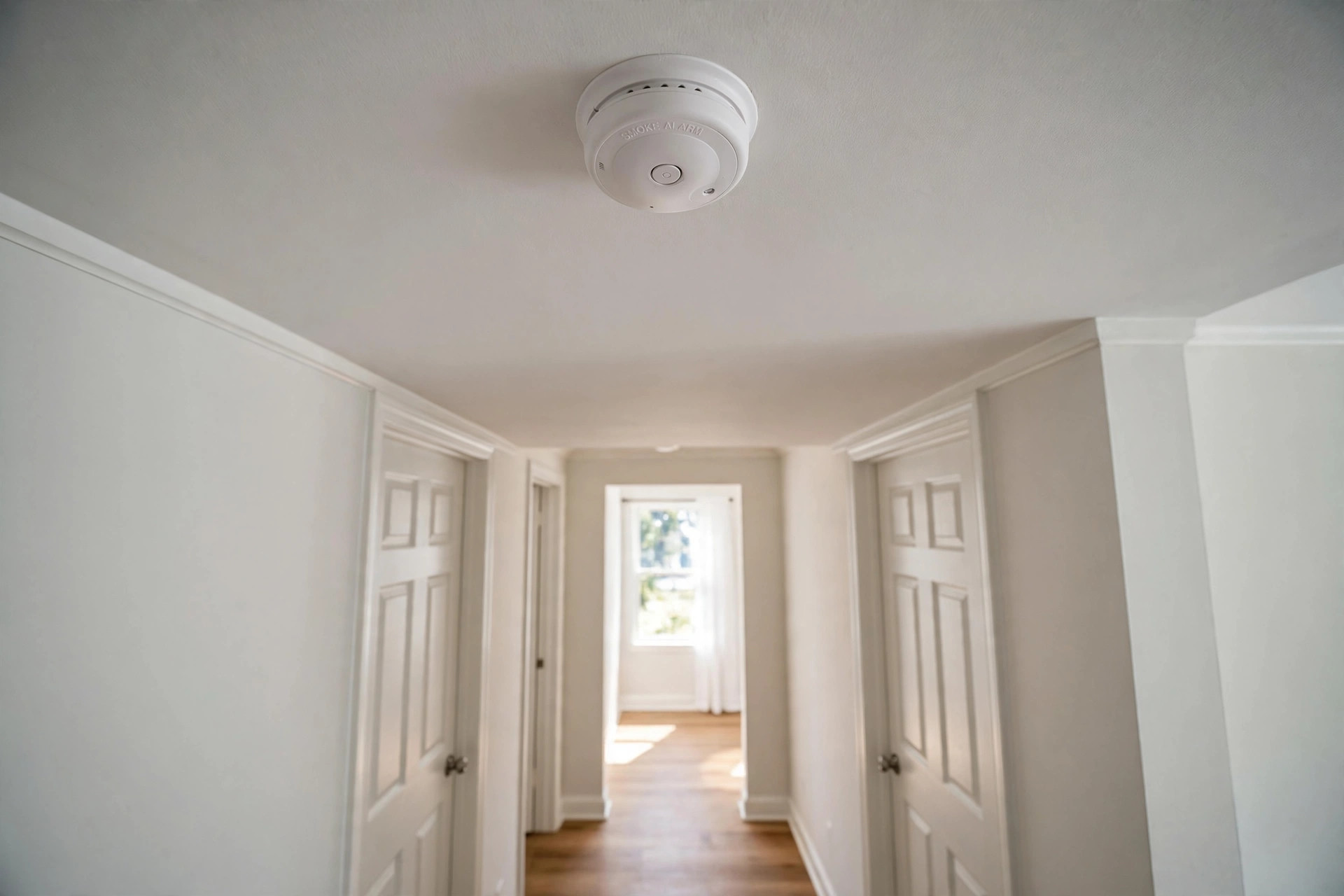
The placement rules follow a simple pattern. Put an alarm in every bedroom. Put an alarm in the hall outside each sleeping area. Put an alarm on every level of the home, including the basement. Do not place alarms in the kitchen itself, since cooking smoke causes false alarms. Keep alarms at least ten feet from stoves. For a hallway, mount the alarm on the ceiling or high on the wall. Smoke rises. High placement catches it first.
In basements, place the alarm on the ceiling near the stairway. In homes with split levels, treat each level as its own floor. For vaulted or sloped ceilings, mount the alarm within a few feet of the peak. The exact measure varies by code edition, so check the current text or ask your inspector. These placement rules apply to both hardwired and wireless units.
Related reading on choosing the right unit can be found in our guide to the best smart smoke detector reviews 2026 usa, which compares current models side by side.
Types of Interconnected Alarms
Hardwired Alarms
Hardwired alarms draw power from the house wiring. They have a battery backup for outages. They connect through a third wire in the cable. When one unit senses smoke, the signal runs to all the others. Hardwired alarms are the standard for new homes under the IRC. They last about ten years. At ten years, the whole unit must be replaced.
Wireless Interconnected Alarms
Wireless alarms connect by radio signal. They need no third wire. This makes them ideal for older homes. Running new wires through finished walls is costly and messy. Wireless units avoid that work. Each alarm has its own battery or sealed battery. When one senses smoke, it sends a radio signal to the rest. The best hardwired smoke detector reviews usa page compares wire-in models, while wireless reviews are covered by many tech sites such as CNET.
Most codes accept wireless interconnection. NFPA 72 permits radio links between alarms. Some local inspectors may ask for proof that the units are listed for this use. Look for a UL listing mark on the box. A listed alarm has passed independent safety tests.
Smart and Combo Alarms
Smart alarms add phone alerts and voice warnings. They can tell you which room has smoke. They can send a message when you are away. Combo alarms detect both smoke and carbon monoxide. Some codes require or allow combo units. When you pair smoke and carbon monoxide protection, read our best smart smoke and co combo reviews usa guide for current picks. Reviews at PCMag and The Verge also track new smart alarm models each year.
What to Look for When You Buy
Buy only alarms with a UL listing. The mark means the unit passed safety tests. Check the date on the back. Alarms expire ten years after the build date, not the install date. A unit that sat on a shelf for two years has only eight years of life left.
Pick ionization, photoelectric, or dual-sensor based on your home. Photoelectric alarms sense slow, smoky fires well. Ionization alarms sense fast, flaming fires well. Dual-sensor units cover both. Some fire experts favor photoelectric for hallways and bedrooms. Either type meets code when listed.
For older homes, wireless interconnection saves a lot of labor. Make sure all units use the same link method. Units from different makers may not link. Buy the set together. For new builds, hardwired units with battery backup meet the IRC. Sealed ten-year battery alarms cut battery changes for wireless sets. Consumer Reports tests alarm sound levels and battery life in its labs.
Cost and Price
Prices vary by type and brand. A basic battery-powered alarm costs little. Interconnected units cost more. Wireless interconnected alarms often run higher than single units. Hardwired alarms cost less per unit, but install labor adds up in older homes.
A full set for a small home may take five to seven alarms. A larger two-story home may need eight to twelve. Electrician fees for hardwired install depend on your area and the ease of access in walls and attics. Wireless install needs no electrician in most cases. Many owners can mount wireless units with a drill and a ladder.
Smart alarms cost the most. They add phone alerts and room names. Combo smoke and carbon monoxide units cost more than smoke-only units. Sealed ten-year batteries raise the price but remove yearly battery changes. Over ten years, the sealed units often cost less in batteries and time. For monitored fire protection tied to a full security system, companies like SimpliSafe and ADT offer plans that pair alarms with professional response. The Google Store sells smart alarm hardware that links with home apps.
Care and Upkeep
Test every alarm once a month. Press the test button and hold it. All linked alarms should sound. If one stays quiet, check the link. Replace dead batteries at once. For sealed units, no battery change is needed. Dust the units twice a year. Use a soft brush or vacuum. Dust can clog the sensor and cause false alarms or slow response.
Replace every alarm after ten years. Write the install date on the unit with a marker. When the date hits ten years, buy new units. Do not wait for failure. Sensors wear out with age. An old alarm may sound late or not at all.
Check local rules when you replace alarms. Many cities now demand interconnection at replacement. This means a simple swap may turn into a system upgrade. Budget for the full set. Keep papers and dates in a home file. This helps at sale time. Home inspectors check alarm age and placement.
Safety
Never paint over a smoke alarm. Paint blocks the sensor. Keep alarms clear of curtains and shelves. Do not hang decorations from them. In the kitchen, use a vent fan while cooking to cut false alarms. Never remove a battery to stop a false alarm. Move the unit farther from the stove instead.
Plan an escape route for every room. Practice it twice a year. Keep bedroom doors closed at night. A closed door slows smoke and heat. This gives alarms more time to wake you. Teach children the alarm sound. Show them the meeting spot outside. Ring and other smart home makers note that phone alerts help, but they never replace a practiced escape plan. A leader in alarm hardware, Kidde, reminds owners that alarms are only one part of fire safety.
If an alarm sounds, get out first. Call the fire department from outside. Never go back inside for pets or goods. Smoke kills more people than flames. Stay low if you must pass through smoke.
Frequently Asked Questions
Do my old alarms meet the interconnected smoke alarms code requirements usa?
It depends on your state and the age of your home. New construction must have hardwired interconnected alarms under the IRC. Older homes may keep single alarms until replacement in some areas. Many local codes now demand interconnection when alarms are replaced. Check with your local fire marshal.
Can I use wireless alarms to meet the code?
Yes, in most places. NFPA 72 allows radio-linked alarms. Many cities accept them for existing homes. Buy listed units made to link with each other. Some inspectors ask for the listing papers. Keep the box or manual.
How many alarms does my home need?
Count every bedroom, each hall outside sleeping areas, and every level including the basement. A small ranch may need four or five. A two-story home with a basement may need eight or more. Your inspector can confirm the count.
Do smoke alarms expire?
Yes. Replace them every ten years from the build date. The date is printed on the back of the unit. Sensors wear out. Old alarms may fail in a real fire.
What is the difference between ionization and photoelectric alarms?
Ionization alarms sense fast flaming fires best. Photoelectric alarms sense slow smoky fires best. Dual-sensor units cover both types. Any listed type meets code. Many experts favor photoelectric near bedrooms.
Can I mix brands in one linked system?
Most makers say no. Wireless links use private signals. Units from different brands often fail to link. Hardwired units may link across brands, but makers still advise one brand for the set. Buy matched units to be safe.
A Short Final Word
The interconnected smoke alarms code requirements usa exist for one reason. They save lives. Linked alarms make sure the whole house hears the warning. New homes must meet the hardwired rules. Older homes can use wireless units to reach the same goal. Buy listed alarms, place them by the code, test them each month, and replace them at ten years. The cost is small. The value is beyond measure.
References
ADT. (n.d.). Home security and automation. https://www.adt.com CNET. (n.d.). Technology news and reviews. https://www.cnet.com Consumer Reports. (n.d.). Product reviews and ratings. https://www.consumerreports.org Google Store. (n.d.). Smart home devices. https://store.google.com Kidde. (n.d.). Smoke and carbon monoxide alarms. https://www.kidde.com National Fire Protection Association. (n.d.). Fire safety information and codes. https://www.nfpa.org PCMag. (n.d.). Technology product reviews. https://www.pcmag.com Ring. (n.d.). Smart home security devices. https://www.ring.com SimpliSafe. (n.d.). Home security systems. https://www.simplisafe.com The Verge. (n.d.). Technology news and reviews. https://www.theverge.com U.S. Consumer Product Safety Commission. (n.d.). Product safety information. https://www.cpsc.gov
Was this guide helpful?

About Jennifer Lee
The My Garden US editorial team writes practical, in-depth home and garden guides for American homeowners — tested advice, no fluff.