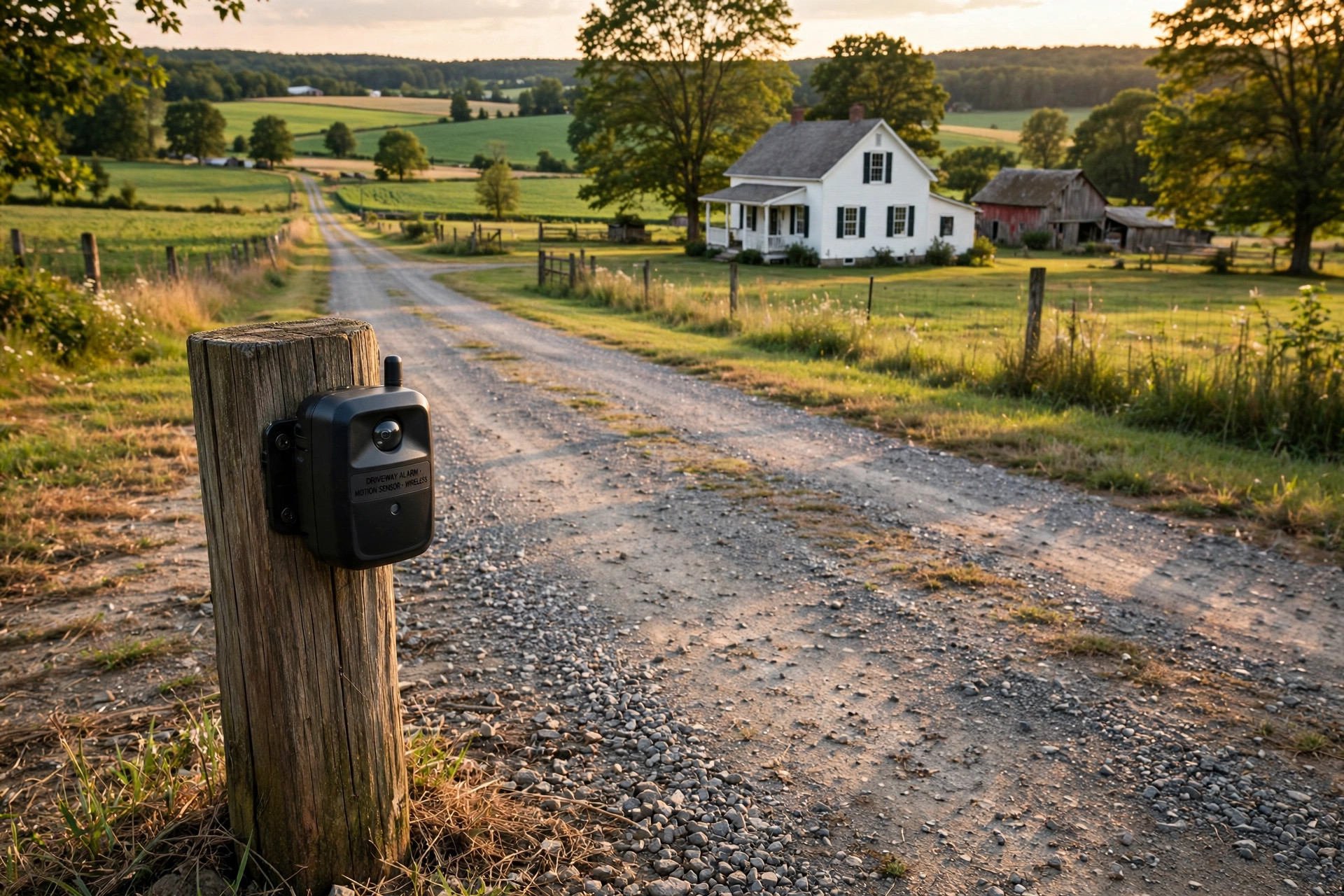

A long range driveway alarm is a small device that tells you when a car or person enters your driveway. The sensor sits outside, near the road or the gate. The chime sits inside your home. When something moves past the sensor, the chime rings. It is that simple.
For many homes in the USA, this kind of alert matters a great deal. Rural driveways can be hundreds of feet long. You cannot hear a car pull in from inside the house. A driveway alarm closes that gap. Suburban homes use them too, mainly to know when visitors or delivery trucks arrive before they reach the door.
This guide brings together what buyers learned in 2026. It covers how these alarms work, what to look for, what they cost, and how to keep them running. It is written in plain terms so any home owner can follow it.
Why a Driveway Alarm Matters
Peace of mind is the main reason people buy a driveway alarm. When you live on a large lot or down a long lane, you want warning before a stranger reaches your porch. The chime gives you that warning. You can look out the window. You can lock the door. You can simply be ready to greet a guest.
Security firms have said for years that early warning is the first layer of home defense. A driveway alarm is not a camera and it is not a lock. It is an early signal. Many owners pair it with a smart doorbell so they get both a chime and a video check. Sites such as SimpliSafe and ADT describe layered systems in which simple sensors sit at the edge of the property and cameras sit closer to the house.
Delivery drivers are another reason. Packages left at the gate can sit in the rain or be stolen. A driveway alarm tells you the truck arrived. You can walk out and take the box inside right away.
Families with children like them too. A chime tells a parent that a car has entered the property. On a busy street, that small warning helps parents keep young kids away from the road.
Finally, cost matters. A full wired security system can run into thousands of dollars. A driveway alarm often costs less than a dinner out. For homes that only need one alert point, it is a sound buy.
How a Driveway Alarm Works: Long Range Driveway Alarm Reviews 2026 Usa
Most units sold in 2026 use one of two detection methods. The first is passive infrared, known as PIR. The sensor reads heat. A car engine, a person, and a large animal all give off heat. When a warm shape moves across the sensor’s view, the alarm trips.
The second method is magnetic detection. A small probe goes in the ground beside the drive. It senses the metal of a passing car. It ignores people and animals. Owners who only want car alerts often prefer this type.
The signal from the sensor to the chime travels by radio. Short range units reach about 400 feet. Long range models claim one half mile or more in open air. Real world range is always lower than the box claims. Trees, hills, and house walls cut the signal. Most buyers in 2026 found that a unit rated for 2,000 feet worked well up to 800 to 1,200 feet in real yards.
The indoor chime plugs into a wall outlet or runs on batteries. Many chimes let you pick from dozens of tones. Some flash a light as well as ring, which helps homes with hard-of-hearing family members.
What to Look for Before You Buy
Reviews from 2026 buyers point to the same buying points again and again. Read them before you order.
Sensor Type
Choose PIR if you want alerts for cars and people. Choose a magnetic probe if you only want car alerts and your drive sees foot traffic, deer, or loose dogs. Reviews on PCMag note that dual-purpose sensors are more flexible but also produce more false alarms.
True Range
Ignore the box number and read user reviews. Look for buyers with a lot like yours. A flat open yard gives near full rated range. A wooded lot cuts it fast. If your drive is 900 feet, buy a unit rated for at least 2,000 feet. That margin keeps the signal steady through rain and wind.
Power Source
Outdoor sensors run on batteries or small solar panels. Battery models are cheaper and simpler. Solar models save battery trips but need direct sun for part of the day. Under a tree, solar can fail in winter. Check what type of battery the sensor takes and how long reviewers say it lasts.
Tones and Zones
Good units offer many chime tones so you can tell zones apart. If you later add a second sensor at the back gate, you can give it its own tone. Tech sites like The Verge and CNET often test how clear these tones sound from across a room.
Weather Rating
The sensor lives outside all year. Buy one rated for your climate. Cold northern states need units that work well below freezing. Hot southern states need heat tolerance. Snow can block a PIR lens, so mount the sensor with a slight tilt and clear the lens after storms.
Types of Driveway Alarms on the Market
Basic PIR Wireless Kits
These are the most common. One outdoor sensor and one indoor chime. They cost little and install in minutes. They suit suburban drives and short rural lanes.
Long Range Radio Kits
These use stronger radios and better antennas. They are built for long drives and farm gates. They cost more but hold a signal across wide land. Buyers in 2026 rated them well for properties over five acres.
Magnetic Probe Systems
The probe buries beside the drive and detects cars only. False alarms are rare. Install takes more work because you must dig a small hole and run a wire to the radio box. Farms and businesses favor these.
Multi-Sensor Expandable Systems
Some brands let you add sensors to one chime. You can cover the front drive, the back gate, and the shop door with one receiver. Each zone gets its own tone. These cost more up front but grow with your needs.
Smart Connected Alarms
A few new models send alerts to a phone app instead of, or as well as, a chime. They use Wi-Fi or a hub. They cost more and need good signal at the sensor spot. Owners who already use a smart hub from Google often like this style.
What Recent Reviews Say About 2026 Models
Across retail sites and review outlets, a few themes came through in 2026. Ease of setup won praise. Most units took under twenty minutes to install. Owners mounted the sensor on a post or tree, plugged in the chime, and tested with a walk down the drive.
Battery life earned mixed notes. Makers often claim one to two years. Heavy-traffic sites burned through batteries in six to nine months. Buyers learned to buy quality lithium cells instead of cheap store brands.
False alarms were the top complaint. PIR sensors tripped on deer, swaying branches, and hot sun on pavement. Owners fixed most problems by aiming the sensor away from roads and trees and lowering its sensitivity. Magnetic probes had almost no false alarms but missed the occasional small car.
Range tests were the most quoted part of every review. In open yards, long range kits met their claims. In woods, they fell short by half. This is why the margin rule above matters so much.
Price satisfaction was high. Even the top models cost far less than a camera system. Consumer testers at Consumer Reports have long judged value this way, weighing what a device does against what it costs.
Cost and Price in 2026
Basic PIR kits sold for twenty to fifty dollars in 2026. Long range kits ran fifty to one hundred fifty dollars. Magnetic probe systems ran one hundred to three hundred dollars, depending on range and features. Expandable multi-sensor kits sat in the one hundred to two hundred dollar band.
Smart connected models were the priciest, often one hundred fifty to three hundred dollars plus any app fees. Most had no monthly fee, which buyers liked.
Extra costs are small. Plan for replacement batteries once or twice a year. A mounting post or bracket may cost ten to twenty dollars if you do not have a tree or fence post handy. There are no wiring costs since the units are wireless.
If you are weighing this against a smart doorbell installation, the driveway alarm is the cheaper job. A doorbell often needs wiring work and a fee to an installer. The driveway alarm needs a post and a few screws.
Care and Upkeep
A driveway alarm needs little care, but a small routine keeps it honest.
Clean the sensor lens twice a year. Dust and spider webs blur the view and cause missed alerts or false ones. A soft cloth and a little water is enough.
Trim plants near the sensor. A branch waving in the wind is the most common cause of false alarms. Cut back growth each spring and fall.
Test the range twice a year. Walk the drive and listen for the chime. Batteries fade slowly, and range drops before the unit dies. A quick walk test catches weak batteries early.
Change batteries before winter. Cold drains batteries faster. Put in fresh cells in late fall, and the unit will hold through the cold months.
Check the mount after storms. High wind can shift the sensor’s aim. A sensor that points at the road will chime for every passing car.
Keep a spare battery set indoors. When the chime stops or grows weak, swap cells right away instead of waiting for a store trip.
Safety
A driveway alarm is a warning device, not a safety guard. It will not stop a car and it will not call the police. Do not rely on it as your only line of defense.
Mount the sensor where it cannot be reached from the road. A sensor on a low post by the street can be stolen or smashed. Place it ten to fifteen feet inside your property line, aimed across the drive.
Do not place the sensor where it watches a public road. You will get alerts all day, and you may record movement that is not your concern. Aim it at your own drive only.
Use common sense with wiring and digging. If you bury a magnetic probe, call 811 before you dig to mark buried lines. The federal safety guidance at CPSC also reminds owners to keep small batteries away from children and pets.
If the alarm is part of a larger security plan, link it to a camera or a door sensor. One chime plus one camera tells you both that someone came and who it was. Pairing a driveway alert with a glass break sensor gives inside and outside coverage for a modest total cost.
Frequently Asked Questions
How far can a long range driveway alarm really reach?
The box may claim one half mile or more. In real yards, expect half of that. Open flat land gives the best range. Trees, hills, and metal buildings cut it. Buy a rated range at least twice your actual distance for a steady signal.
Will rain or snow set it off?
Good units handle rain well. Heavy wet snow on the lens can block or fool a PIR sensor. Clear the lens after storms. Magnetic probes ignore weather almost completely.
Do these alarms work for apartments or small lots?
They can, but they are built for drives and gates. Apartment dwellers often do better with a door alarm sensor on the front door. That gives a closer, more useful alert for a small space.
Can animals trigger the alarm?
Yes, PIR sensors read heat, so deer, dogs, and raccoons can trip them. Aim the sensor higher, narrow its view, and keep it away from animal paths. A magnetic probe avoids this problem since it only senses cars.
How hard is it to install one?
Most owners finish in under thirty minutes. Mount the sensor on a post or tree. Plug in the chime. Test it by walking the drive. Magnetic probes take longer because you dig a small hole for the probe.
Do I need Wi-Fi or a phone app?
No. Most driveway alarms work with a simple indoor chime and need no internet. Smart models add phone alerts, but the basic kits work fine without any app or account.
A Final Word
A long range driveway alarm is one of the simplest ways to know what is coming up your drive. It costs little, installs fast, and needs almost no care. The key is to buy enough range for your land, mount the sensor with care, and keep the lens clean. Do that, and the chime will do its job for years.
For extra peace of mind, pair the alarm with a smart hub or camera from a brand like Ring. A chime tells you someone is coming. A camera shows you who. Together they give a small home the watchfulness of a much larger system.
References
ADT. (n.d.). Home security and automation. https://www.adt.com CNET. (n.d.). Technology news and reviews. https://www.cnet.com Consumer Reports. (n.d.). Product reviews and ratings. https://www.consumerreports.org Google Store. (n.d.). Smart home devices. https://store.google.com PCMag. (n.d.). Technology product reviews. https://www.pcmag.com Ring. (n.d.). Smart home security devices. https://www.ring.com SimpliSafe. (n.d.). Home security systems. https://www.simplisafe.com The Verge. (n.d.). Technology news and reviews. https://www.theverge.com U.S. Consumer Product Safety Commission. (n.d.). Product safety information. https://www.cpsc.gov
Was this guide helpful?

About Lisa Anderson
The My Garden US editorial team writes practical, in-depth home and garden guides for American homeowners — tested advice, no fluff.
You May Also Like
SmartThings vs Hubitat Comparison 2026 USA: Which Smart Home Hub Wins
May 31, 2026 0 views
WiFi 7 Router for Smart Home Reviews USA: A Practical Guide for Buyers
April 24, 2026 0 views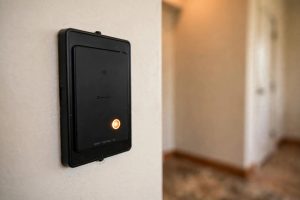
3 Way Smart Switch Installation Guide USA
February 21, 2026 0 views