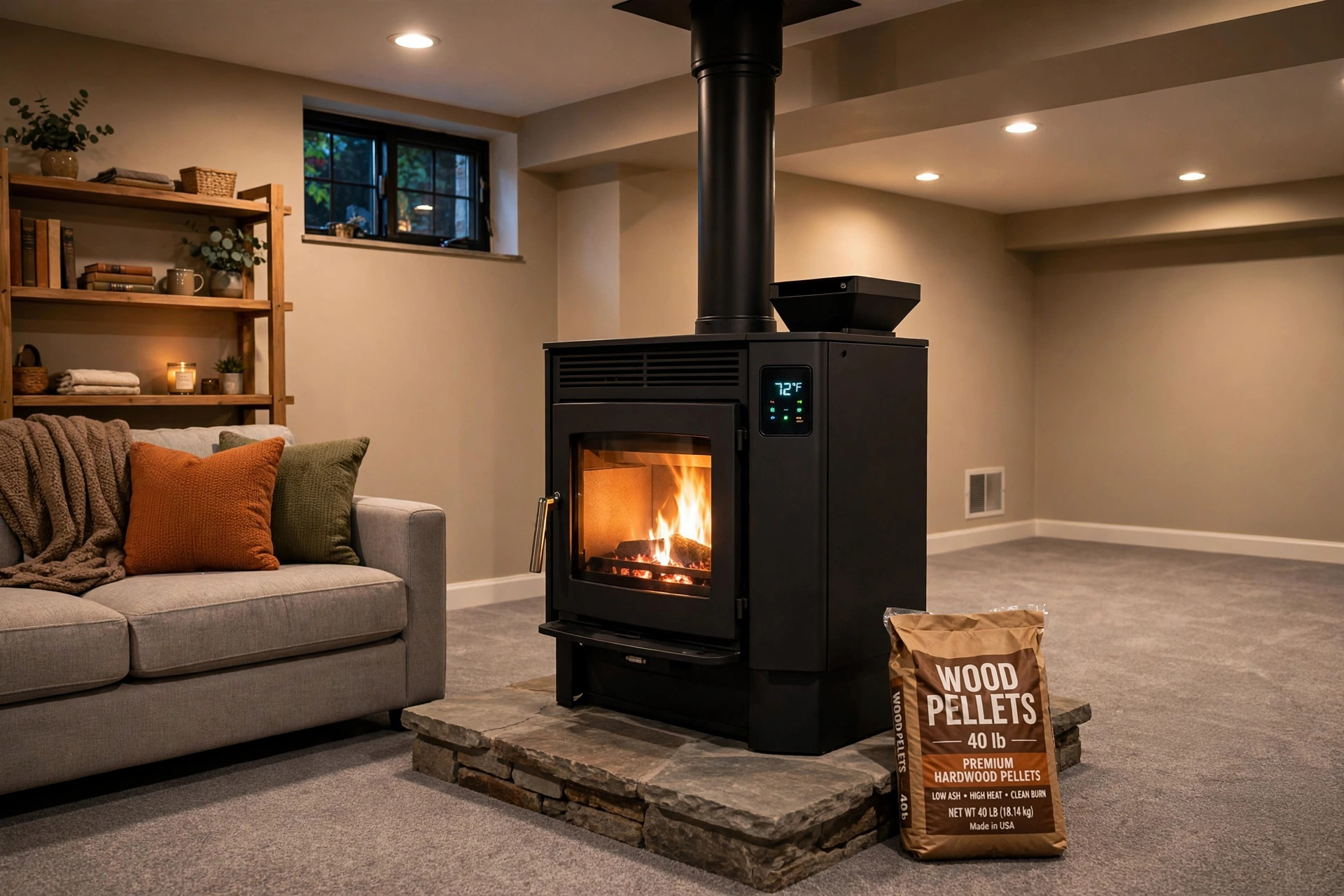

When a homeowner searches for the best pellet stove for basement reviews usa, the search usually starts the same way. The basement is cold. The furnace upstairs does not reach the lower rooms. The family wants a warm space down there without spending a fortune on a full system upgrade. A pellet stove answers that need well. It burns small wood pellets, feeds them by itself, and puts out steady heat with little effort from the owner. In this review guide, we look at how these stoves work in below-grade spaces, what buyers praise, what they complain about, and how to pick the right model.
Why It Matters: Heat That Reaches the Lowest Room
Basements stay cold for clear reasons. Heat rises. Cold air sinks. Concrete walls draw warmth out of a room all winter. A furnace in many homes was sized for the main floors only. Ductwork may not reach every corner of the lower level. Reviews from American homeowners say the same thing again and again. The upstairs is warm while the basement stays ten degrees colder.
A pellet stove changes that picture. It is a stand-alone heater. It sits in the room you want warm. It burns compressed wood pellets and sends warm air straight into the space. There is no need to extend ducts or install a second furnace. For families who want a usable playroom, office, or guest room below grade, that direct heat makes a real difference.
Cost is another reason these stoves earn strong reviews. Wood pellets are a renewable fuel. Prices move with the seasons, but they often cost less per unit of heat than oil or electric resistance heat. The U.S. Department of Energy publishes plain facts about biomass heating that help owners compare fuel costs. Many reviewers report lower winter bills after adding a stove to their basement. They also like the idea of heating with wood waste instead of fossil fuel.
There is a third reason, and it is comfort. Pellet stoves run steady. A thermostat or room sensor holds the temperature close to the set point. The flame is visible through a glass door, which makes a cold basement feel warmer than a bare wall heater ever could.
Pellet Heat Compared with Other Basement Options: Best Pellet Stove for Basement Reviews Usa
A basement can be heated in several ways, and reviewers often compare them before they buy. Baseboard electric heaters are cheap to install but costly to run. A gas furnace extension needs new ductwork. A wood stove gives strong heat but asks for split wood, constant tending, and a full chimney.
Leading heating makers such as Carrier, Trane, Lennox, Rheem, and Goodman publish home heating guides that compare gas furnaces, heat pumps, and other systems. Those guides help owners see where pellet heat fits. A pellet stove sits between a wood stove and a furnace. It gives the warm glow of a real flame with the hands-off running of a modern heater. It will not cool the room in summer the way a heat pump does, but for winter warmth it is hard to beat on comfort per dollar.
What to Look for: How to Choose the Right Model
Match the BTU Output to the Room
The first rule of any review of the best pellet stove for basement heat is simple. Match the stove to the space. Basement rooms often run from 400 to 1,500 square feet. A stove rated for 40,000 BTU per hour covers roughly 1,000 to 1,200 square feet in most homes. A larger open basement may need a 50,000 BTU unit.
Buyers should remember that basements lose heat faster than above-grade rooms. Concrete walls, slab floors, and small windows all pull heat away. A stove at the top of its rated range will work hard in a drafty basement. Reviewers suggest buying a model with a little more capacity than the math says you need. It is better to run a strong stove at a low setting than to run a small stove at full blast all winter.
Hopper Size and Burn Time
The hopper is the bin that holds the pellets. The stove feeds pellets into the burn pot from the hopper on its own. A bigger hopper means a longer burn between refills.
Small stoves hold 40 pounds of pellets. That is one standard bag. They burn for about a day and a half at low settings. Large stoves hold 60 to 80 pounds and can run two or three days without a refill. In a basement, a large hopper matters more than it does upstairs. Nobody wants to carry bags down the stairs every single day. Reviewers praise models with easy-open hopper lids and clear low-fuel warnings.
Venting Options for Below-Grade Rooms
Venting is the part of basement installation that worries new buyers the most. A pellet stove needs an exhaust vent to the outdoors. In a basement, that usually means a short run of double-wall pipe through the wall above ground level.
Most reviewers say direct venting is the easiest path. The pipe goes out through the rim joist or the wall just above the foundation. The stove fan pushes exhaust out, so a tall chimney is not required. The pipe must keep clear of windows, doors, and air intakes. Local codes set the exact distances. Buyers should check those rules before they drill a hole.
Some owners vent straight up through the floor and out the roof. That costs more but keeps the wall free. Either way, the U.S. Department of Energy notes that proper venting is what keeps these appliances safe and efficient. A licensed installer can handle the job in half a day in most homes.
Efficiency and Certifications
Pellet stoves are among the most efficient wood-burning heaters made. Good models reach 75 to 90 percent efficiency. That means most of the fuel becomes heat, not smoke.
Buyers should look for stoves tested to current EPA emission standards. Certified models burn cleaner and many are built to tighter engineering specs. Homeowners can also compare efficiency ratings on ENERGY STAR heating pages, which explain how efficiency numbers are measured. Higher efficiency means fewer pellets per winter and less ash to clean.
Types of Pellet Stoves Suited to Basements
Free-standing stoves are the most common choice. They stand on legs or a pedestal and radiate heat in all directions. A free-standing unit in the middle of a basement family room spreads warmth well. They come in plain steel or cast-iron finishes that suit many styles.
Fireplace inserts fit into an existing masonry fireplace. Many basements have a fireplace that no longer gets used. An insert turns that opening into a working pellet heater. Reviewers like inserts because they keep the pipe run short and hide the vent inside the old chimney. The room keeps its fireplace look with none of the work of a wood fire.
Corner models have a triangular back that fits into a corner. They suit small basement rooms where floor space is tight. Low-clearance models are built for rooms with low ceilings. They sit lower than standard stoves so they fit under ducts and pipes without crowding the space.
Each type burns the same pellets and needs the same venting. The choice comes down to the shape of the room and where the vent can exit. Reviewers advise measuring the room and marking the vent path before shopping.
Cost and Price: What Owners Actually Pay
Stove prices run wide. Small basement models start near $1,500. Mid-range stoves with large hoppers and digital controls run $2,500 to $4,000. Top-line models with the highest BTU ratings can pass $5,000. Prices vary by region and by dealer, so it pays to shop around.
Installation adds to the bill. A simple through-wall vent and hearth pad may cost $500 to $1,000. A more complex vent run or electrical work pushes that higher. Reviewers advise getting two or three quotes from licensed installers before choosing. A clear written quote should list the vent parts, the hearth pad, and the labor separately.
Fuel is the long-term cost. A 40-pound bag of pellets sells for $6 to $9 in most American markets. A basement stove in a cold climate may burn one to two bags a day in January. That puts a heavy heating season near $700 to $1,200 in fuel. Owners who buy pellets by the ton in late summer often pay less per bag. Many reviewers say the savings over electric heat pay for the stove in three to five years. Storage matters too. Pellets must stay dry, so owners keep them in a garage or a dry corner of the basement.
Care and Upkeep Through the Heating Season
A pellet stove asks for steady small chores. The burn pot needs cleaning once a week. Ash builds up in the firebox and must be emptied every few days. The glass door fogs with soot and needs a wipe. Reviewers say the whole weekly routine takes about twenty minutes once it becomes a habit.
Once a month, the vent pipe and the heat exchanger tubes need a brush-out. A stiff brush and an ash vacuum handle the job. The Family Handyman site carries step-by-step maintenance articles that new owners find useful. At the end of the season, a deep clean protects the stove. Burn off the last pellets, empty the hopper, and brush the flue. Some owners schedule a yearly visit from a chimney professional who can spot wear in the gaskets and the vent seals.
Pellet quality affects maintenance. Cheap pellets leave more ash and hard clinkers in the burn pot. Premium pellets burn cleaner and cut cleaning time. Reviewers repeat one tip often. Buy one bag of a brand to test before buying a full ton. A bad ton is a long winter of extra scraping.
Safety in a Below-Grade Space
Safety rules for basements are stricter than for main floors, and for good reason. A basement has fewer exits and less airflow than the rooms above. Any fuel-burning heater needs respect and a careful setup.
A carbon monoxide detector is a must. Put one in the basement near the stove and another in the sleeping areas above. Test the batteries each fall. The vent pipe must meet clearance rules from walls and ceilings. The hearth pad under the stove must extend past the door opening to catch stray sparks and hot ash.
Keep three feet of clear space around the stove. Do not store pellet bags against the hot surfaces. Let the stove cool fully before cleaning the burn pot. Teach children to keep away from the glass door, which gets very hot. Guides from This Old House show how pro installers set clearances and hearth protection the right way. Owners who follow the manual report no more risk than with any other heater.
Frequently Asked Questions
Can a pellet stove heat a whole basement by itself?
Yes, in many cases. A single stove with enough BTU output can hold a 1,000 to 1,500 square foot basement at a comfortable temperature. Closed-off rooms far from the stove will stay cooler. A small fan can move warm air down a hallway or into a bedroom.
How loud is a pellet stove?
It hums. The auger and the fans make a low sound like a small dishwasher. Most reviewers stop noticing it after a day or two. Bedrooms right next to the stove may need a quieter model, so buyers should check the sound rating before they buy.
Do pellet stoves work during a power outage?
No, not on their own. The auger, the fans, and the controls need electricity. Owners in storm country often add a battery backup or a small generator. A battery unit made for pellet stoves can run the unit for several hours until the power returns.
What pellets should I buy?
Look for pellets marked premium or super premium grade. They come from clean wood with no bark and leave little ash. Softwood and hardwood both work well. Test a few bags before buying a full ton so you know the brand burns clean in your stove.
How does a pellet stove compare to a mini split for a basement?
Both heat well. A pellet stove gives direct radiant warmth and a real flame. A mini split heats and cools with no fuel to carry. Some owners pair the two. The stove carries the deep winter load, and the mini split handles mild weather and summer cooling. Our review of mini split systems for cold climates compares popular heat-pump options, and the Daikin vs Mitsubishi mini split comparison looks at two leading brands side by side.
Can I install a pellet stove in my basement myself?
A handy owner can do it, but most reviewers suggest hiring a licensed installer. The vent, the hearth pad, and the electrical work must meet local code. A poor vent job can leak smoke or carbon monoxide into the home. Professional installation usually costs less than fixing a bad one. It also helps to seal air leaks first, since less heat loss means a smaller stove can do the job. Our guide to garage insulation kits for metal doors shows how better insulation cuts the heating load anywhere in the home.
A Short Final Word
The best pellet stove for a basement is the one that fits the room, the budget, and the owner’s habits. Size it a little above the math. Choose a hopper large enough to spare daily trips down the stairs. Vent it by the book. Feed it good pellets and clean it on schedule. Do those things, and the reviews write themselves. A cold basement becomes the warmest room in the house.
References
Carrier. (n.d.). Heating and cooling systems. https://www.carrier.com ENERGY STAR. (n.d.). Energy efficient products. https://www.energystar.gov Family Handyman. (n.d.). DIY home repair and maintenance. https://www.familyhandyman.com Goodman. (n.d.). Heating and cooling equipment. https://www.goodmanmfg.com Lennox. (n.d.). Heating and cooling systems. https://www.lennox.com Rheem. (n.d.). Heating, cooling, and water heating. https://www.rheem.com This Old House. (n.d.). Home renovation guidance. https://www.thisoldhouse.com Trane. (n.d.). Heating and air conditioning. https://www.trane.com U.S. Department of Energy. (n.d.). Energy efficiency and renewable energy. https://www.energy.gov
Was this guide helpful?

About James Carter
The My Garden US editorial team writes practical, in-depth home and garden guides for American homeowners — tested advice, no fluff.
You May Also Like
Best Insulation for Florida Attics 2026
March 26, 2026 0 views
Best Garage Heater for Winter Reviews USA: A Practical Guide to Warmth
September 16, 2026 0 views
Best Portable AC for Bedroom Reviews USA: What Buyers Should Know
February 26, 2026 0 views